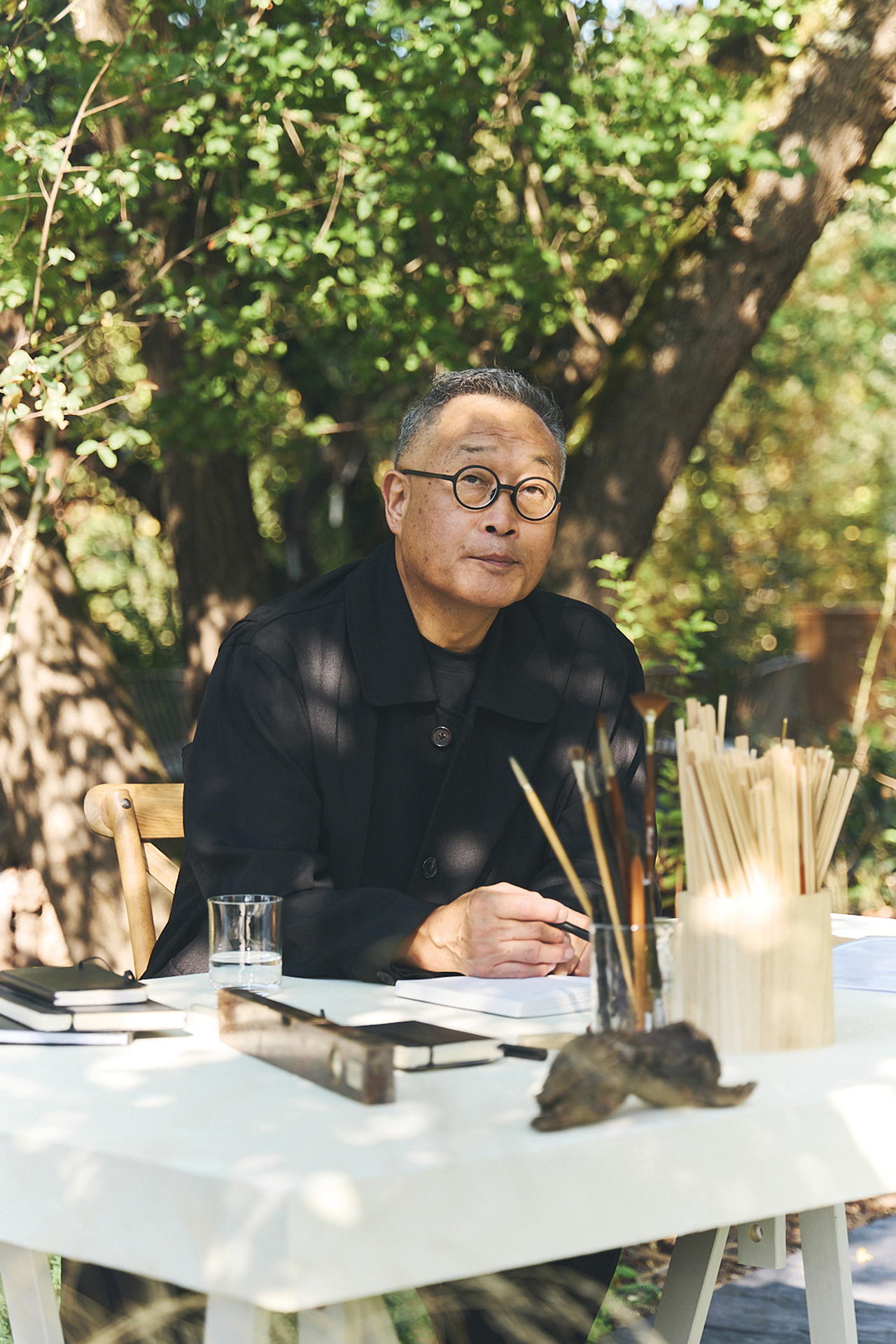
High above the streets of Paris or perched precariously in trees, you might encounter Tadashi Kawamata’s architectural forms that appear to grow organically, stretch across voids or spiral skywards.
He has spent the past five decades proving that the most powerful structures are often those that aren’t built to last. At once fragile yet forceful, provisional yet deeply considered, his site-specific installations disrupt the built environment and invite us to experience it anew.
The nomadic Japanese artist repurposes the world’s most prestigious institutions as venues for his transient, poetic structures. From the Venice Biennale to the Centre Pompidou, his work—crafted from wooden planks, crates, or discarded chairs—challenges our fixation on permanence.
“In my vocabulary, nothing is permanent,” Kawamata asserts. His installations, often dismantled post-exhibition, reflect a cycle of construction, disappearance, and renewal, embodying the idea that “everything is in a state of change”. This ephemerality, influenced by economic pragmatism, resonates with a broader Japanese ethos shaped by natural forces and temporal awareness.
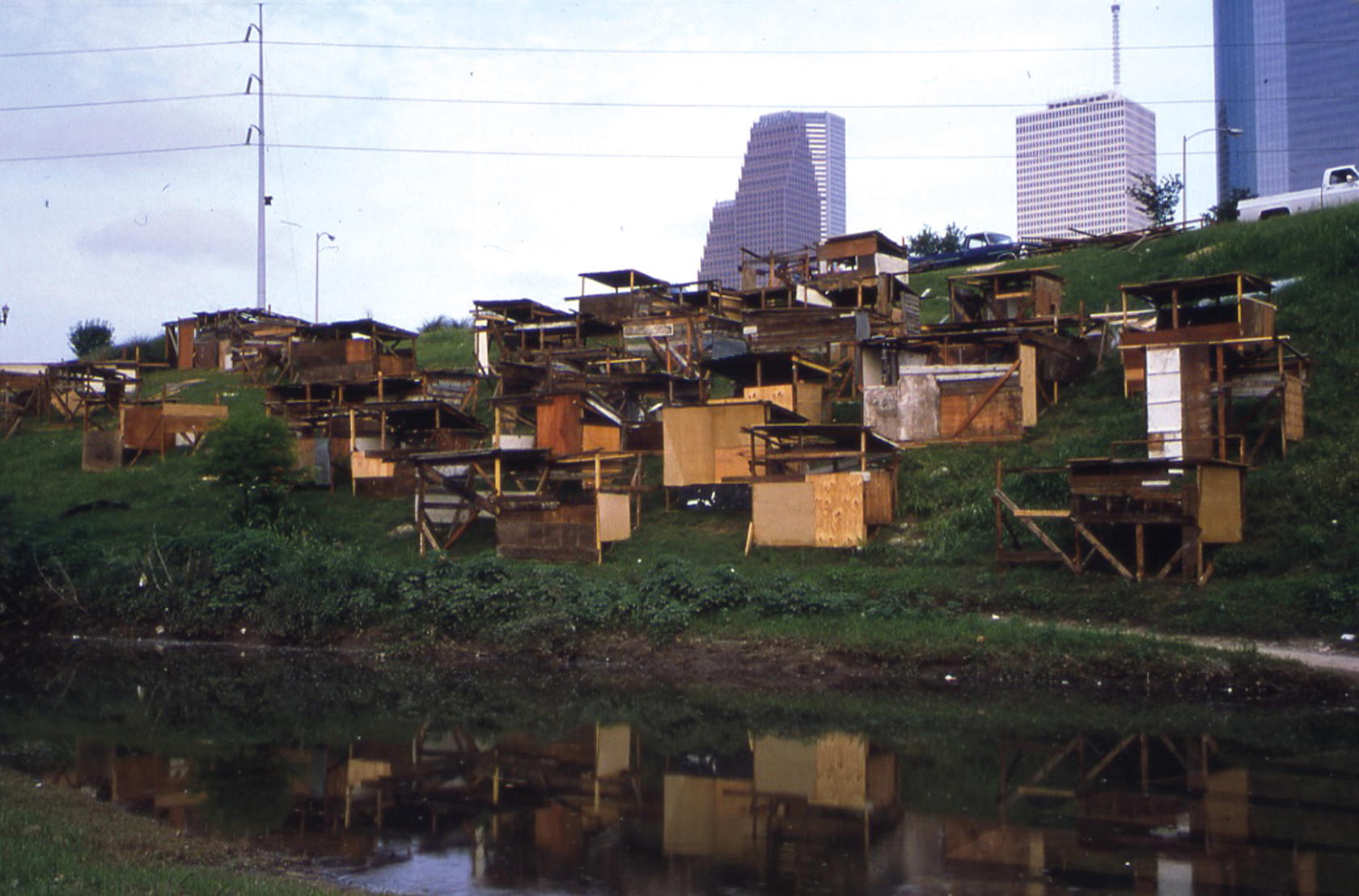
Kawamata’s fascination with Hokkaido’s rugged landscapes was sparked by his desire to understand the conflict between industry and nature. Born in 1953, his childhood was a juxtaposition of greenery and grit.
“I was born in the heart of the mountains, but I grew up in an industrial village. My father was a coal miner, and we lived in a community of 10,000 people. I was a wild child, swimming in the river and playing in the mountains. I didn’t even see the sea until I was 14.”
An upbringing in a working-class environment, where housing was functional and the land was constantly being excavated, shaped his artistic language. He discovered later, while studying painting in Tokyo in the 1970s, that using canvas in that way restricted his creativity.
Abandoning the discipline, he began working with wooden stretchers of canvases—an improvised gesture that would define his practice. “That was the starting point for a different type of work. While other students painted with live models in the atelier at art school, I started making installations.”
Liberty In Spontaneity
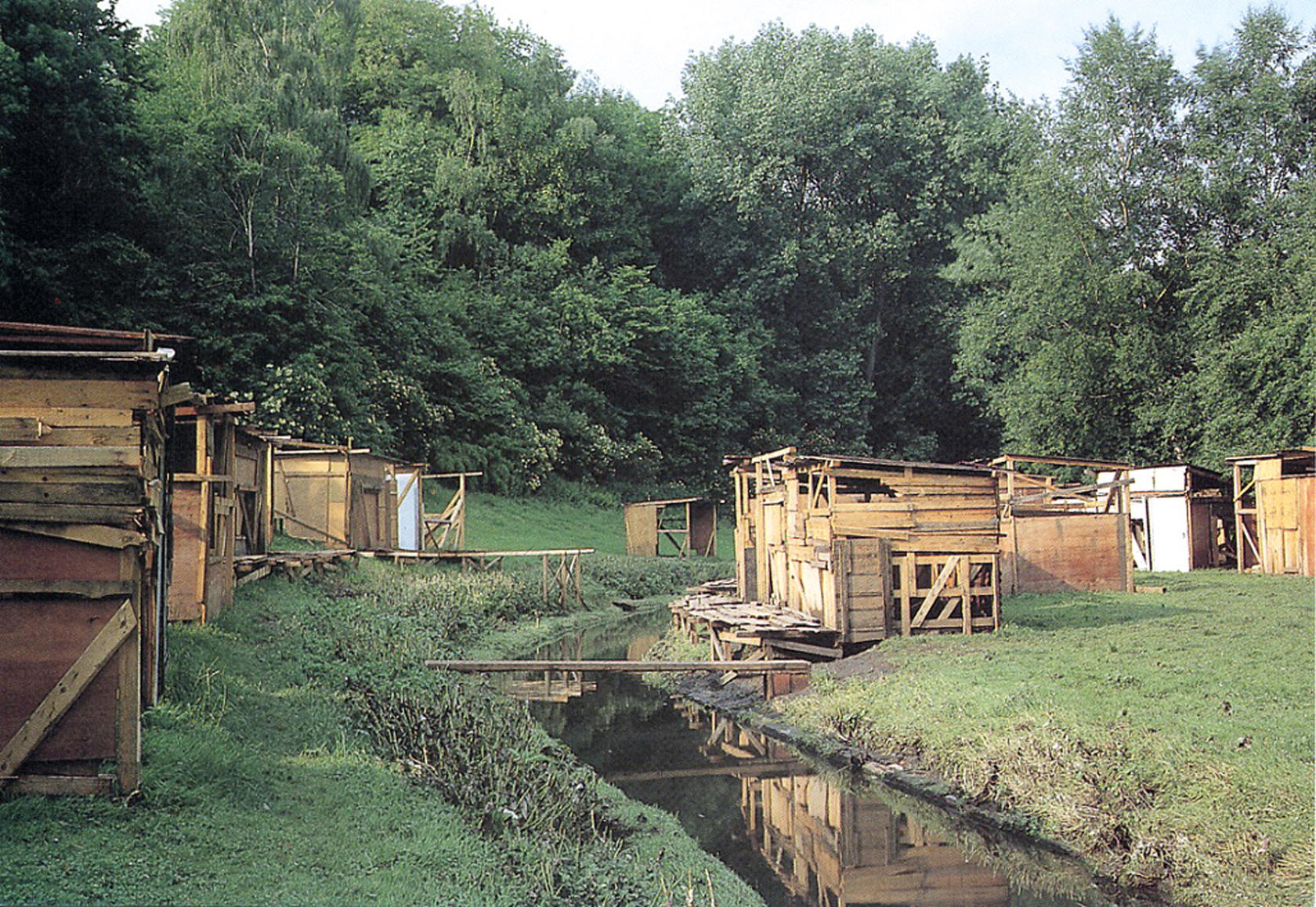
From the outset, Kawamata was drawn to public spaces, fabricating installations in parks, forests and empty buildings, often with salvaged objects. “I always used leftover scrap materials.”
What began as necessity—“because I had no money”—evolved into a core methodology that included recycling, mobility and responsiveness to a site. He staged interventions in rented apartments across Japan. “It was like a travelling circus; I would build, dismantle and move on.”
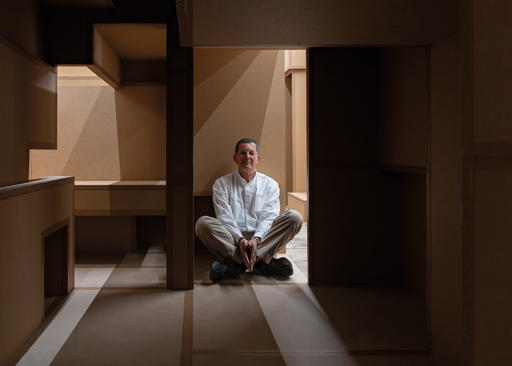
He sharpened his approach while living in New York in the mid-1980s. At MoMA PS1, he experienced the raw energy of the East Village and the rise of graffiti culture. “Without permission, they just did whatever they wanted,” he says, citing Keith Haring and Jean-Michel Basquiat as examples. In response, Kawamata constructed makeshift homeless shelters from cardboard, which were illegal, transient and socially attuned. “I still think of my work as a form of street art.”
Wood became his universal language. Lightweight, inexpensive and globally accessible, it allows him to work anywhere: “I only need a hammer and nails—no special techniques or tools like with stone or metal.”
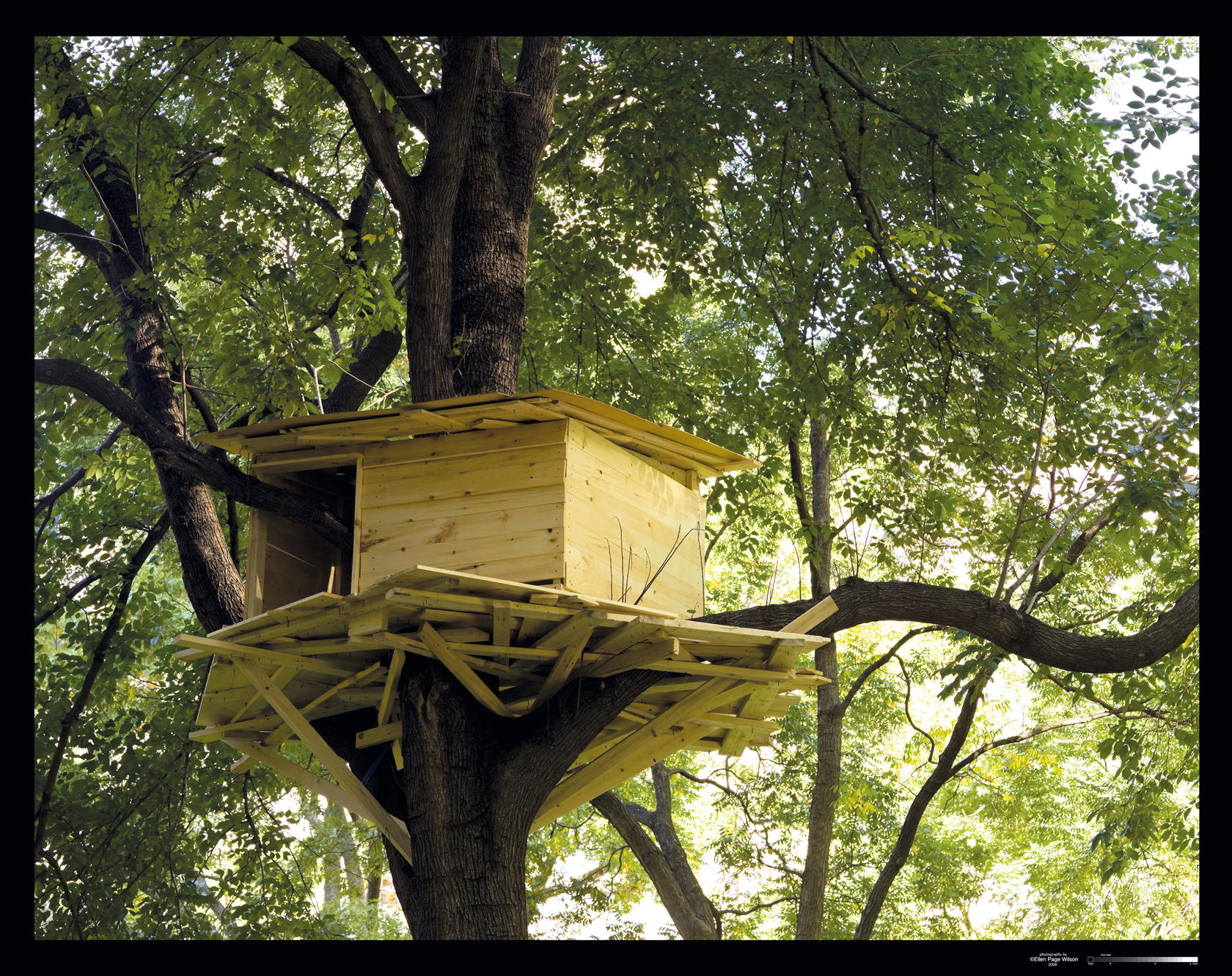
More importantly, it’s a collaborative tool. Embedding social exchange into the construction process, he frequently works with local participants, such as artists, carpenters, and even the unemployed. “No matter where you are or what language you speak, the work remains the same.”
Kawamata’s process is intentionally intrusive. He tries to create a “parasite” of sorts within rigid, structured cities. As opposed to placing objects in rooms, he allows his structures to wrap around buildings or burst through windows. There is a dialogue between the built environment and the organic world. “I like to make something fragile, spontaneous, and sometimes disappearing, like with graffiti,” he adds. “I’m presenting a kind of freedom of action.”
“When you are five metres above the ground, the world looks different. You feel the wind and hear things differently; it is a way to reconnect with our environment.”
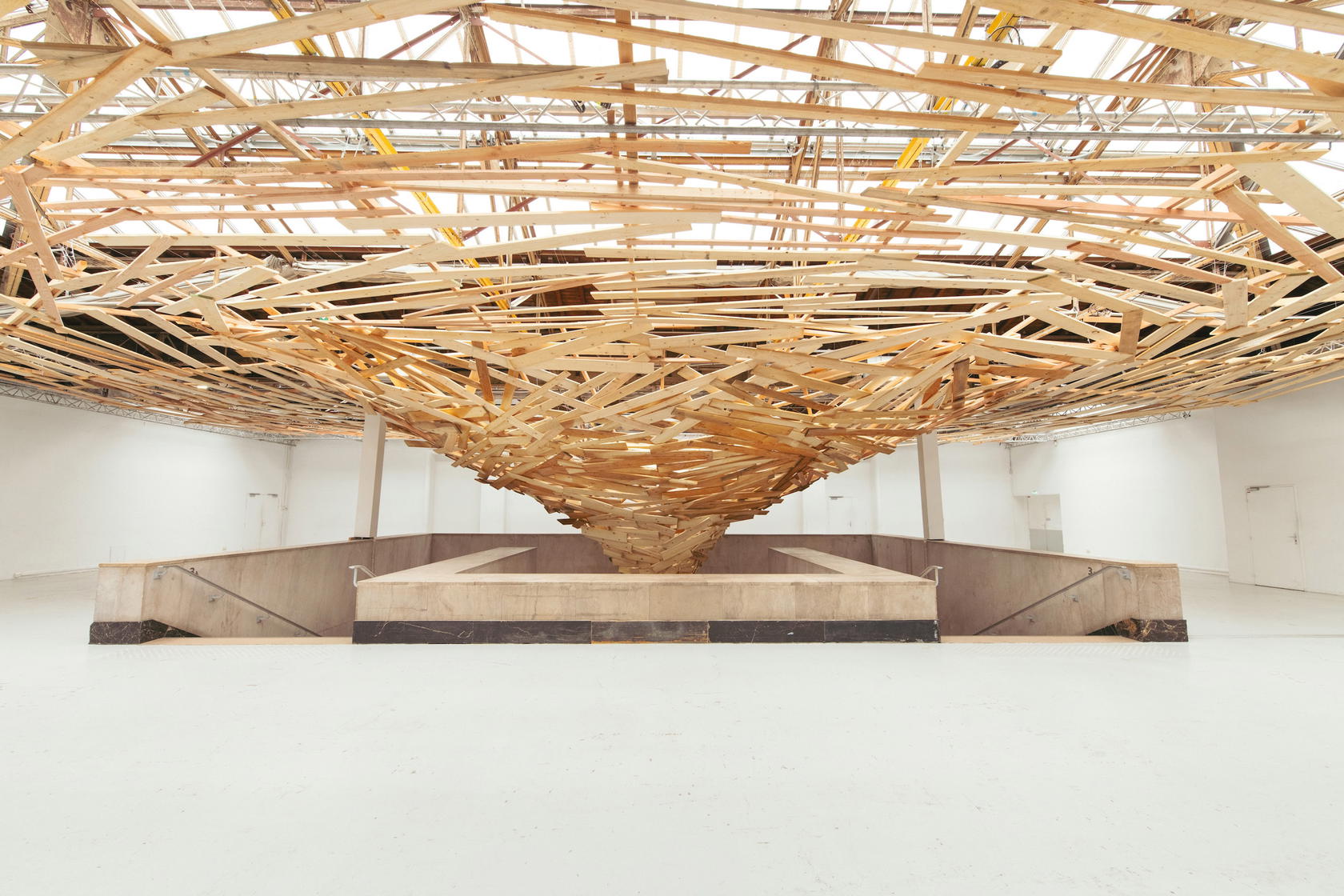
Kawamata is this year’s protagonist of champagne house Ruinart’s Conversations with Nature series. The project, which bridges the gap between the ephemeral and the eternal, began in February at the Palais de Tokyo in Paris, where two temporary installations attracted visitors: ‘Tornado’ and ‘Nest’. These swirling, wooden vortices transformed the museum into a space of vibrations, reflecting the delicate balance of nature in the champagne ecosystem.
Art As Connection
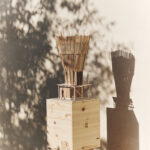
The journey continued in May at Ruinart’s historic estate at 4 rue des Crayères in Reims, where Kawamata installed three permanent in-situ pieces—‘Tree Hut’, ‘Nest’, and ‘Observatory’—in contrast to his usual shorter-lived works.
These structures serve as imaginary refuges, with the tower featuring a spiral staircase that allows visitors to experience their surroundings differently. “When you are five metres above the ground, the world looks different. You feel the wind and hear things differently; it is a way to reconnect with our environment.”
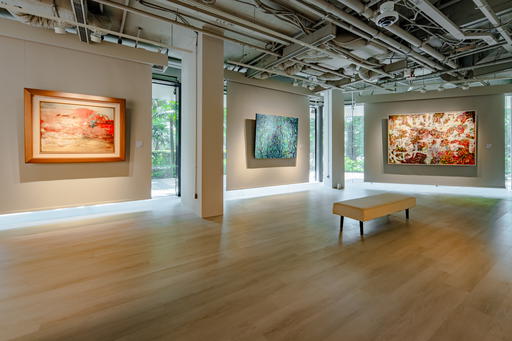
He continues to test the limits of how we construct and perceive space, whether he is intervening in urban centres or natural landscapes. His participation in “Reinventing Landscape: Highlights of the Centre Pompidou Collection, Vol. IV”, on display at West Bund Museum in Shanghai until 18 October 2026, reflects this enquiry.
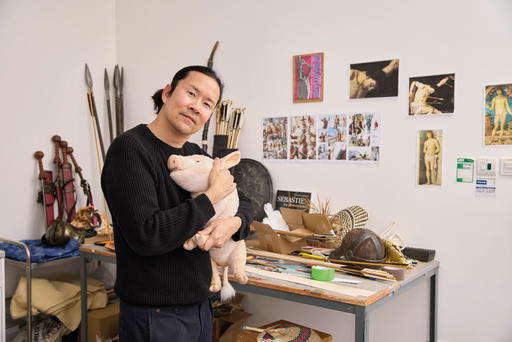
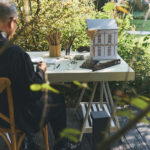
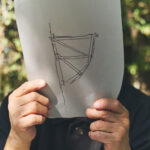
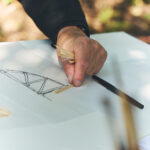
Here, he is showcased alongside prominent artists like François Morellet, Georges Braque, Zao Wou-Ki, Nicolas de Staël, Peter Doig and Joan Mitchell. Despite his global fame and busy schedule, Kawamata remains grounded. The artist still retreats to his Paris suburbs studio to counterpoint his large-scale works through sketches, maquettes, and models. He enjoys working alone on such small pieces, often late at night. These solitary acts provide a necessary balance to the collective intensity of his larger projects.
Kawamata believes that art is ultimately about the people it connects. “For me, the artist is a tool to communicate with many diverse people. I meet architects, singers, and pop stars, as well as normal people through my art. It also bridges different countries, cities and cultural backgrounds.”
Rather than building monuments to his own ego, Kawamata builds reminders that we are just guests in the landscape, and that things meant to fall apart have their own beauty.