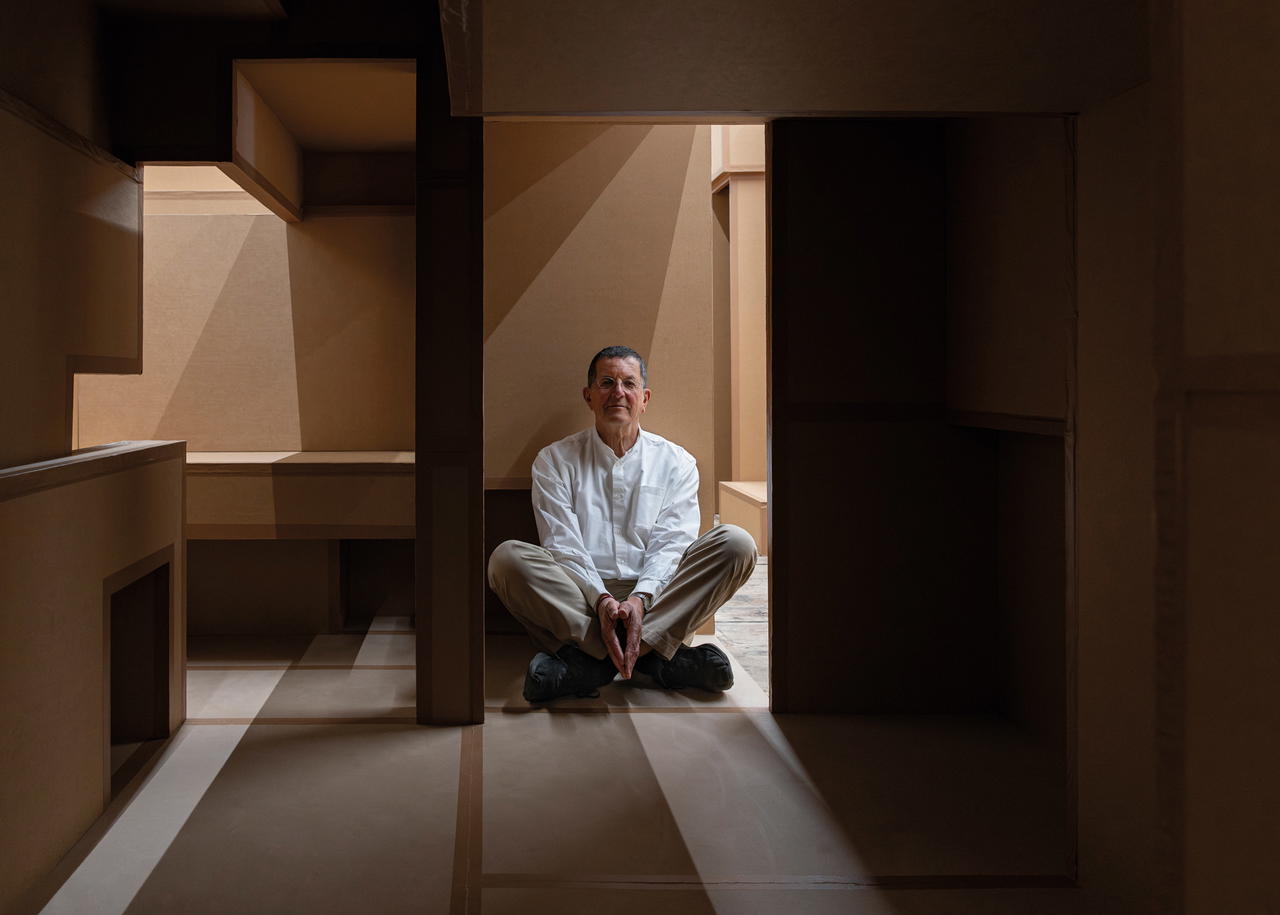
Light is the first thing you notice. Then the darkness, followed by the strange sensation of becoming childlike again. It takes bending, crouching, and crawling to enter ‘Innercity’, Antony Gormley’s massive new installation at Galleria Continua in the mediaeval hill town of San Gimignano, central Italy.
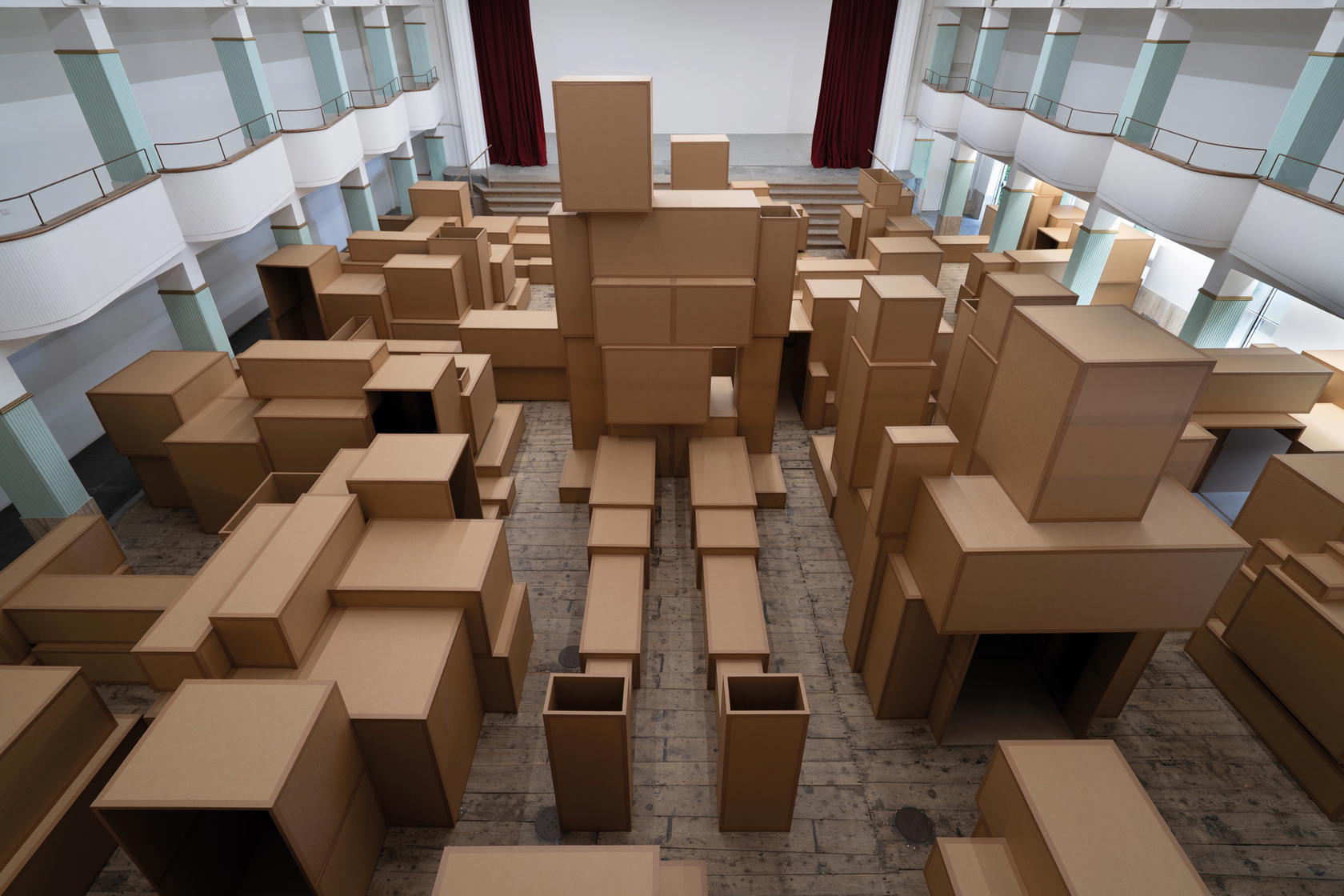
Fifteen giant honeycomb-cardboard bodies—each five times the height of a human—rise like a miniature metropolis inside the gallery’s former 1950s cinema theatre, forming a labyrinth of tunnels, chambers, and dead ends. Initially, they resemble hulking forms, but once inside, they become strangely dimensionless and disappear into darkness, silence, and disorientation.
“I want you to go inside. I want you to experience the distinction between the universal abstraction of the promise of the box and then the internal experience of it,” Gormley insists.
“Maybe you’ll reconnect with architecture’s emotional potential to make us feel extended or more aware of the interplay of light and dark, the possibility to look through, up, and beyond, and to to understand that being inside is essential to comprehending the outside. It offers a reconciliation or dissolution of the dualities between inside and outside, of open and closed.”
BODY OF WORK
At 75, the London-based British sculptor is a leading figure in contemporary art, exploring the body not as an object or image, but as lived experience. Over more than five decades, he has used sculpture to pose deceptively simple questions: What does it mean to be alive? To inhabit a body? In an era increasingly dominated by screens, algorithms, and virtual experience, how do we reconnect with physical reality?
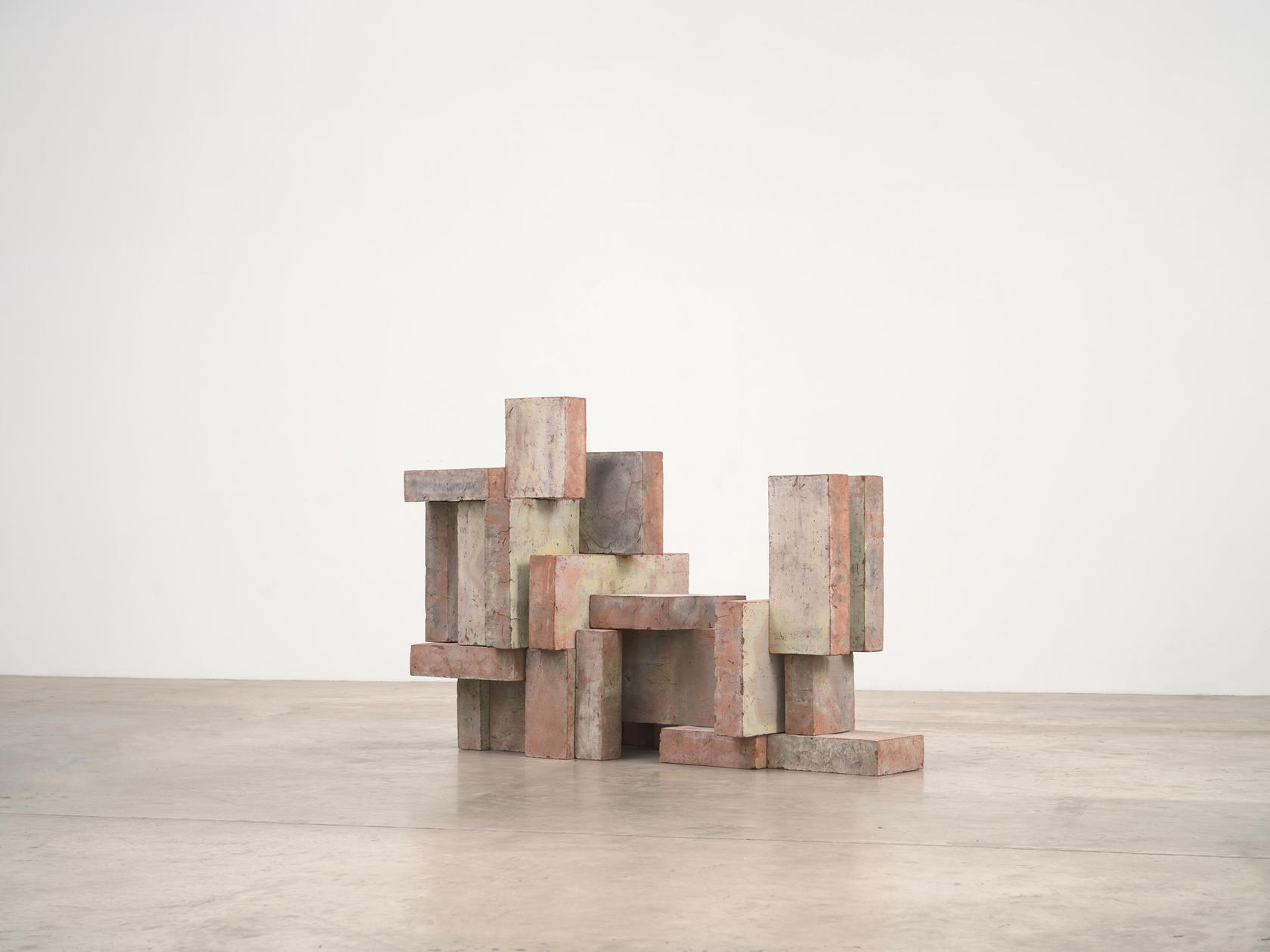
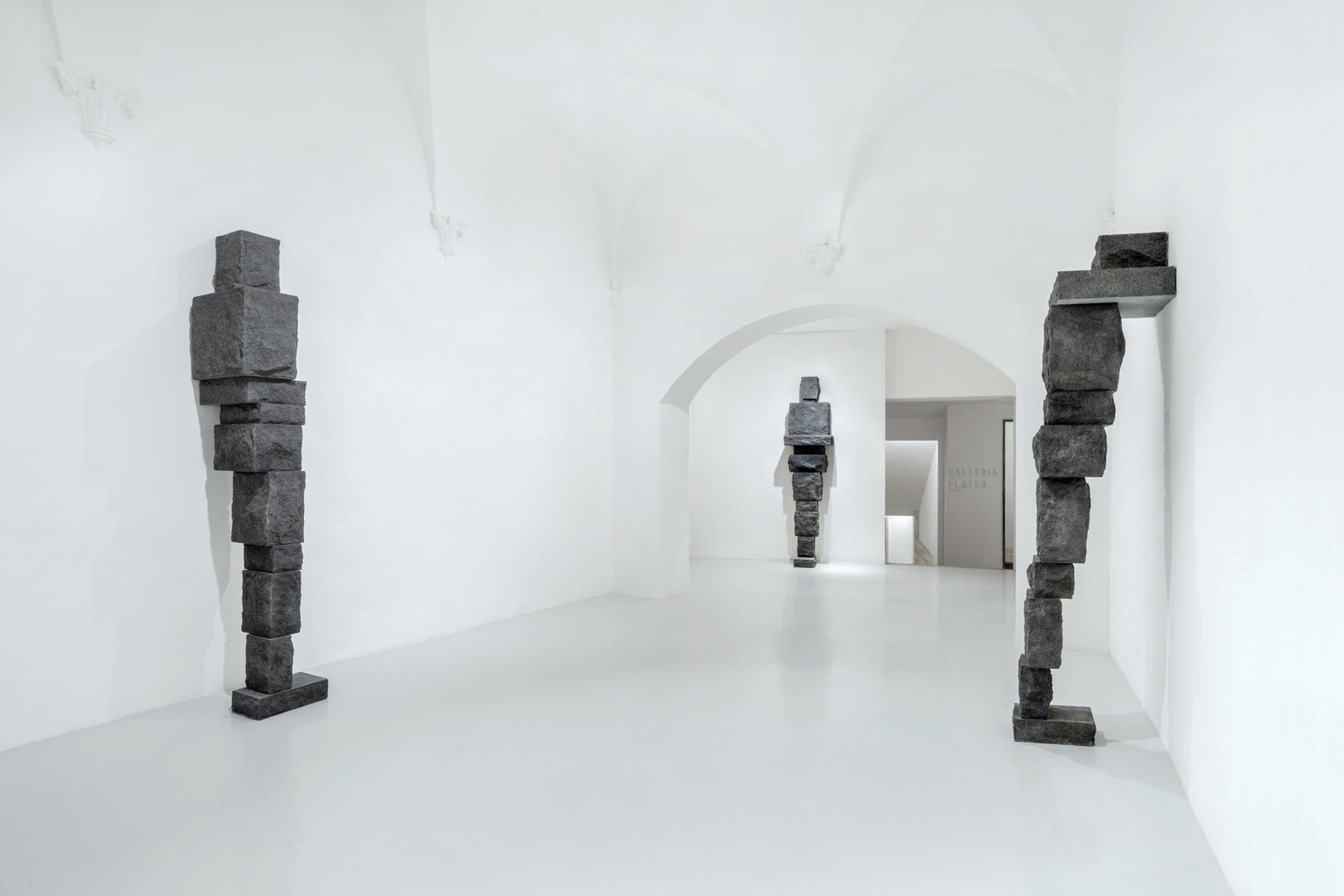
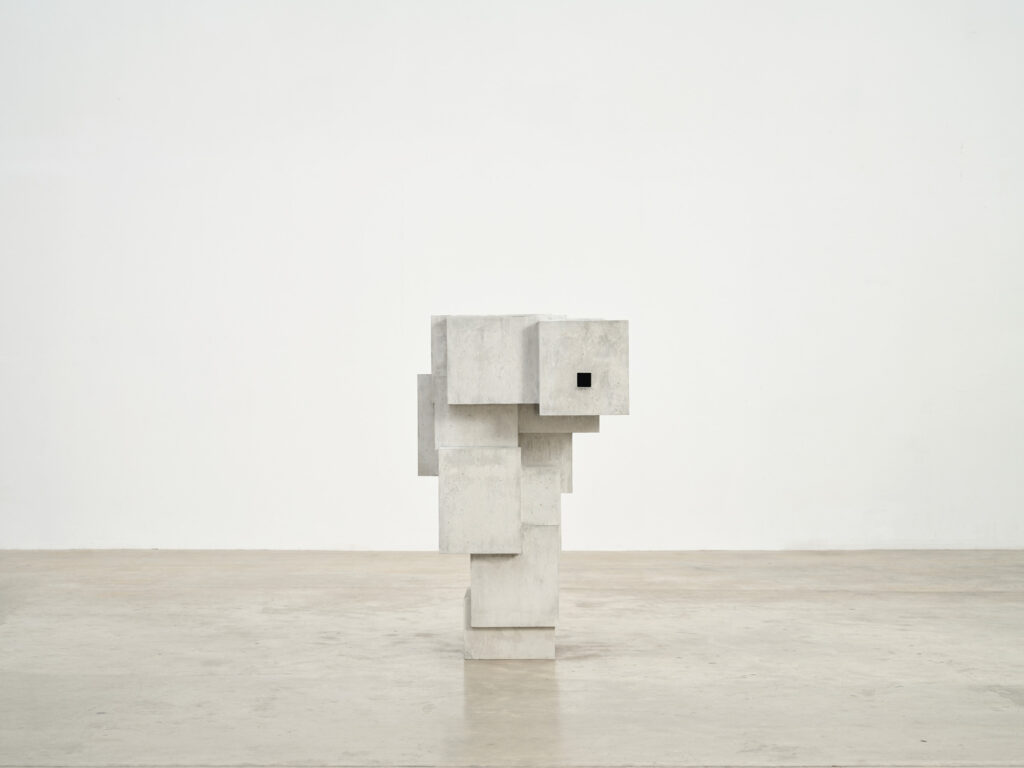
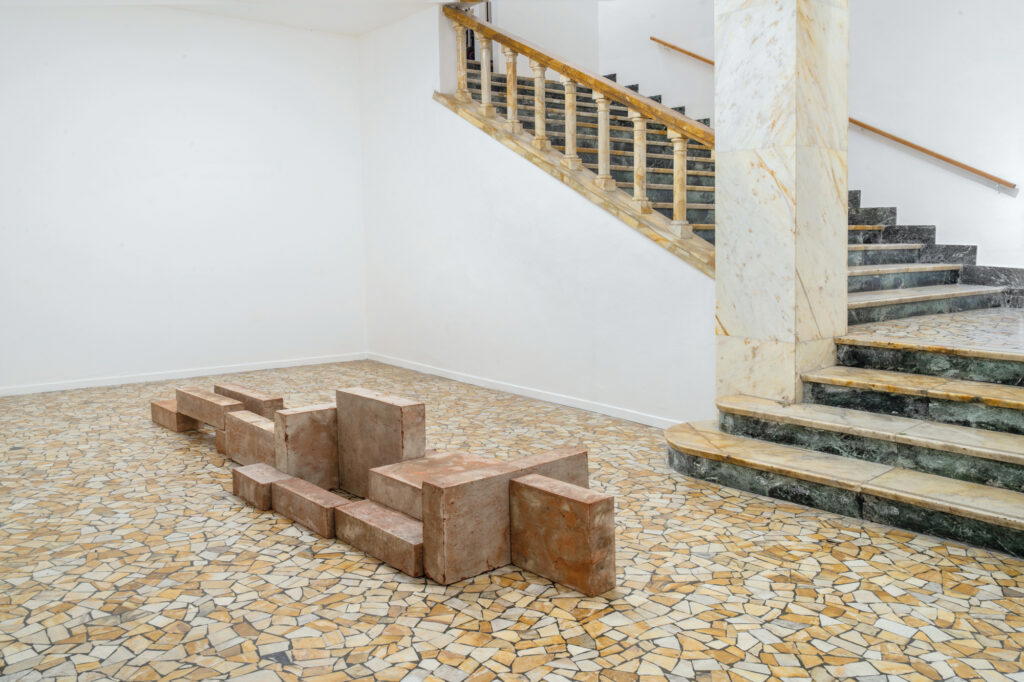
Those questions animate “What Holds Us”, his major new exhibition at Galleria Continua, open until 13 September 2026. ‘Innercity’ introduces cardboard as a new primary material for Gormley, while oversized, stacked clay figures suggest intimacy, and monumental basalt sculptures lean precariously against 14th-century walls, subverting the traditional role of the caryatid or sculpted female figure that serves as an architectural support.
“It’s only by embracing the stillness and silence of sculpture that we become aware of our own freedoms of movement and thought.”
Propped against the gallery’s ancient structure, the rough volcanic blocks are powerfully evocative of states of being. “There’s an uncanny tension between the scale of the work and their vulnerability,” he points out. “Each one conveys a sense of uncertainty.” Together, the works transform the Tuscan hill town into a reflection on human fragility, architecture, and urban life.
Born in London in 1950 to a German mother and an English-Irish father, Gormley did not emerge from a family of practising artists. His father, a successful pharmaceutical manufacturer with a deep love of early Renaissance art, surrounded him with reproductions of Fra Angelico everywhere at home. Visits to the National Gallery, British Museum, and Tate left a lasting impression too. “I never chose to be an artist,” he shares. “I gradually realised I couldn’t be anything else.”
ART ARTICULATES LIFE
The turning point occurred in his early 20s, during the three years of travel through India and Sri Lanka. There, Gormley immersed himself in Buddhist meditation under the guidance of Satya Narayana Goenka, an Indian teacher of vipassanā meditation. “It was the complete contrast to wisdom or knowledge derived from books or the recorded thoughts of others. Just sit in silence and observe what is present. That was a revelation to me.”
The experience profoundly transformed Gormley’s understanding of the body. “There is within each of us a direct connection with infinity,” he explains. “That is the foundation of my sculpture—that in the body’s darkness lies an equivalent to cosmic deep space. In that darkness lies all our potential.”
Rather than than idealising or representing the body, Gormley began to view it as “a place of being, the vessel in which we live and through which we can connect to greater nature”. That philosophy underpins his entire practice.
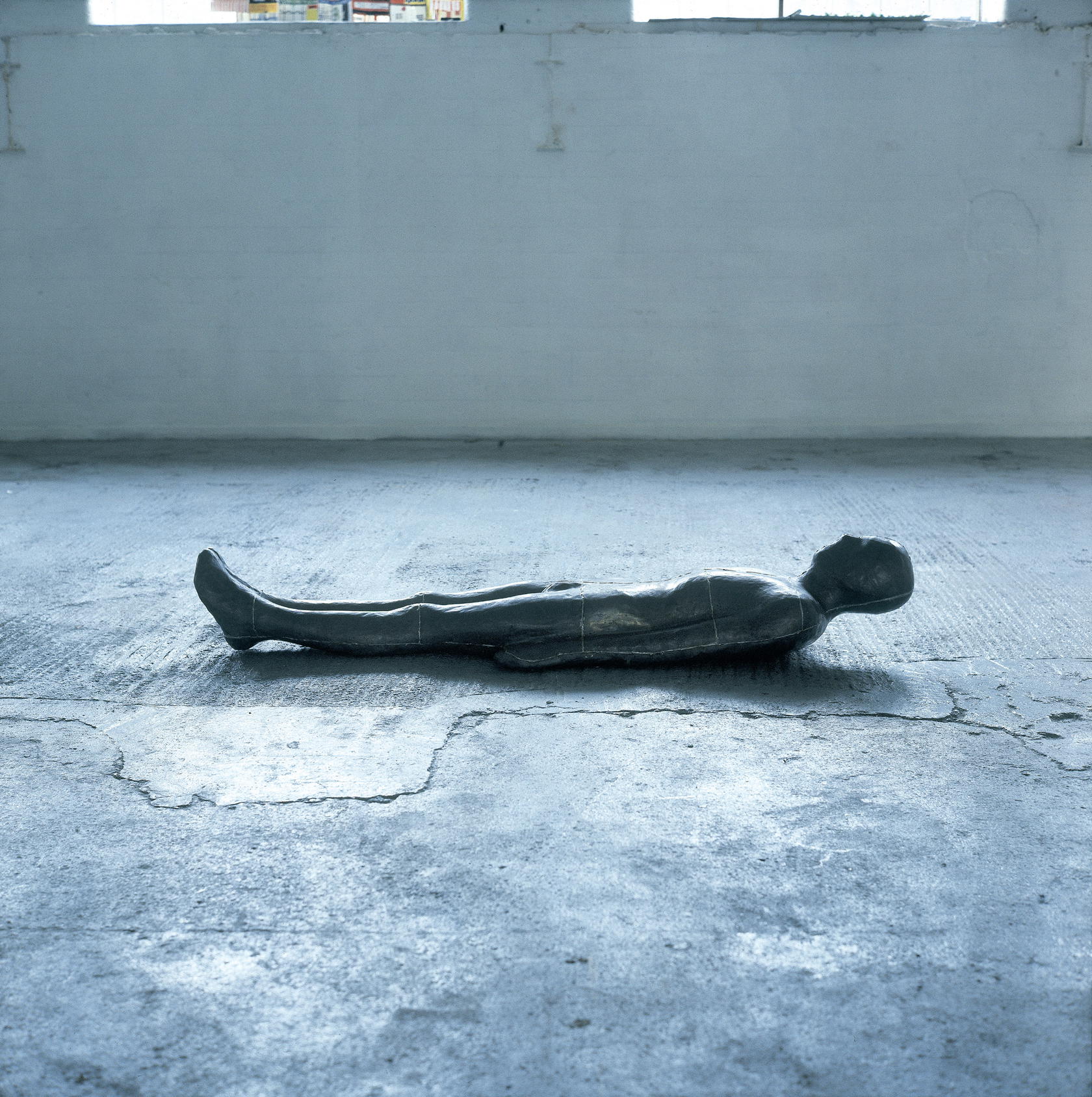
Unlike traditional figurative sculpture, Gormley’s work resists storytelling. His figures are anonymous, devoid of facial features and narrative, allowing viewers to project their own stories. “A sculpture is not a frozen moment in a movie,” he explains. “A sculpture is a thing in a world of things that refuses most of the mechanical or biological imperatives of movement. It is only by embracing the stillness and silence of sculpture that we become aware of our own freedoms of movement and thought.”
Throughout his career, from ‘Angel of the North’ on a hill in Gateshead in North East England and ‘Another Place’ on Crosby Beach in Liverpool to ‘Event Horizon’ on New York City rooftops, Gormley has consistently taken sculpture beyond museum confines and into everyday life. For him, art belongs in the world, not sealed inside institutions. “Art comes from life; it belongs in life,” he asserts. “Art is the way that life expresses itself.”
OUT OF THE BOX
Materials are never neutral for Gormley. Each—cast iron, terracotta, stone, concrete, aluminium, lead—carries emotional and philosophical significance. How does he decide which material best embodies a particular idea? “The material tells me. Every work in some sense is the mother of the next work.”
Cardboard, however, represents a particularly timely shift. Initially drawn to it for environmental reasons, he soon saw its symbolic resonance. “It’s an incredibly powerful metaphor of our time,” he says, alluding to the billions of Amazon packages delivered annually. In ‘Innercity’, the boxes become both architecture and anatomy, reflecting contemporary life in the age of online consumption and hyper-urbanisation.
Despite the scale and ambition of his projects and his ongoing exploration of the body, Gormley states, “It’s all unresolved. Every work is a question.”
That restless inquiry continues in “Antony Gormley. Geestgrond”, the most comprehensive exhibition of his work in continental Europe, on view through 20 September 2026 at the Royal Museum of Fine Arts Antwerp.
Bringing together over 100 works spanning four decades, it examines the body as a site of knowledge and grounding in an era of AI and radical technological change. For Gormley, sculpture remains a vital counterforce to digital abstraction. “We mistake information for experience. In a time of mass distraction, where a superfluity of information leaves us unsure where to look or what to think, the reassertion of first-hand physical encounter is so important.”
His sculptures ask us to stop and slow down—to feel space, weight, gravity, and silence again. Exploring the dim cardboard interiors of ‘Innercity’, the effect is unexpectedly profound. For a moment, you are no longer consuming images; you are simply being.