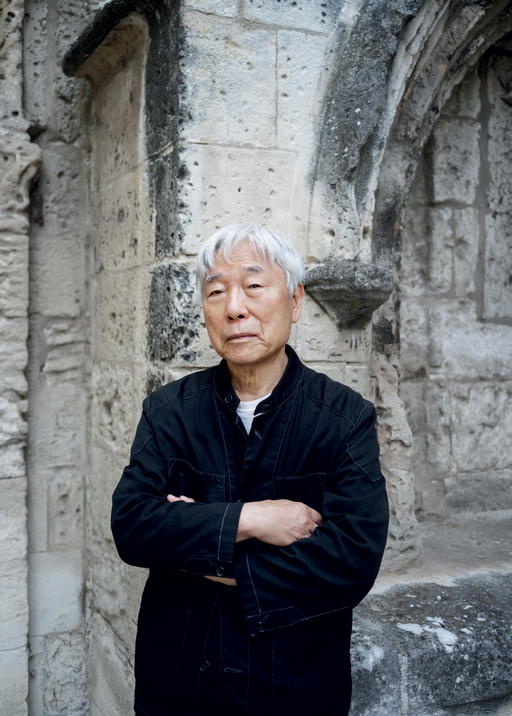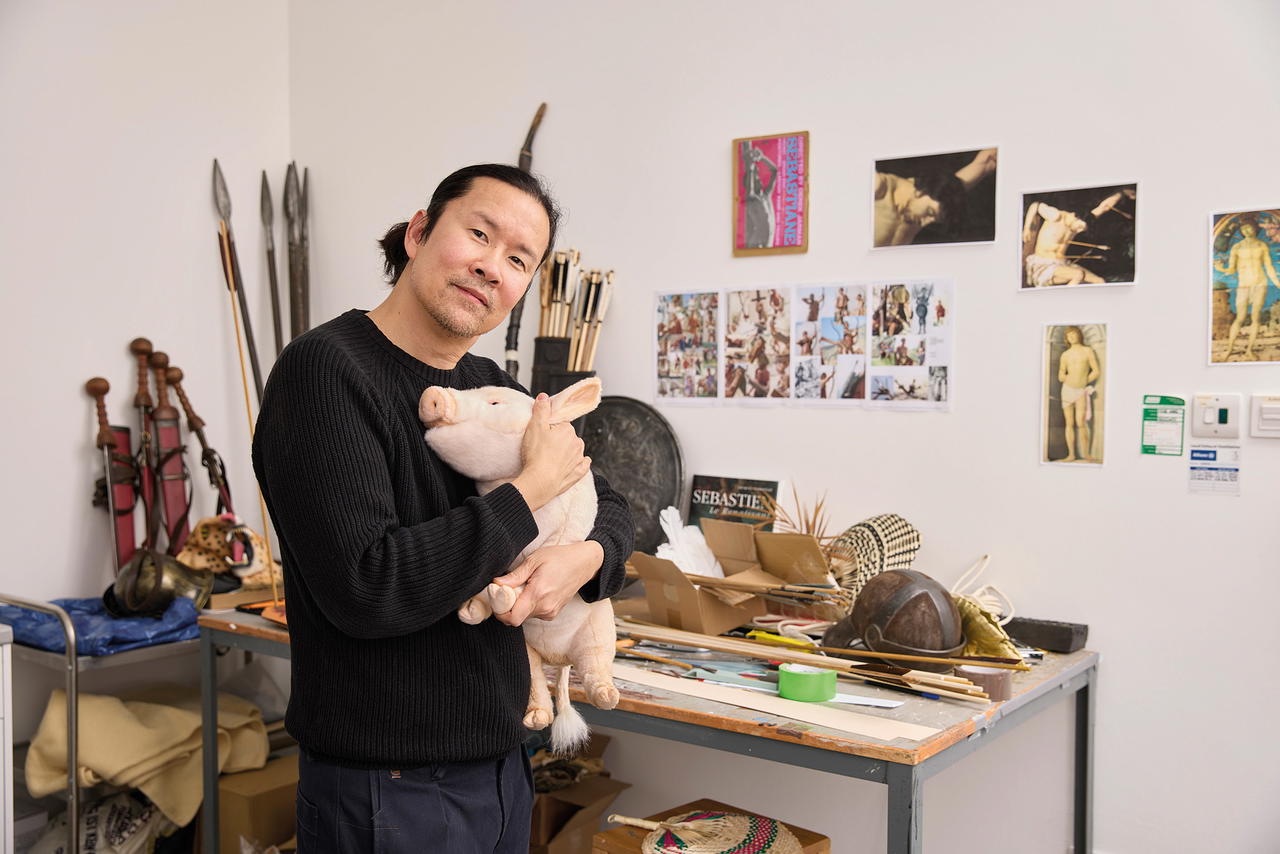
Identity is never fixed in the hands of Ming Wong, known for his video installations and performances. It is rehearsed, miscast, translated, and performed over and over again until it begins to slip.
In more than two decades, the Berlin-based Singaporean artist has built an impressive body of work that dissects how we construct ourselves through cinema, theatre, language, and history, often by inserting himself into iconic movie roles in which he ostensibly has no place.
Wong is best known for his reenactments and “miscasting” of multiple characters of different genders, races, and nationalities, often within the same work. This method allows him to interrogate the mechanics of representation itself.
“I believe in the complexity of human identities, how much or little an individual conforms to or resists the structures of a family, society or nation,” he says. “Art, in all its forms, serves the same function: to give colour to life, which changes depending on where you look, who is looking, and what you look at.”
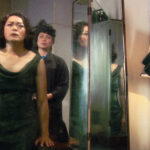
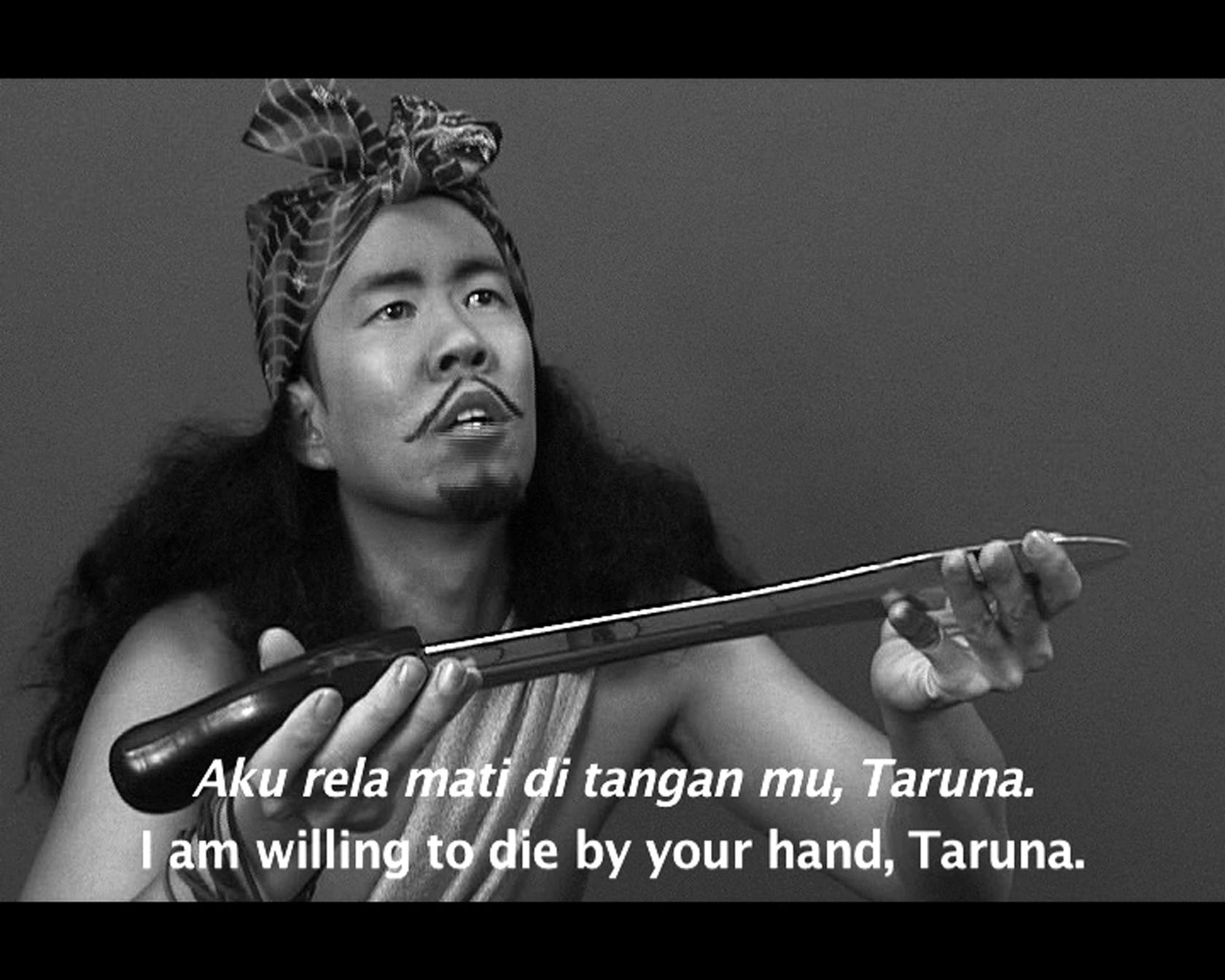
Nowhere is this more evident than in works such as Four Malay Stories, where Wong performs all the roles from classic films by P. Ramlee in a language he does not speak, exposing the fractures in Singapore’s linguistic and cultural policies. Life Of Imitation, his 2009 Venice Biennale presentation, recasts Douglas Sirk’s Hollywood melodrama through Singapore’s racial framework, collapsing distinctions between self and other.
Cantonese Opera & Role-Playing
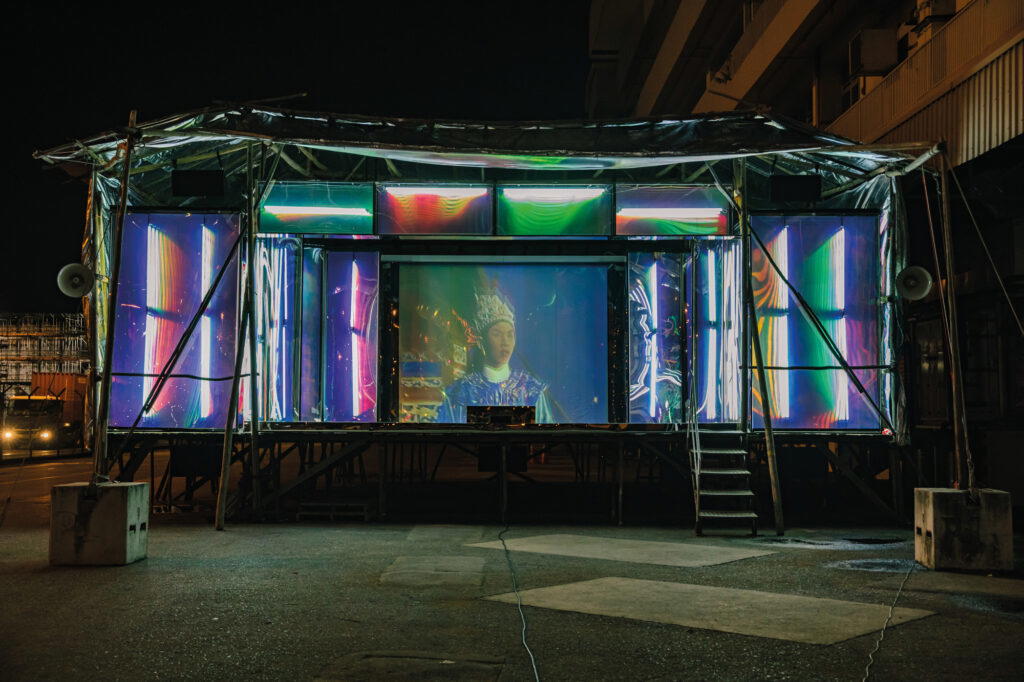
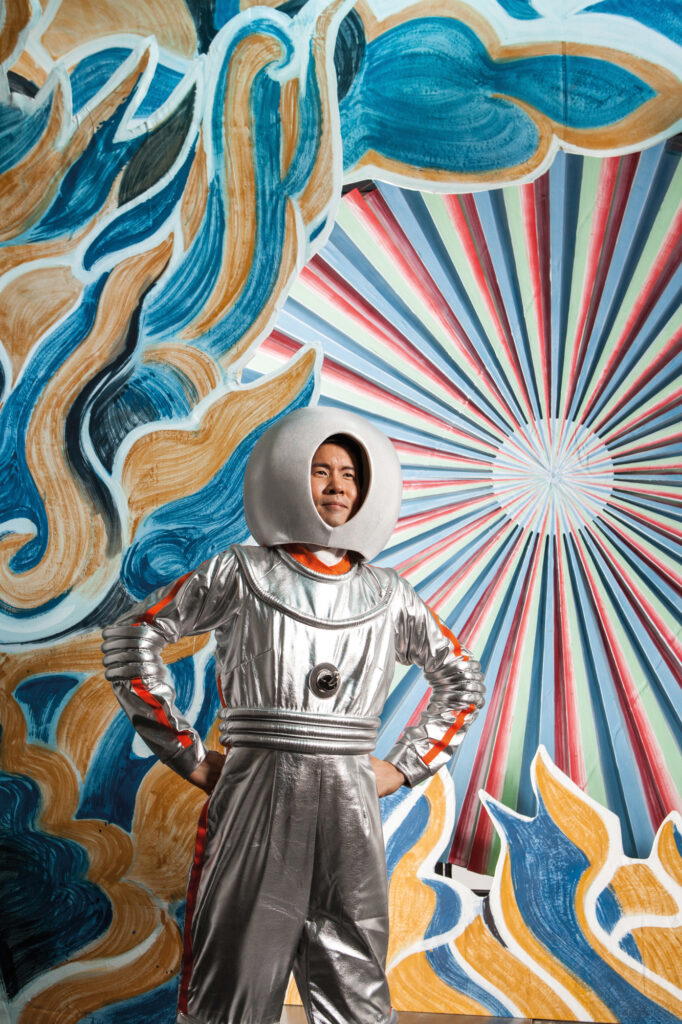
Wong’s practice is equally shaped by theatre; it informs his installation designs, often structured like stages or sets. In “Wayang Spaceship”, presented at the Singapore Art Museum in 2022, he fused traditional Cantonese opera with science fiction, creating a speculative world cinema that collapses time and geography.
The connection to Cantonese opera is not incidental. His aunt Joanna Wong is hailed as the doyenne of Cantonese opera in Singapore. The genre’s theatricality, stylisation and gender fluidity have all seeped into his work, from his embrace of subterfuge to his fascination with role-playing.
“In the theatre, whether it is contemporary stage plays or traditional Chinese opera, one learns to read across art forms and levels of realism or artifice,” Wong notes. “With a sensitive artistic soul, you learn about the effects of colour, tone, music, performance subtleties or subtexts beneath grander gestures, and the ability to analyse across cultural or ethnic contexts.”


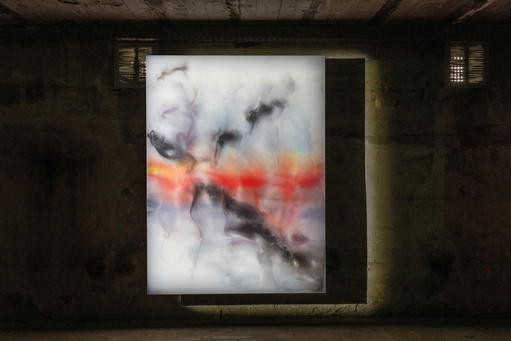
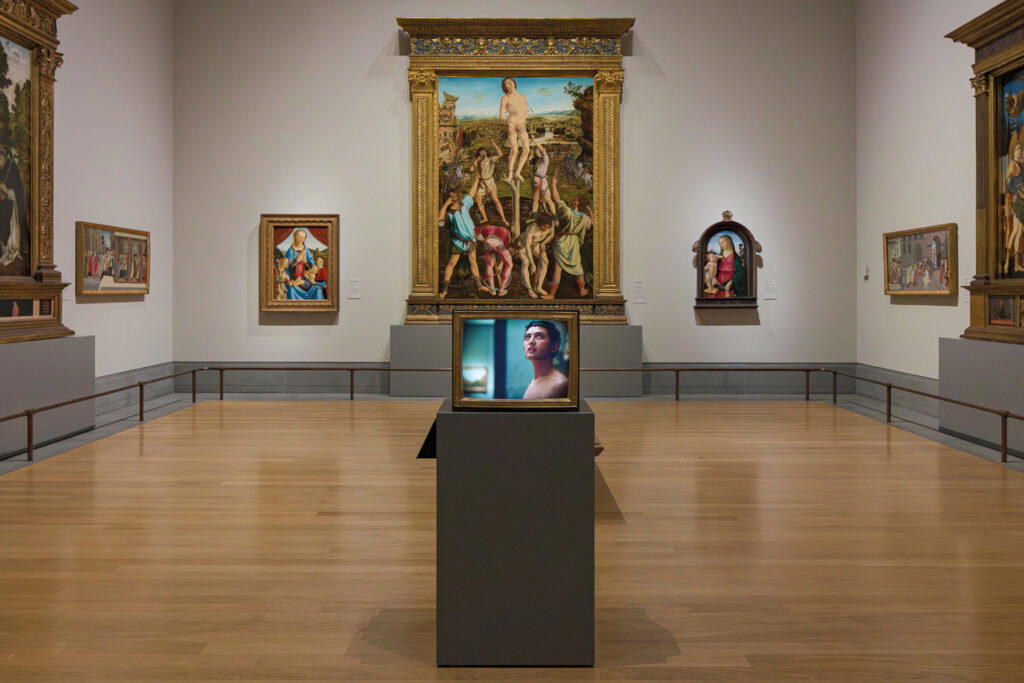
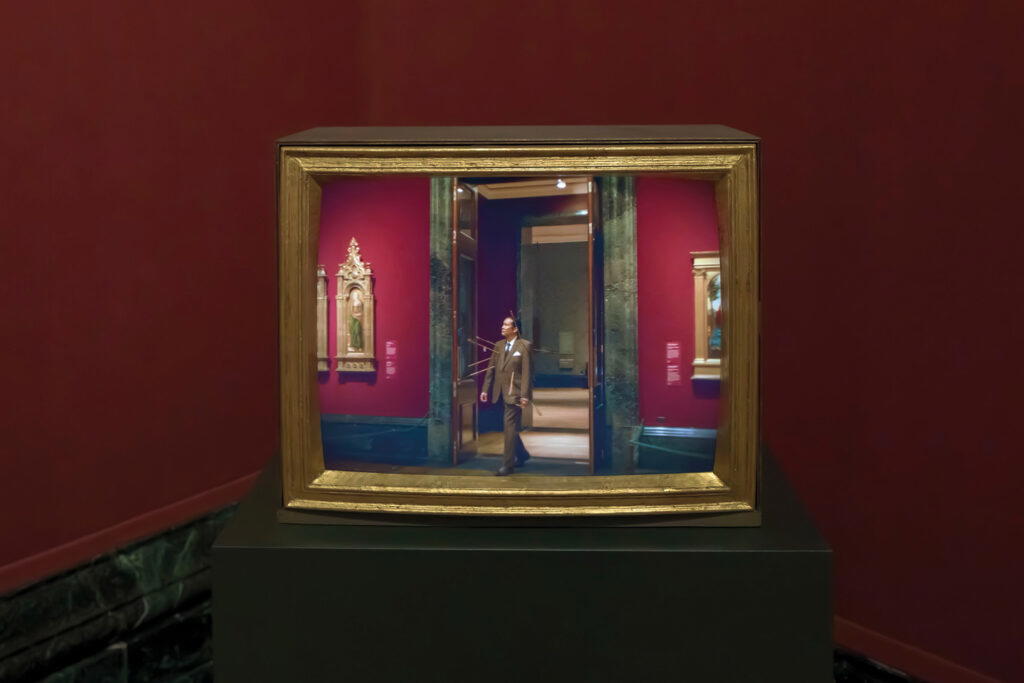
Wong’s recent film and display commission for the National Gallery in London—Dance Of The Sun On The Water | Saltatio Solis In Aqua—was developed during his 2025 residency at the institution. He drew inspiration from the Christian martyr Saint Sebastian and film director Derek Jarman’s Sebastiane, weaving art history, queer cinema, and performance together.
In his version, there isn’t just one martyr, but all the Asian cast members get shot with arrows by Roman soldiers they also portray “taking turns to play the martyr until it loses meaning, like a mirror of our own lives today.”
The project is less a departure than a continuation. As with his earlier works, Wong is interested in the construction and unravelling of meaning. In his words, “I try to understand how our identity is formed, how people perceive us, and how we present ourselves to others. My art is about showing what happens behind the scenes, why we behave the way we do, why people see us in this the way, and how we can make our subjective truths more apparent to others.”
Constructing Identity
Born in 1971, Wong grew up in a rapidly changing Singapore. “I witnessed significant changes in the physical landscape before and after shopping malls took root in the urban fabric. They included the proliferation of capitalistic trappings, changes in language policies, and the development of arts infrastructure such as art museums, cultural districts, and art festivals.”
His extended family favoured the medical profession, but at age 15 he chose to pursue an artistic path. Wong’s early training in Chinese painting and calligraphy at Nanyang Academy of Fine Arts may seem distant from his later video installations, but the conceptual connection is clear. After absorbing the discipline of copying masters, he rebelled against it.
“My art is about showing what happens behind the scenes, why we behave the way we do, why people see us in this way, and how we can make our subjective truths more apparent to others.”
”My release came from writing for the English-language theatre scene in Singapore. I began investigating the ways language is used and abused in multilingual Singapore,” he explains, locating the roots of his practice in both imitation and disruption.
The cinema was Wong’s first visual education, not museums. Having grown up on Hong Kong melodramas, Hollywood movies, Bollywood musicals, and local Malay cinema, he learnt that identity could be constructed—and destabilised—on screen. “I watched different shows on TV from a variety of cultural sources. As a young queer kid, it was about identifying with characters of diverse cultural backgrounds, genders, body types, or nationalities.”
This fluidity would become his artistic language. After moving to London to study at UCL’s Slade School of Fine Art, he began experimenting with film and video at a time of technological transition. The shift from analogue to digital mirrored his own movement between cultures, geographies, and identities.
Singapore as a cultural interculotor
Even after decades abroad, Singapore remains an anchor. Wong sees the city-state’s multidimensional quality as an asset. “There is constant exposure and negotiation across complex cultural barriers at this crossroads of major distinct cultural and migrationary routes, where the art of code-switching is a daily reality.”
It is also this sensibility of navigating between systems that led him to live in Berlin. Since relocating there in 2007, Wong has found a vantage point from which to engage with Europe while maintaining a critical distance. His reinterpretations of works by German filmmaker Rainer Werner Fassbinder and Italian poet and writer Pier Paolo Pasolini, for example, are as much about his own position as an outsider as they are about the original creations.
Looking ahead, Wong is increasingly focused on trans-Pacific cultural histories, particularly the journey of Cantonese opera from Hong Kong to Western North America and its encounter with Hollywood and country music.
“Currently, I’m invested in what happens between China and America. It is a space that’s critical for understanding where we may be heading.”
At the same time, he continues to value Singapore’s position on the periphery, suggesting that being outside the dominant sphere provides a distinctive viewpoint. “This perspective allows one to see beyond the immediate surroundings, fostering empathy and allowing the best in humanity to come through”.
With this perspective in mind, Wong sees Singapore as a welcoming, safe, democratic, and peaceful country capable of acting as a cultural interlocutor on the global stage. This is as long as its complexity is nurtured rather than simplified.
Ultimately, his work emphasises openings over answers. As Wong puts it, artists should venture into the unknown, question the world at large, and provoke reflection and discussion. In his hands, identity is not a fixed construct, but a dynamic ever-evolving script continually rewritten.