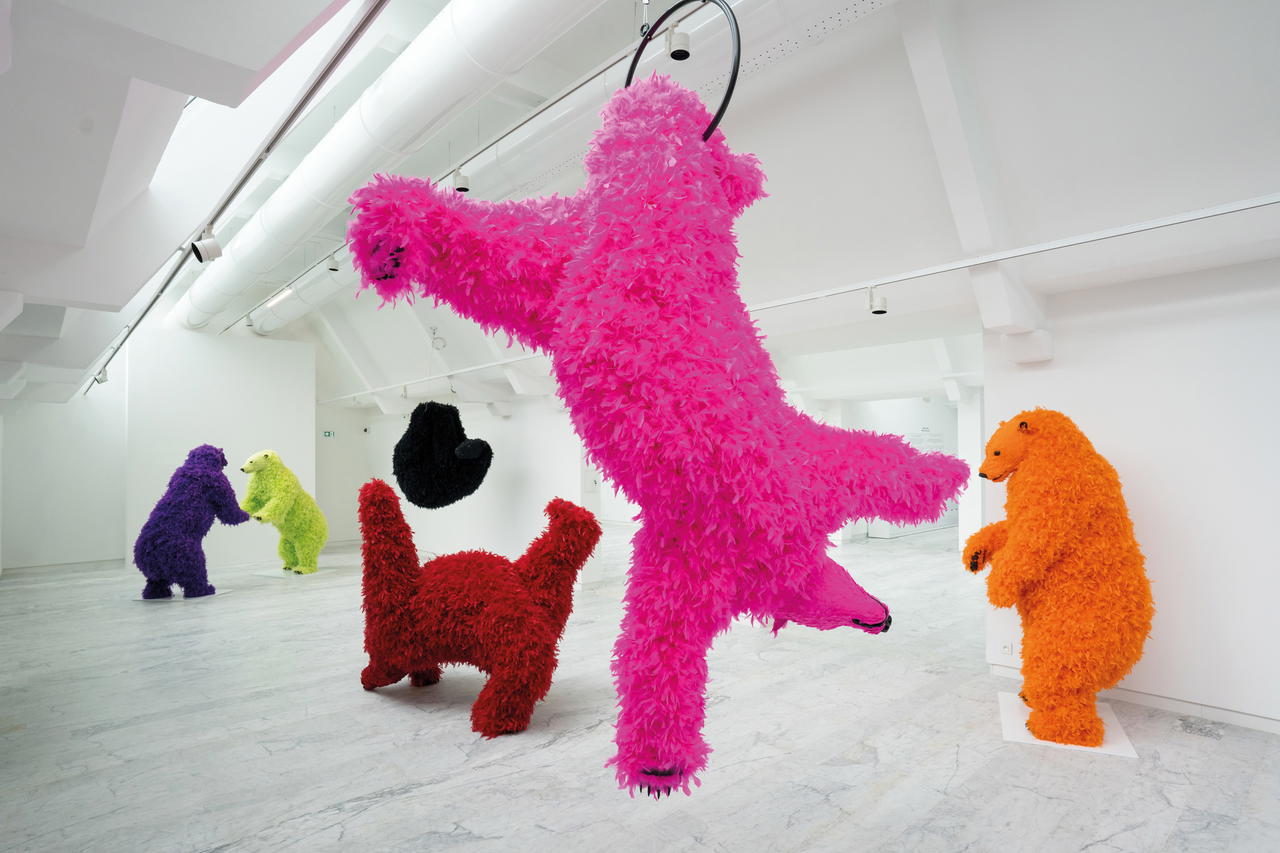
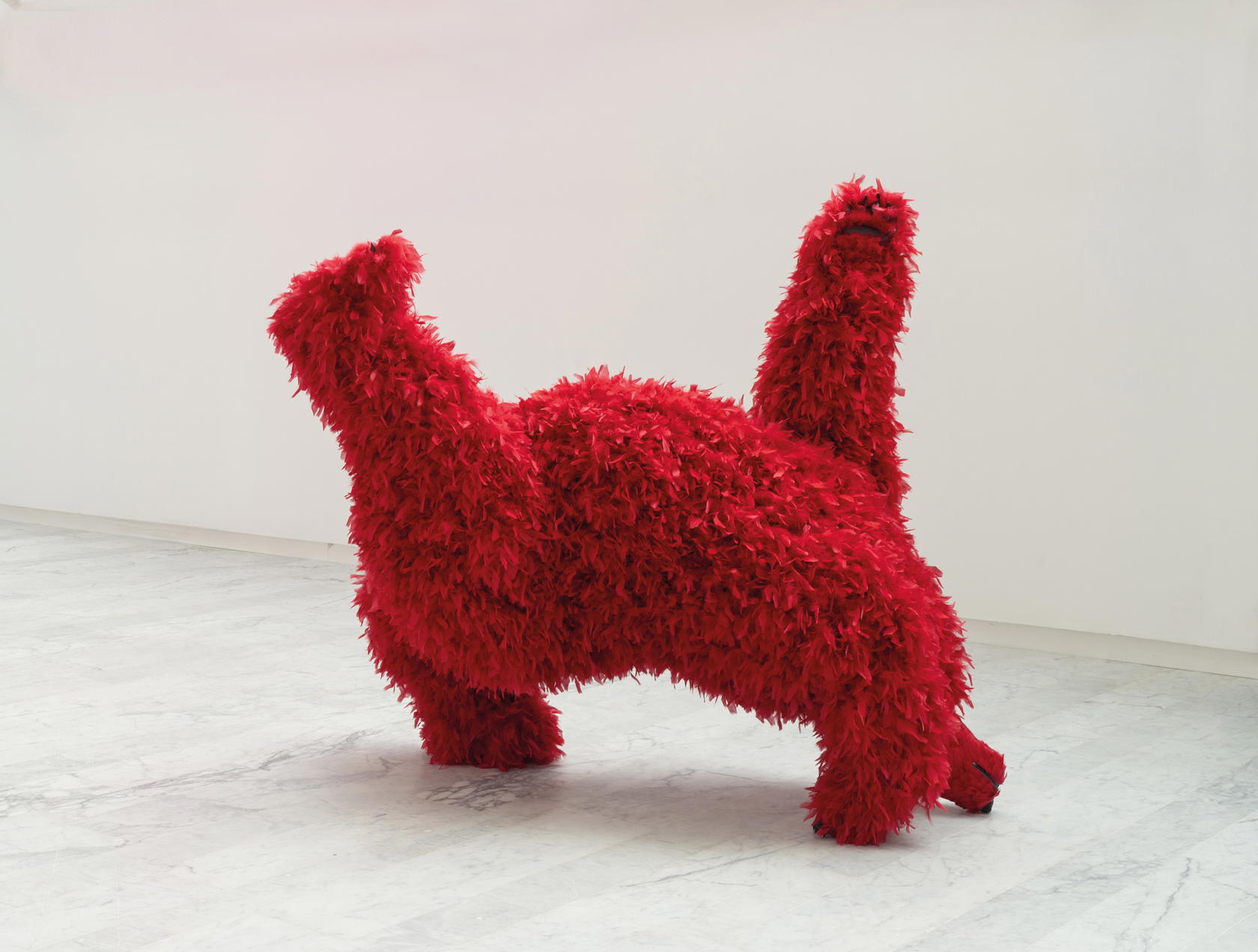
In Paola Pivi’s universe, polar bears shed their image as lumbering Arctic beasts. Instead, they transform into vibrant creatures adorned with coloured feathers that perform yoga poses or dangle from a trapeze. Here, animals are not mere bystanders but central protagonists that astonish, challenge, bewilder, and open a door into the mysteries of life.
“The first thing that comes to mind is their design and the level of extravagance, beauty, elegance, characterisation, unfamiliarity, and striking surprises they represent simply through their appearance. It is completely mind-blowing,” says Pivi during our email interview with the multimedia artist, who is based in Hawaii.
Despite having never encountered animals until her late 20s, she is fascinated by these furry companions that hold different levels of consciousness and ancestral memory. “Animals are always a special presence and symbolise the miracle of life vividly.”
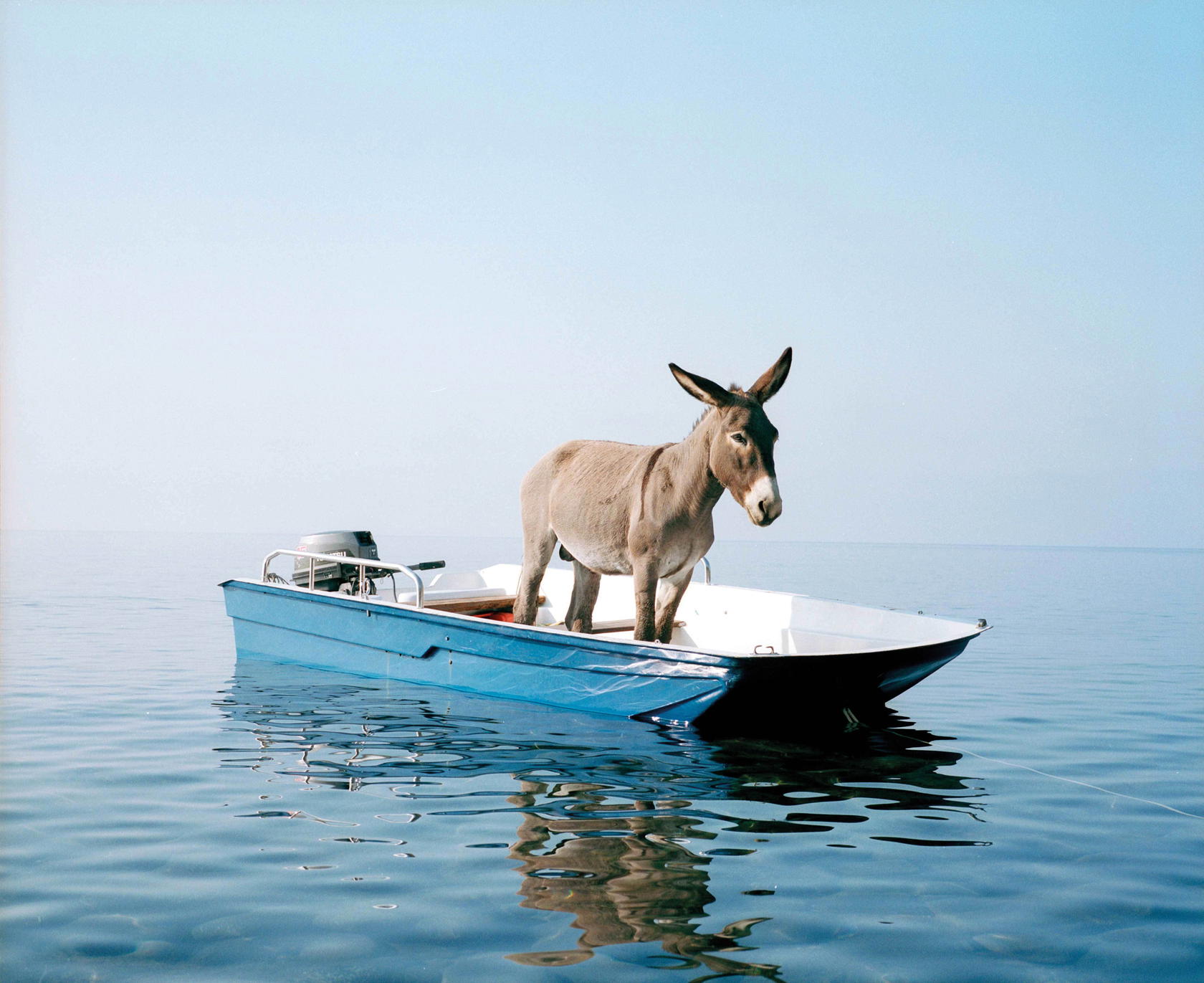
Like her colourfully plumed polar bears, Pivi’s art transcends boundaries and resists easy classification. Born in Italy in 1971, she transforms the familiar into the fantastical through her work in sculpture, video, photography, performance, and installation. There are zebras in the Arctic, goldfish on airplanes, and in her Public Art Fund installation in 2012, a Piper Seneca airplane, lifted by its wingtips, rotates continuously.
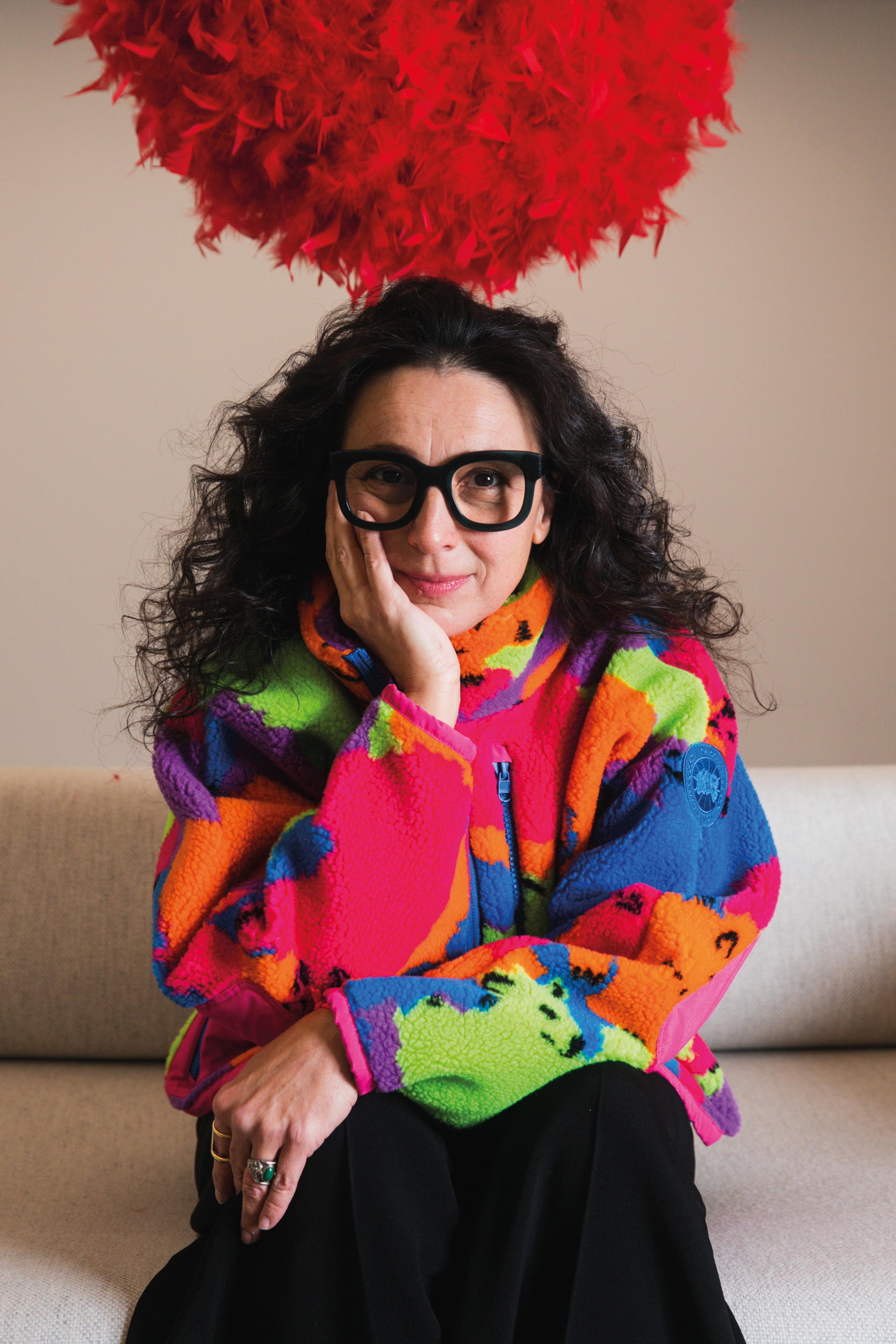
“I expect people to be better at using their brain than I am. I wish people surprised me.”
In addition to exhibiting internationally at institutions such as the Venice Biennale, the Centre Pompidou, and the Guggenheim Museum, Pivi has lived on the island of Alicudi (Sicily) and in New Delhi, and Anchorage, Alaska. Each region, she says, has influenced her sensibilities, giving her a greater understanding of people, nature, history, and culture.
“I enjoy seeing the differences in apparent banalities, and I like how places change me. Once that is done, the places will also permeate the art.” With her, ideas come unbidden: “Like images that appear suddenly and become complete. At times, they come in dreams… more like flavours of ideas in dreams.”
Playful yet provocative, Pivi’s work blends whimsy with critique. As an example, ‘One Cup of Cappuccino, Then I Go’ (2007) creates tension between wild instinct and human order through the release of a leopard into a gallery of meticulously arranged cappuccino cups. ‘Lies, Lies, Lies’ (2021) is bombarded with dozens of screens flashing images and voiceovers repeating “lies”, mirroring digital overload and misinformation.
Additionally, ‘You Know Who I Am’ (2022) depicts a bronze Statue of Liberty wearing emoji-inspired masks representing real immigrants commenting on immigration and the pursuit of the American Dream.
In each of these works, she creates absurdist parallel worlds that challenge societal structures. “My only hope is for people to become better.” For her, art is a catalyst, a charge released into the world with its meaning left to the audience. “Art is not explainable. I expect people to be better than me in using their brain. I wish people surprised me.”
In response to what she does outside of art, she says, “I’m sorry I don’t have any fun, surprising things to share at this time. These days, the news pains me, so I stop for a while.”
She is currently preparing a solo exhibition at The Art Gallery of Western Australia at the Perth Cultural Centre. “I Don’t Like It, I Love It”, among other works, includes two new installations about which she offers, “Two dreams come true, two utopian works I’ve wanted to do for years. I am walking on clouds.”
Recently, she’s also transfixed by Grieger, the Düsseldorf photo lab. Working alongside people who have spent decades honing their craft and striving for a level beyond perfection is an experience she sees happening in various fields and treasures “minute by minute”. What might seem a simple photo print, she reflects, becomes extraordinary through the team’s decades-long collaboration, endless care, and talent.
Pivi’s answer to the question of what she hopes people will remember decades from now is disarming: “This question just makes me smile. It fills me with joy. I think they will feel this.”
The improbable wonders of her world unsettle and delight. By challenging us to see the ordinary anew, she reminds us that art is not an answer, but a spark that inspires us to imagine and become something better.