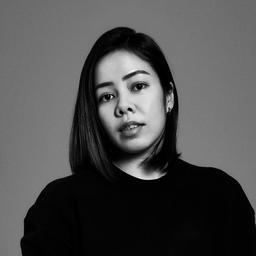
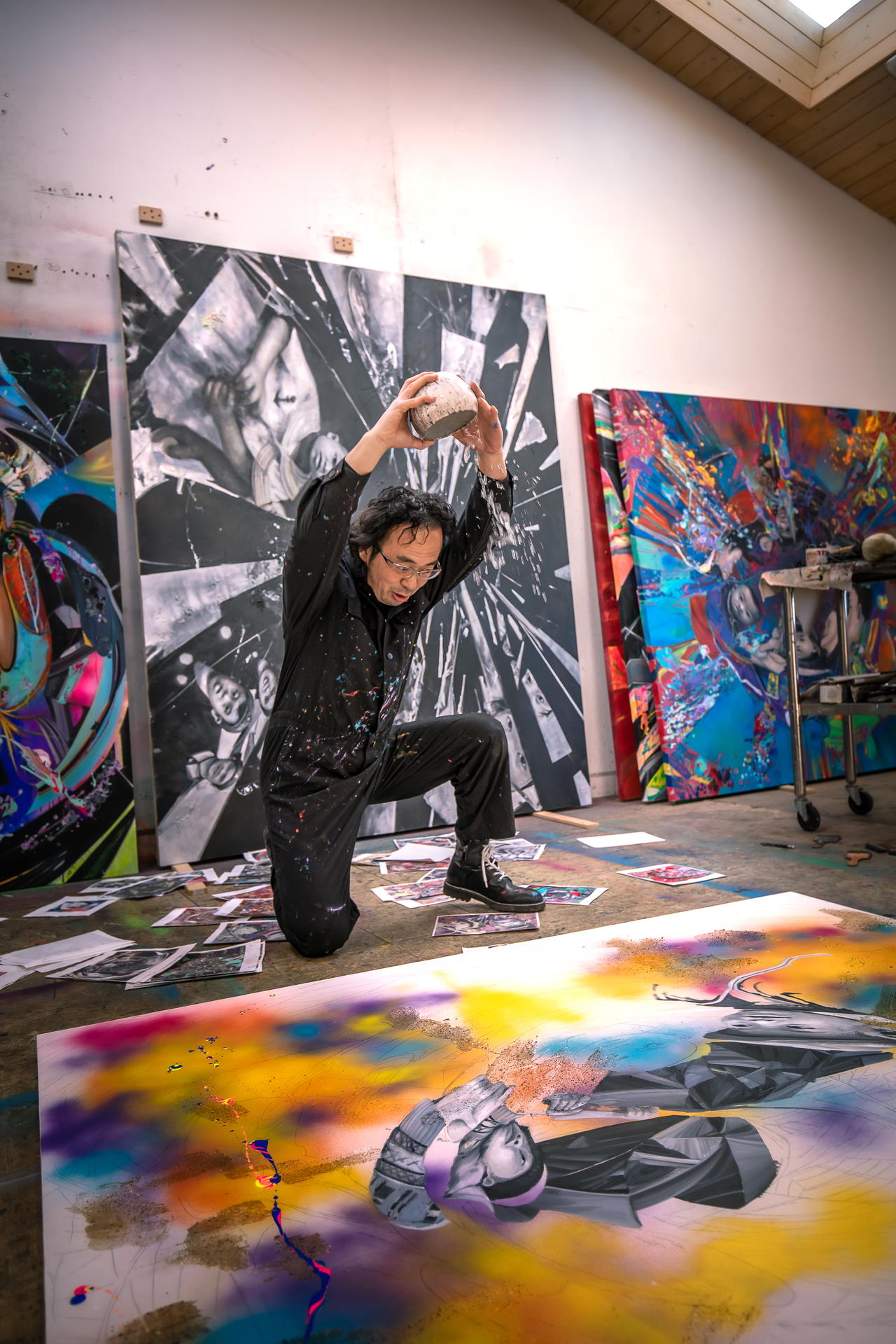
If past lives were real, then Li Tianbing thinks he could’ve been a painter in another time and place. Born 1974 in the southern province of Guilin, China, the artist relinquished a diplomatic career to fully devote himself to art.
From January 19 to February 4, a solo exhibition of his most recent works will be presented at Opera Gallery Singapore. A tribute to Li’s late father, the showcase explores themes of memories, solitude, and growth. By reinventing the past with the present, he invites viewers to rethink the notion of memories through his paintings.
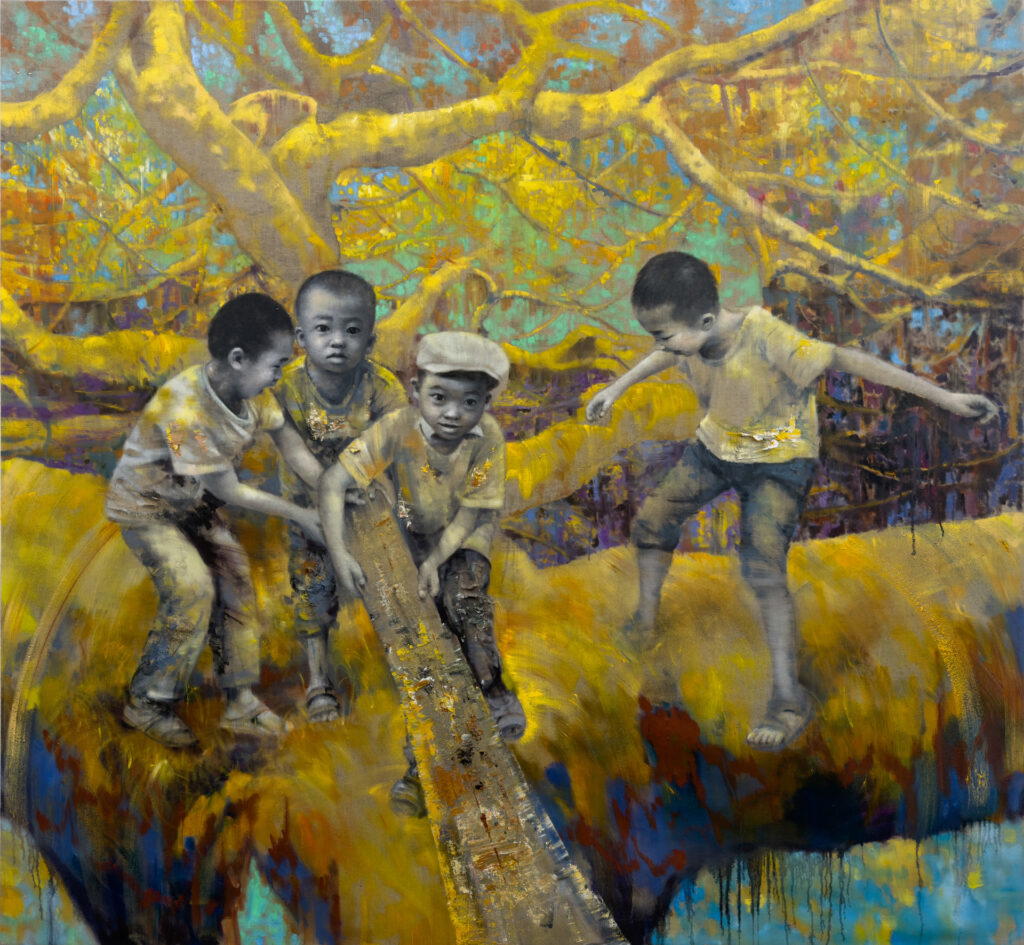
Titled “Me and the Tree”, the exhibition reflects how Li found solace and comfort in the trees around him in view of an often-absent father. By reshaping his own imagined childhood, he creates a space that freely brims with boyish insouciance, brotherhood, and camaraderie.
We speak to the artist to understand his art-making journey, his relationship with his father, and why his creative process is akin to being in a prison.
What sparked your passion for making art? How has the journey been so far?
Ever since I was a kid, I loved to draw. Back then, my family didn’t have much money, so I would use chalk to draw on the ground. Eventually, a well-known local painter noticed my talent and started mentoring me at the Youth Palace of Guilin. I had soon become a prodigy in the local art scene.
On my 10th birthday, my mom gave me a book titled The Life of Xu Beihong. I was fascinated by how he blended Chinese and Western art. At that time, I dreamt of studying in Paris and becoming an international artist.
What’s your favourite work of all time and why?
Francis Bacon and his self-portraits have a lasting impact on me. They made me realise that art’s true power lies in tragedy because it is an inherent part of life. Some people turn to war, deepening the tragedy, while others resort to substances to seek escape.
Artists have the unique ability to confront tragedy head-on through their creations. Bacon’s self-portraits unveil the truth of our twisted human nature in a vivid way. They make me rethink the essence and purpose of painting.
What has been the most seminal moment in your career and why?
It was when I got accepted into the Ecole Nationale Superieure des Beaux-Arts de Paris. Having left China, my home for over 20 years, I felt uncertain about my artistic potential in the Western world. However, I realised that success relied on my own efforts. Graduating was just the beginning of my journey as a professional artist.
Your work is characterised by the dual influence of the Far East and the West. How would you describe the relationship between the two?
In traditional Chinese paintings, humans don’t take up much space. It’s all about the connection between heaven and man. Human emotions are conveyed through landscapes and still life. In the West, especially after the Renaissance, expressing human nature became more straightforward, so portraiture became crucial. Chinese traditional paintings, compared to Western paintings, always seemed a bit lacking.
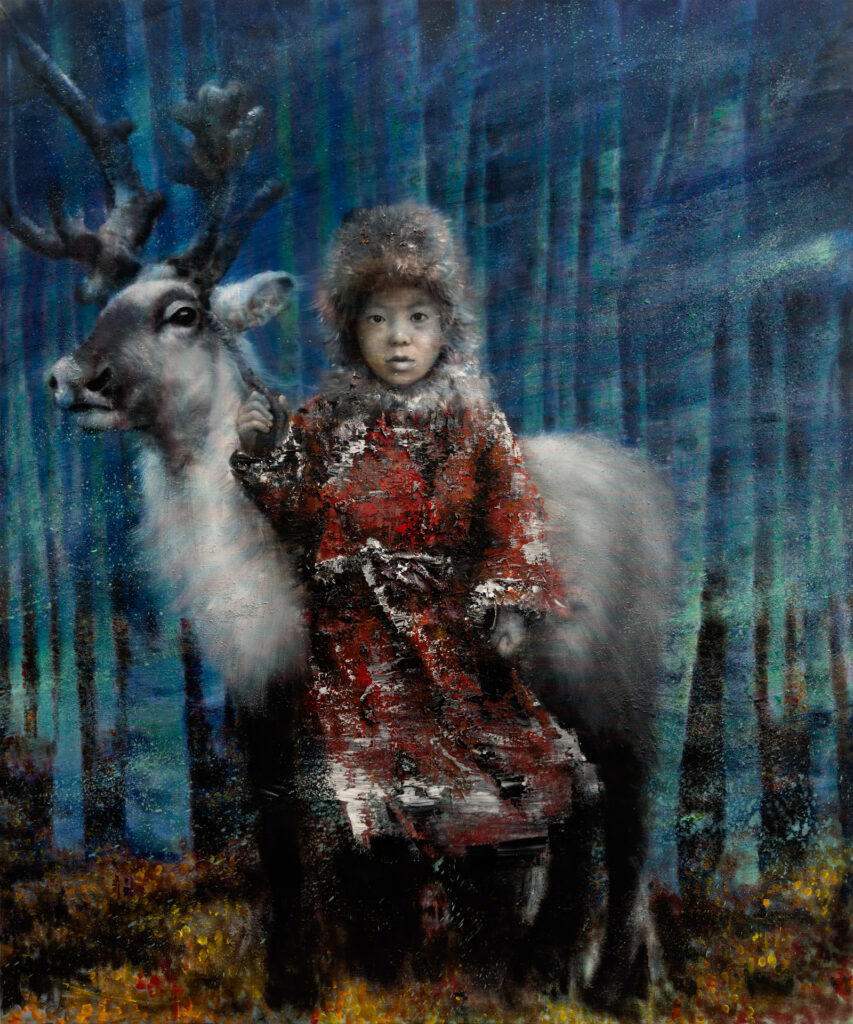
In my works, characters take on a leading role. I’m no longer shy about sharing my own story, after being influenced by French humanism for more than 20 years. In my oil paintings, I incorporate techniques from Chinese ink paintings, such as the use of black and white, as well as the relationship between human and nature.
What is your favourite childhood memory with your late father?
During my childhood, my dad worked in the military’s propaganda department, so he had rare access to a camera. He secretly used it to take black and white photos of me at different ages.
Those photos became the foundation for my ongoing series “Me and My Brother”. Even today, I still paint the same photos he took over forty years ago. Each time I paint the same photo, the canvas reflects subtle changes in result and expression, a reflection of who I am now.
A year before my father passed away, we went to a remote village in Guangxi to take pictures. We encountered many local children, and I remember my father arranging the scenery while I operated the camera. Several of the works displayed in this exhibition are inspired by this last trip we took as father and son, particularly the series of children playing on trees.

What’s something most people don’t know about being an artist?
My studio overlooks the sea. When friends visit, they often assume I spend my days gazing at the sea for inspiration. However, my creative process is akin to being in a prison. I shut the windows, only venturing to the balcony when friends arrive.
I describe my process as a high-pressure, confined, and intensely heated experience, like a pressure cooker. Yet, I derive joy from it, relying on my passion for art and the immense satisfaction I gain from artistic creation. It’s somewhat akin to the feeling of being a creator, like God creating humans.