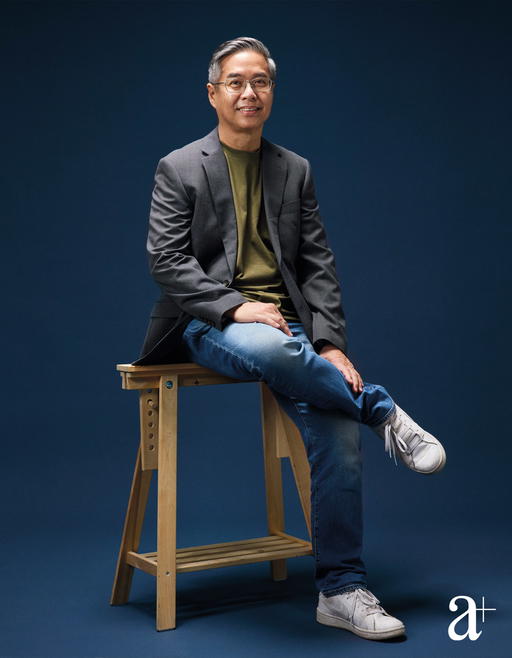
When Royce Lee was released from prison after serving a protracted eight-year sentence for operating a drug trafficking syndicate, he was riven with apprehension, despite having opened his own restaurant.
“I’d renounced the secret society, but on the day I opened the restaurant in Geylang, the gang members visited to give me an envelope filled with cash. I didn’t know how much it contained but refused to accept it, telling them I wanted to change my ways,” recounts the 49-year-old chef.
When that venture cratered—leaving him in the doldrums—he contemplated relapsing into the shadowy world of crime, but was convinced otherwise by his business partner who was also his former prison counsellor. He reveals that grisly tales of beyond the pale reverse initiation ceremonies involving the sacrifice of appendages aren’t entirely apocryphal.
Lee’s account underscores the tenuous line ex-offenders tread when reintegrating into society. Apart from shadowboxing with the spectre of their inner demons and anxieties, others feel stifled by discrimination within and beyond the workplace.
Munir Shah bin Manzur Ahmed Khan, who endured six years of imprisonment and eight lashes of the cane meted out for drug-related infractions, relates such indignities as being routinely singled out by police officers at crowded MRT stations.
“Sometimes when they see my tattoos they pull me aside for spot checks and to screen my IC. Upon identifying my past trafficking offences, they always ask if I have drugs on me,” he shares.
“At work, some colleagues refrain from communicating with me once they know about my “illustrious” past, so I need to earn their trust,” he adds.
“I’d renounced the secret society, but on the day I opened the restaurant in Geylang, the gang members visited to give me an envelope filled with cash. I didn’t know how much it contained but refused to accept it, telling them I wanted to change my ways.”
Royce Lee on almost relapsing to his old ways
Such obdurate social stigma isn’t lost on ex-offender Charlie (not his real name), who was brought to book for investment fraud committed while mired in gambling debt.
The tuition teacher, who served close to nine years behind bars, says he’s experienced multiple rejections from potential employers after they discovered his criminal record.
“I’m pretty academically qualified and present myself professionally during interviews, so perhaps it was my record working against me,” wagers the 43-year-old, who requested to remain anonymous for fear of unnerving his students’ parents.
One of the ex-offenders suggested that former inmates still fettered by electronic tagging devices are particularly vulnerable to hawkish employers abusing their positions of power. “They kept threatening to send me back to prison if I did not want to work overtime. We don’t have a choice as it is considered a privilege to be working while tagged.”
Such narratives simmer beneath the surface of buoyant statistics, including a 30-year low in two-year recidivism rates for the local inmate population in 2021. This has been attributed to a raft of evidence-based rehabilitation and reintegration programmes that support inmates seeking accredited skills, employment and accommodation upon release.
“I’ve seen friends whose parents passed away while they were inside [prison] and I knew I wouldn’t be able to forgive myself for it.”
Munir Shah bin Manzur Ahmed Khan
Yet, those aren’t guaranteed markers of individual success. “Even with a job, ex-offenders may face challenges transitioning from prison to the work environment. The lack of relevant skills and the inability to adapt to the workplace are commonly cited challenges,” says Paulin Chua, director of Partnership@YR, Reintegration Group, at local statutory board Yellow Ribbon Singapore (YRSG).
Banking on education
One way to help level the playing field and engender upward social mobility is YRSG’s Yellow Ribbon Fund STAR (Skills Training Assistance to Restart) bursary, which funds the tertiary education of low-income ex-inmates upon release.
Lee, Munir and Charlie are among 246 individuals who’ve benefitted from the programme, a game changer for those whose lives have stalled out after flying too close to the wind. For Munir, who’s circled in and out of prison since 2012 for drug-related offences, the tipping point came when his father visited him in prison in a wheelchair, confronting him with life’s ephemerality.
“I’ve seen friends whose parents passed away while they were inside and I knew I wouldn’t be able to forgive myself for it,” reflects the 39-year-old former graphic designer, who began dabbling in drugs while studying at an arts college.
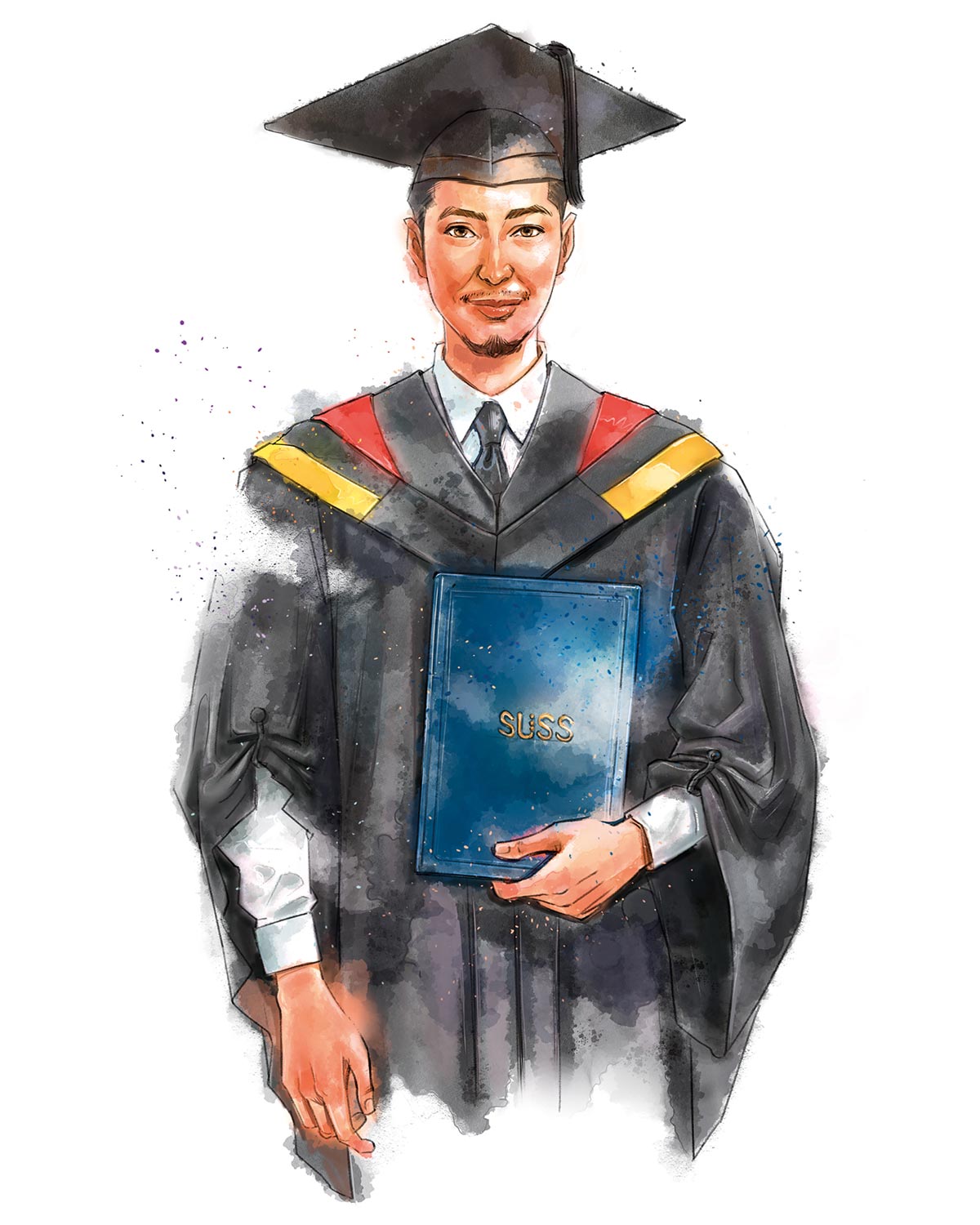
After retaking his O’ and A’ Levels at Tanah Merah Prison (TMP) School and seeking his counsellors’ advice, he applied for the bursary and subsequently undertook a Bachelor’s degree in human factors in safety at Singapore University of Social Sciences. The circuitous journey was potholed with difficulty.
“From a bad person, I managed to over the years get people to take a second look at me. I’ve always liked to be loud in everything I do but now I want to be loud in a different way.”
Royce Lee
“Thrice a week for four years, I rushed to attend evening lectures after work, reached home at 11pm and woke up in the morning to go onsite.” Today, Munir is a safety officer working at Changi Airport, supporting his young family including a 15-month-old daughter. He views his job as a “way to contribute to society for all the lost time and shit you’ve done.”
“As a safety officer I make sure that all my colleagues, the bulk of whom are foreigners, don’t die and can go home safely to their families,” he shares.
His redemption arc crackles with the same overriding spirit of tenacity as Lee. Years earlier, the latter may have been labelled an inveterate criminal etched with numerous convictions including for loanshark activities. With rain buffeting his aluminium-roofed office in Paya Lebar, the taciturn man’s voice is barely audible as he tells me how he learnt data entry while in prison and later earned a SHATEC (Singapore Hotel and Tourism Education Centre) diploma in culinary arts through the YRF STAR bursary.
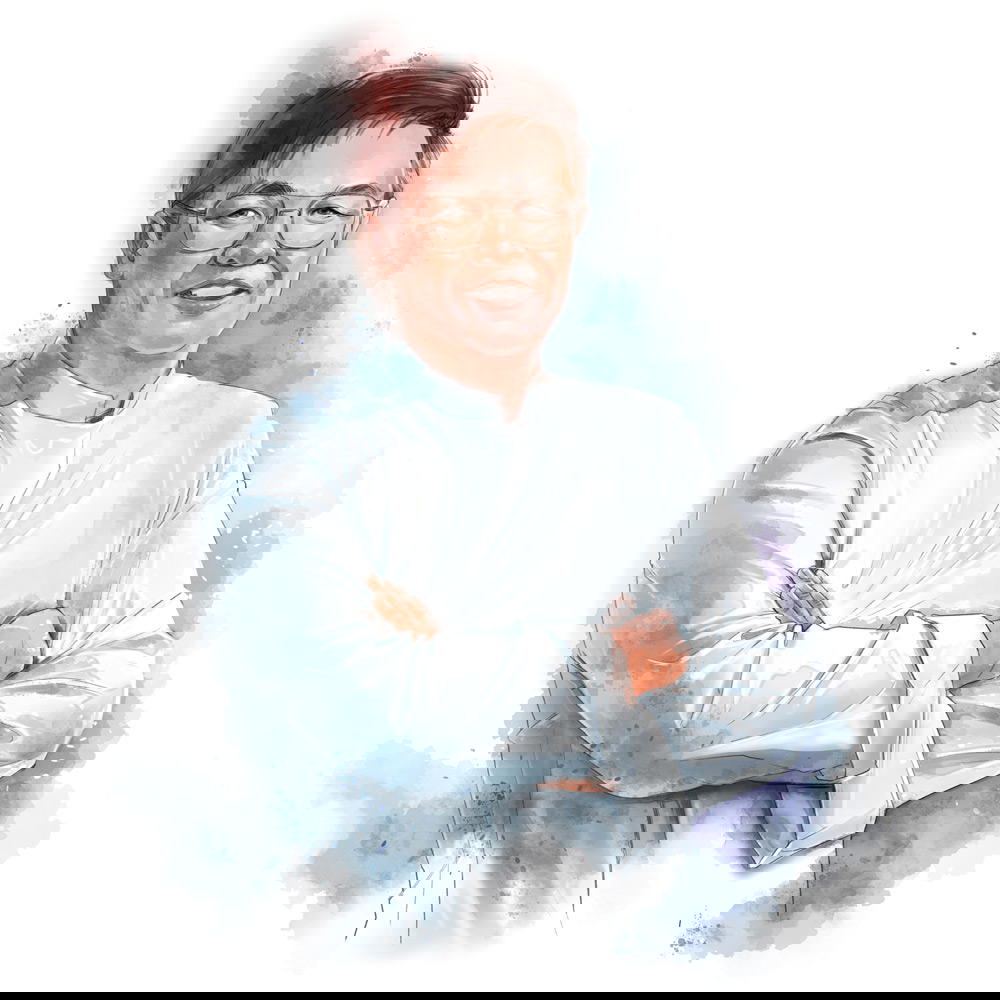
The quintessential underdog, he eventually took another stab at entrepreneurship together with the same business partner. They now own a catering business that counts the Ministry of Defence, Prime Minister’s Office Singapore and—in circumnavigating a full circle—Singapore Prison’s Service as clients.
Lee observes that compared to the past—where he was paid a monthly salary of $950 to work as a chef in a Taiwanese restaurant following his 2002 incarceration—ex-offenders today are remunerated according to the market rate.
Through its job placement and career retention services, Chua reports that YRSG inculcates fair, merit-based and inclusive hiring practices. “YRSG adopts a targeted engagement approach to reach out to employers to offer fair remuneration, put in place supportive work practices and offer career progression for deserving ex-offenders hired.”
Breaking glass ceilings
While Singapore’s push towards inclusive hiring presents an encouraging message to ex-offenders, it could ring hollow if their career options are limited. All three individuals we spoke with unanimously groused that ex-offenders are typically shunted to blue-collar roles.
Munir, for instance, shared that his criminal record renders him persona non grata at certain restricted zones within the airport, a clause that will only be lifted 10 years upon his release. And Charlie, whose bursary helped him attain a Bachelor’s degree in economics and public policy and global affairs from Nanyang Technological University, was met with radio silence after applying to be a teacher under the Ministry of Education. Statistics on the number of ex-offenders employed in Singapore’s public service aren’t publicly available.
While expressing mea culpa for their past transgressions, they called for a shift in public perception towards ex-convicts. “Perhaps the government can take the lead in showing the public sector that yes, these people can work in certain roles as well,” asserts Charlie. As a youth, he’d shuffled discursively from school to school without completing his formal education, but now derives satisfaction from helping students improve their grades.
Lee, on the other hand, is resolute about changing the status quo. He intends to establish a hawker chain teaching ex-offenders practical skills such as costings and marketing, thus propping them up to eventually run their own stalls.
What’s behind the commitment to pay it forward?
“I have been given many chances. From a bad person, I managed to over the years get people to take a second look at me. I’ve always liked to be loud in everything I do but now I want to be loud in a different way,” he avows.