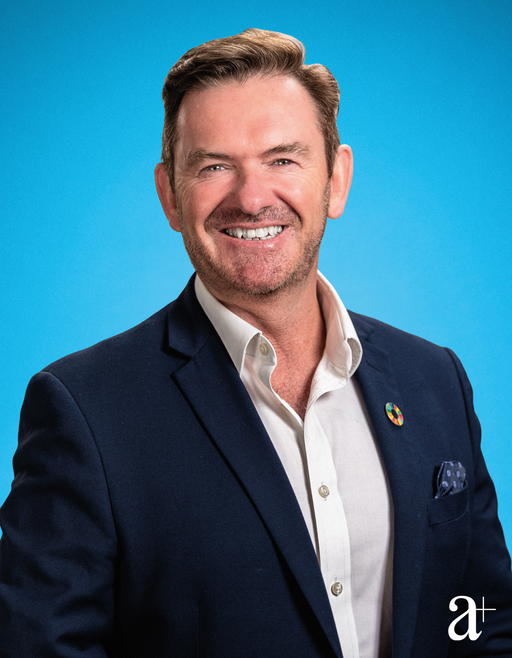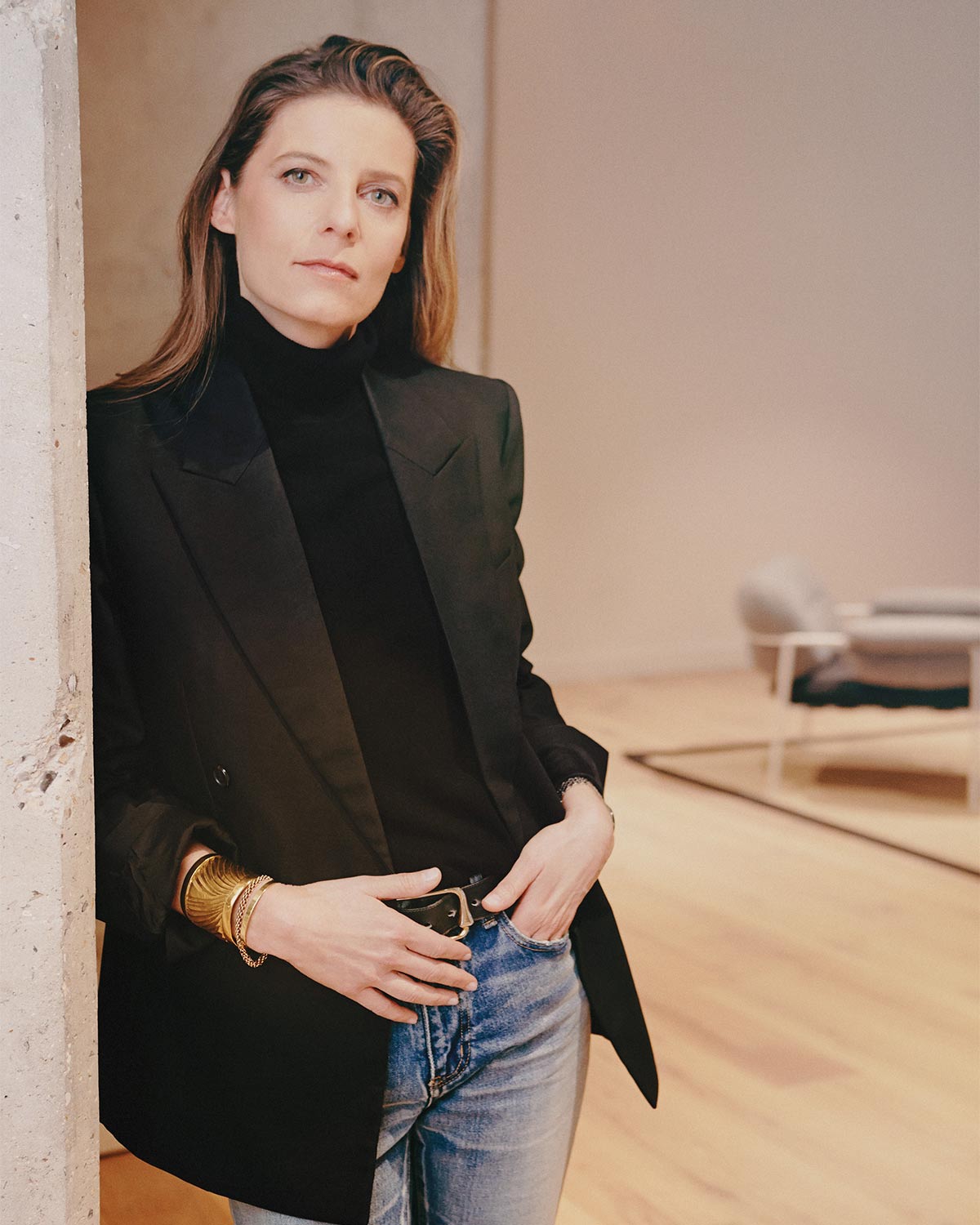
Vestiaire Collective’s fashion director, Sophie Hersan, walks the talk. The co-founder of the resale platform is an ardent collector of vintage and pre-loved pieces. She tells us that she has reduced her personal collection to what she considers the “essentials”, and 90 percent of her wardrobe consists of these pieces.
“I sold a lot of pieces to only keep the essentials, such as a vintage Schott leather jacket from the 1980s to 1990s, a tuxedo from Tom Ford’s Gucci era, vintage denim from Levi’s, a Phoebe Philo Céline coat, cashmere sweaters made in Italy, and vintage accessories, such as Cartier watches and rings, and Yves Saint Laurent rings, to complement my looks,” Hersan says.
Vestiaire Collective’s mission for change has gone beyond its resale business. To achieve a longer-lasting and broader impact, the platform is partnering with other players to push for proper legislation at the governmental level.
What was the goal of the business when you started, and how has it changed since then?
We founded Vestiaire Collective in 2009 to reduce waste by allowing consumers to extend the life of their wardrobes. We realised that there was a gap in the market for a platform where people could buy and sell pre-loved luxury items. With this mission, we set out to provide a curated and inspiring platform where fashion lovers could buy and sell high-quality, luxury items with complete peace of mind, knowing that they were authentic and in good condition.
Since the beginning, our vision and mission have been to drive change and empower our community to make the fashion industry more sustainable. That’s what drives us to continue our work today. Recently, we became a B-Corp unicorn company—and the only female-founded unicorn in France at that. We are extremely proud of that achievement.
The industry is pivoting towards pre-loved fashion as a sustainable solution. As a leading luxury resale platform, how has the Vestiaire Collective customer base evolved since its launch?
According to our latest Vestiaire Collective x BCG report for 2022, there is a growing interest in sustainability through the growth of the second-hand market, which is projected to increase by 20 to 30 percent. The study also shows that 50 percent of customers look for affordability in second-hand items, followed by 40 percent for sustainability. Furthermore, consumers looking for unique pieces value the variety of choices and the excitement of the hunt.
Among Asian consumers, French designers, luxury brands, and vintage pieces in good or excellent condition are in high demand. Investment pieces that last over time are preferred over unique pieces that are no longer available. Some customers are true collectors and select rare pieces that are real investments, which they will take good care of.
We are seeing influential figures wear red carpet outfits more than once. Some are also choosing vintage pieces over new runway styles. Zoe Tay wore two gowns from Vestiaire Collective at the recent Star Awards in Singapore. Has the stigma of wearing vintage or pre- loved pieces shifted, especially in Asia?
We were honoured to dress Zoe Tay for this fantastic occasion in vintage Oscar de la Renta and Christian Lacroix couture dresses. Both were sourced through our community and we hope for more opportunities to showcase how desirable and timeless vintage can be.
As more celebrities adopt sustainability with pride, the red carpet is becoming greener. There is a place for vintage in Asia and Singapore, especially with stigma slowly disappearing to make way for vintage luxury pieces. Additionally, influential people are becoming increasingly interested in advocating for more environmentally friendly and conscious alternatives to clothing.
Vestiaire Collective announced last November that fast fashion would be banned on its platform. What impact has this had on the business?
We banned fast fashion to make a stand on overproduction and overconsumption, and to educate our community and wider audiences about the consequences of the fast fashion system, both upstream and downstream.
Fast fashion brands accounted for 5 percent of Vestiaire’s offering in 2022. We banned ultra-fast fashion brands instantly. This is our way of celebrating craftsmanship and educating about durability. Vestiaire has been promoting high-quality, long-lasting, timeless pieces since its creation. Buying less and better quality is our mantra.
There is a wide range of fast fashion, and its definition is becoming more grey. What criteria does Vestiaire Collective use to determine whether a brand is fast fashion?
For the first wave of the ban in 2022, we defined a clear set of social and environmental criteria, such as poor quality items, massive production, and the violation of human rights based on existing and recognised references (European Environmental Display, Clear Fashion, Good on You, and so on). These will be fine-tuned with an independent third party this year for the second wave.
One draw of Vestiaire Collective is the Brand Partnership programme. What led to that?
The Brand Partnership programme for luxury houses and digital platforms was launched in February 2021 to create a more sustainable fashion industry. We call it ‘Resale as a Service’. It began with Alexander McQueen and MyTheresa, and has since expanded to include more brands. Among our recent collaborations are Chloé, Gucci, Courrèges, and Paco Rabanne.
Our partnership with these luxury brands has helped us reinforce our position as a trusted platform for luxury brands looking to enter the circular economy. In addition to building trust with our community, we are transparent with our authentication standards by working directly with these houses.
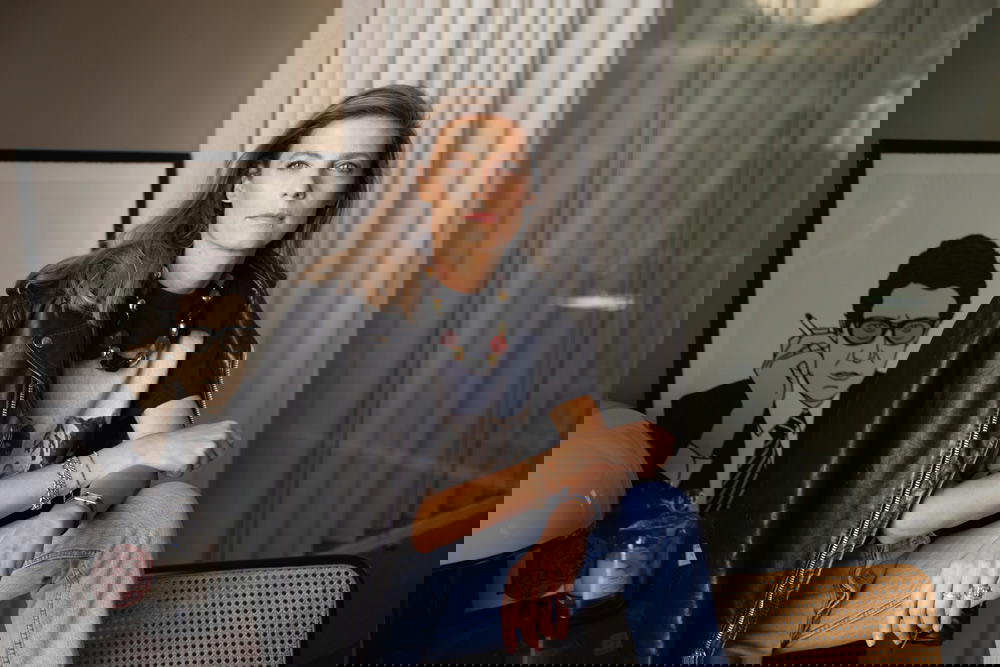
Photo: Vestiaire Collective.
What continues to be a challenge for resale platforms?
Counterfeit items are one of the biggest challenges. As counterfeit products become more and more prevalent in the market and their quality improves, resale platforms like us must provide peace of mind to consumers.
Authentication has been a top priority for us since we started. Currently, we have more than 90 physical and digital authenticators as well as 14 years of research and expertise in pre-loved authentication under our belt.
Our authentication centres are active globally in the north of France (covering the EU markets), New York (for North America), London (for the UK), and Hong Kong and Seoul for the APAC region.
The process is unique and requires years of accumulated experience. Our expertise and fashion knowledge continue to evolve as we innovate with technological tools and AI. In addition, we recently partnered with Chloé using Digital ID to offer a fresh experience to our customers. The tool populates a certificate of ownership that facilitates resale on our platform.