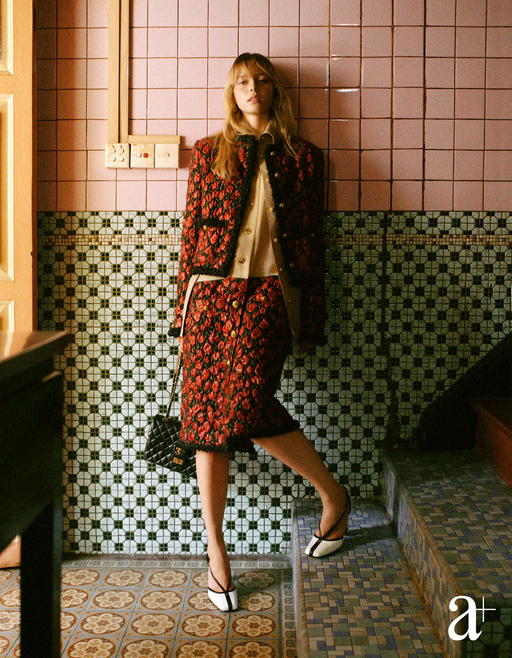
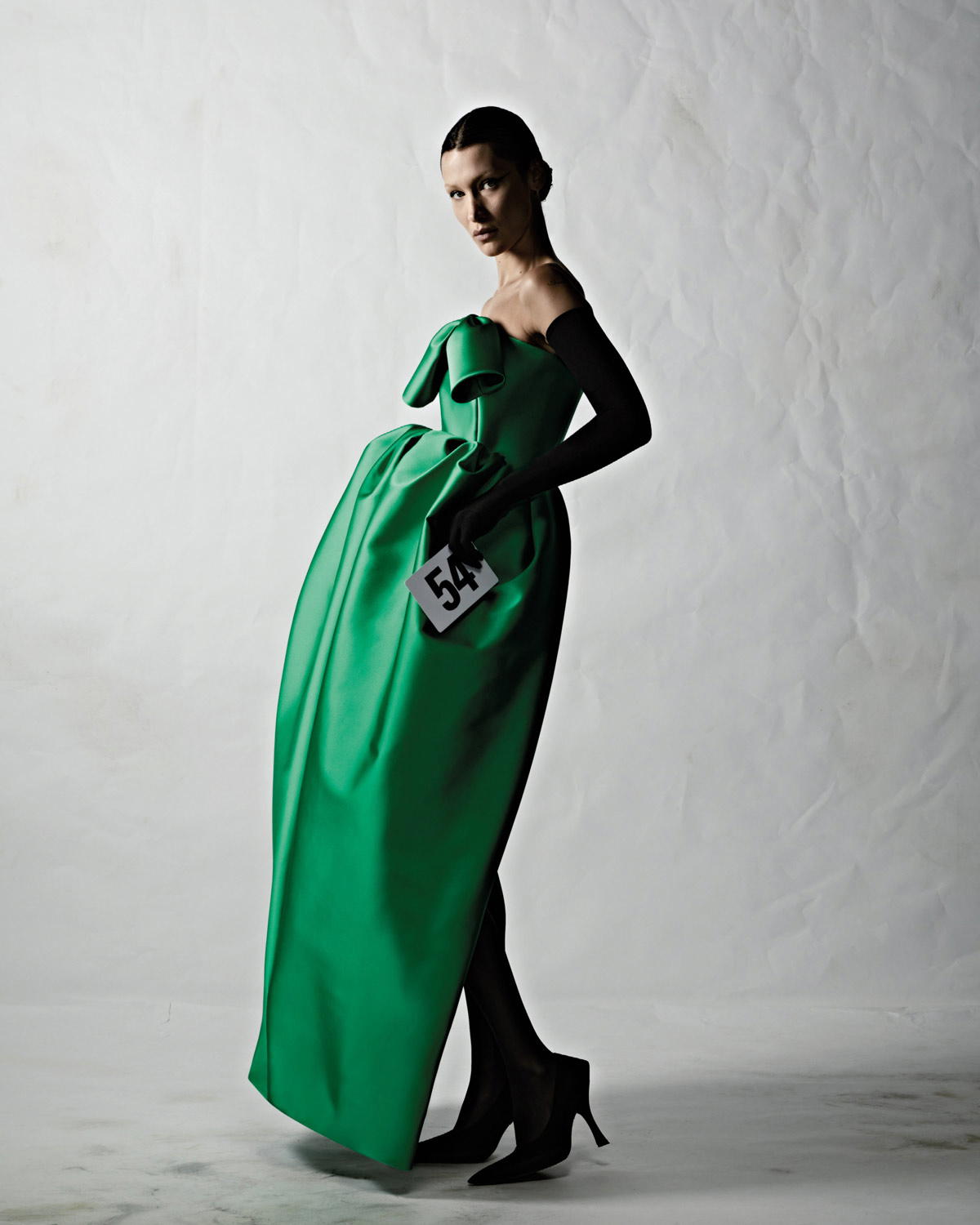
For an industry that often prides itself on proposing new ideas season after season, there’s a somewhat predictable consistency to how fashion operates. It’s old news by now that as much as fashion trends are said to be fleeting, they eventually circle back albeit in updated forms. It’s not that fashion designers often run out of ideas, but rather, taking references from the past is a creative tool that’s common throughout various creative mediums — the creation of something new based off of familiarity.
It is little wonder then that vintage fashion has been a constant source of reference for fashion designers to study details and techniques since pretty much time immemorial. Creative directors of storied fashion houses are the most apparent examples of this.
With the industry standard so far averaging at two to three years for a creative directorship (a timeframe that’s typically at the mercy of commercial receptions), a newly installed creative director would often dig deep into the archives of a house in order to fashion a fresh aesthetic that’s still rooted in its key design tenets.
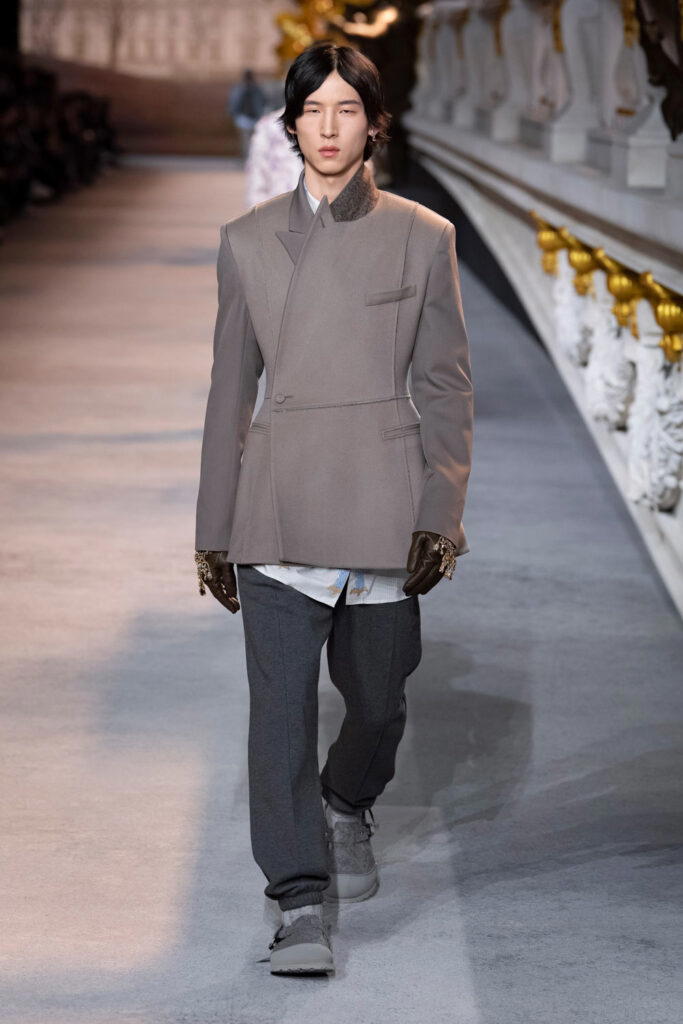
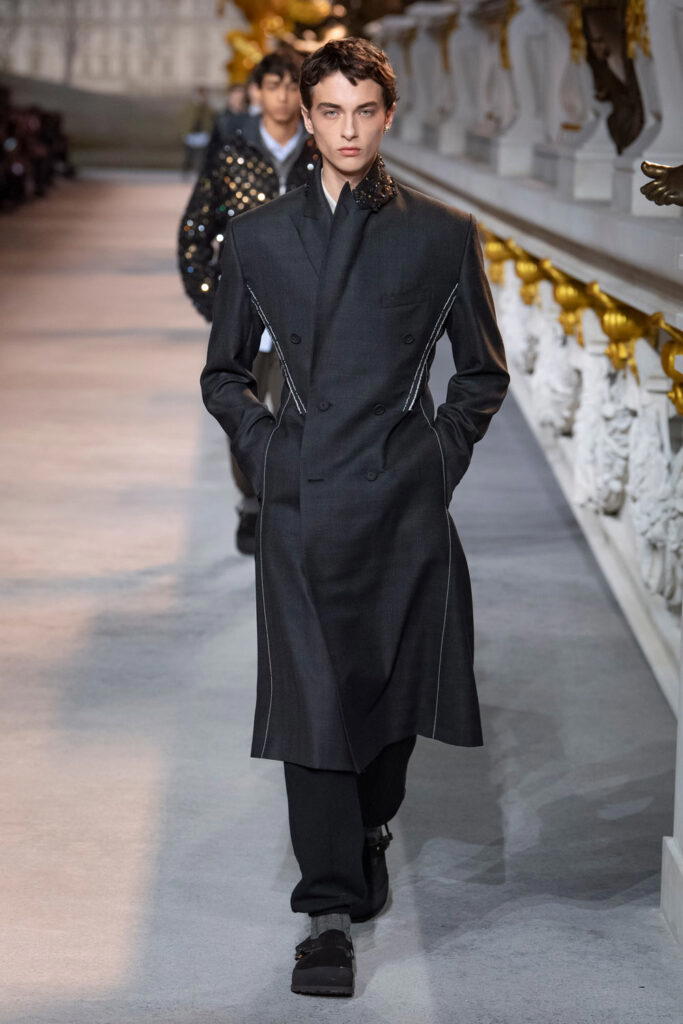
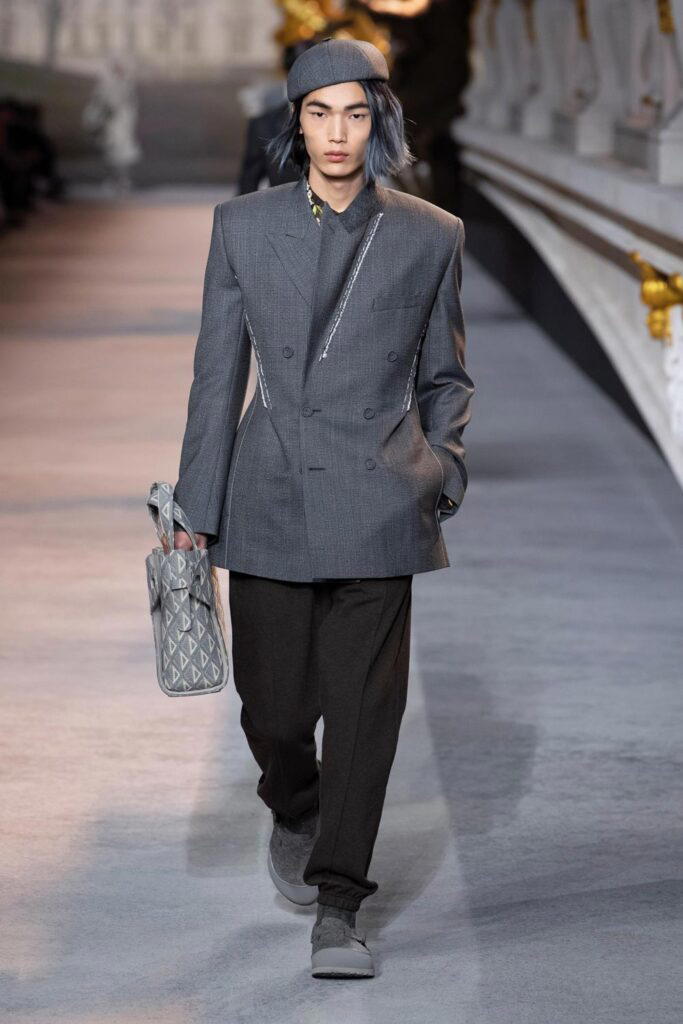
Since his appointment in 2018, Kim Jones of Dior Men continues to explore the extensive history of the Parisian couture house. Jones is known for taking the largely female-centric design language of Dior and re-contextualising them for menswear. The house’s emblematic Bar jacket — one half of the game-changing New Look of the 1940s — is a central piece in Dior Men’s winter 2022 collection. Jones leaned towards a deconstructed approach with exposed canvas and raw seams visible on the reworked, more masculine jacket.
Kenzo’s latest artistic director Nigo revealed to Women’s Wear Daily that he had amassed quite a collection of vintage Kenzo (amounting to the hundreds) even before the role. “I was very aware of Kenzo and desired it, but didn’t have the money to buy it,” he recounted before going on to say that his collection of 1980s Kenzo began only when he gained recognition and success in fashion. Those vintage pieces then helped to inform the direction for his iteration of Kenzo, marked by motifs stripped from the archives.
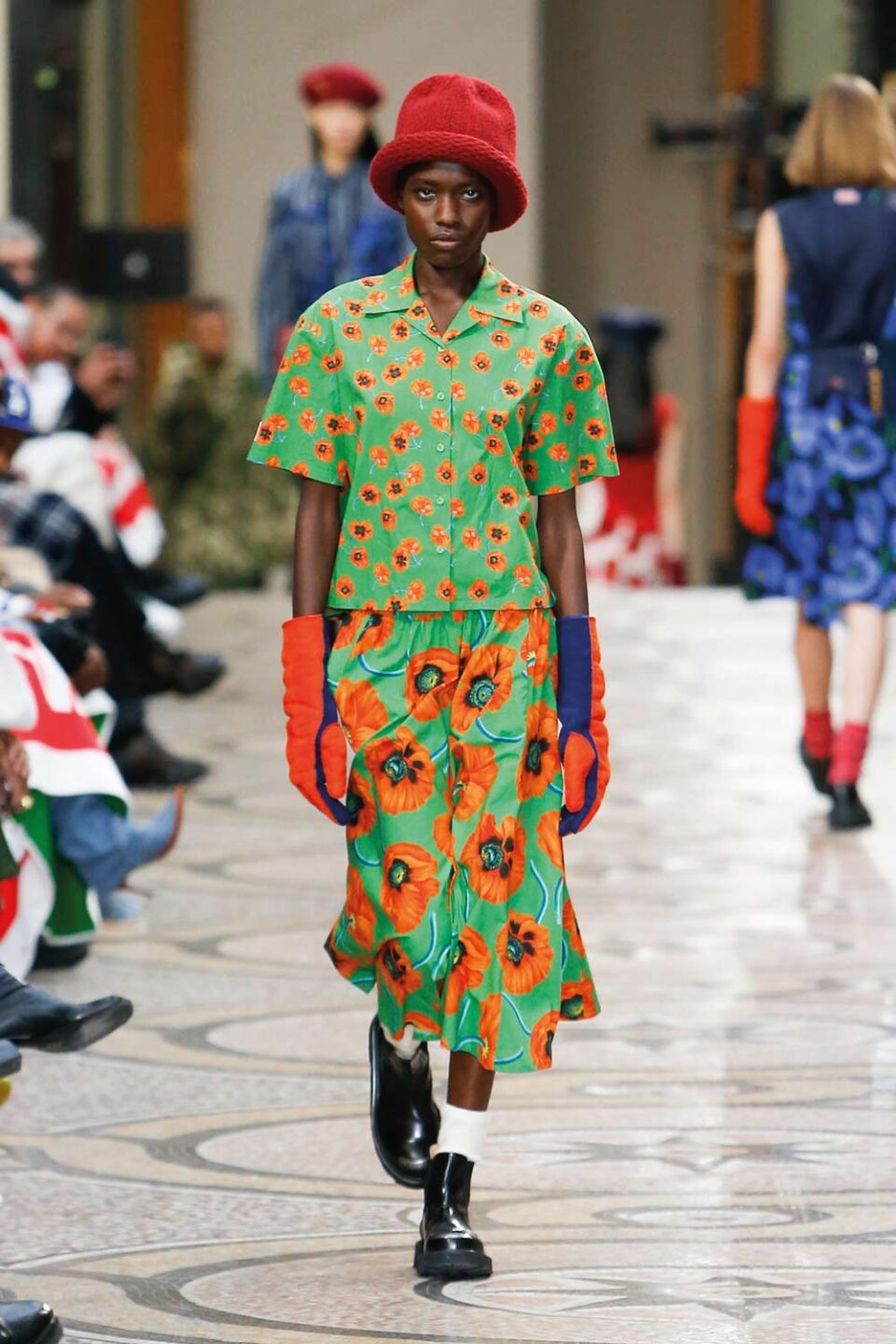
Photo: Kenzo.
The same goes for Chanel’s Virginie Viaird, Pieter Mulier at Alaïa, Balenciaga’s Demna, as well as co-creative director Raf Simons at Prada — only some of the latest in the ever-changing roster of creatives helming historic fashion houses.
Whether the nods are nuanced or modern reproductions, there’s no escaping from archival works being referenced especially if one intends on staying respectful of a fashion house’s history.
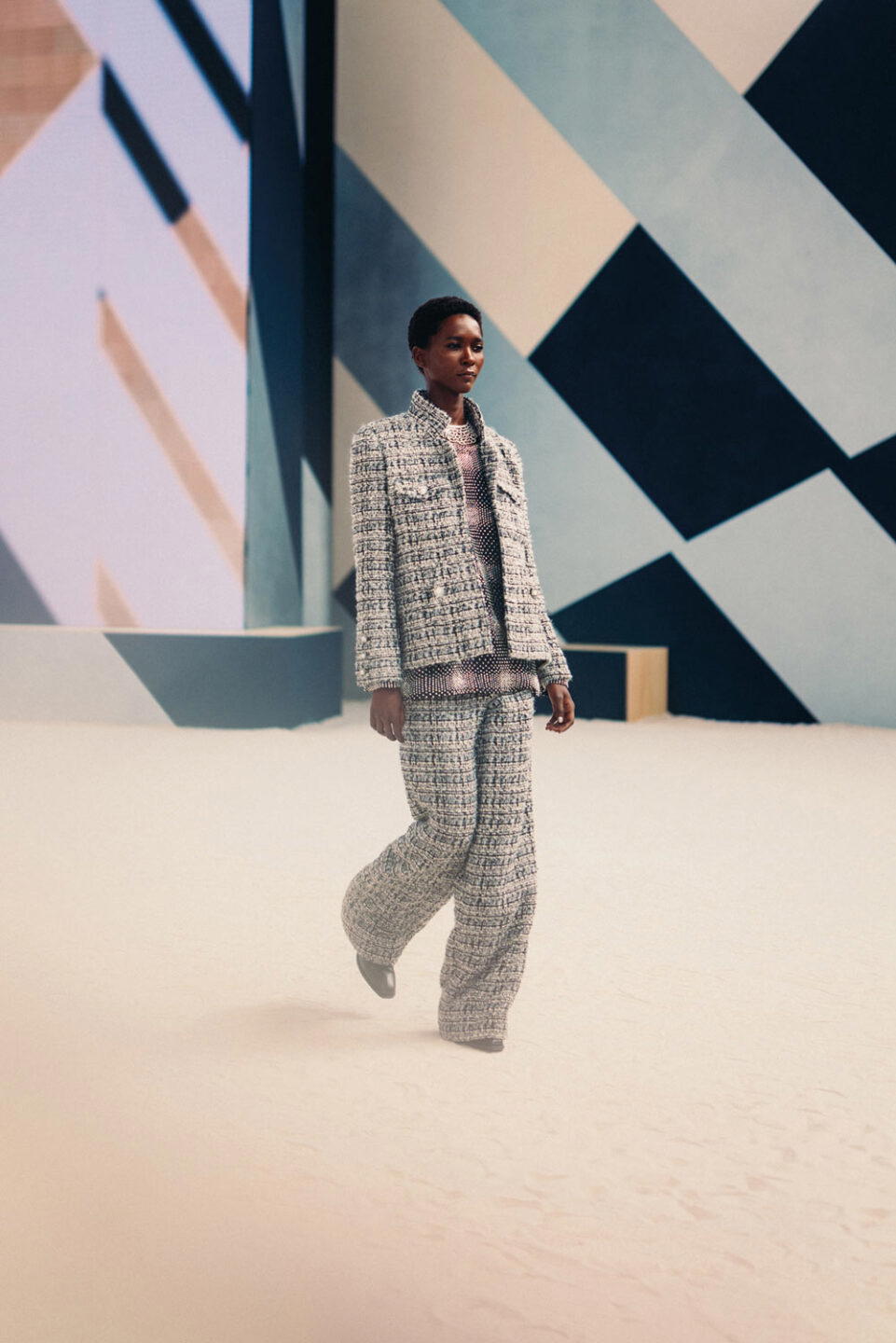
Photo: Chanel.
Vintage, eclectic
Naturally, inspiration isn’t (and shouldn’t be) just restricted to a house’s own vintage creations. The past informs the present through general dress beyond the traditional notions of fashion. Parisian multi-hyphenate Gauthier Borsarello is a known connoisseur in the space, owning both a vintage store as well as a private showroom situated across from each other in the fashion capital’s 16th arrondissement. The latter is only accessible to fashion insiders.
Housed below the Holiday Boileau boutique (Borsarello was previously the style director), his private showroom contains a rare collection of vintage menswear, with a majority of them steeped in Americana. And they’re not merely American flag-laden denim pieces or one-of-a-kind Levi’s jeans. Borsarello’s rather extensive collection includes pieces from the pages of history such as a well-used American firefighter jacket issued back in the 1960s, a US Army jacket from the First World War, and even a Hawaiian shirt (from the island state itself) straight from the 1950s.
Although his personal collection is not for sale, they continue to live on today. Fashion stylists are able to pull anything from vintage collegiate hoodies to old-school motocross paraphernalia for editorial fashion shoots, while designers often visit to inspect rare pieces and elements as well as specific construction details to inspire their own creations.
Vintage fashion has always been omnipresent within the industry. Its desirability outside of those closed doors however, has been gaining more and more prominence.
Old-school new Hollywood
On red carpets, celebrity style has expanded from the usual fresh-off-the-runway looks to iconic fashion from decades past. Cardi B took to the 2019 Grammys red carpet in a gravity-defying couture dress by Thierry Mugler that was first unveiled as part of the house’s autumn/winter 1995 couture runway show. The Birth of Venus-inspired creation easily made the rapper a best-dressed standout for the night and marked the beginning of a partnership between the house and the rapper, who continues to wear both vintage and new Mugler.
Then of course, there’s that hotly debated (and widely slammed) pop culture moment at this year’s Met Gala. Kim Kardashian made her appearance in the exact Bob Mackie dress that was made for and worn by the late Marilyn Monroe, in relation to the In America: An Anthology of Fashion exhibit. Since no alteration could be made to the historical piece of fashion, Kardashian had to actively lose weight to fit into it and slipped into a replica immediately after her red carpet moment.
In the past decade or so, self-professed image architect Law Roach’s penchant for vintage fashion has helped create style icons out of the celebrities he’s tasked with pulling looks for. But none had shared the same level of love for vintage fashion that Roach has until Jaime Xie.
The socialite-turned-reality-star was a force during the spring/summer 2022 fashion show season. While making her way from one front row to the other, Xie was spotted in some of vintage’s bests. She wore a Rasta-inspired outfit from John Galliano’s Dior spring 2004 collection to the house’s runway show, vintage Versace to the Versace show, and a beautifully sculpted Balenciaga spring 2008 dress to former Balenciaga creative director Nicolas Ghesquière’s showing for Louis Vuitton.
Roach told Vogue in 2021, “Recently, I’ve been putting vintage on a lot of my clients, and it’s just something that feels natural. Wearing vintage is one of the easiest ways to move forward sustainably, whether you’ve bought it at a thrift store, [the piece] was given to you by a family member, or you purchased it online.”
A way towards circularity
Sustainability was perhaps never at the forefront of one’s consciousness when it came to buying vintage, or even thrifting. The main goal was (at least when it came to vintage-buying) to own and collect a piece of fashion history. But with sustainability now an unavoidable part of fashion, pre-loved and vintage fashion, collectively, has been increasingly seen as a way of partaking in a circular fashion economy.
Industry bigwigs have acknowledged the role that pre-loved and vintage fashion play. In 2021, French luxury conglomerate Kering invested 178 million euros (S$250 million) for a five percent stake in Vestiaire Collective, a global resale platform with a pre-loved fashion inventory of three million and growing.
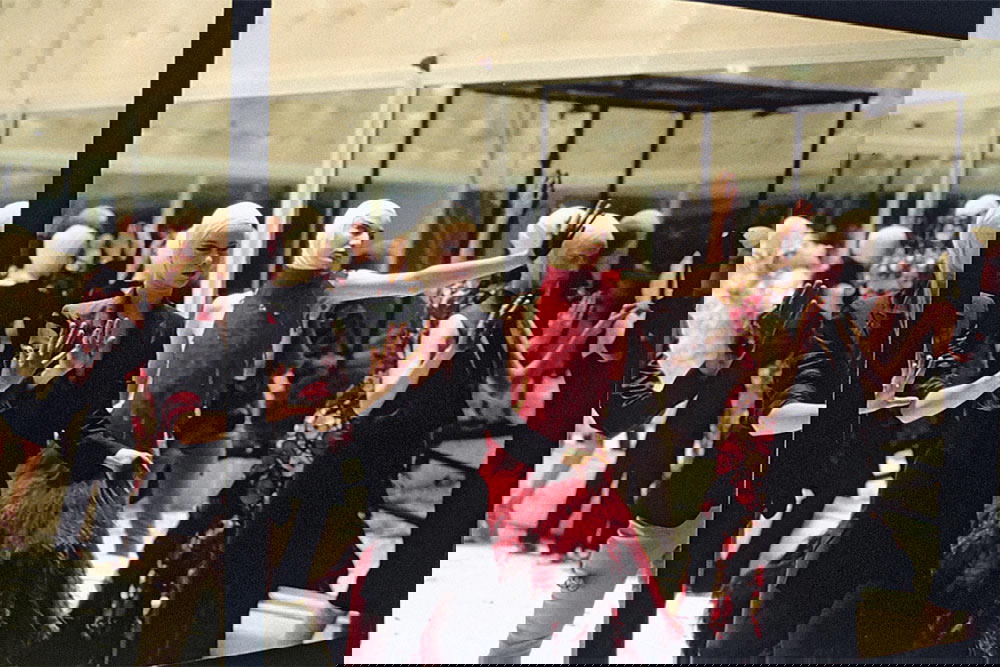
Kering-owned Alexander McQueen partnered up with Vestiaire Collective on the latter’s ‘Brand Approved’ programme. Alexander McQueen clients are contacted to inquire if they have anything from the brand to sell. The brand takes on the responsibility of authenticating the items and then listing them on Vestiaire Collective with a special ‘Brand Partner’ tag. If an item sells, it’s original owner then gets store credits that can be used towards new purchases in Alexander McQueen boutiques.
In a similar way, Valentino is taking personal ownership of its own pre-loved fashion from clients and rewarding them for reselling, albeit in a more intimate capacity. Through the house’s multi-phased Valentino Vintage project that began in October 2021, clients willing to part with their own collection of Valentino pieces could do so with selected vintage stores in Milan, New York, Los Angeles, and Tokyo.
After being appraised by specialists in the vintage stores, a positive appraisal and an acceptance of the valuation of a piece would then award a client with store credits to be used in a Valentino boutique that’s associated with each individual vintage store.
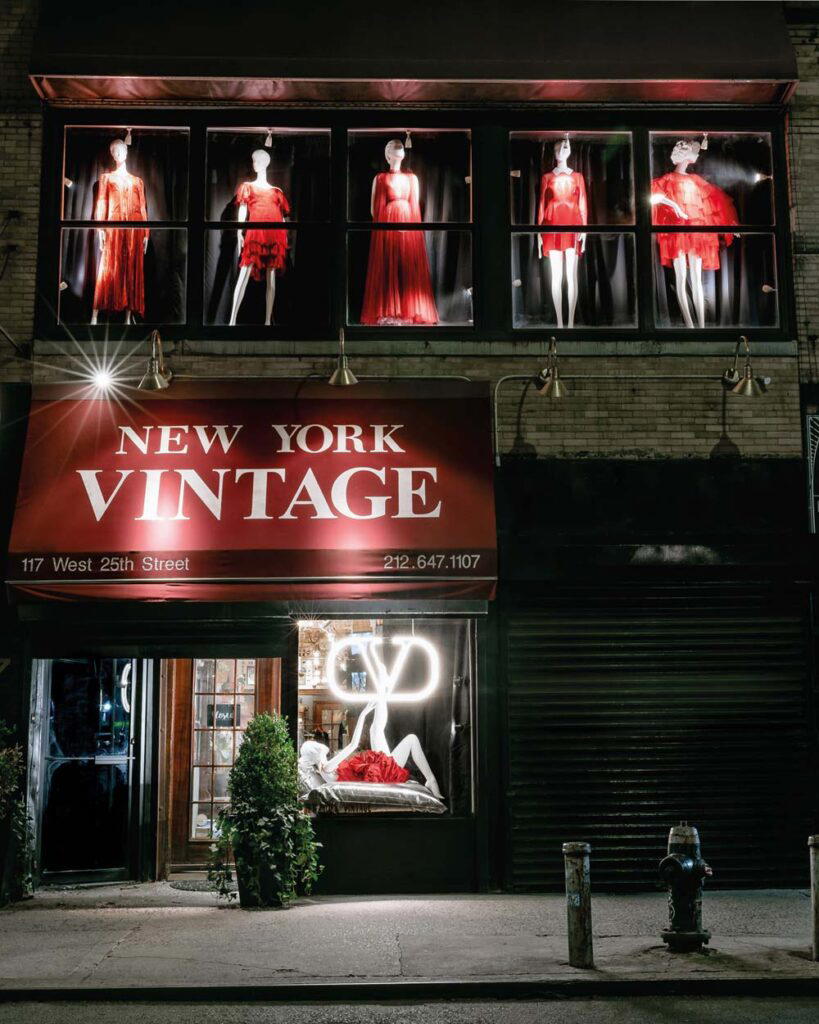
The second phase of Valentino Vintage in June 2022 saw the takeover of four vintage stores — one in each of the aforementioned cities. Valentino garments that were collected during the initial phase were fully displayed in each vintage store and made available for anyone to purchase and love once again.
Gucci has a different take on vintage. Under the creative direction of Alessandro Michele, Gucci’s aesthetic has been a steady amalgamation of the old and the new. It’s not unusual to find archival Gucci pieces that are often revived as is or embellished with contemporary flourishes as part of new collections.
The Italian fashion house launched an online concept store called Vault in late 2021 to hone in on the vintage aspect of its aesthetic. Under Vault’s Gucci Vintage Treasures section, Michele and a group of Gucci archivists have curated a selection of authentic, one-of-a-kind vintage Gucci pieces for sale. They’re acquired through a myriad of ways including auction houses as well as personal collections of relatively obscure buyers.
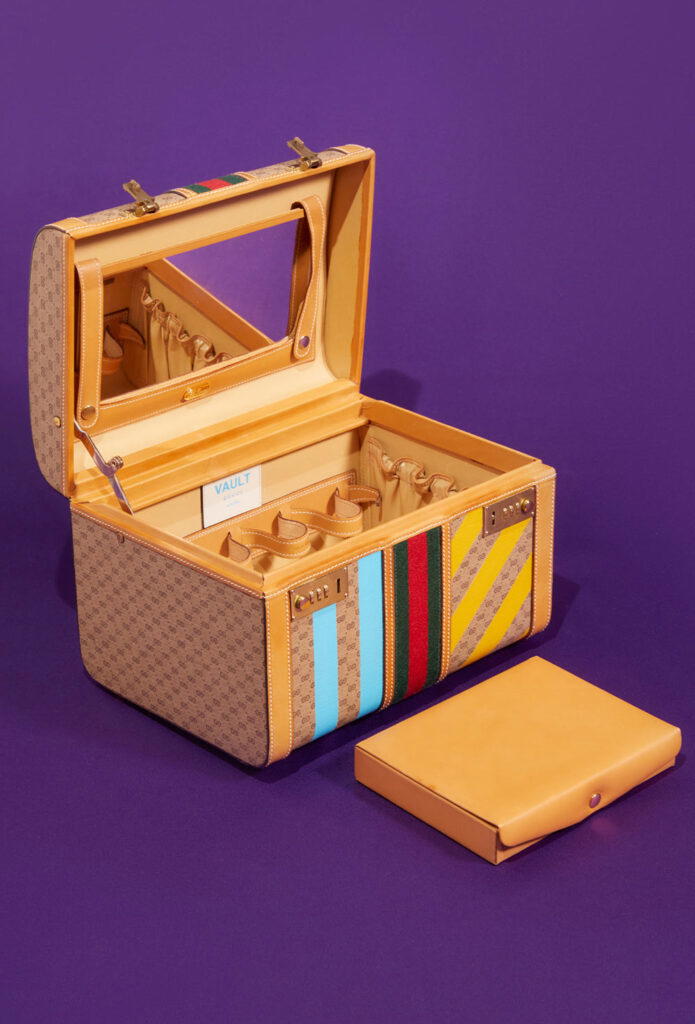
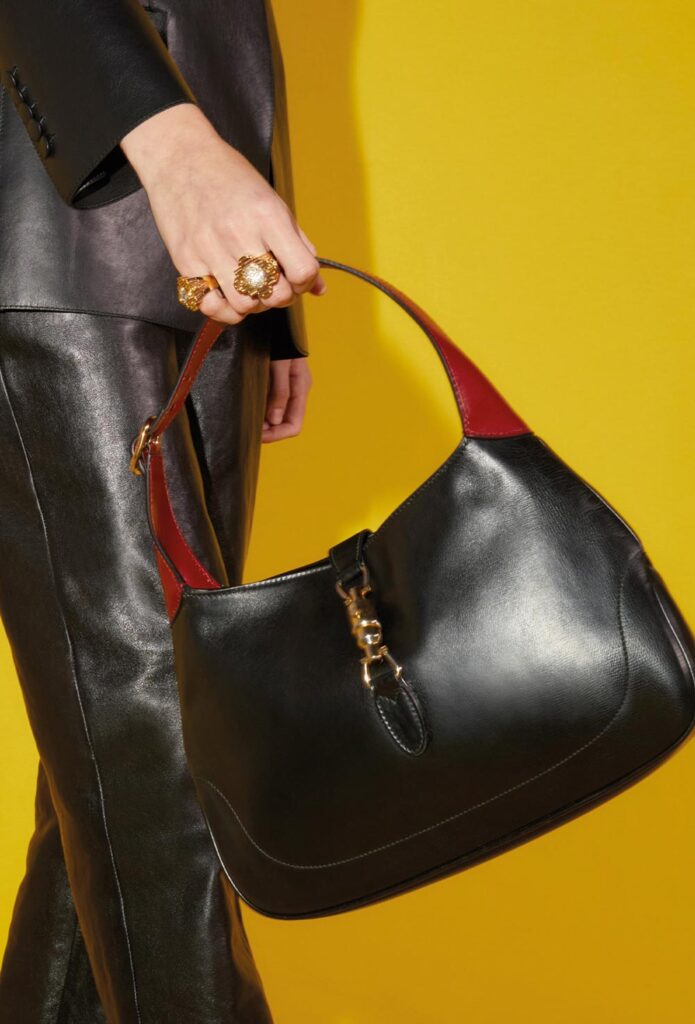
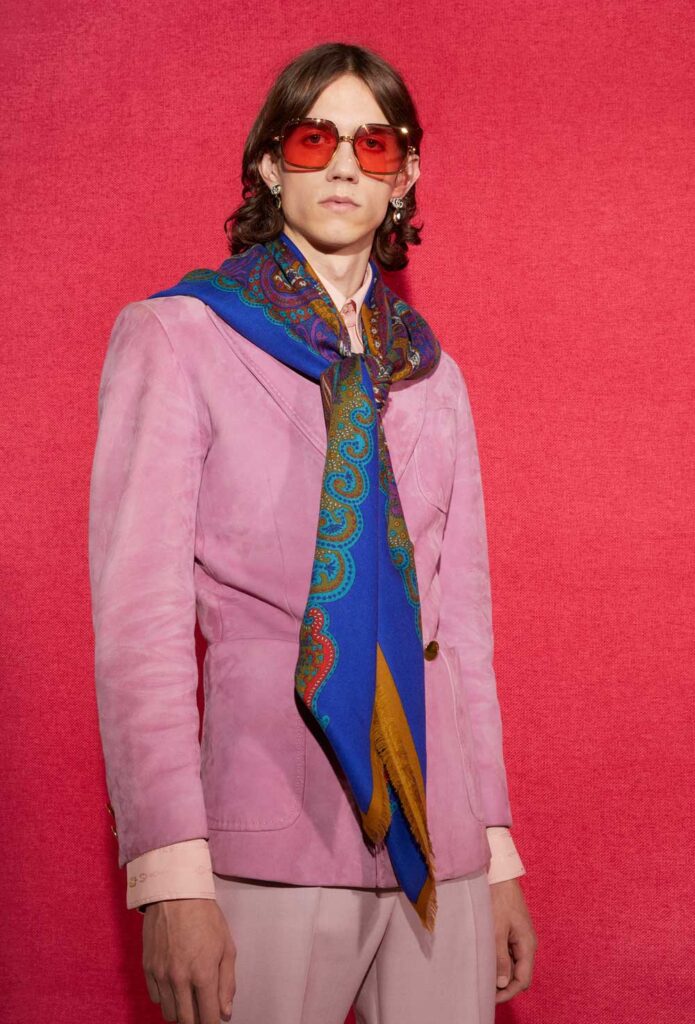
The pieces are then reconditioned by Gucci’s in-house artisans and numbered to highlight the exclusivity of each one. Items range from something as classic as a floral scarf from the 1970s or a bag decorated with an older monogram style, to more custom pieces such as a bag constructed to fit a tennis racket.
In with the old and in with the new
It is quite odd to think that for an industry whose main raison d’être is to introduce new ideas, fashion is continuously taking reference from the past in so many ways. And where the old has always been seen as an issue and perhaps a hindrance to the profitability of the new, vintage fashion has become an accepted part of the fashion ecosystem.
Considering how vintage fashion derives its value from the level of quality and craftsmanship, it remains to be seen whether current fashion items would be able to stand the test of time in the same way. It’s certainly a point that has been brought up time and time again, especially among seasoned collectors.
While that’s a legitimate concern in vintage fashion, one thing’s for certain: there’s value in every piece of garment. It is said that you should always treat your elders with respect and reverence. We could do well to do the same to vintage fashion, and its soon-to-be vintage successors.