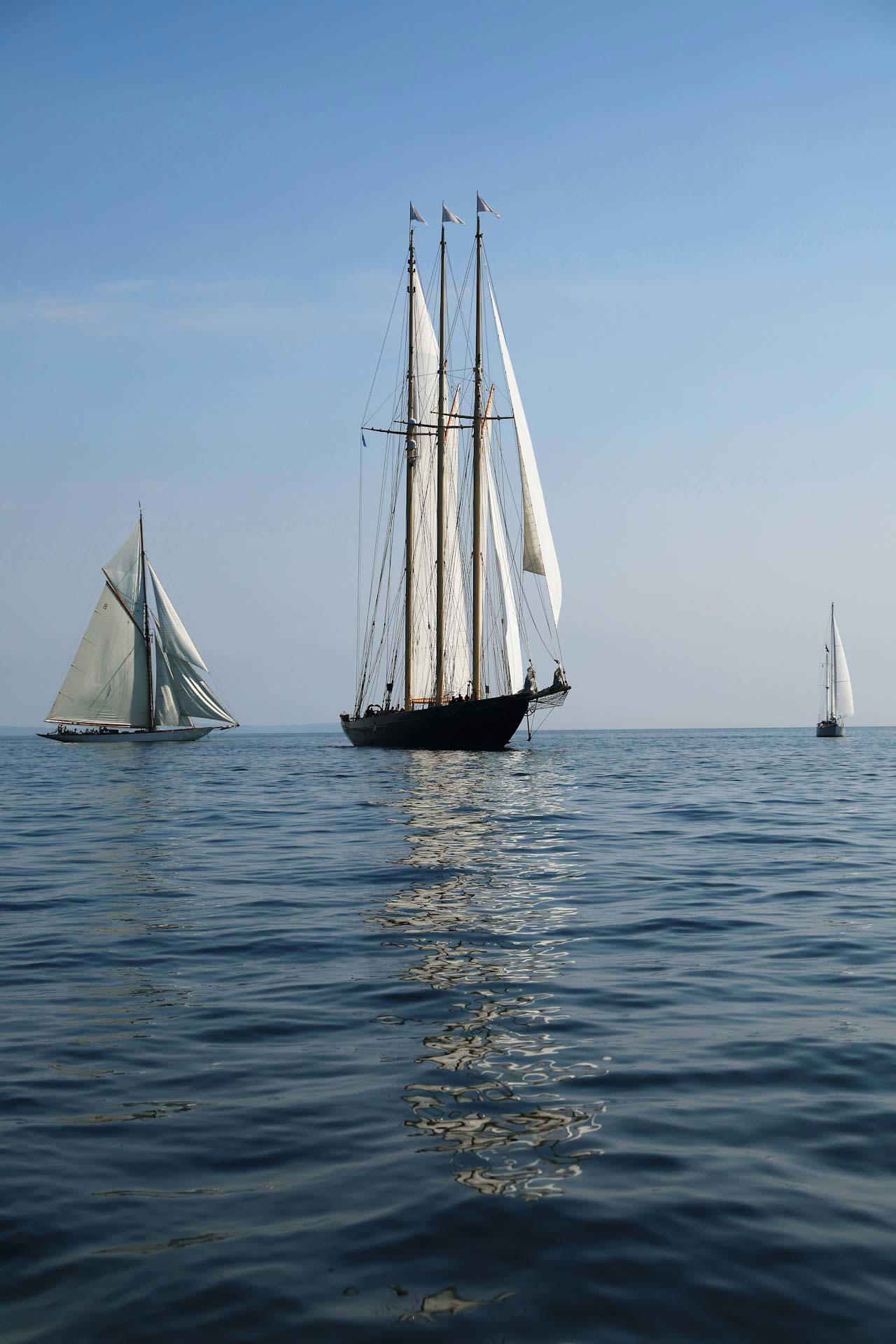
Richard Mille—the man, not his eponymous watch brand—became terribly seasick the first time he went on a boat. A friend in Tahiti invited him to go fishing. Richard, who was in his early 20s, agreed. The sea was calm and the skies were beautiful. He felt fine when the boat sputtered out to sea. However, when it came to a complete stop, the waves started rocking the vessel and he began feeling sick.
The fact that we are talking in the bowels of the Atlantic, a schooner slicing through the water during the Cowes leg of the inaugural Richard Mille Cup, is somewhat ironic. “It was the only time I became seasick,” the watchmaker says, referring to the Tahitian incident.
The Richard Mille Cup is a labour of love. There wasn’t a new watch to salivate over. Neither was it a PR push for the eponymous watchmaker. Instead, he fell head over heels with pre-war boats after buying the Moonbeam IV, a 32-m-long classic gaff cutter previously owned by Prince Rainier of Monaco.
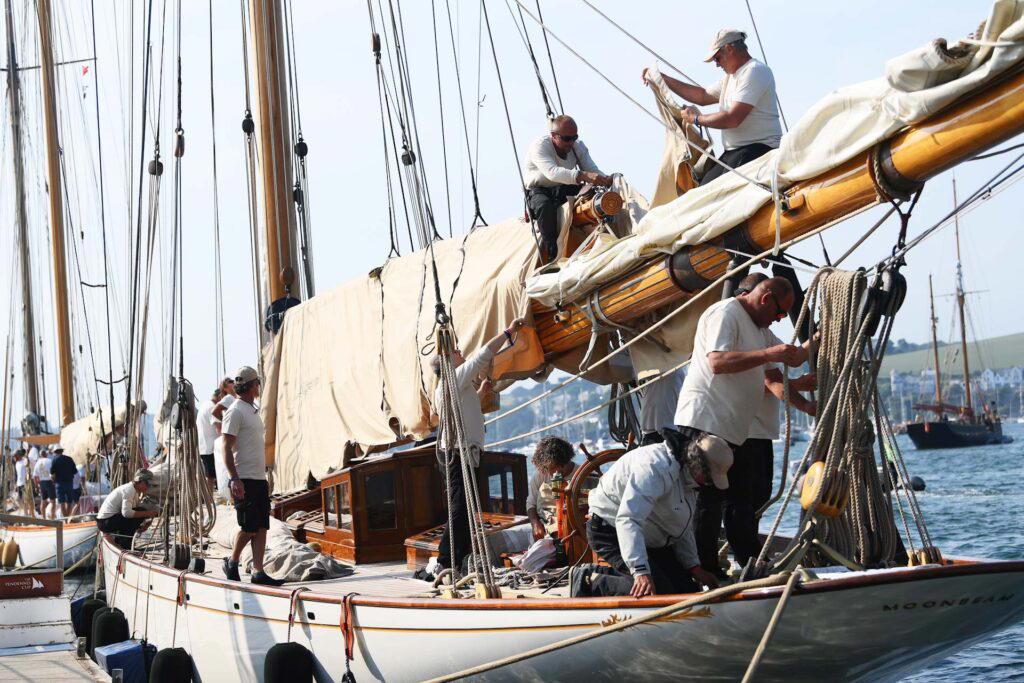
“I’m a car man,” says Richard. “But my friend and classic car collector Benoit Couturier bought the Mariquita (a similar classic boat) and pushed me to buy one, too.” The beauty of the boats spoke to Richard. Unlike modern motorised ones with their sharp lines and angular silhouettes, these boats that came to life at the turn of the 20th century had sensuously curved hulls and rakish wooden masts with fluttering sails. They also had an old-world charm you don’t get with ferries and motorised speedboats.
“Today’s cars and boats are made with computers because they are more efficient. But you lose beauty in the process. These pre-war boats have a strong visual identity that really speaks to me,” says Richard.
Beauty and efficiency can coexist harmoniously. Neither needs to be sacrificed for the other. The fact that the Atlantic, Mariquita and Moonbeam IV triumphed in multiple races during their heyday is a testament to their sailing prowess.
“These early 20th-century sailboats were designed and built only for speed, and it’s that extreme quality I appreciate. Their beauty and efficiency contribute to their formidable personalities. Whether you look at their lines, sails or masts, everything is gorgeous. Even the slightest detail proves to be exceptional because each has its function. There are tremendous similarities between these boats and our watches. They’re not from the same era, but they are born of the same philosophical approach,” says Richard.
Still, organising a regatta for love might seem like a mad endeavour. However, this is the same man who started a watch brand because he wanted to develop his dream timepiece and push technical innovation to its limits, production costs be damned. A two-week sailing competition is par for his course.
“I want to celebrate friendship and build powerful emotions with our friends, clients, and journalists. Large galas with thousands of people don’t interest me. I prefer smaller, more intimate events. They can be more symbolically powerful,” says Richard.
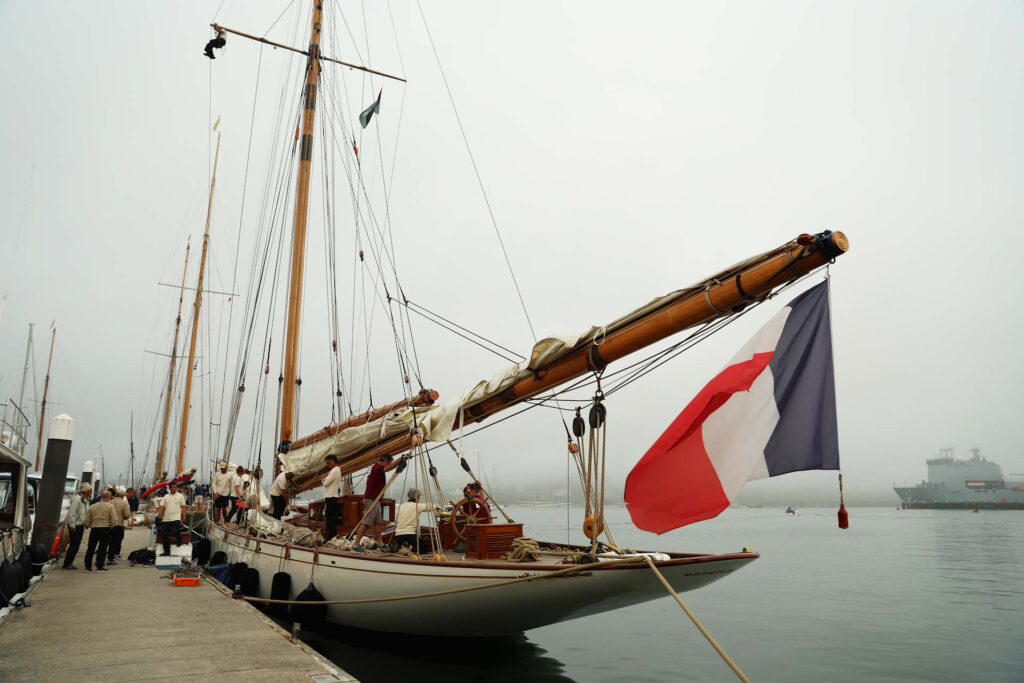
The Richard Mille Cup is full of symbols. The inaugural edition saw four historic yacht clubs—the Royal Cornwall Yacht Club, the Royal Dart Yacht Club, the Royal Yacht Squadron, and the Société des Régates du Havre—and 11 classic yachts start at Falmouth, England, making pit stops at Dartmouth and Cowes, before crossing the finishing line at Le Havre, France. During each stop, the yachts competed in several inshore races, earning points along the way.
These spots weren’t randomly chosen. Each town boasts a storied sailing heritage stretching as far back as the 19th century and regularly hosts sailing competitions throughout the year. The most popular is arguably Cowes Week, the largest and one of the longest-running sailing regattas in the world. Every August since 1826, several thousand boats have converged on the Solent strait between the Isle of Wight and mainland Great Britain to compete with each other.
These races have been immortalised in the record books and even painted for posterity. Old paintings of historical boats wrestling the high seas with waves crashing onto their decks hang on the walls of the Royal Yacht Squadron clubhouse at Cowes Castle on the Isle of Wight.
My time aboard the Atlantic, one of the competing schooners, during the Cowes leg wasn’t as dramatic. There’s a lot of waiting during a race, usually for the winds to whip up and send the large sails billowing into a frenzy. During those times, a full-service kitchen served champagne and whipped up meals. To warm myself up, I once asked if the ship had cup noodles. Fifteen minutes later, the crew brought steaming hot Japanese instant ramen. You’d never go hungry.
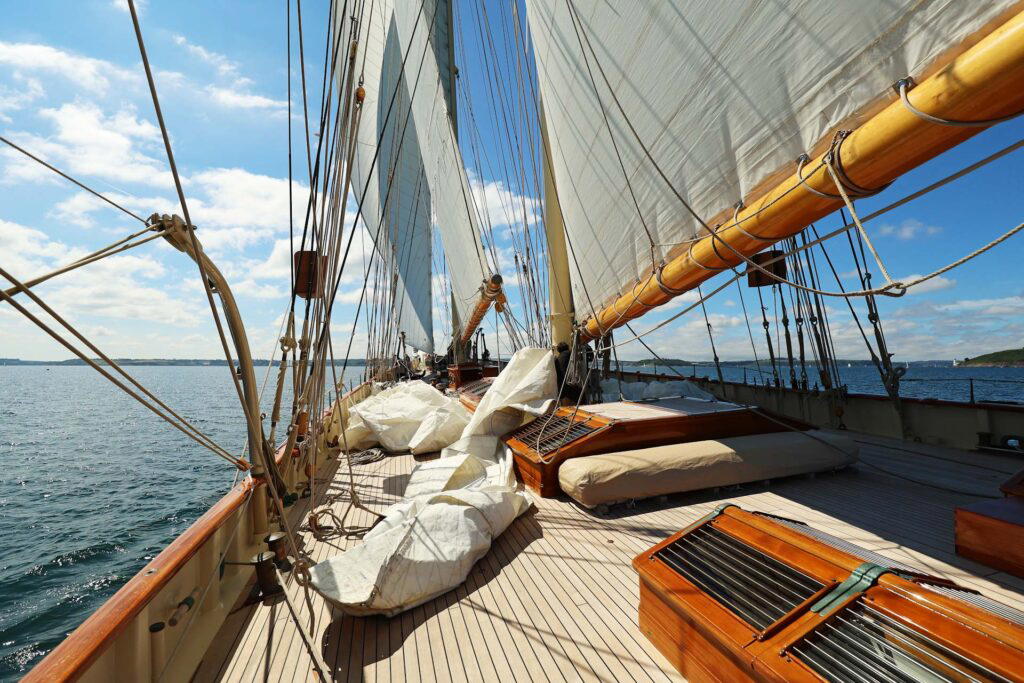
But when the gods blew their large breaths across the water, oh, what a sight. The crew sprang into action, hoisting sails and rigging ropes. It was a well-choreographed dance. You had to hold on tight to your champagne glasses lest they slipped off the tables.
The first thing you’ll notice about a sailboat is that it doesn’t travel in a straight line like a motorboat to reach its destination. Instead, it zigs and zags across the water at an angle to catch the wind.
The best place to catch the action is on the deck, with the boom swinging from left to right just centimetres above your head. Although the Atlantic is a massive 69-m ship, it occasionally reached 16 knots (30kph) due to strong winds and an experienced skipper. But there were faster schooners. It finished third in its class.
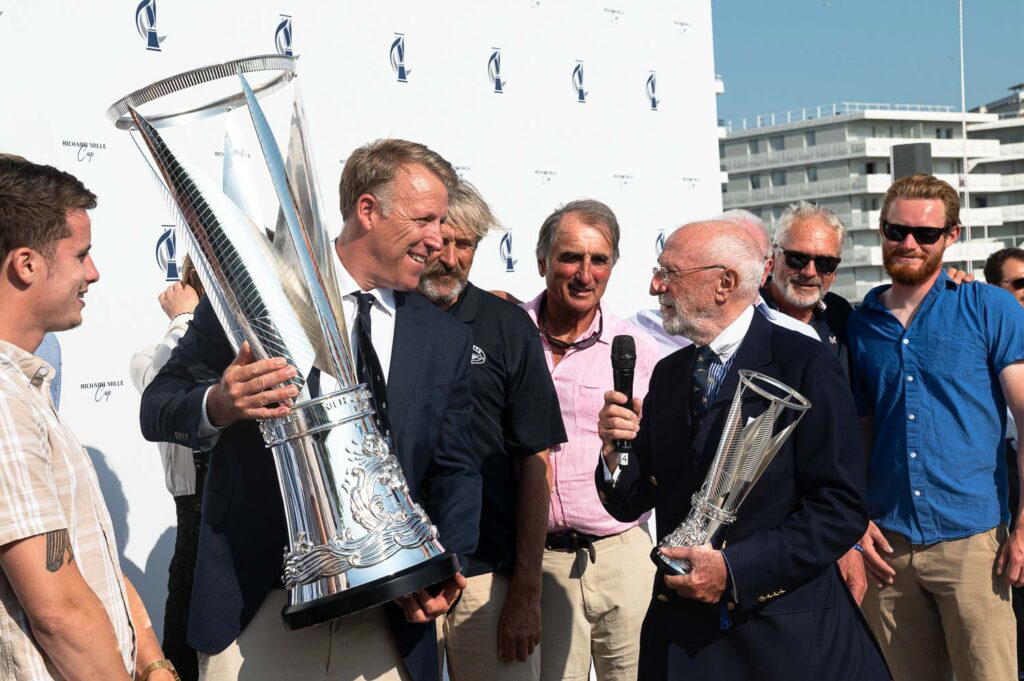
The eventual winner, Mariette, held aloft the beautiful metre-high sterling silver trophy crafted by Garrard, a jeweller for the British royal family. The Société des Régates du Havre club, the last stop in the Richard Mille Cup regatta, hosted the prize giving.
While Richard celebrates winners, it’s not the most important thing to him. “It’s about having a pleasant moment and enjoying yourself. Nobody will remember the winner, but everyone will remember the beautiful views, sounds, and atmosphere.”