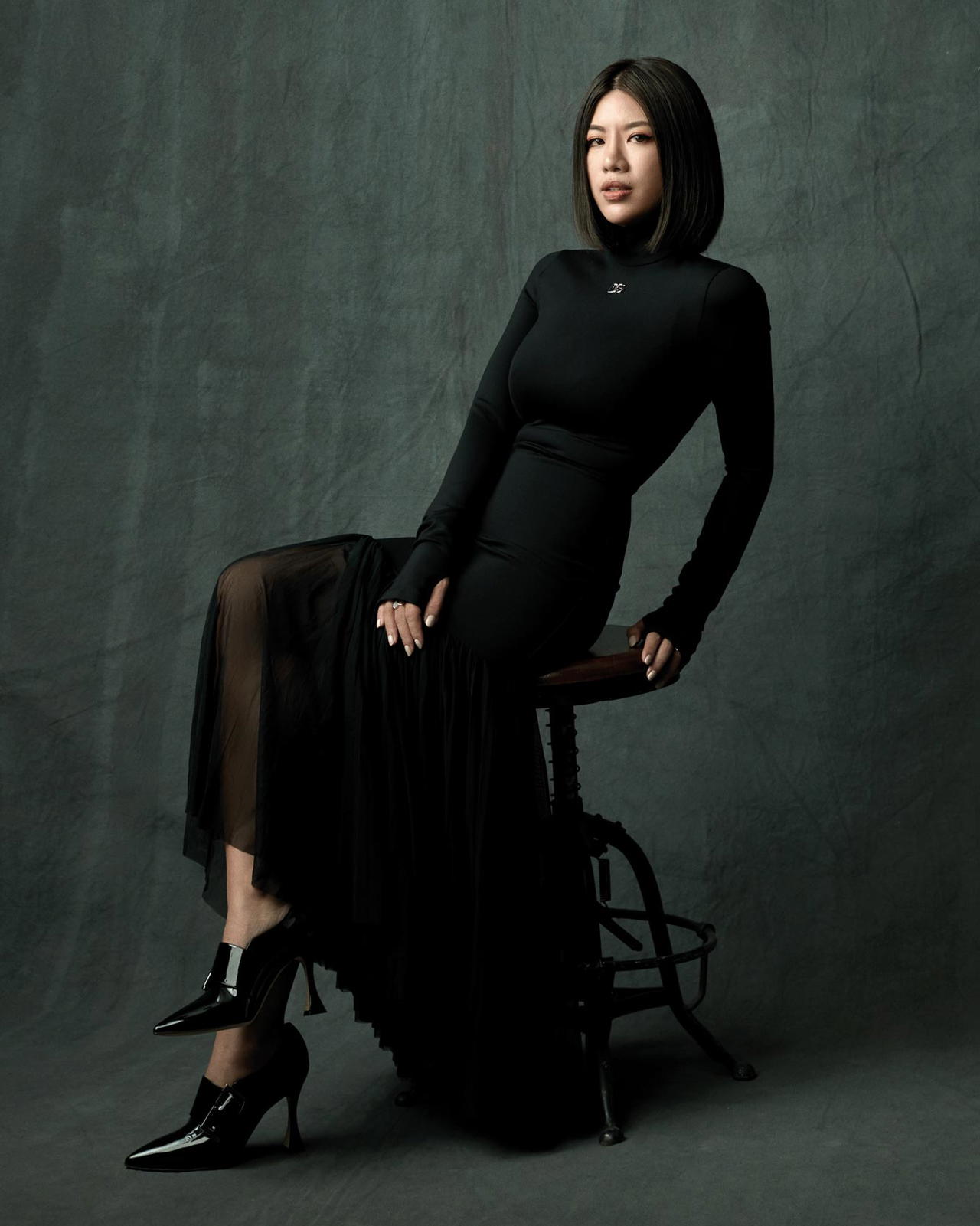
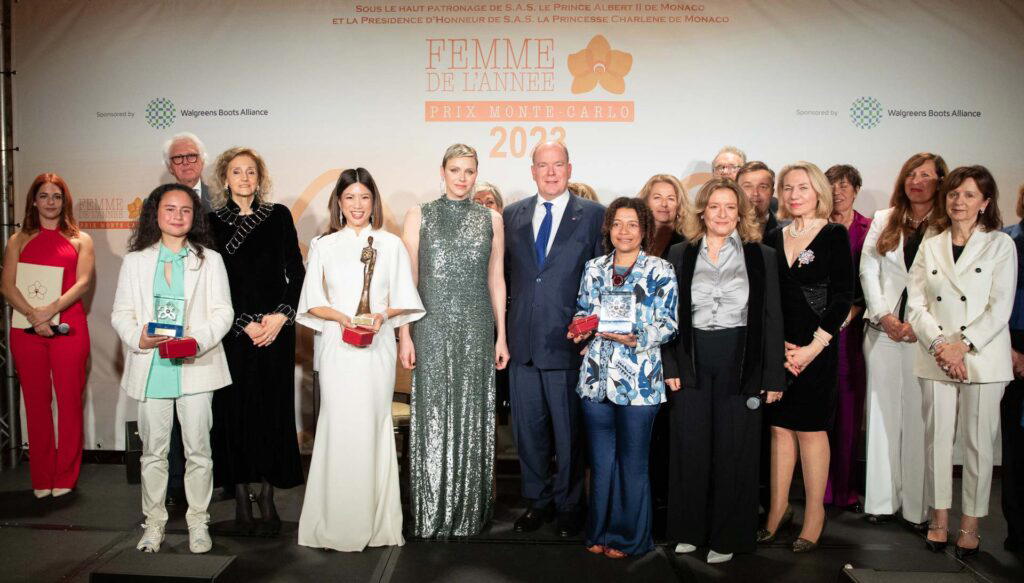
Leanne Robers is on a roll. Shortly after wrapping up the global She Loves Tech conference in November last year, Cinzia Colman, founder of the Monaco Women Forum invited her to give a speech to Prince Albert II, Princess Charlene and a bevy of other personalities from around the world at the Women of the Year awards in the city-state. At the event, she received the Monte Carlo Woman of the Year special award for her work in supporting in women-led and women-impact startups.
Together with Robers, we present her speech below.
—
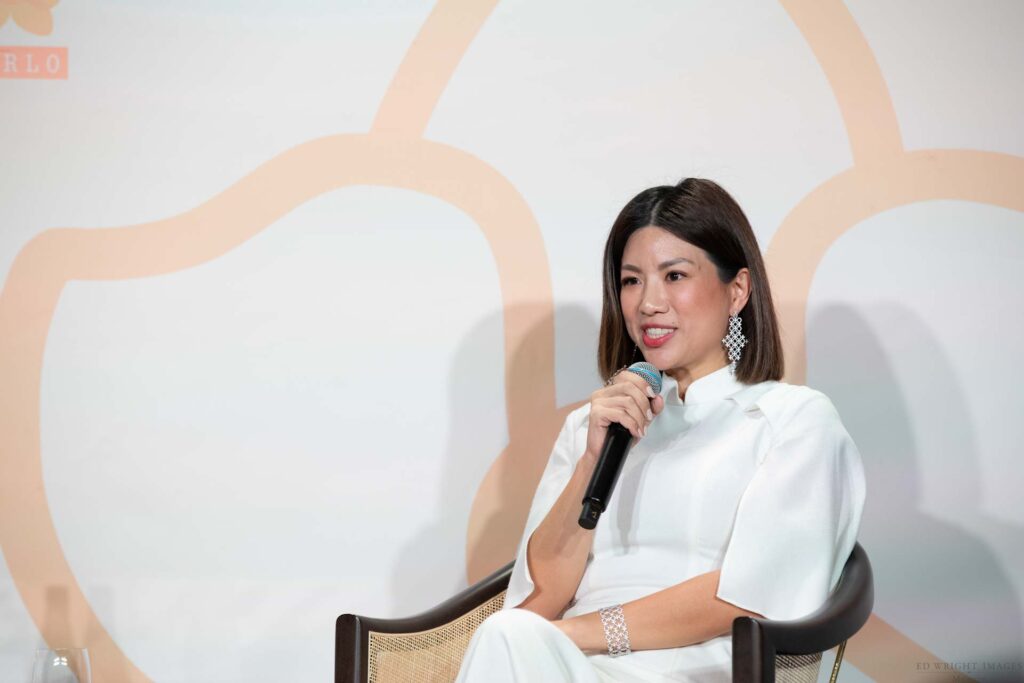
Good afternoon, distinguished guests, ladies, and gentlemen. My name is Leanne Robers, and I am the co-founder of She Loves Tech, the world’s largest startup competition and acceleration program for women in technology. I am deeply grateful to the government of Monaco for inviting me to speak today and it is an honour to share with you all something that’s so dear to my heart.
Throughout my career, I have dedicated myself to promoting equal access and opportunities for women in technology. I have founded multiple tech companies and have personally experienced the challenges and deeply ingrained biases that women face in this industry. I’ve had investors look past me and speak to my male co-founder, even though I was the CEO. I’ve even had top investors tell me, directly to my face, that women don’t build good technology businesses, or can only build beauty and fashion businesses. This isn’t unique to me. I’ve heard the same stories from countless other women, and the data shows it.
Guess how much VC money goes to women-led startups? Women-only founders get only 2.2 percent of total venture capital funding, and they are underrepresented in management and leadership positions of technology companies.
Women-led companies do well, so this makes no sense. Boston Consulting Group conducted a study and found that female-led startups generated twice the revenue than male-led startups for every dollar of investment raised. Women outperformed their male counterparts despite raising less money.
We believe the data and we believe women founders can do great things if given the chance. We started She Loves Tech to showcase great women building ground-breaking technologies, to give them a global stage to get the recognition they deserve, and to give them access to partners and funding that they might not be able to get on their own. We started with this mission nine years ago, and we never imagined how deeply it would resonate with people or how big it would become.
She Loves Tech now operates in 72 countries. We’ve had more than 13,000 startups come through our door. Companies that have gone through our programmes have raised more than US$300 million for businesses that are changing the world of healthtech, fintech, climate tech, and many others. It is inspiring what women can do with the right opportunity.
It has been a long journey to get to this point, and we still have a long way to go. But along the way, we’ve identified three critical components to promote better gender equality in the tech sector.
First, the power of intention. This is what separates companies that genuinely embrace diversity and inclusion from those that merely want to tick the boxes and talk about it for marketing purposes. Companies have hired chief diversity officers without doing anything else, as if that would fix all their problems. They don’t implement diversity and inclusion at every level of the organisation. Diversity and inclusion don’t exist; it’s all empty virtue signalling. It’s not giving people a real voice, and their businesses and their shareholders are not benefiting.
On the other hand, organisations that truly embrace diversity outperform. Research shows that diverse teams bring in more revenue and make better decisions.
We don’t want Diversity-in-Name-Only companies. I affectionately call them DINO-saurs because I believe they’ll either evolve or become extinct.
Second, the power of representation. Role models are essential for inspiring the next generation of women in technology.
In 2019, I flew to Karachi for our She Loves Tech Pakistan Finals. The commissioner of Karachi stood on stage and said how important She Loves Tech is as he has a daughter and he wants to build a better Pakistan for her, and for all. Young girls came to tell me that before we brought She Loves Tech to Pakistan, they thought that technology was only for the boys. But because they saw amazing women on stage building great technologies, they too can choose a career in technology. In the last four years, Pakistan has become one of our most vibrant and exciting markets.
It’s so important that people see others with similar backgrounds and can relate to them. Representation creates belief and hope, and that catalyses action. We need to give women platforms to be role models.
Third, the power of collaboration. No single organisation can tackle this complex issue alone. It takes a village to do She Loves Tech and we work with governments, multinational corporations, schools, investors, and other startup communities across all 72 countries that we operate in.
We couldn’t be in anywhere close to these markets without collaboration. For example, I’ve never been to Bangladesh, a country with a population of 170 million and a young startup ecosystem. I wouldn’t have known how to even get started in this country. Thankfully, we met two people who wanted to build Bangladesh’s first venture studio. They had a big, bold vision, but there were only two of them and they couldn’t do this on their own.
When we first met, they were so excited to be part of something that’s bigger than them. She Loves Tech gave them guidance, a global community, and recognition. They gave us their local contacts and networks, and expertise in navigating the founder landscape. Global and local came together to create outcomes that neither one of us could do alone.
This is the power of collaboration. The sum is greater than its parts. When we collaborate well, one plus one equals three. For us to tackle gender equality, we need to work together, bringing together not just women, but also men, leaders, and allies who can uplift each other and create lasting change.
Organisations that truly embrace diversity outperform. Research shows that diverse teams bring in more revenue and make better decisions. We don’t want Diversity-in-Name-Only companies. I affectionately call them DINO-saurs because I believe they’ll either evolve or become extinct.
Leanne Robers makes the case for diversity in organisations.
I hope you’ll join us on this journey to create a world where women in technology are the norm rather than the exception, and where young girls and women see role models across the science and technology sectors. By harnessing the power of intention, representation, and collaboration, we can work together to create a more equitable world for women, and a more prosperous world for everyone.
Thank you once again to the Monaco Women Forum for inviting me to speak today. Let’s continue to work towards creating a new generation of girls and women with diverse minds and voices. We will all be better off for it.