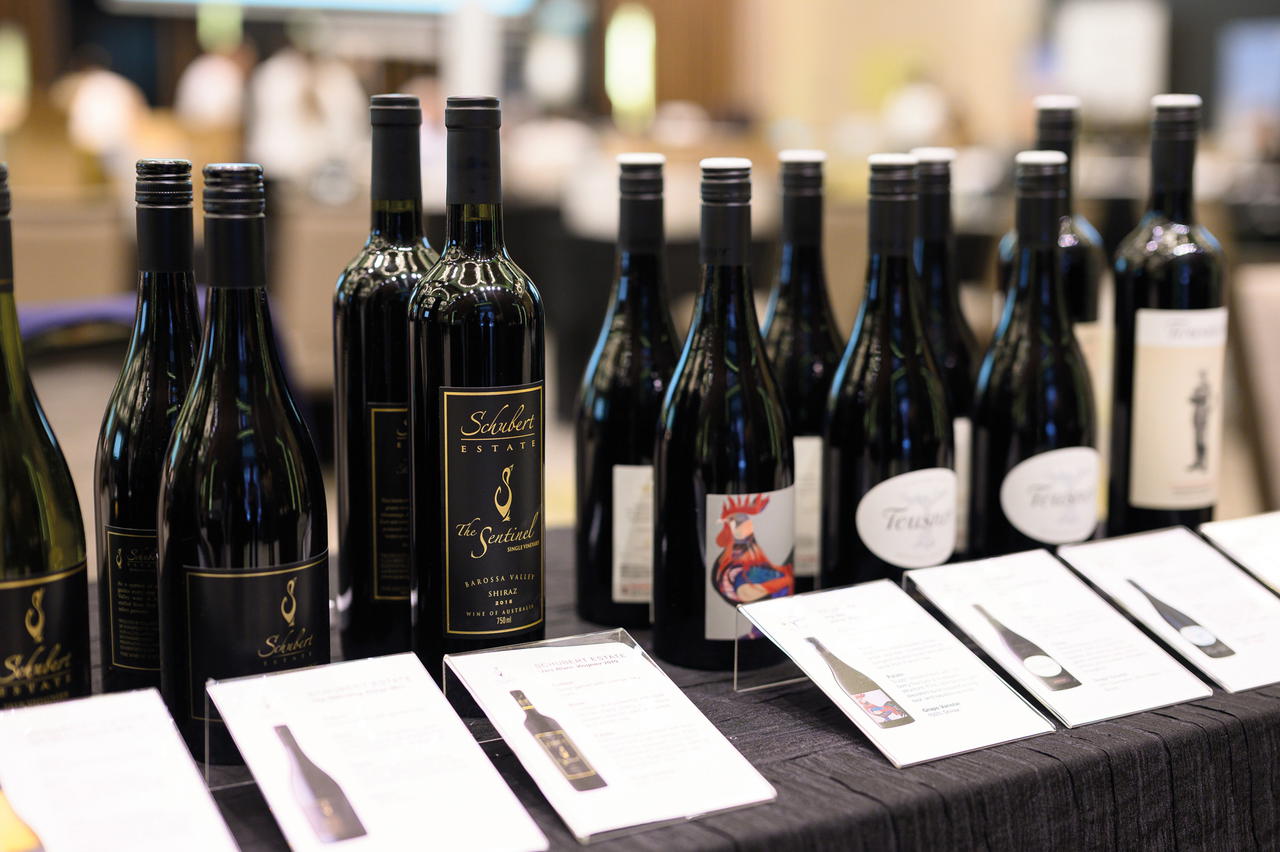
Identifying pests, diseases and rocks, examining tea leaves and coffee beans, blind-tasting cocktails in black glasses, and recognising chefs and their signature dishes—these are some of the lesser-known and frankly unexpected skills sommeliers can be judged on. The Singapore National Sommelier Competition (SNSC) this month will test participants on these tasks and more, says Gerald Lu.
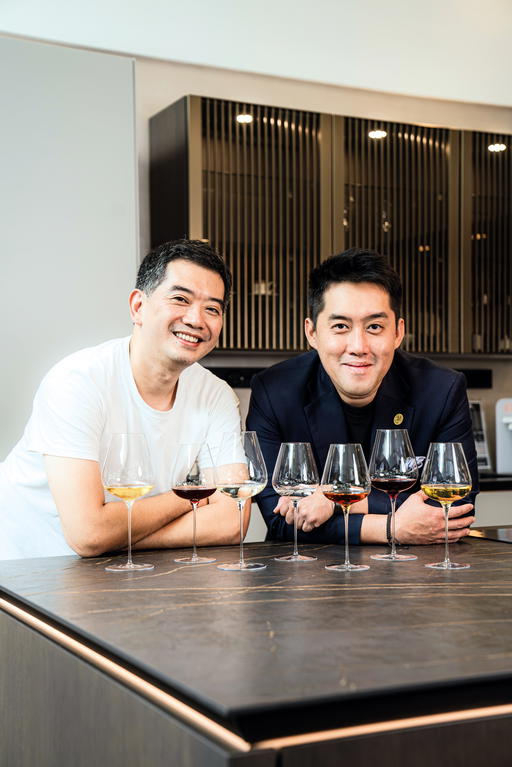
Now in his third term and sixth year as the president of the Sommelier Association of Singapore (SAS), Lu also owns Praelum Wine Bistro and is a leading critic of Asia Wine Review, an independent wine publication and an online editorial platform.
An SNSC winner in 2010 and 2017, he recalls how the competition has evolved over the years: “When it launched in 2009, the SNSC was a closed-door, industry-only event open only to Singaporeans and permanent residents. Only a small pool of candidates was eligible, and very few people outside the industry even knew the competition existed.
“There was a simple theory paper, a couple of wines to taste, and four or five on-stage tasks that focused solely on wine service and blind tasting. There was zero publicity back then.”
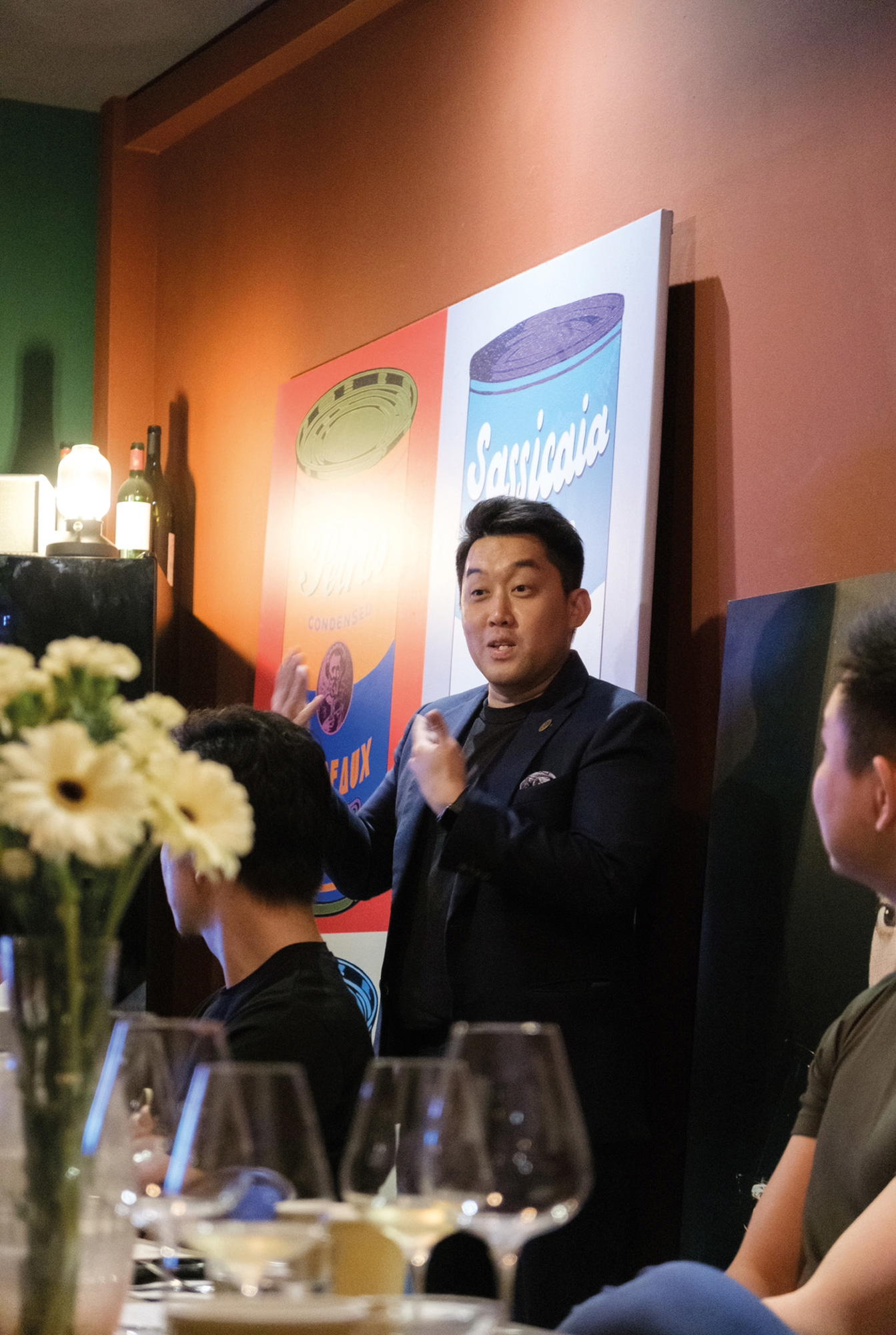
The SNSC welcomes the public today as well as culinary and hospitality students. Digital platforms also host competition segments, expanding participation and engagement.
This year, the preliminary round is on 6 September, followed by semi-finals on 7 November and finals the next day. The finals will be staged alongside The Grape Escape (TGE), Singapore’s largest consumer wine fair. Both are organised by SAS and will be held at Mett Singapore in Fort Canning Park.
Inaugurated in 2018, TGE serves as the public-facing extension of SNSC, drawing hundreds of industry partners, sommeliers, and consumers into a shared celebration. Lu notes that visitors should pay attention to wine regions from the UK, China, and Japan.
“As for grape varieties, it’s interesting to see how the current vinifera varieties adapt to climate change while keeping an eye on PIWIs, the innovative hybrid grape varieties bred to naturally resist fungal diseases, to see how they develop. Solaris, for instance, has taken off well.”
He adds that besides becoming more adventurous, Singaporean drinkers are also more knowledgeable and rigorous in their evaluation of sommeliers.
Current trends focus on discovering “New Wave” winemakers in regions such as Jura in Burgundy and Savoie—an elevated alpine area near Lake Geneva and Mont Blanc. Additionally, rising winemaking nations like the UK and China are producing English sparkling wines and Ningxia reds, alongside other bottles from these new regions.
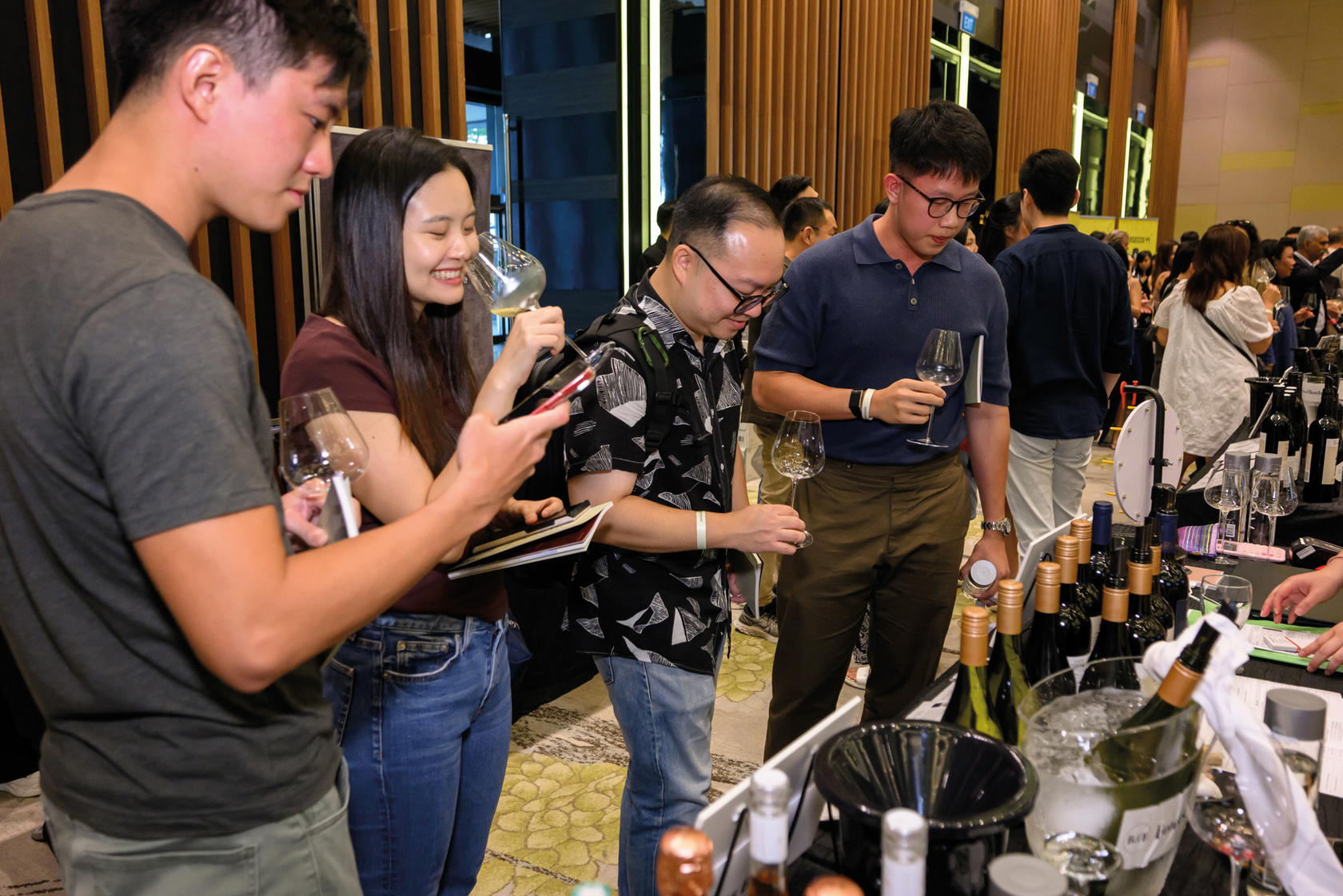
“Be sure to stop by our partner Bottles & Bottles’ booth, as it brings a huge range of wines from around the world every year. With its generosity, consumers have a one-stop solution, which is always a respite when overwhelmed with choices,” he says. At TGE, sake and craft beer are also not to be missed.
According to Lu, eligibility for SNSC candidates has also broadened beyond Singaporeans and PRs, with certain caveats that allow long-serving sommeliers who have not obtained PR status to develop and hone their skills.
Back in 2009, SAS drew from a pool of around 40 sommeliers; today, that number has grown to nearly 300. “Together with a more integrated international sommelier community and accessibility to knowledge and information, the SNSC standard has risen significantly, giving our national champions a clear path to podium finishes in regional and international competitions.”
For SNSC highlights, Lu says first-time finals viewers should watch the picture recognition segment that’s run like a game show. “Usually, the food and wine pairing explanations are the most interesting, followed by wine list corrections—the wine geeks love joining in with the sommeliers. Also, the playful tension of whether a sommelier will drop something in their haste adds extra entertainment,” he laughs.
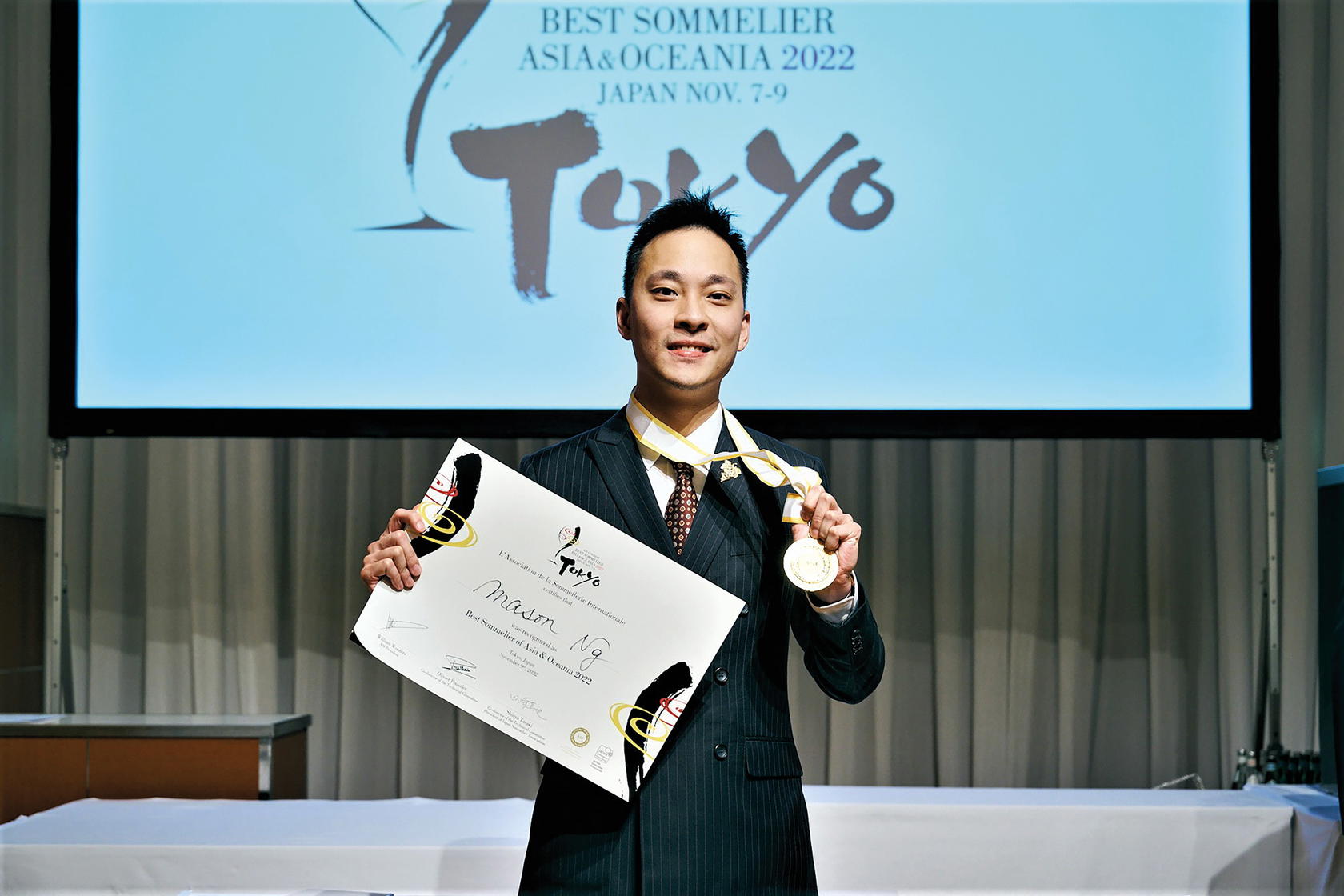
Thinking of competing? Mason Ng advises putting aside your ego, embracing the possibility of losing, and not worrying about being judged or critiqued.
The head judge for this year’s SNSC, he competed in 2018 and 2019, won in 2019, and then helped organise the event for the next two years. Formerly based here, Ng now lives in Hong Kong, where he runs a wine bar Maison Natsukashii and is a Hokkaido Wine Ambassador.
“The best sommeliers I know never stop learning because wine evolves with every vintage, region, and producer. The moment you believe you know everything is the moment you stop growing. Success in competition isn’t defined by a single performance; it’s the result of years of consistency and an unwavering commitment to hospitality,” he says.
Regarding what distinguishes a good sommelier from a great one, Ng notes that knowledge alone is not enough. The key is the ability to translate knowledge into genuine hospitality.
“A sommelier may know every grand cru vineyard in Burgundy, but if they cannot tailor their language to the guest or recover gracefully from an unexpected situation, that knowledge loses its value in service,” he explains.
As the competition continues to raise the bar, SNSC has evolved from a test of technical prowess into a showcase of the composure and hospitality that define the modern sommelier.
Discover more here.