What you drink your wine from affects its taste. This isn’t snobbery—it’s science. A broad bowl aerates bold reds; a narrower one keeps delicate whites crisp and coy. The rim also plays an important role: it determines the angle at which wine hits the tongue, nudging taste towards sweetness, acidity, or umami. Shape, in short, shapes perception.
Enter SKLO, a Singapore lifestyle brand with a taste for good design. The exclusive Southeast Asian distributor of 200-year-old Czech glasshouse Kvetna 1794, SKLO recently stepped into the design spotlight with its own range of wine glasses that’s earning nods from both Red Dot jurors and serious sommeliers.
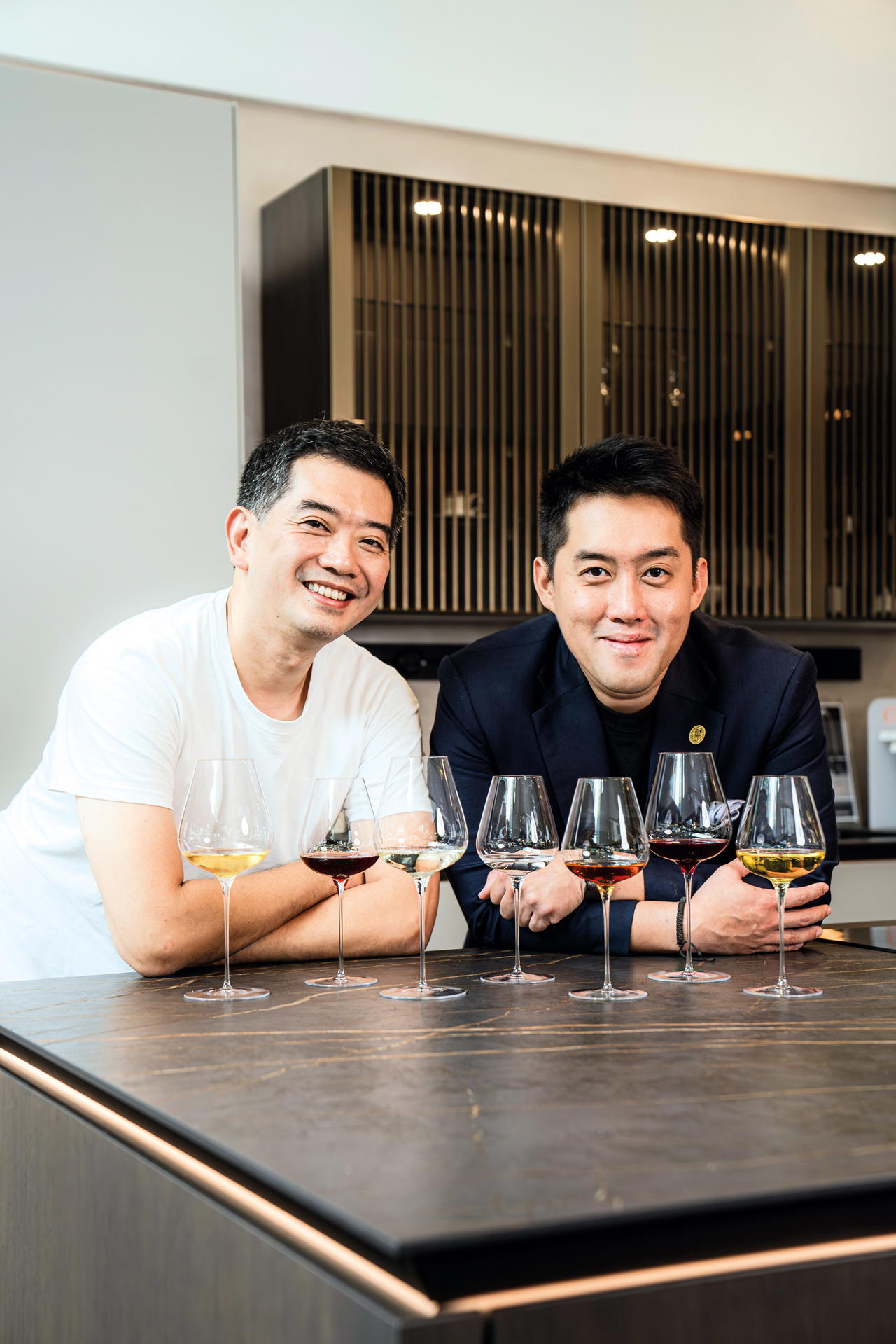
“SKLO Evolution began as a concept for a professional tasting glass, now known as Evolution 50,” explains founder Thoo Lee Ming. Compact and engineered for focus, it was intended for formal tastings. But when sommeliers began asking for a more versatile glass that could perform across varietals—and even spirits—the concept evolved. “That became Evolution 125.”
Developed with the Sommelier Association of Singapore (SAS) and handcrafted by artisans from Kventna 1794, SKLO’s Evolution 50 and 125 series are universal stemmed glassware designed to be enjoyed across all wine styles.
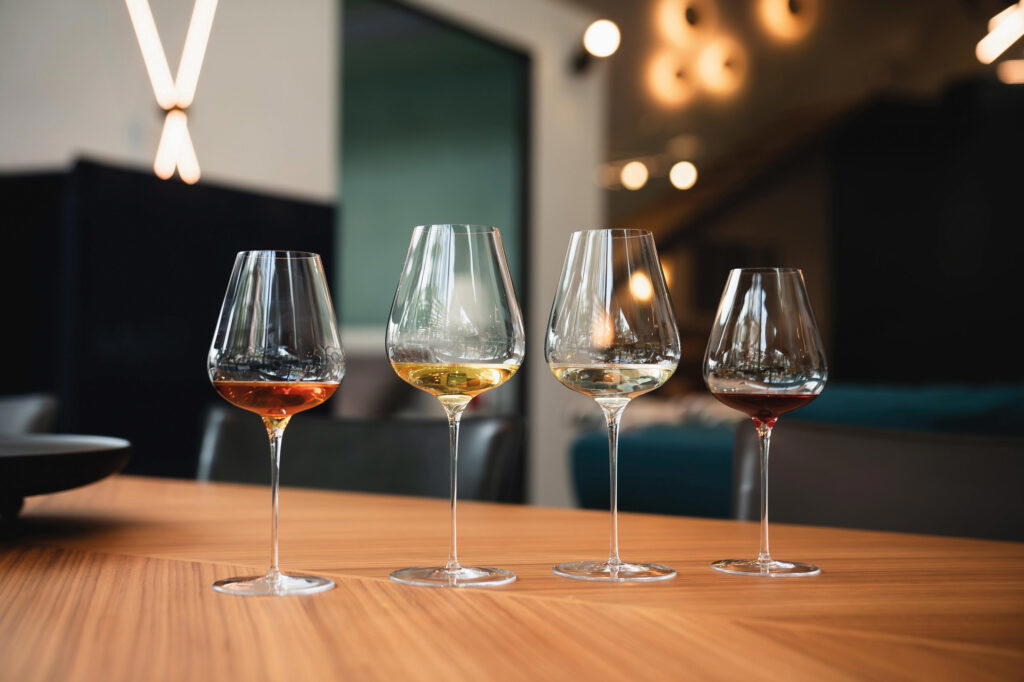
Universal wine glasses, of course, are not a novelty. Notable examples include the Zalto Denk’Art, Gabriel Glas Gold Edition, and Grassl Versatile. However, as Thoo points out, they’re often designed for Western markets. “Many overlook regional nuances—table sizing, hand ergonomics, even the way sommeliers in Asia approach service,” he says. “We weren’t trying to reinvent the wheel—we were trying to refine it, with the input of professionals who use glassware every day,” he adds.
“What sets the SKLO Evolution 125 apart is how it was created—not just by glassware designers, but by working sommeliers who use glasses daily in high-pressure, real-world service. SKLO Evolution was developed from the floor of restaurants, bars, and tasting rooms, with real-world feedback from sommeliers,” says Gerald Lu, President of SAS.
That feedback drove three core areas of refinement. First, the tulip-shaped bowl was precisely calibrated to optimise aromatic velocity, as in how scent molecules rise from the wine without requiring aggressive swirling. In addition to helping concentrate aromas, a narrower rim provides a more comfortable nose experience for many Asian consumers.
In terms of ergonomics, the stem has been slimmed and subtly shortened to offer better control for smaller hands, while the footplate’s reduced diameter is a deliberate response to the compact tablescapes and shared dining formats typical of Asian hospitality.
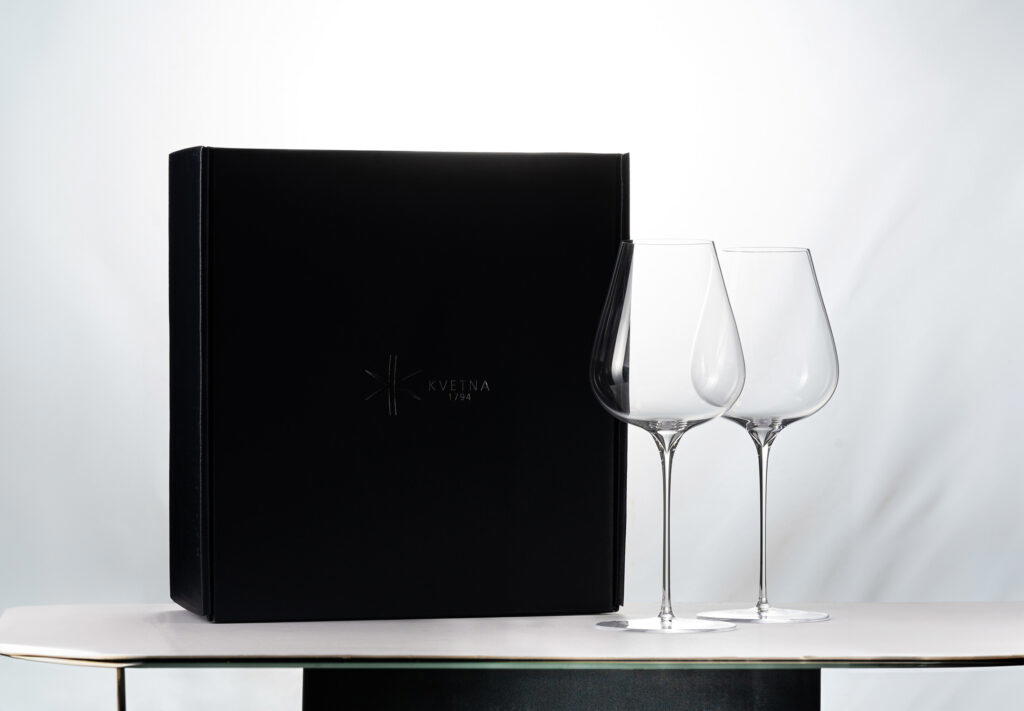
Perhaps most crucially, the glass was designed to be structurally neutral. It neither favours red over white, nor power over delicacy. Instead, it delivers clarity and balance across the spectrum—acidity, tannins, and alcohol—allowing the wine’s character to come through with precision.
“The design process with SAS was very data- and feedback-driven,” says Thoo. “Every round of prototyping involved blind tastings across different wine types, and we captured input on aroma intensity, structure, texture, and clarity of flavour.”
Surprisingly, Thoo and Lu found that “more isn’t always better”. For example, the assumption that a bigger bowl enhances aroma didn’t hold true in all settings. “A tighter, more controlled tulip shape provided better structure for a wider range of wines while retaining elegance and ease of use,” shares Thoo.
Good wine can certainly stand out, even in the wrong glass. However, when served in the right one, it comes alive. The philosophy at SKLO emphasises that the perfect stemware doesn’t merely hold the wine—it enhances it. So, the next time you swirl and sniff your drink, consider the importance of the glass.