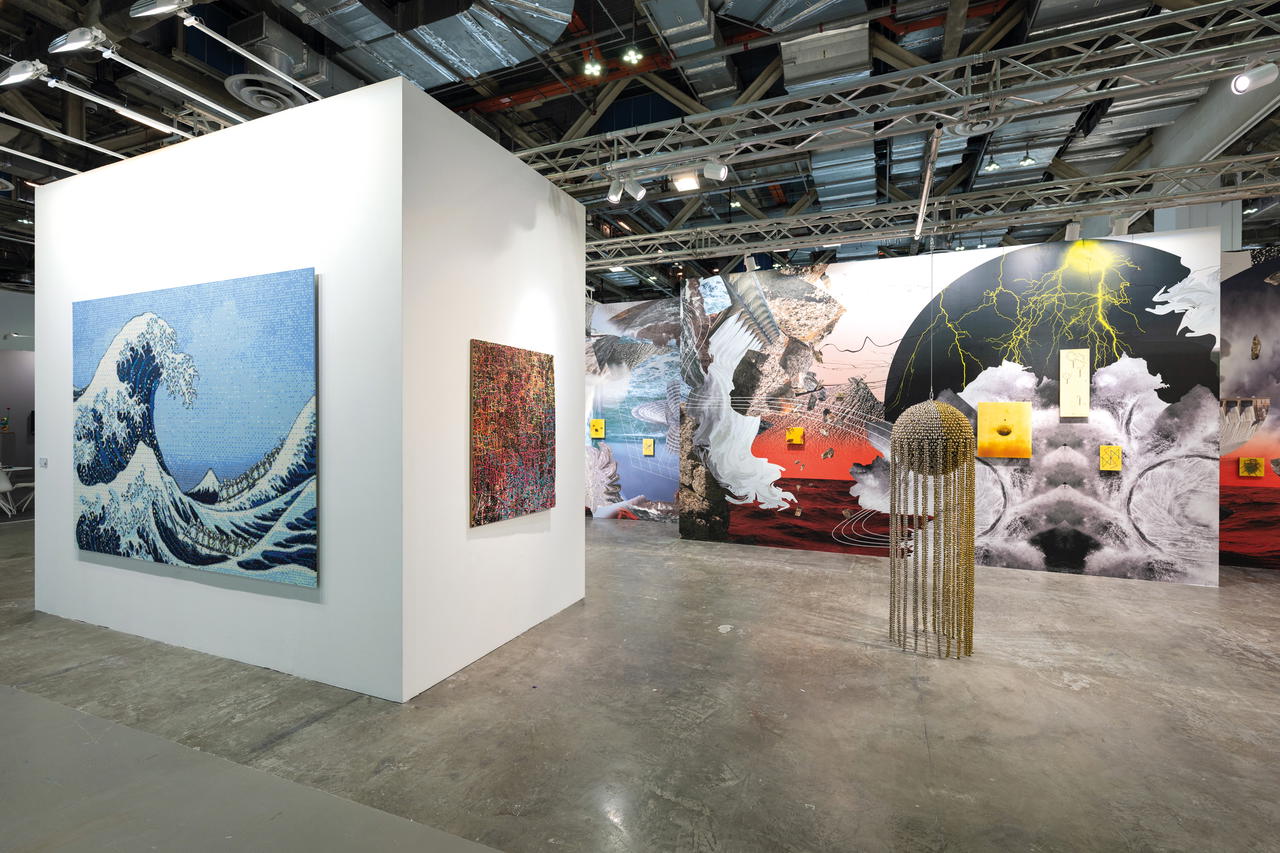
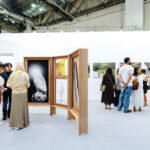
Between champagne flutes and second glances, Art SG and S.E.A. Focus at the Sands Expo & Convention Centre unfolded as a recalibration of priorities rather than a spectacle. Singapore Art Week 2026 saw both fairs as anchors of a market that has moved from an adrenaline-fuelled launch phase to one that is deliberate, analytical, and mature.
Art SG, now in its fourth edition, gathered around 100 galleries from over 30 countries, with S.E.A. Focus staged for the first time within the same venue, creating a continuous circuit between global blue-chip, regional heavyweights, and emerging voices.
VIP attendance remained robust, with museum directors, curators, and patrons walking the floor. Among those spotted were Maria Balshaw, Director of Tate; Michael Govan, CEO and Wallis Annenberg Director of the Los Angeles County Museum of Art; Russell Storer, Senior Curator and Associate Director of Curatorial Affairs at M+; and Purat Osathanugrah, Founding Chairman of Dib Bangkok.
The big-ticket sales included Raqib Shaw’s ‘Fall of the Jade Kingdom I – Paradise Lost Chapter II’ for £475,000 ($817,147) at Thaddaeus Ropac and Chen Wen Hsi’s ‘Memories of Taroko’ for $320,000 at Artcommune.
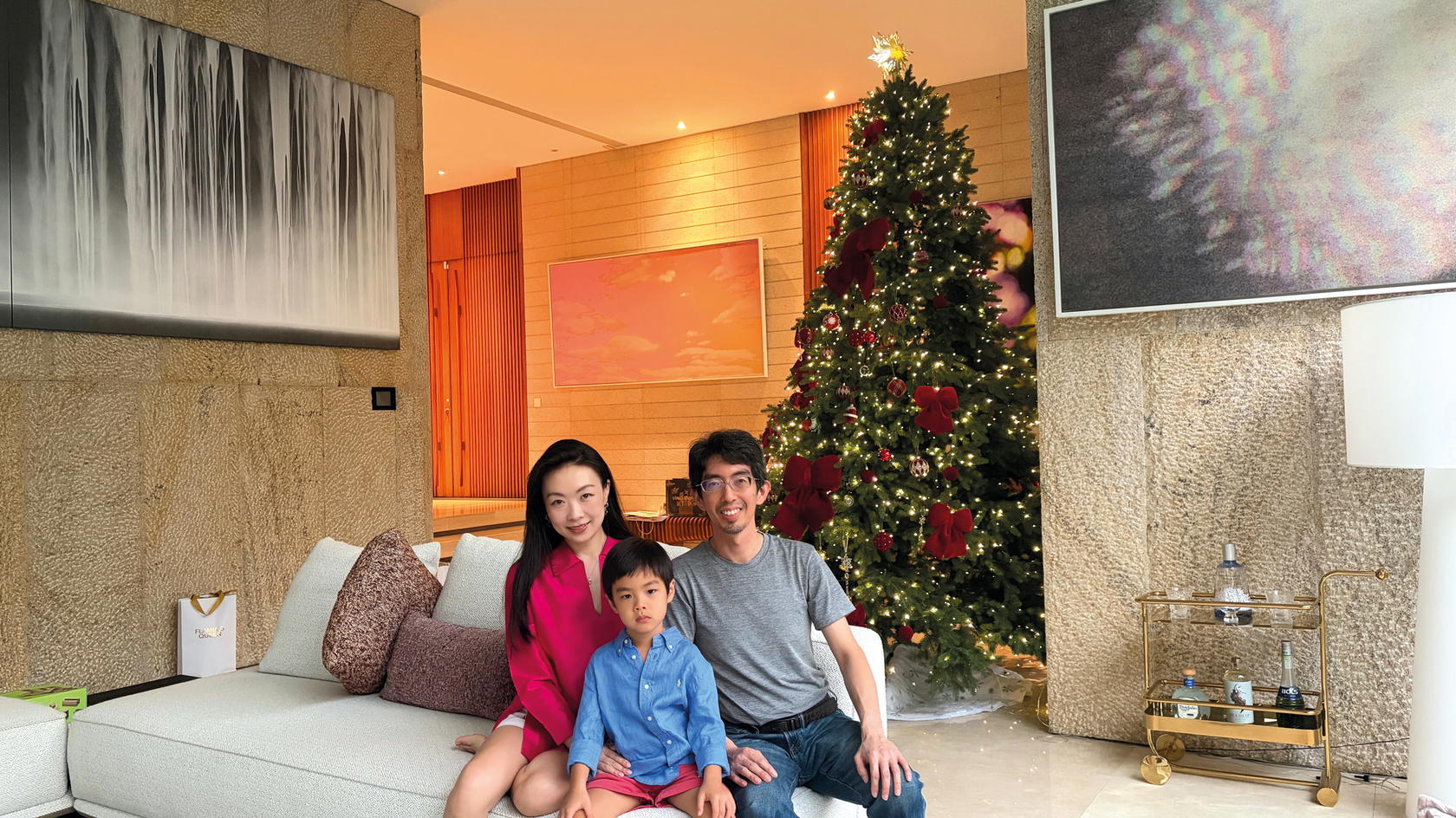
To collectors Bruce and Lulu Ang, Art SG was “a study in contrasts”, moving from Mangu Putra’s Indonesian landscapes and Han Sai Por’s organic bronzes at Gajah Gallery to Jaafar Latiff’s charged abstractions at Cuturi and Antony Gormley’s small-scale sculptures at White Cube. Their key acquisition, however, signalled a decisive shift.
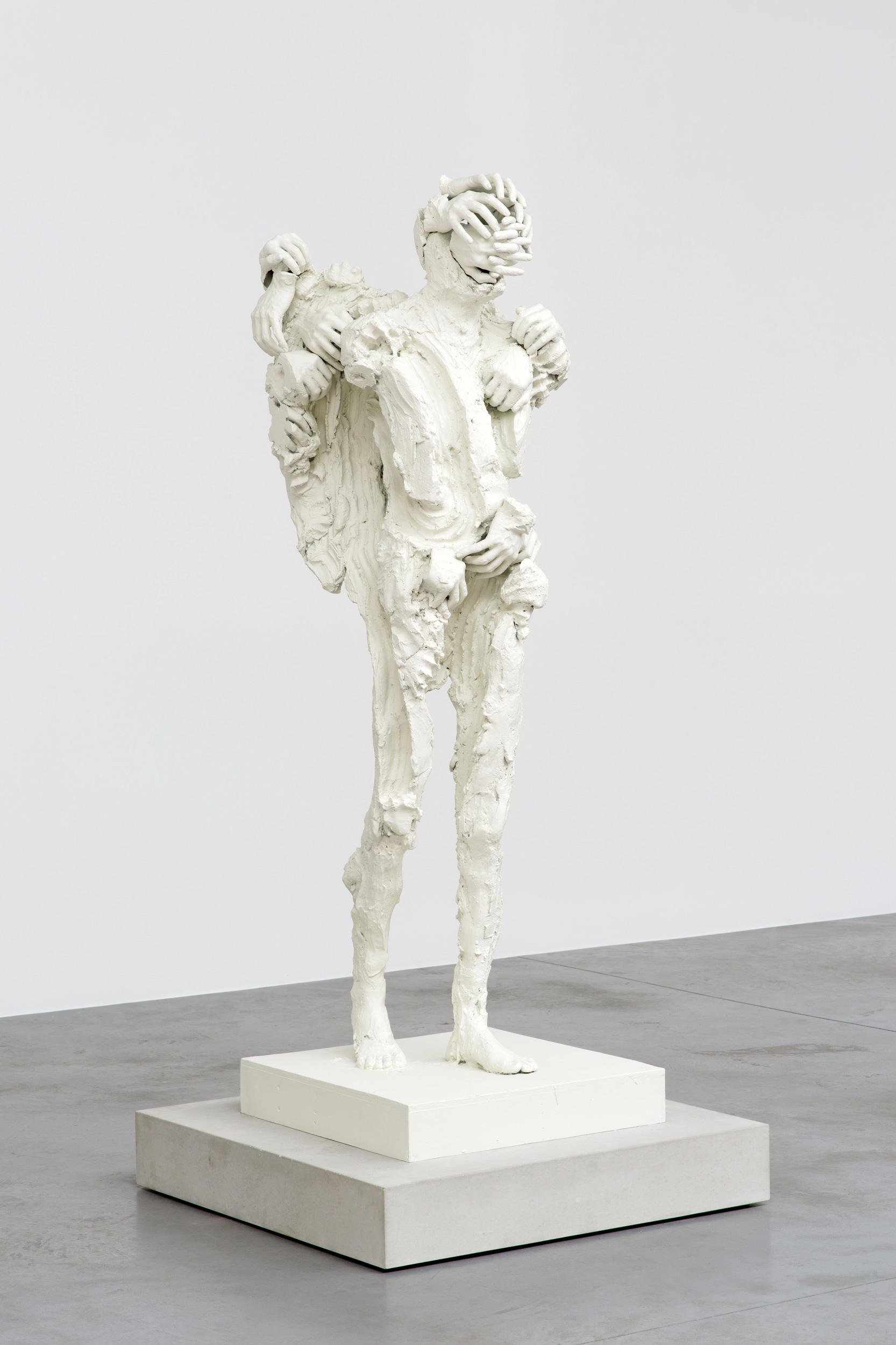
Although they had no prior knowledge of Canadian-born sculptor David Altmejd, they bought his ‘Untitled 1 (Bronze Watcher)’ from White Cube, stepping outside the established gallery circles. “We realised that the true purpose of an international platform such as Art SG is to explore global perspectives that aren’t normally accessible in Singapore,” they said.
Although the piece “commanded the space”, Altmejd’s philosophy—sculpture as an autonomous organism—sealed the deal. “We weren’t just buying a sculpture; we were bringing a piece of a larger, boundary-breaking evolution into our collection.”
The week was also decidedly local for them. Ahead of the fair, the Angs committed to a work by Singaporean artist Ian Tee at a charity auction by OH! Open House, underscoring a “responsibility to support our homegrown talent”. At Art SG, they singled out Indonesian artist Jemana Murti, whose AI-configured, 3D-printed reinterpretations of cultural relics felt like “a digital archive brought into the physical world”.
Atmospherically, they found the fairs to be quieter and contemplative, with fewer international galleries and a greater regional focus. To thrive, they argued, Singapore must remain “a beacon that draws the world in, so that our local and regional artists don’t just talk to each other, but contribute to a global dialogue”.
DELIBERATE PURCHASES
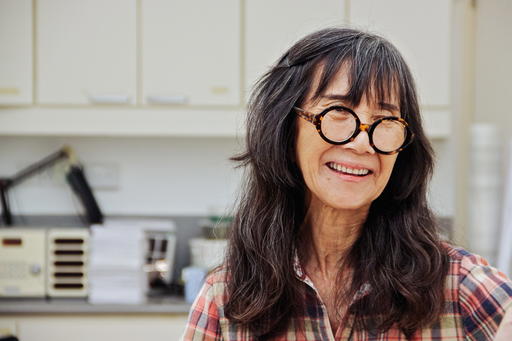
Veteran collectors Linda Neo and Albert Lim, meanwhile, approached the fairs with a different attitude. Neo said, “Although galleries are the go-to for art purchases, artists produce special pieces for art fairs to leverage the wider audience.”
‘The Poverty Line’, a long-running visual art project and documentation of global food access by Singaporean-born photographer Stefen Chow and economist Huiyi Lin at Whitestone Gallery, intrigued her.
She also cited Johyun Gallery’s complete sell-out of Korean visual artist Lee Bae’s works—“very well-shown internationally and much sought after”—totalling US$2,758,000 ($3,479,120), including one she was considering. In S.E.A. Focus, emerging Singaporean artist IC Koh at Wetterling Teo Gallery stood out for his “brushless approach on sculptured canvas”.
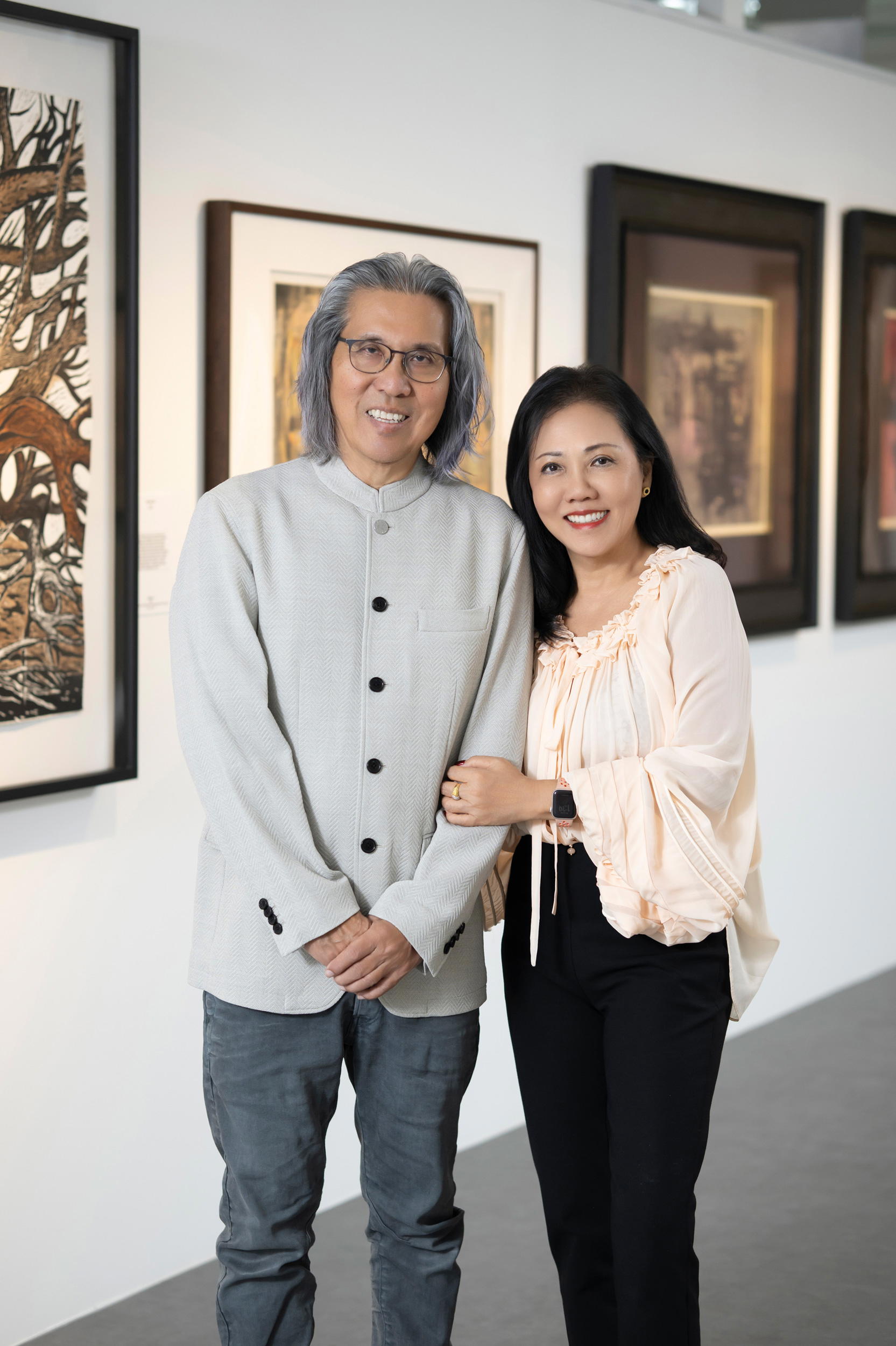
In addition, Neo noted a more measured buying climate this year. There was a pronounced dip in collectors from Indonesia and the Philippines, along with consumers taking longer to consider their purchases, she explained. Even so, curiosity remained high, particularly for South Asian and Latin American art—an extension of Singapore’s cultural crossroads status.
Although she did not buy anything at the fairs, she did acquire a Finbarr Fallon photographic set from Supper House in Tanjong Pagar Distripark. Furthermore, she launched “Ink and Paper: 10 Years On”, a six-month exhibition featuring Singaporean modernists like Cheong Soo Pieng and Ong Kim Seng in February. She views keeping the ecosystem healthy as her curatorial duty.
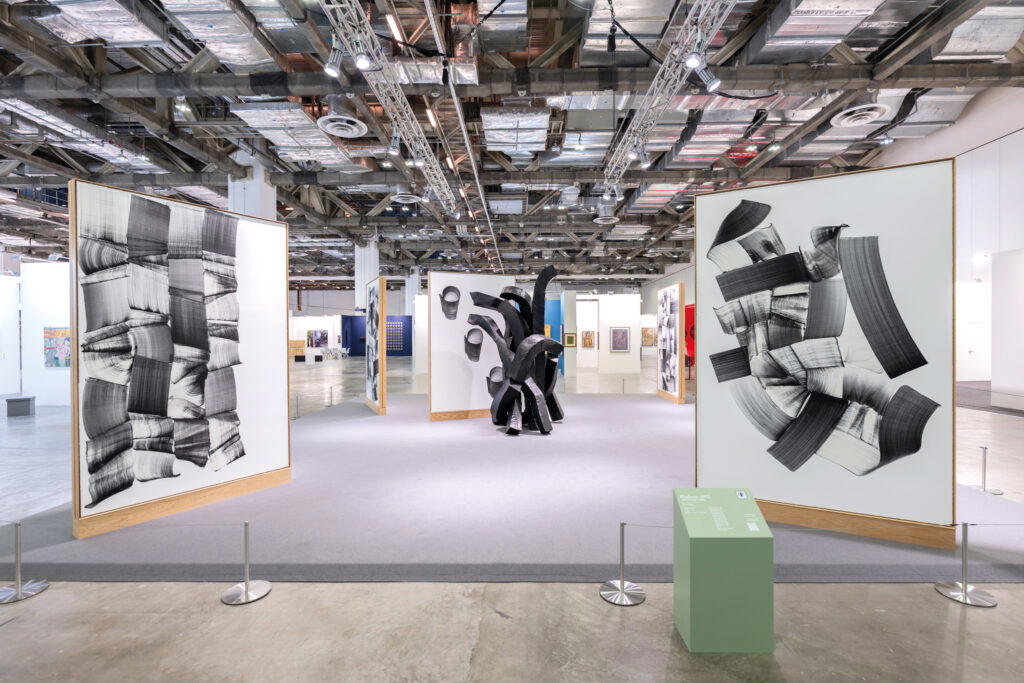
Lawyer Ben Ng was delighted by the show of strength by Singapore’s galleries’ this year. Esmond Loh’s works at Haridas Contemporary reframed hawker culture, while Sullivan + Strumpf’s Eko Bintang presentation revealed paintings which were “enigmatic and thoughtful, with a sense of humour”. He especially admired Tom Sachs’ space-age forms that combined signature bricolage techniques with hand-sculpted porcelain at Thaddaeus Ropac.
Ng added that his recent acquisition of Heemin Chung’s ‘Being Saturated’ from Ropac’s Seoul show (not shown at the booth) shaped his Singapore Art Week experience: “Fairs are crucial for relationship-based industries like art. Art SG, for instance, matters because it allows us to continue meaningful interactions with the international art world.”
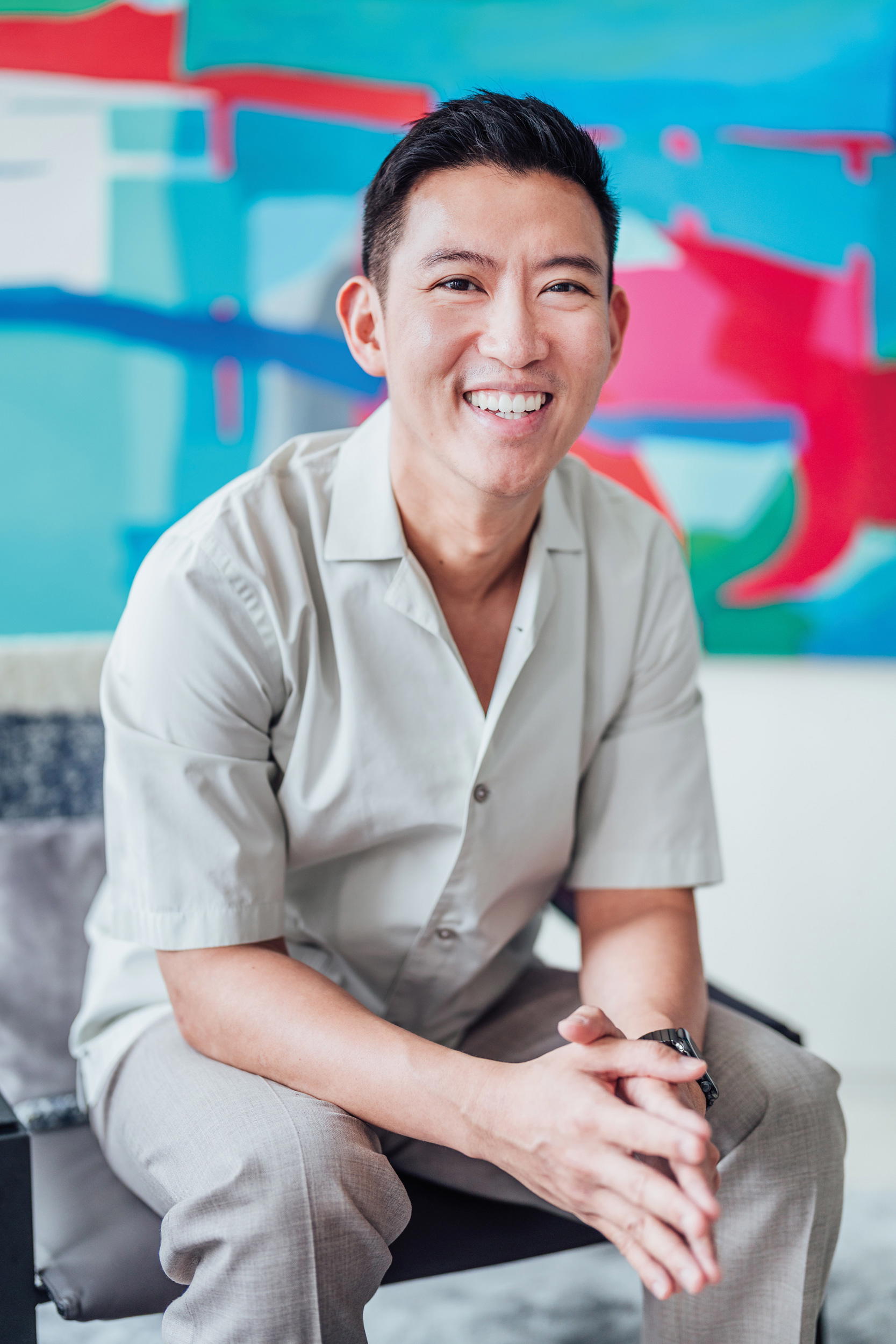
While acknowledging that the attendance felt “slightly more restrained”, he commended the off-site programming in River Valley. In addition to Dawn Ng’s solo at Singapore Repertory Theatre, Ng also cited exhibitions at STPI, Tanoto Art Foundation, and New Bahru Art Foundation.
EVOLVING WITH CONFIDENCE
On the market front, dealers also echoed this thoughtful attitude. Anthony Phuong of A2Z Art Gallery observed “a studious audience eager to learn. I didn’t feel the usual frenzy, but I appreciated the quality of the guests”. As a result of his Shiori Eda focus, 11 of the 18 works were sold, with further negotiations in progress.
The sale of works under $10,000 was easy, as Yeo Workshop reported, with Southeast Asian artists such as Citra Sasmita selling out at that price point. It also singled out “a more concerted effort to foreground Singaporean artists”.
Christiaan Haridas, meanwhile, sold 80 percent of his booth, placing major works with under-40 Singaporean collectors—evidence of generational turnover. “Level 1 was bustling with activities,” he said. “Our proximity to S.E.A. Focus was also advantageous, as clientele from the platform flowed into our lanes.”
Finally, Sullivan + Strumpf, which sold works by all artists at its booth, appreciated the chance to network with collectors and museums in the region. “There’s a real community in Singapore,” said its co-director Ursula Sullivan.
In retrospect, Art SG and S.E.A. Focus 2026, while lacking in the excitement of earlier editions, made up for it with substance. Singapore’s art scene demonstrated its ability to transcend mere hosting by engaging with the global art world more assertively, supported by influential attendees, six-figure sales, and a growing, multigenerational collector base.