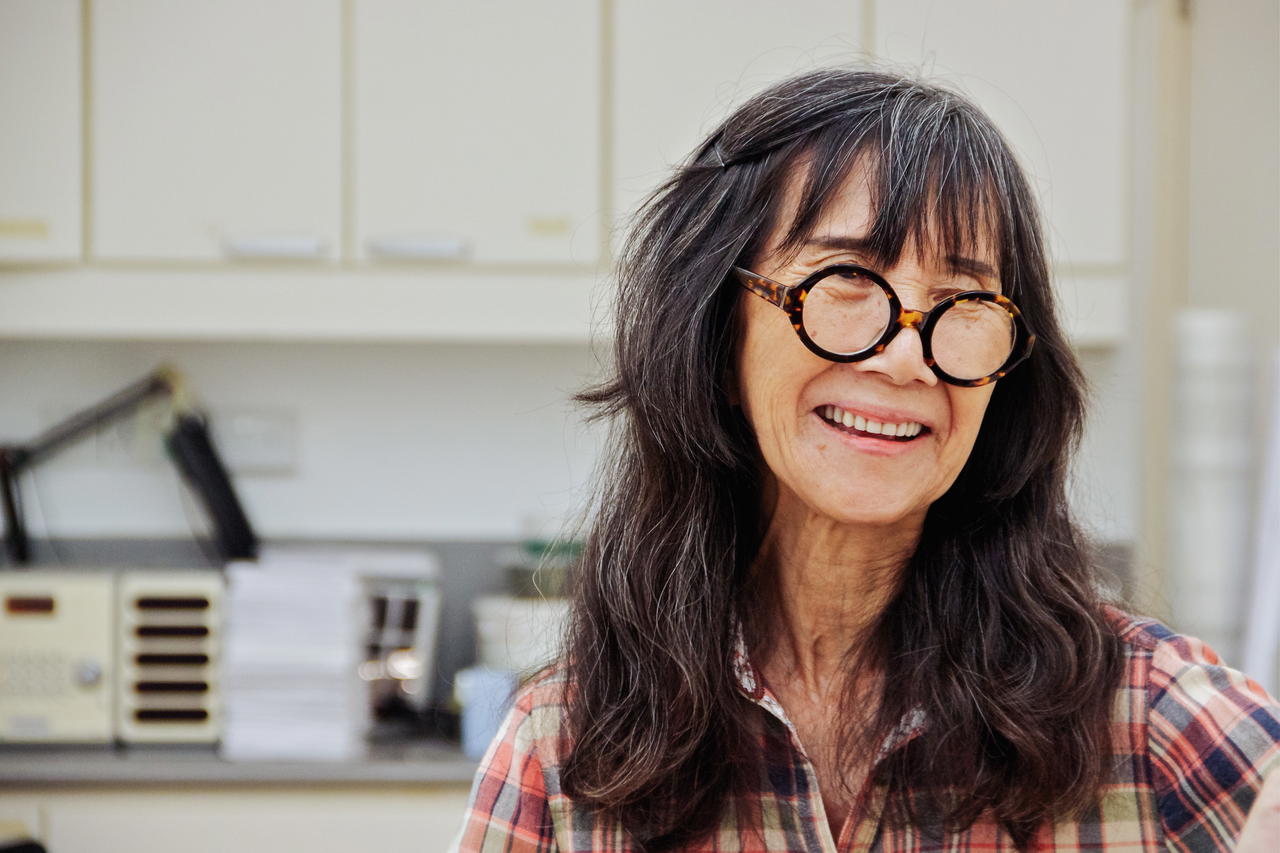
Four large granite boulders from Han Sai Por’s ‘Seed Series’ (1996) sit prominently along The Esplanade Waterfront. In front of Capitaland Tower, the colourful glass balls of ‘Shimmering Pearls 1’ (1999) float above a water fountain. At Gardens by the Bay, 12 highly polished stainless steel pieces make up the Perpetual Blooms (2022).
Her name may not be widely recognised by every Singaporean, but many have likely encountered Han’s celebrated sculptures.
For more than 40 years, she has shaped stone into organic forms that reflect Singapore’s landscapes and spirit. Her sculptures are massive and intimate at the same time. Among them are granite slabs pared down to look like delicate seeds and immense boulders reimagined as delicate leaf folds.
At 80, Han remains as prolific as ever, inspired by the same organic rhythms that first inspired her as a child. “I was surrounded by trees, plants, and wildlife,” she recalls of her upbringing in Changi. “Living and playing amidst this organic beauty, I was constantly inspired by the colours, forms, and shapes of living things in nature.”
As a result of that early immersion in landscape, her practice became rooted in a philosophy that views nature as both subject and source, endlessly fertile in its composition.
With her works in the Australian Parliament in Canberra, the China National Museum in Beijing, and even the Chancery of Singapore’s Permanent Mission to the United Nations in New York, Han is recognised as Singapore’s foremost sculptor today.
Her roots, however, remain firmly planted on the island she calls home, and her relationship with the natural world has never been decorative. It is not a motif for her, but a philosophical anchor. Using its transformation processes—the germination of a seed, the erosion of a rock, the cycle of growth and decay—she creates works that are less about representation and more about essence.
“Regardless of the material or technique, the essential element is the message the artwork delivers,” she explains. “Stone and wood require carving, metal involves welding, bronze necessitates moulding and casting. Each demands different skills, but the artist’s hand and presence remain irreplaceable.”
The results of this approach are familiar yet abstract forms. In her acclaimed ‘Seed Series’, which she has been refining since the mid-1980s, smooth granite sculptures evoke the germ of life itself, simultaneously fragile and enduring. Encountering them invites reflection on beginnings, resilience, and the forces that shape existence.
SCULPTING A PRESENCE
Han was awarded Singapore’s Cultural Medallion in 1995, the nation’s highest arts honour. From there, her works travelled widely: outdoor gardens in Suzhou, public parks in Japan and Malaysia, airports and embassies across continents.
More notable awards followed, including the Top Prize at India’s 11th Triennale (2005), the Outstanding City Sculpture Award in China (2006), and the Leonardo Award for Sculpture in Italy (2015). More recently, she was included in Forbes Asia’s 50 Over 50: Most Outstanding Women (2024).
Although this recognition has elevated Singapore’s position on the global sculptural stage, she remains understated about her achievements, viewing them less as personal triumphs than seeds of recognition for sculpture in the region.
“I am deeply honoured that my contributions have elevated Singapore’s presence in global sculpture,” Han says, more concerned about the dialogue her work provokes than with the awards themselves.
Despite her success, she has long known the difficulties younger sculptors face. Materials are expensive, space is scarce, and sculpture’s physicality may deter those without institutional support. “Public unfamiliarity with sculpture, limited education in 3D art, and the lack of dedicated studios make it challenging for emerging artists.”
This led her to co-found the Sculpture Society (Singapore) in 2001 and become its founding president. Since then, it has been a critical platform for collaboration, problemsolving, and advocacy. It stages exhibitions, hosts visiting artists, and sustains sculpture’s relevance in Singapore’s art world.
“Thinking sculpture will fade away is a grave mistake,” she says. “Globally, sculpture is a vital symbol, conveying culture and history. Sculpture museums, gardens, and parks flourish around the world. Singapore must find its own ways to create a space for sculpture.”
With workshops, exhibitions, and mentorship, the society has created a space where sculpture is seen as vital, tactile, and intellectually alive, rather than just an afterthought. For many younger practitioners, Han is more than just a mentor; she is proof that it is possible to maintain a sculptural practice in a city more accustomed to canvas than stone.
However, challenges remain at large for budding young artists. While Singapore’s sculptural scene has gained international recognition, institutional support lags. Major art schools no longer offer specialised sculpture programmes and training is often reduced to functional design modules. In contrast, sculpture is celebrated through festivals, public installations, and a blend of traditional and contemporary art in other countries.
“Sculpture needs a dedicated space and institutional support to maintain its role in storytelling, cultural unity, and societal dialogue. Without this, we risk losing a vital artistic voice.”
Despite this, she remains optimistic. In her view, creativity often flourishes under constraints. Singapore’s small size, she believes, should not be a barrier to innovation, but rather a challenge that inspires it.
STPI, SG60, AND AN UNFAMILIAR MEDIUM
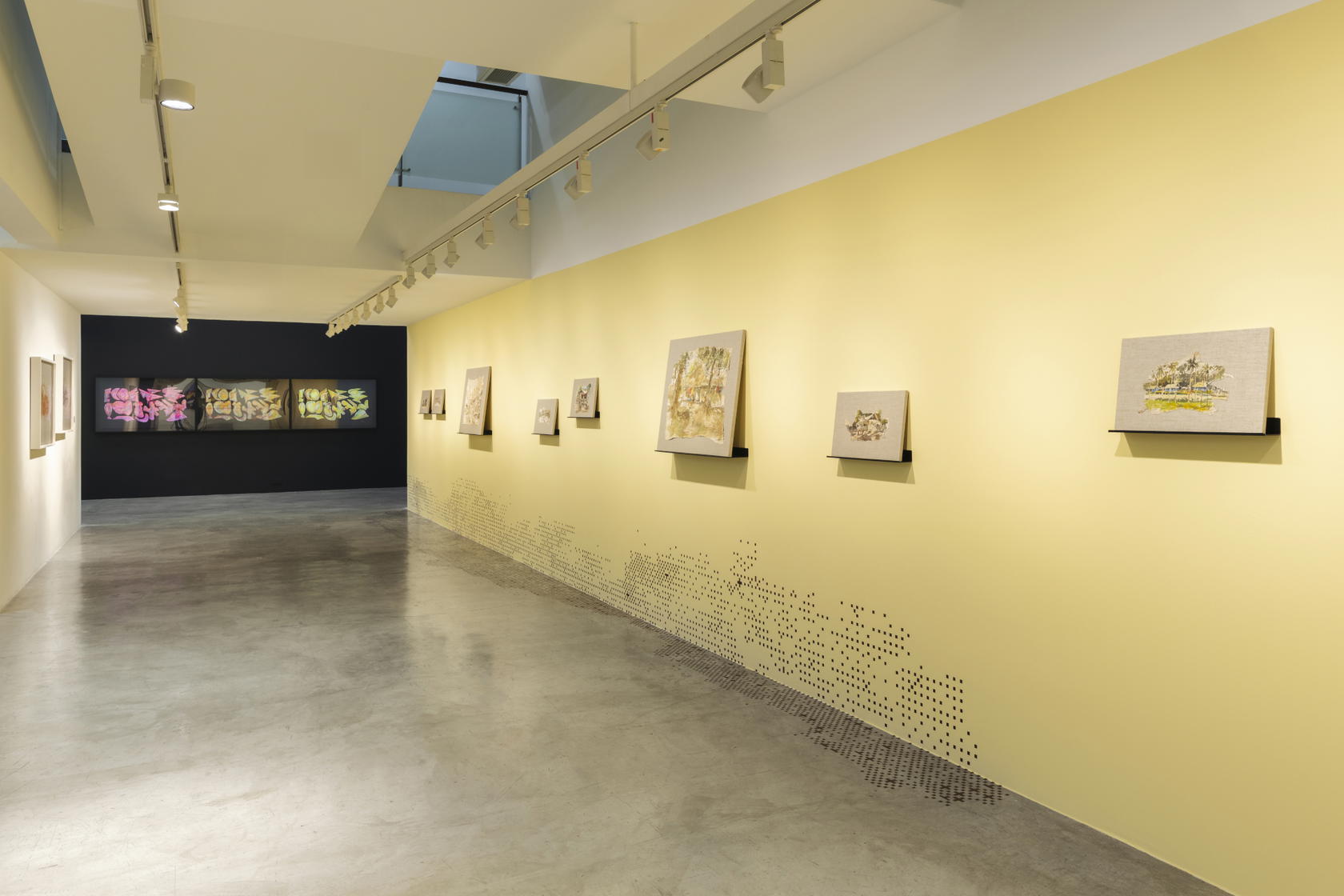
Her works for STPI Singapore’s “Material Moves” reflected this spirit of renewal. In the exhibition (15 August to 5 October, 2025), which coincided with Singapore’s 60th anniversary of independence, four local octogenarian artists pushed themselves beyond their signature mediums.
Prior to the exhibition, Han completed three residencies during STPI Creative Workshops in 2013, 2022, and 2024. The first two resulted in the “Moving Forest” (2014) and “The Forest and Its Soul” (2022) exhibitions. Her creations from her 2024 residency were presented in “Material Moves”.
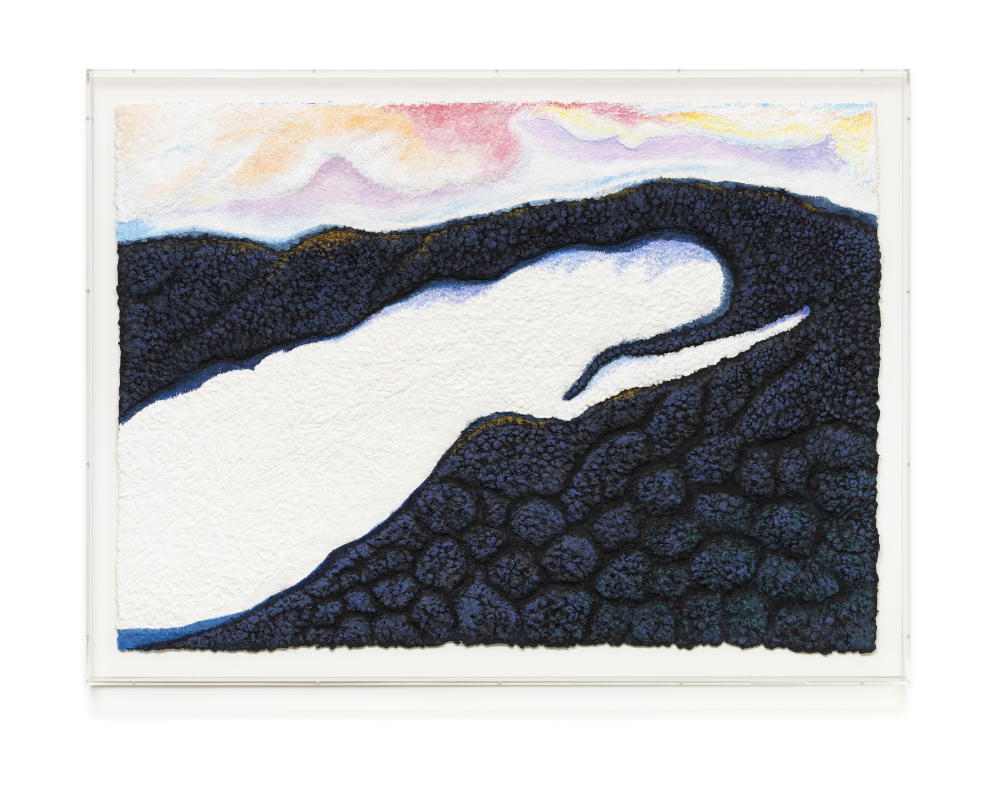
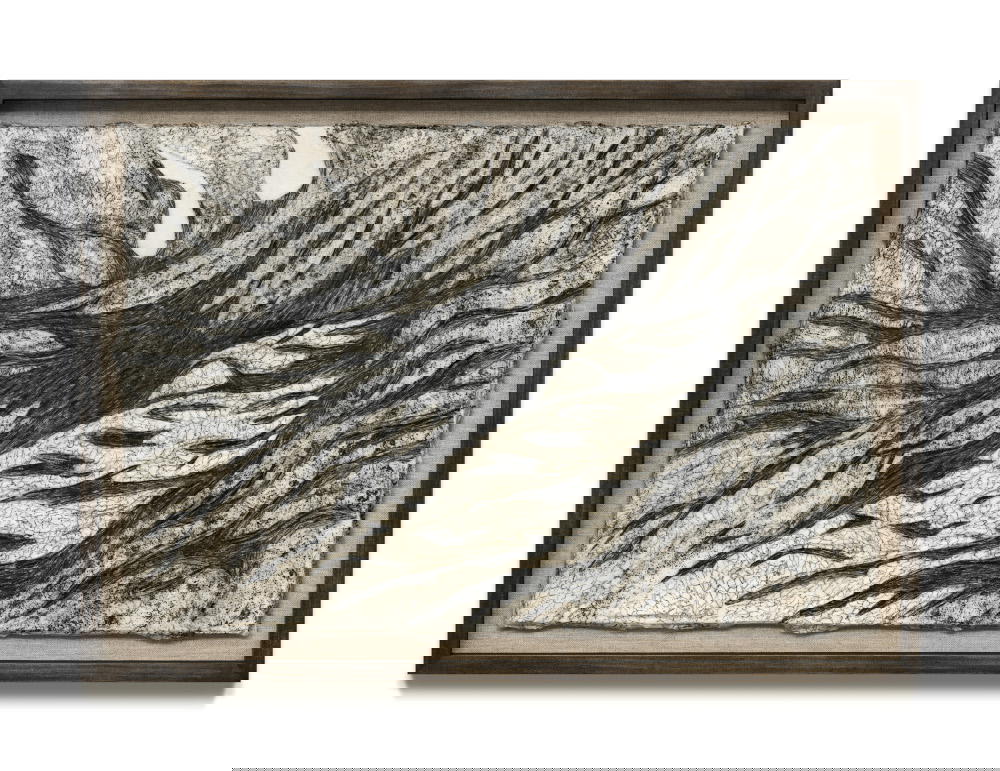
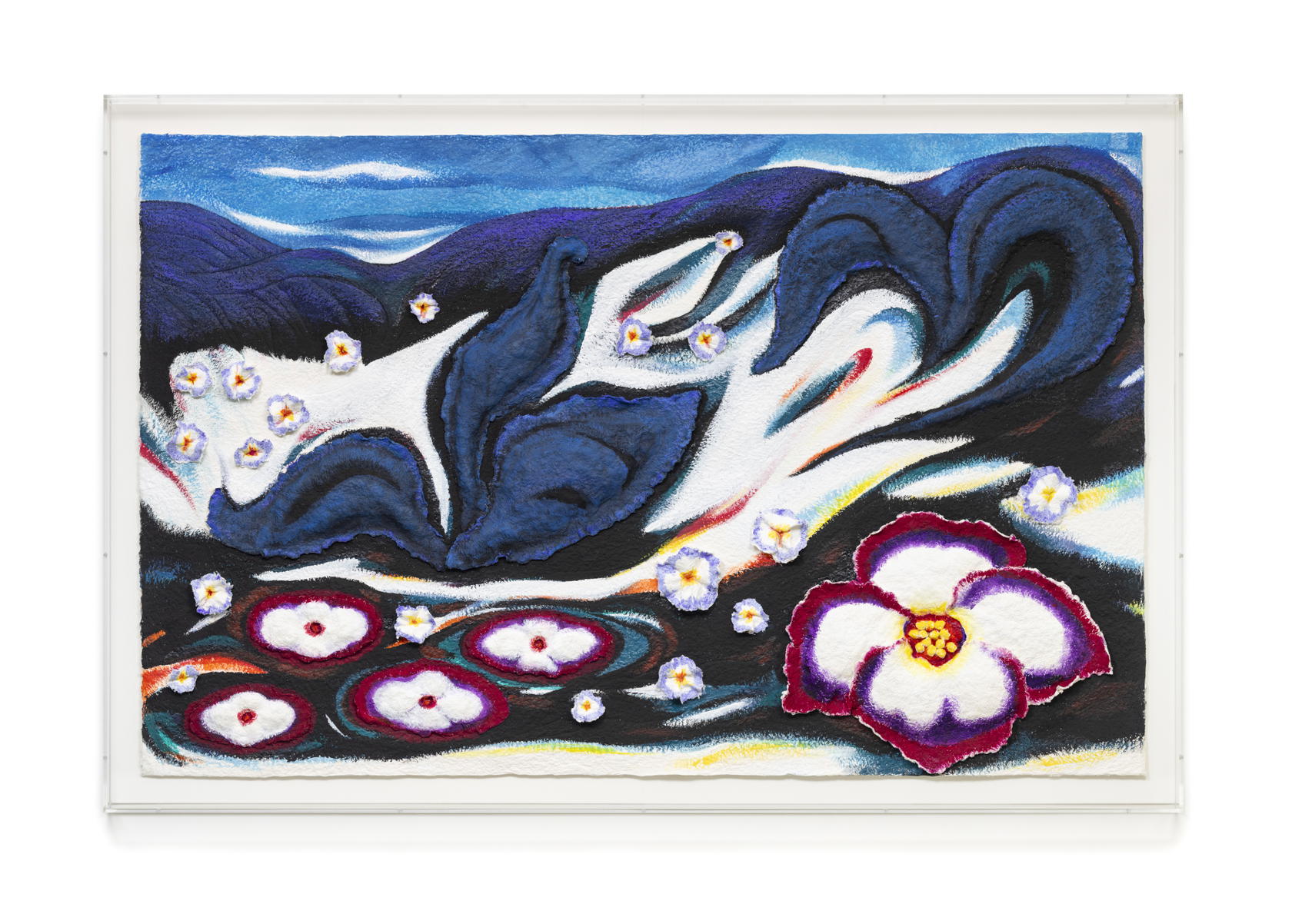
By combining her sculptural instincts with STPI’s resources, including its ‘River Across The Forest’, 2024 traditional papermaking facilities, skilled printmakers, and assistants, Han was reinvigorated by the challenge of an unfamiliar medium.
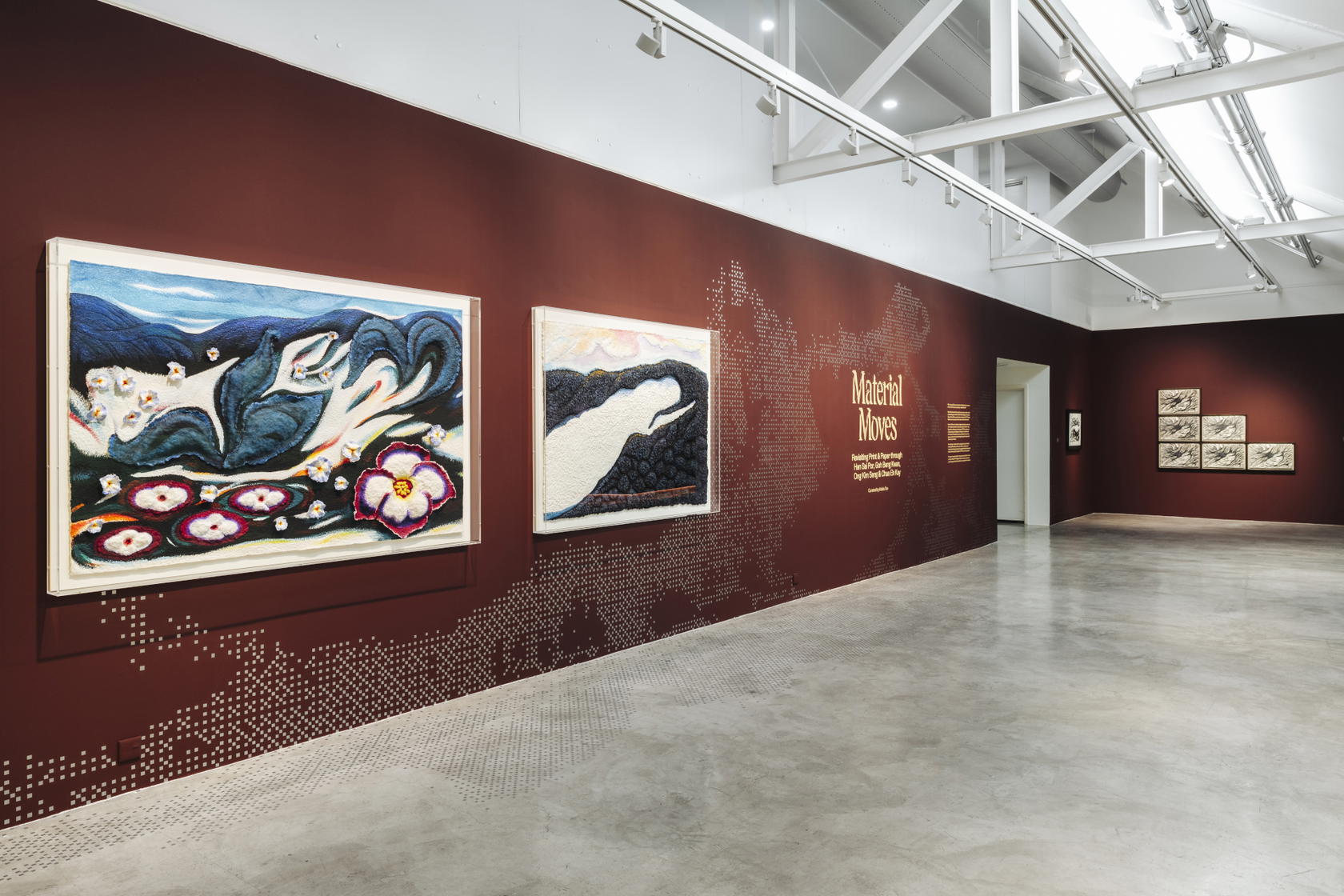
This exhibition gave the artist, whose work has mostly focused on stone and wood, the chance to explore paper pulp and printmaking—materials far removed from her usual repertoire, but nonetheless aligned with her tactile sensibility.
In her 3D works, she transformed paper pulp from STPI’s handmade paper, acrylic paint, and screen-printing into tropical flowers and other natural elenents. She describes them as “representing our natural landscape and signature blooms”. With her innovative approach, she reimagined granite’s heaviness into a light, gestural form, revealing a lighter, expressive, and celebratory side.
As part of Han’s lifelong dialogue with nature, the collaboration reflected a broader theme in her work: the willingness to step into unfamiliar terrain while remaining grounded in her lifelong relationship with the natural world. “It was enjoyable and challenging, allowing me to create something fresh while staying true to my enduring love of nature,” she says.
CONTINUAL GROWTH
At the core of Han’s practice is the conviction that art enriches life by merging beauty with introspection. “It encourages deeper observation of our world, transforms perspectives into creative expression, and fosters societal vibrancy,” she notes.
Sculpture is not only an aesthetic pursuit for her, but also a cultural duty to position Singaporean voices within a global conversation. “My lifelong commitment is to position Singaporean sculpture within the universal tapestry, enriching lives while honouring our unique identity.”
Her career shows how that vision continues to be realised. Her monumental sculptures and delicate blooms have placed Singapore on the map for contemporary sculpture, and she has nurtured a local artistic community.
One of the few women working in a physically demanding field, Han’s role as a woman sculptor underscores her perseverance. However, she rarely frames her career in terms of gender. The work itself is what matters most: its forms, its meaning, and ultimately its dialogue with nature.
Even though she is 80 years old, her story is far from over. It is one of constancy and renewal, which is truly remarkable even after decades of unwavering work and experimentation. Seeds, stones, and flowers are undeniable symbols of growth and continuity in her work.
Han’s presence ensures that Singapore’s sculptural voice resonates internationally, even as she explores unfamiliar ground. “In art, as in life, there must always be growth,” she reflects. Her works, whether granite boulders along The Esplanade Waterfront, or tropical flowers at STPI, embrace the principle of being rooted in place but always reaching out.
As Singapore celebrates six decades of nationhood, Han Sai Por stands as both a witness and participant, shaping stone, shaping paper, and shaping the ways we perceive ourselves. Her legacy, like the seeds she so often carves, will continue to take root in future generations: enduring, resilient, and alive.