
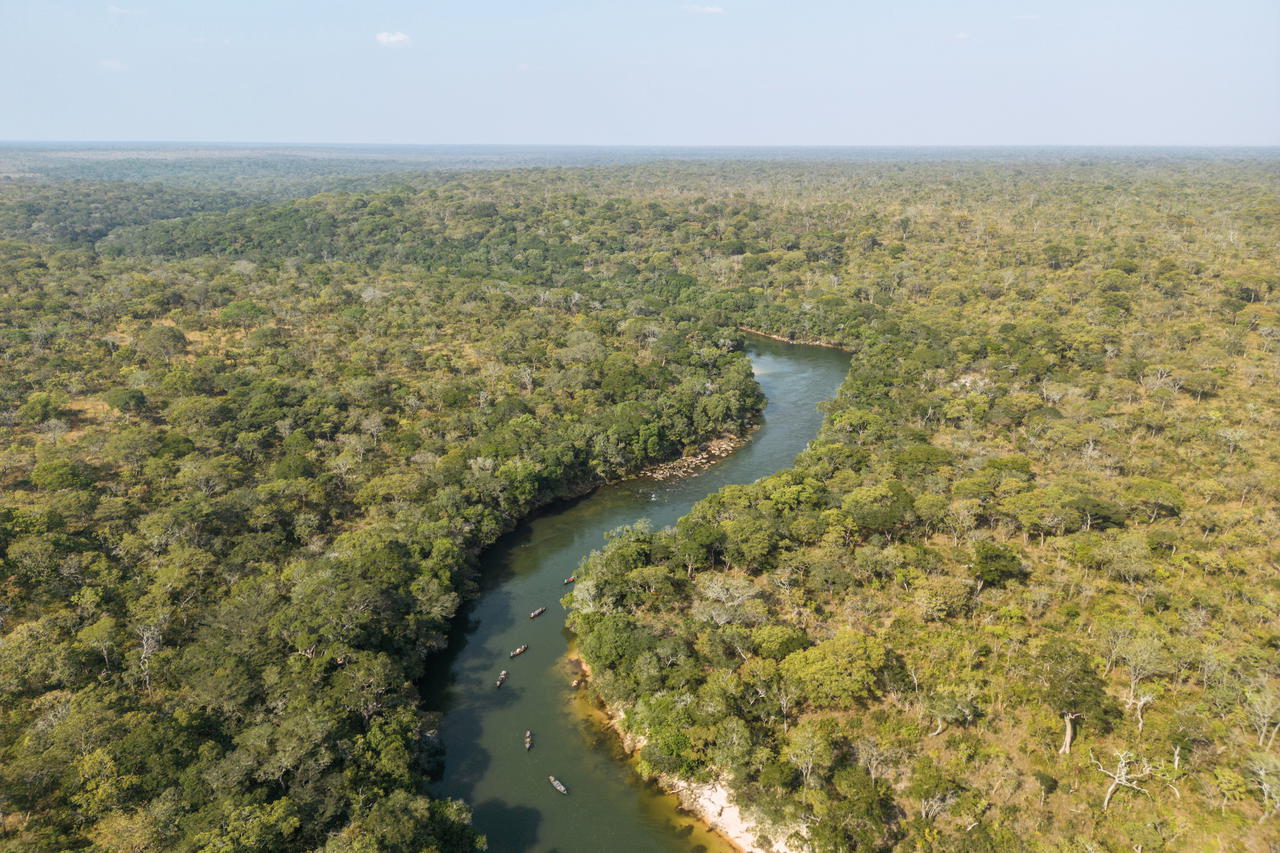
As part of the Rolex Perpetual Planet Initiative, conservation biologist Steve Boyes leads the Great Spine of Africa expeditions, which aim to document the continent’s vital water sources, protect them, and raise awareness of the importance of conserving these ecological treasures.
In his latest adventure along the Cassai River—a major tributary of the vast Congo River and Africa’s second largest river by volume—the National Geographic explorer and his team uncovered findings that could redefine our understanding of the continent’s water supply.
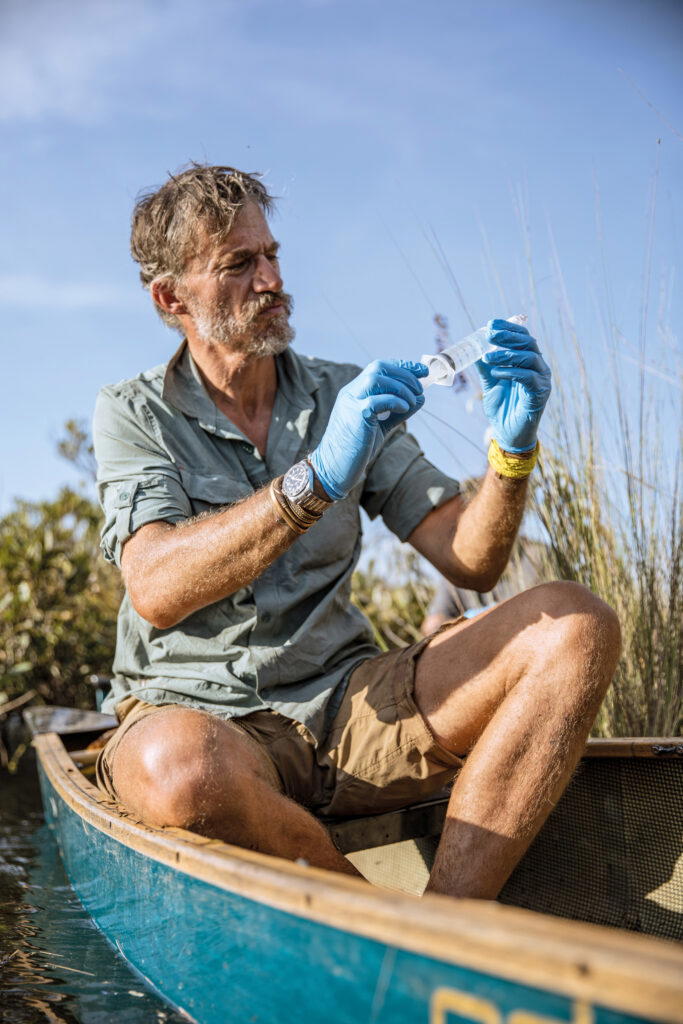
Africa’s rivers are its lifeblood, and without water, there is no life. As climate change continues to threaten the stability of global water supplies, the Great Spine of Africa expeditions are reshaping our knowledge of the important water towers in the Angolan Highlands.
The peat contained here acts like a giant sponge, holding 25 times its dry weight in water, ensuring a constant supply even during dry seasons. This makes the peatlands a significant water source for nearly 500 million people across Africa.
“The world looks at us as climate change sets in and thinks ‘Africa is going to suffer the most’…this built-in resilience can still be protected. And we need to protect it now.”
Steve Boyes
Despite the absence of snow cover, they ensure water continues to flow downstream during the driest months, providing life to communities and wildlife. Boyes estimates that 423 cu km of water—equivalent to 10 times the water usage of the entire State of California—flows from the Angolan Highlands water tower each year, providing essential resources to the Cassai River and other major African rivers like the Zambezi.
TACKLING ENVIRONMENTAL CHALLENGES
Rolex, through its Perpetual Planet Initiative, has played a significant role in supporting Boyes and his team in this vital mission. It has a long history of backing exploration with the aim of expanding knowledge and protecting the planet.
Since the launch of the Initiative in 2019, Rolex has supported over 30 partnerships dedicated to understanding and tackling the world’s environmental challenges. This vision is evident in Boyes’ work.
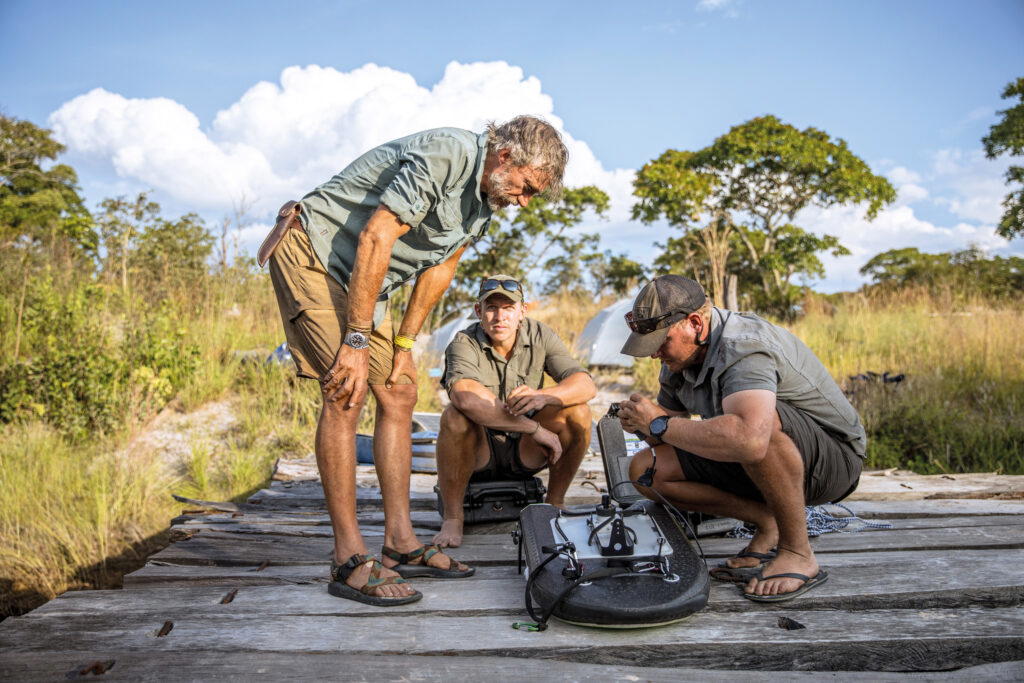
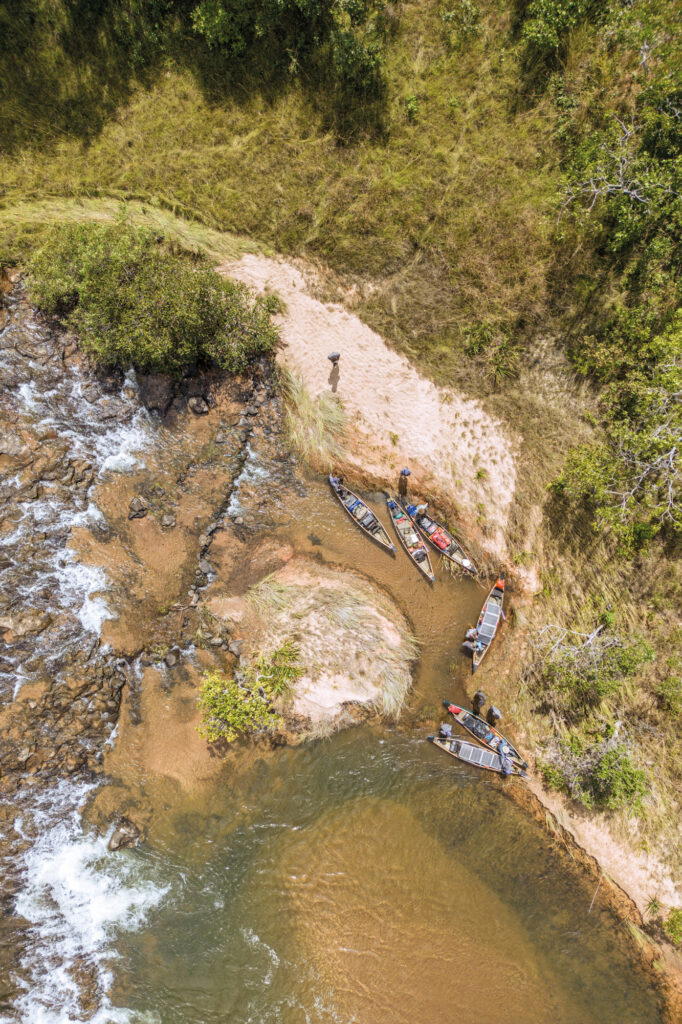
The South African conservationist’s latest odyssey along the Cassai River was nothing short of epic. Over five weeks, Boyes and his 12-member team traversed through 627km of untouched aquatic environments surrounded by the equatorial rainforest.
The journey, however, was far from smooth. The team navigated dangerous terrain before reaching the river, passing through landmine-riddled areas from Angolat’s decades-long civil war. This forced them to use an armour-plated truck for the first leg of the journey.
“It’s almost a relief when you get to the river,” Boyes recounts. “Even so, every day on the water involves going into the unknown. No one navigates these rivers or knows what’s in them.”
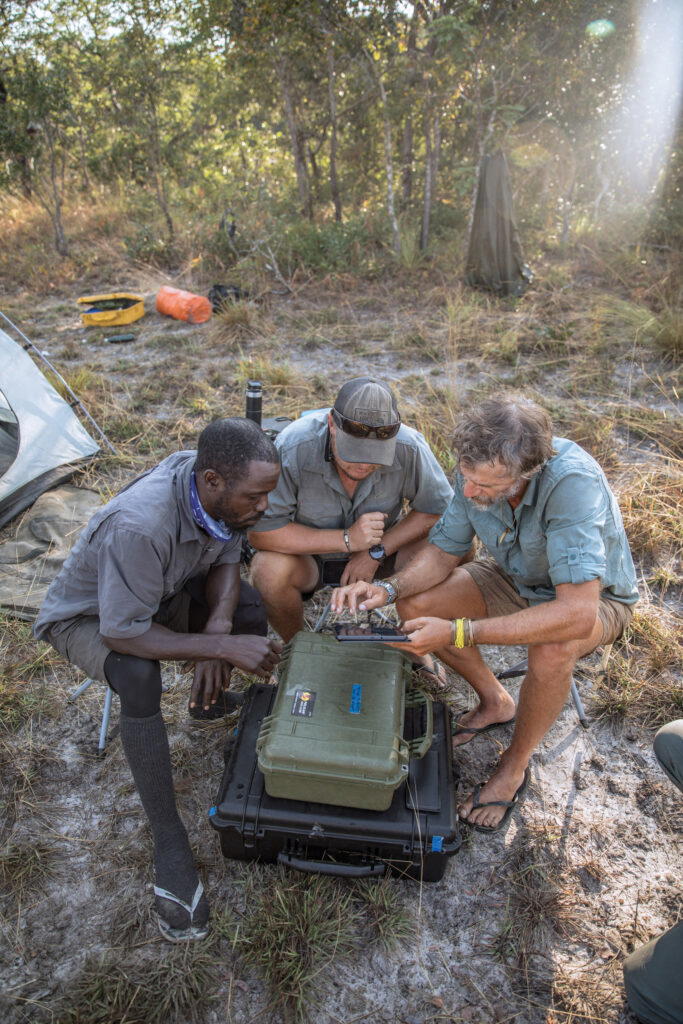
The challenges continued on the river. The team’s progress on the first stretch was painfully slow, covering only 42km in the first 12 days as they struggled to move through dense vegetation. As they journeyed further, they made extraordinary discoveries.
BIODIVERSITY HOTSPOT
An early breakthrough revealed that the Munhango River contributes nearly twice as much water as currently credited. In other words, the Cassai’s source is only 20km from the Zambezi’s true source, providing new insight into the interconnectedness of Africa’s great waterways.
However, while these large-scale discoveries were important, much of the expedition’s focus was on thorough documentation. By taking aerial photographs, measuring water flow, and collecting environmental DNA samples, the team established a foundation of knowledge for future conservation efforts.
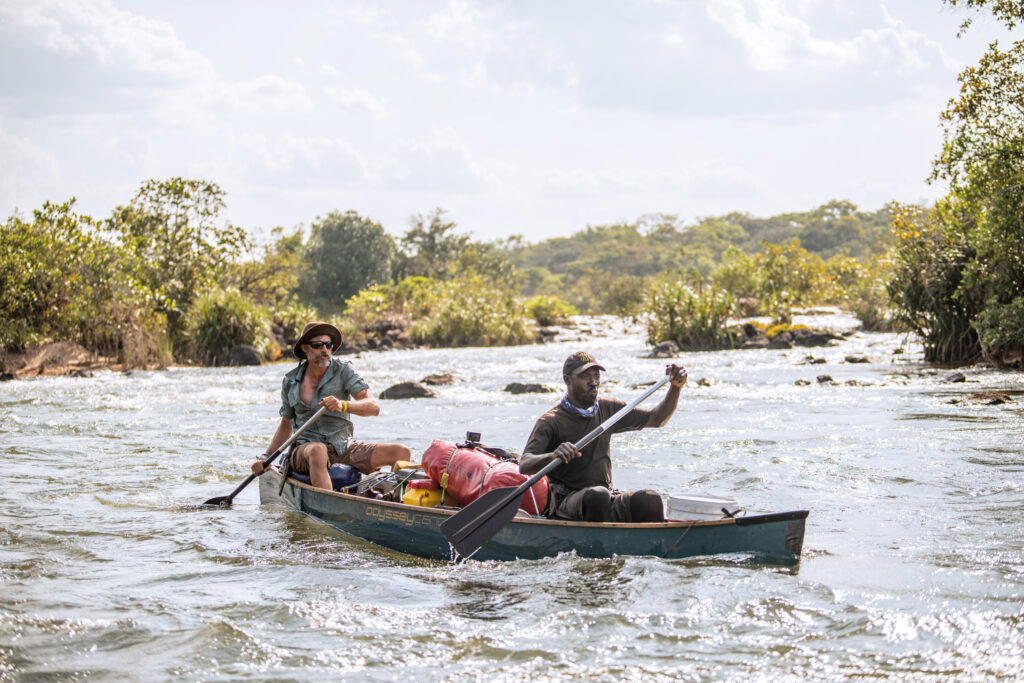
Boyes reveals that his team recorded everything they saw—birds, animals, people, and settlements. “These are the most detailed river baselines ever undertaken, so scientists will be able to make comparisons in 50 years’ time.” In addition, the team identified 154 new species in the Angolan Highlands, further solidifying the region’s importance as a biodiversity hotspot.
Rolex’s involvement in Boyes’ work has been transformative. As he explains, “It’s really inspiring, interacting with an organisation where you talk about big ideas, and they seem to want you to think even bigger than that idea. The support from Rolex has changed my life.”
Beyond financial backing, Rolex has provided Boyes with a global platform to share his discoveries with influential leaders and decision-makers. “Our work is important in helping governments make informed decisions around water use, urban developments, and infrastructure projects,” he explains.
Together, Boyes and Rolex are proving that the pursuit of knowledge and the preservation of the planet are essential to ensuring a sustainable future. The significance of Boyes’ discoveries cannot be overstated. Africa’s water towers like the Angolan peatlands, are not only vital for water security, but also act as powerful carbon sinks, which store vast amounts of carbon that help mitigate climate change.
Despite the growing threat posed by a warming planet, Boyes remains cautiously optimistic about the future of the continent. “The world looks at us as climate change sets in and thinks ‘Africa is going to suffer the most’. But when we modelled that, we didn’t know Africa had these water towers, this built-in resilience that can still be protected. And we need to protect it now.”
Find out more about Rolex Perpetual Planet here.