MapBiomas, a climate-focused collective of nonprofit organisations and research institutions, reported in January 2024 that wildfires had destroyed nearly 10,359 sq km of the Amazon. The wildfires were fuelled by climate change-induced droughts, leading to a scarcity of rain that made even the densest parts of the forest highly flammable.
Despite this concerning situation, there is some positive news. Preliminary data from the Brazilian Space Agency suggested that the rate of deforestation fell by 50 percent
in 2023.
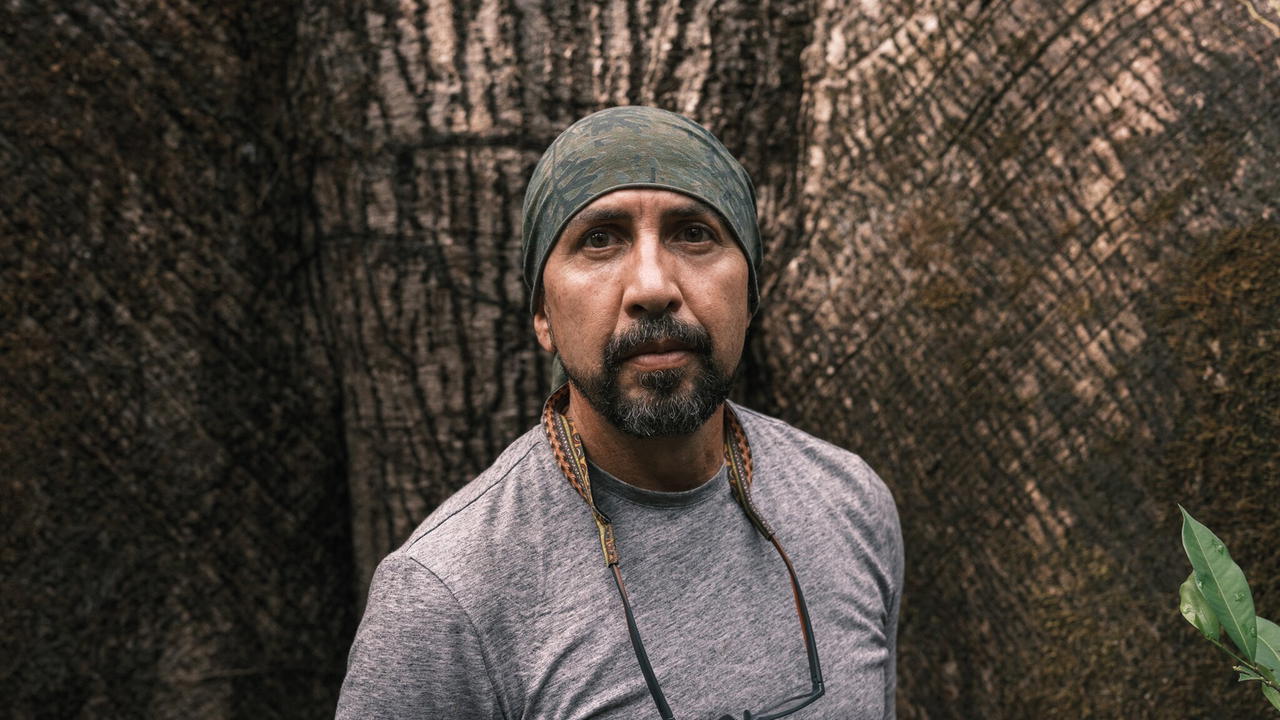
The glimmer of hope that shines through the dark clouds of deforestation and wildfires is largely due to the recent proactive measures taken by the Brazilian and Colombian governments. Their actions, coupled with the relentless efforts of numerous scientists and conservationists, have been instrumental in protecting a forest approximately the size of the continental USA. Among these dedicated individuals is Fernando Trujillo, who has been rightfully honoured with the 2024 Rolex National Geographic Explorer of the Year award.
The Explorer of the Year title recognises a member of the National Geographic Explorer community who highlights the important issues, discoveries, and challenges facing our planet and inspires the world to work towards a more sustainable future. It exemplifies Rolex and the National Geographic Society’s joint aims of using exploration, pioneering science, and bold ideas to care for the environment and people in perpetuity.
Rolex supports the award as part of its Perpetual Planet Initiative, which champions those who are at the forefront of finding solutions to the world’s environmental challenges. Trujillo, a Colombian marine biologist, focuses his conservation efforts on protecting the Amazon river dolphins. The Amazon rainforest, which contains a fifth of the world’s freshwater, is home to immense biodiversity, including many aquatic species.
His passion for river dolphins began during his childhood visits to the Orinoco River with his grandfather.
A trip to the Amazon River later exposed him to these inquisitive mammals, which are sacred to indigenous people. During his university years, a serendipitous encounter with legendary oceanographer Jacques Cousteau solidified his path. He asked the latter what was important to study and was met with one reply: dolphins. “There are river dolphins in Colombia and nobody is doing anything to protect them,” said Cousteau.
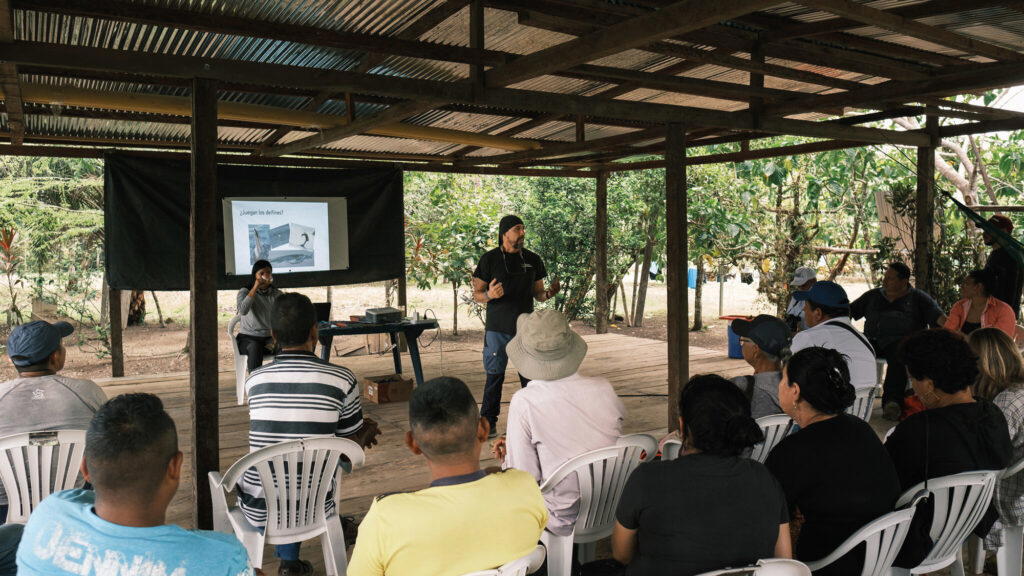
Trujillo began his work at 19, confronting the impacts of human activity. An encounter with a fisherman who had accidentally trapped a dolphin and her calf motivated him to base his efforts within the forest. In the decades since, alongside his scientific endeavours, Trujillo has worked closely with regional governments and local communities to find solutions that benefit everyone.
This intimate, long-standing relationship was honoured by the indigenous Tikuna people, who named Trujillo “Omacha”, meaning a dolphin that became human.
In 1993, Trujillo co-founded Fundación Omacha, advocating for sustainable development and the conservation of aquatic ecosystems in Colombia. As scientific director, Trujillo works with a team of conservationists to carry out scientific studies to improve river management practices and protections.
At present, he is part of the Rolex and National Geographic Perpetual Planet Amazon Expedition, exploring the ecosystem functions that sustain the world’s largest freshwater basin.
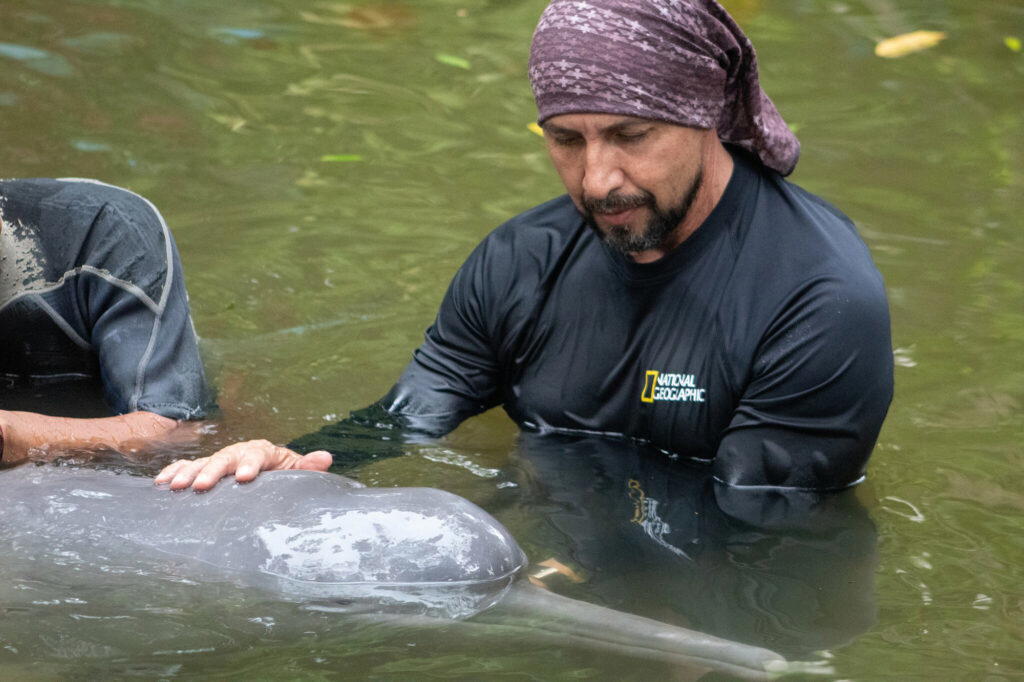
His team is following the Amazon’s tributaries through seven rivers and across four countries, conducting health assessments of river dolphins as a barometer of river health to help identify critical areas to focus conservation efforts. In 2023, his efforts led to 11 countries signing a first-of-its-kind declaration to develop research-based, transboundary solutions for protecting river dolphins worldwide.
By acting as a global advocate for river dolphins and gaining a deeper understanding of the ecosystems on which they depend, Fernando Trujillo is making an impact that will continue across generations after him.
Rolex and National Geographic Society are proud to celebrate his ongoing commitment to protecting the Amazon’s dolphins. His solution-based science and unending energy is illuminating both the conservation stories and local knowledge in the river basin. A truly deserving recipient of the Rolex National Geographic Explorer of the Year Award, Trujillo shows what one pioneering leader can achieve to help create a perpetual planet for us all.