Rolex has long recognised the importance of protecting the world’s fragile ecosystems. Its Perpetual Planet Initiative supports individuals and organisations in addressing environmental challenges. Among the initiatives championed by Rolex is Mission Blue, founded in 2009 by renowned oceanographer and long-time Rolex Testimonee, Dr Sylvia Earle.
Mission Blue seeks to identify and protect critical ocean areas of exceptional ecological importance, known as “Hope Spots.” The company’s significant role in supporting these initiatives highlights the impact of corporate sponsorship in environmental conservation.
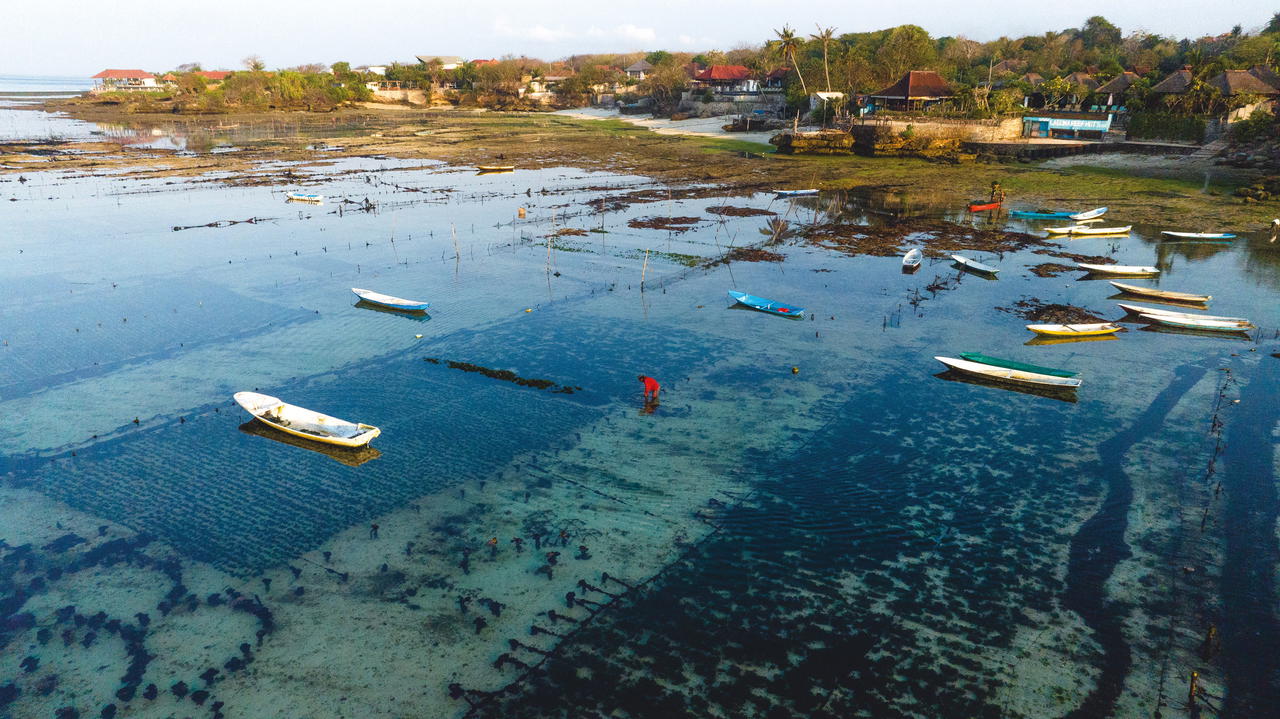
The newest Hope Spot is the Nusa Penida Marine Protected Area (MPA). This area lies within the Coral Triangle and was designated a Hope Spot due to its rich marine biodiversity. Here, the Rolex Perpetual Planet Initiative supports conservation efforts led by Mission Blue Hope Spot Champions, Rili Djohani and Wira Sanjaya.
The MPA lies in the Coral Triangle, an area recognised as the global centre of marine biodiversity that encompasses waters around the Philippines, Timor-Leste, the Solomon Islands and Indonesia. The biodiversity of the Coral Triangle is not just a natural wonder; it is a vital resource for millions of people who depend on fishing, tourism, and coastal industries for their livelihoods.
Despite its importance, the Coral Triangle faces mounting threats from human activities. To address this, marine ecologist Djohani established the Coral Triangle Centre (CTC) in 2010. A year later, in collaboration with the Indonesian government and local communities, her team designated 20,000 hectares around Nusa Penida, Nusa Lembongan, and Nusa Ceningan as a (MPA).
This MPA is home to around 570 species of reef fish, including manta rays and the majestic ocean sunfish, and close to 300 species of coral, representing over 76 per cent of all known coral species. Djohani and Sanjaya continue their vital work at the MPA, partnering closely with the island’s 48,000 residents, whose livelihoods are deeply connected to the ocean.
Nusa Penida’s coral reefs are not only globally important due to their exceptional biodiversity, but also because conservationists are learning that they appear to be particularly resilient against climate change and warming waters.
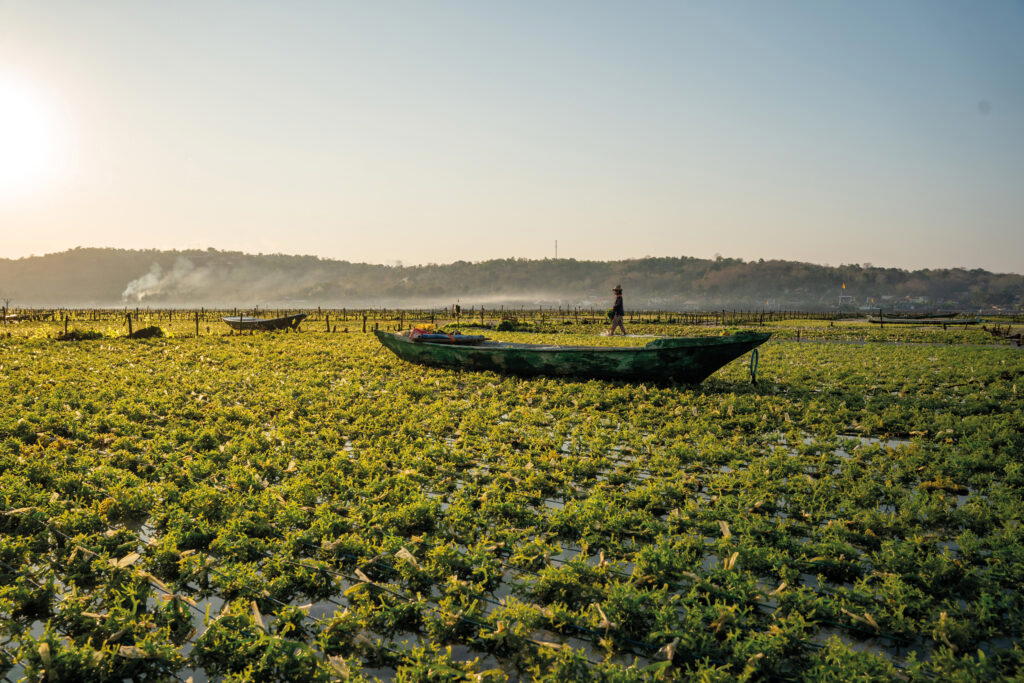
The CTC plays a critical role in training locals to manage the MPA, conduct wildlife surveys, and lead guided tours, helping preserve the marine environment and the community’s way of life. The centre also empowers local communities by providing sustainable livelihood opportunities, including reviving traditional seaweed farming and creating designated marine tourism zones.
In a unique cultural initiative, Djohani and Sanjaya have engaged the local population through Indonesia’s ancient art of shadow puppetry. Collaborating with skilled artists, they developed “Wayang Samudra”, a shadow puppet performance featuring 32 characters inspired by marine life native to the MPA. This form of storytelling resonates deeply with the community, highlighting the ocean’s significance and fostering a strong commitment to marine conservation, particularly among the younger generation.
One key project has been their work rehabilitating the mangrove forests, which were being cut down for timber. By sharingthe benefits of mangrove forests for things like local biodiversity, protection against sea level rises, and eco-tourism, the CTC are encouraging communities to help the mangroves thrive again.
In a huge reforestation effort, they recently planted more than 10,000 seedlings. Coastal mangroves play a vital role as nurseries for reef fish, provide natural defences against storms, and capture atmospheric carbon, making them essential for maintaining healthy marine ecosystems.
Inclusivity is at the heart of Djohani and Sanjaya’s efforts, and they are also engaging youth groups on the islands in a coral reef restoration project. Nusa Penida’s coral reefs are not only globally important due to their exceptional biodiversity, but also because conservationists are learning that they appear to be particularly resilient against climate change and warming waters. This may be simply due to the upwelling of cooler, nutrient-rich waters from the depths, but either way, Nusa Penida’s reefs could provide a crucial insight for global coral conservation efforts.
To motivate people for years to come, marine conservation needs to be part of the local culture.
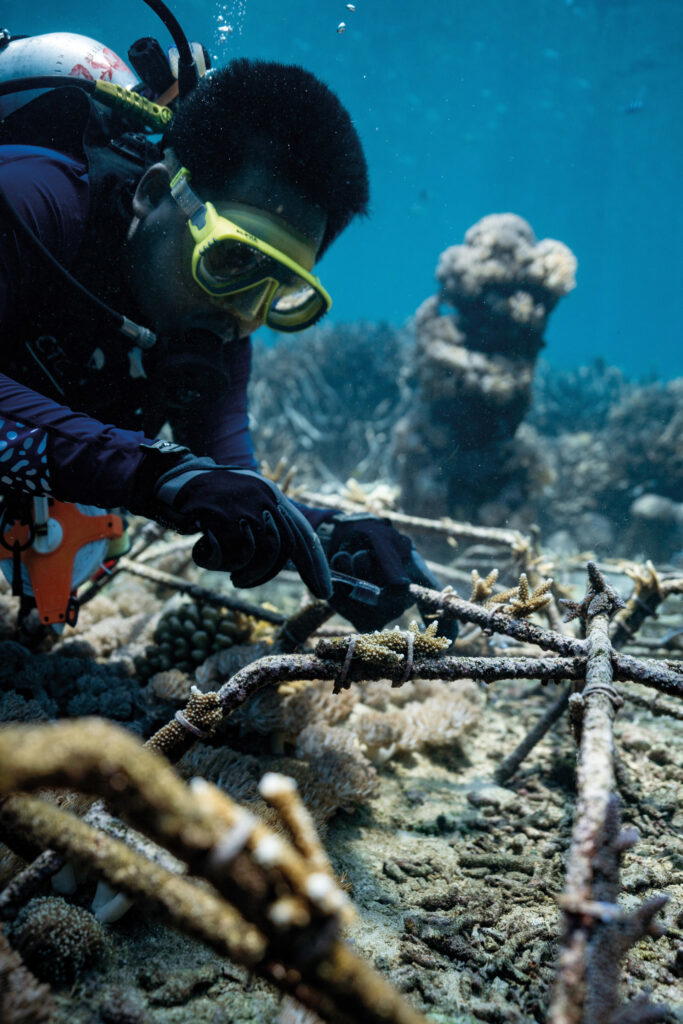
To help restore and enhance this resilience, the programme has so far installed more than 400 linked structures to the ocean floor that act as a support bed on which new corals can grow. They have transplanted 6,000 fragments of coral, covering 240 square metres of damaged reef. Djohani and her team also know that to motivate people for years to come, marine conservation needs to be part of the local culture.
Now, Rolex and Mission Blue are supporting Champions Djohani and Sanjaya in spreading awareness of the MPA and helping the Indonesian government in their goal to protect 30 percent of their waters – around 97.5 million hectares.
By sharing their methods, they are helping other conservationists to establish and fortify MPAs throughout the Coral Triangle and further afield, and by involving tourists in their programmes, Djohani and Sanjaya are creating a global voice for Nusa Penida.
Find out more about Rolex and Mission Blue here.