

The ancient craft of glyptic, which traces its origins to the Egyptians and Mesopotamians, entails the intricate carving and engraving of stones. With its inherently demanding nature, requiring innate artistic sensibilities, unwavering patience, and the utmost precision, it’s no surprise that practitioners of this art are exceedingly rare.
In the exclusive realm of high jewellery maisons, where having a single glyptician is already a rarity, Cartier distinguishes itself with an impressive team of five. This feat highlights its commitment to preserving and transmitting this rare craft, ensuring its survival in an era where traditional arts are fading into obscurity.
A pivotal force in this endeavour was master glyptic artist Philippe Nicolas, who, after 13 years at Cartier, retired at the beginning of 2023, leaving behind a legacy of five skilled glyptic artists—all apprentices under his guidance. “I would like to have more time or to lead a different life. If you believe in the importance of transmitting knowledge and skills, it is also important to know when to stop,” says Nicolas.
He is speaking to us in Beijing, where Cartier unveiled the second chapter of its newest high jewellery collection, Le Voyage Recommencé. The retired Nicolas is now a brand ambassador, passionately advocating for the art of glyptic and emphasising the importance of passing the artistic baton.

“When I was younger and working in other workshops, I learned that people didn’t want to share; they also didn’t like to explain. You had to work in the workshop for a long time before your mentor explained how and why he did what he did. I didn’t want this. My young apprentices had the opportunity to work with me very quickly; and I always explained my work. Technique is not the only thing that defines a good artist; it is also about emotion and timing,” he says.
The desire to impart his expertise and wisdom to the upcoming generation became the primary impetus for his desire to open his own atelier. After working for legendary artist jeweller Joel Arthur Rosenthal, widely recognised as Jar, for 25 years, Nicolas set up shop on his own.
Reflecting on his years with Jar, he fondly recalls, “It was a very important time. I was young, in Paris, and he directed me toward my initial experiences in engraving and sculpture, instilling in me a profound sensibility that has remained.”
His atelier of 17 skilled craftsmen continued crafting pieces for Jar, as well as Dior and Cartier, until the financial crisis in 2008. Confronted with the threat of bankruptcy, he wrote a letter to Bernard Fornas, then CEO of Cartier, proposing a meeting.
Months later, Fornas, accompanied by Pierre Rainero (the style and heritage director at Cartier for the past two decades), arrived early in the morning from a flight from New York City and told Nicolas, “We want to establish a workshop where you can impart your skills within the maison Cartier.” The rest, as the adage goes, is history.
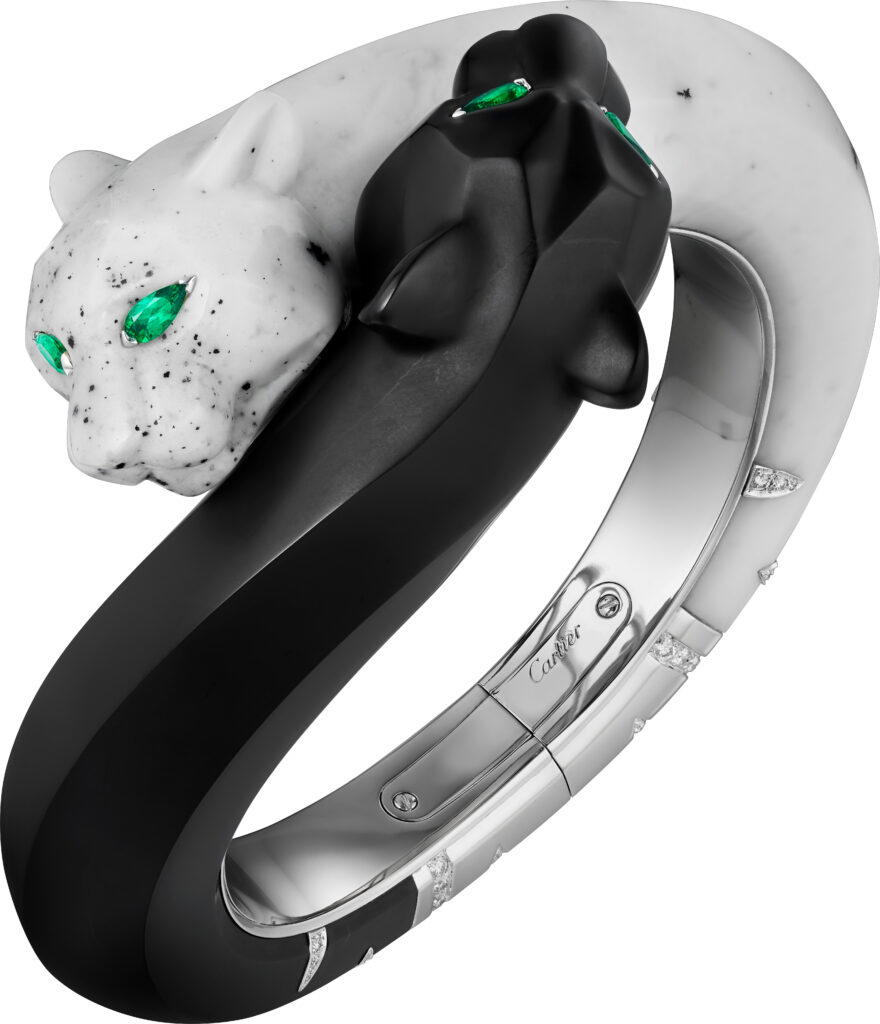
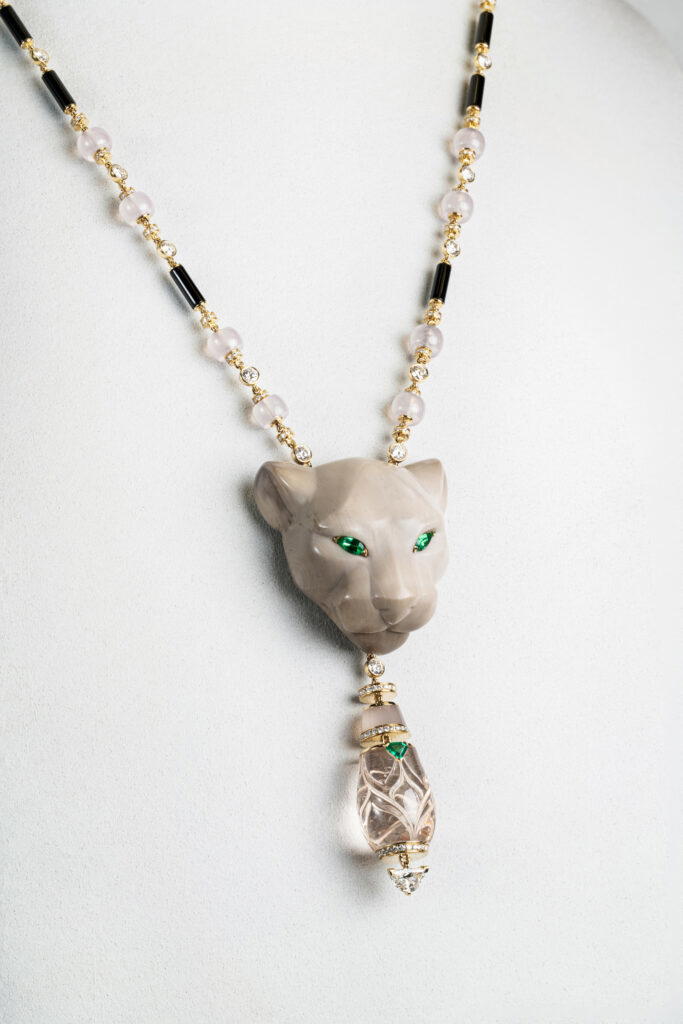
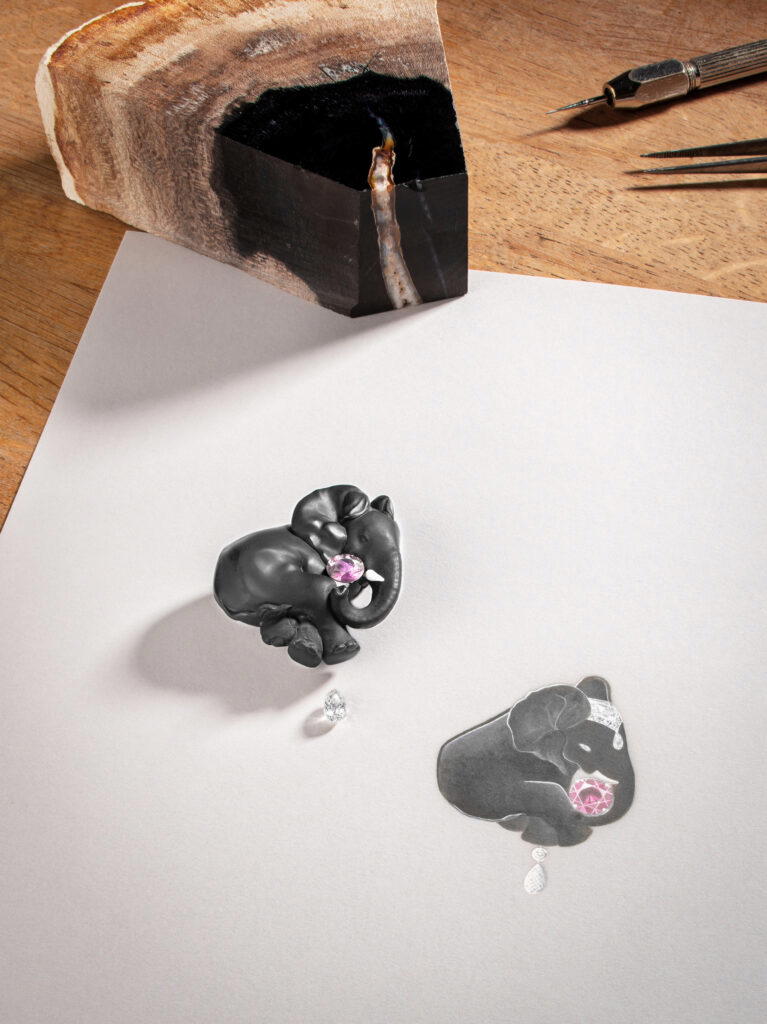
In subsequent years, Nicolas played a pivotal role in creating some of Cartier’s most important jewellery pieces, including the Hypnotic Panthère and Le Voyage Recommencé necklaces from the recent collection. The former showcases a panther carved from a rare block of calamite—a fossil plant dating back to the Lower Carboniferous period—while the latter boasts a 414ct rubellite shaped in the form of a flower, adorned with a 0.73ct D VVS diamond.

Among other notable creations is Okamé, a precious box featuring a bracelet, specifically designed for the Homo Faber exhibition in 2021.
Drawing inspiration from Japan, it integrates three in-house savoir-faire—jewellery, glyptic, and straw marquetry—and features a bouquet of candy-pink Sakura blooms carved from pink chalcedony.
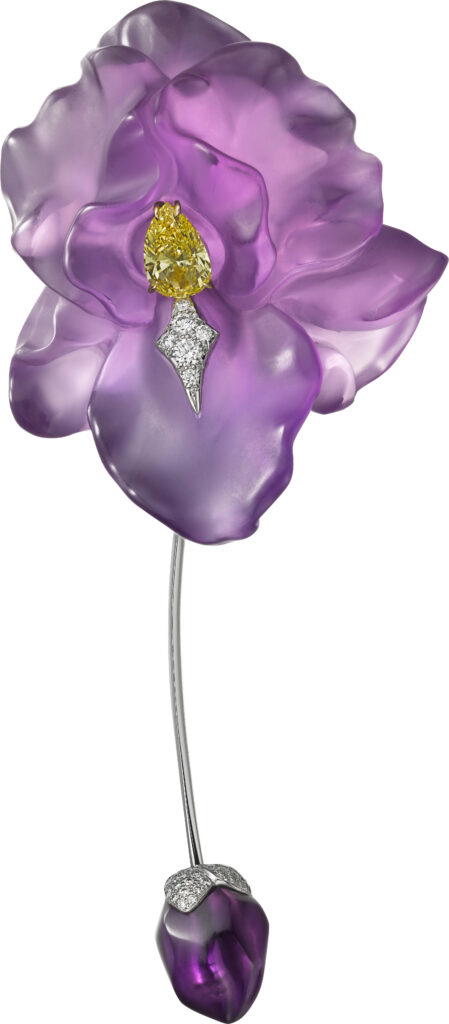
In the Iridacée high jewellery brooch, a remarkably lifelike iris is carved from rough amethysts. Upon closer inspection, it unveils a precious pistil, surrounded by gracefully undulating petals that are so lifelike that they appear to tremble as if caught in a gentle breeze.
“You need to be humble when you work with stones,” concludes Nicolas. “You cannot do this work if you think you are the best and refuse to impart or share your skills.”