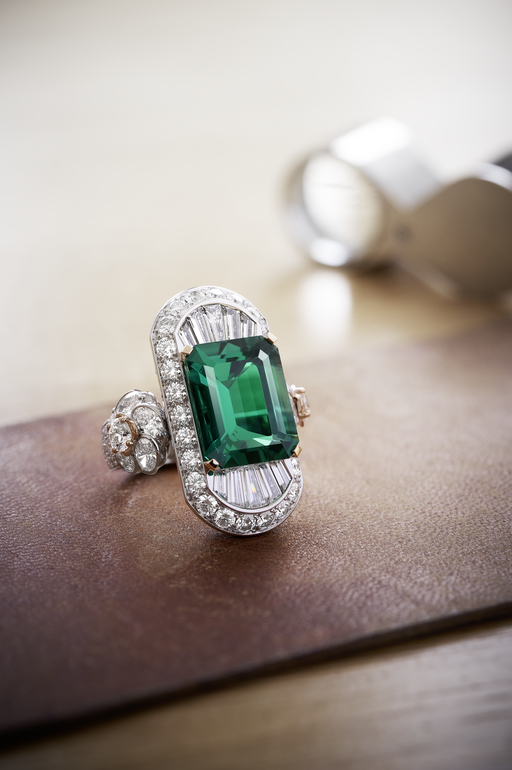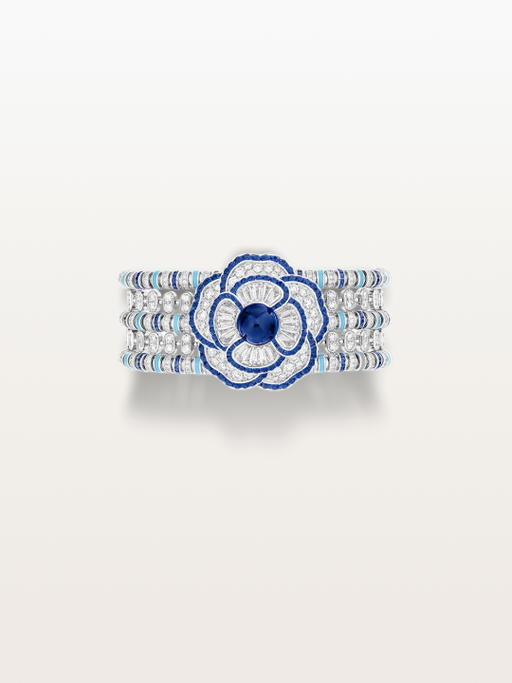


Cartier chose China for the unveiling of the second chapter of its newest high jewellery collection, Le Voyage Recommencé. In Beijing’s Prince Jun Mansion, a 400-year-old cultural landmark and former princely residence, some 380 dazzling high jewellery creations took centre stage.
Amidst this idyllic setting, where a tranquil pond mirrored the beauty of landscaped gardens and ancient buildings with vibrant timber frameworks, Cartier’s high jewellery prowess unfolded as a testament to the enduring allure of its artistic craftsmanship. The exhibition presented around 20 new designs from Le Voyage Recommencé, along with other contemporary creations and heritage pieces.
yellow diamonds, and diamonds.
True to its name, Le Voyage Recommencé is a journey through familiar yet reimagined terrain. Geometric shapes, nods to nature, playful interplays of light, bold colour combinations, and cross-cultural influences are all hallmarks of Cartier’s distinctive style. This time, however, Cartier breathes new life into the narrative by approaching its fundamentals from a fresh perspective.
Among the recent additions, the Tutti Sammann necklace stands out as a new interpretation of Cartier’s bold and distinctive Tutti Frutti design, inspired by Moghul jewellery. It is adorned with a captivating array of carved gemstones, including a 47.83-ct pear-shaped Colombian emerald, a 15.84-ct fancy-shaped Ceylonese sapphire, and a 10.14-ct round Burmese ruby.
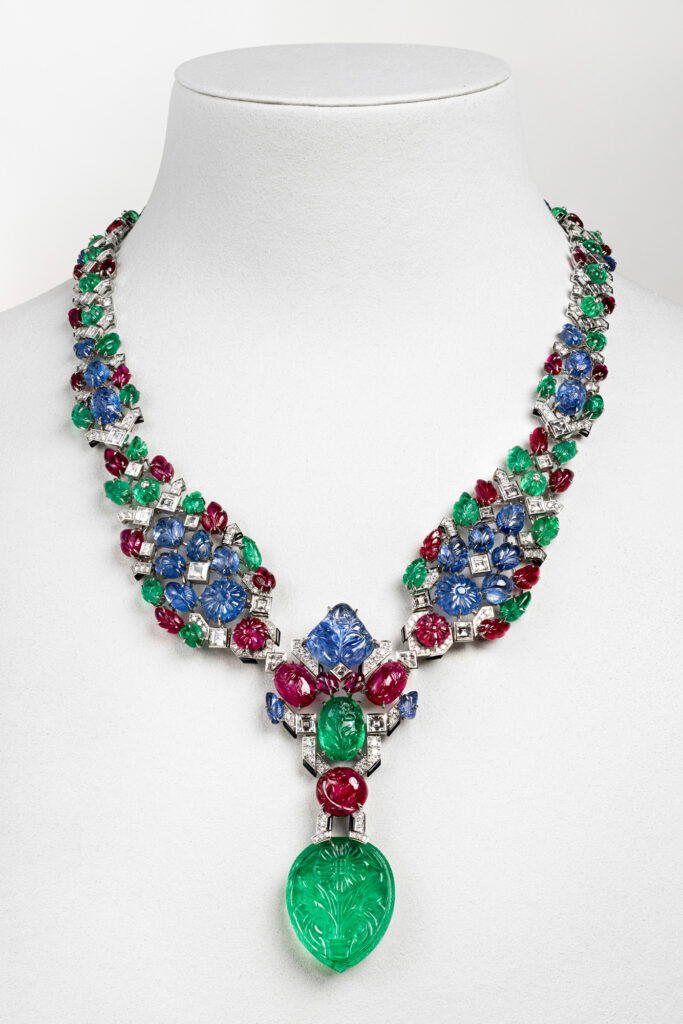
The transformable design enables it to be worn both long and short, and detachable elements serve as brooches or hair clips. Fit for royalty, it reinterprets a recurring Cartier creative theme: the cypress, with its distinctive elongated silhouette visible from either side.
It’s no secret that the Cartier brothers—Pierre, Louis, and Jacques—were intrepid travellers who traversed the seven seas in search of opportunities and adventure. From Russia to Arabia and India to North Africa, they drew inspiration from indigenous cultures, nature, art, and architecture, incorporating these influences into the Cartier lexicon.

China also served as a profound source of inspiration. By the 1920s, Chinoiserie designs, motifs, and Chinese decorative techniques became prominent features in Cartier’s creations. Dragons, symbolic emblems of imperial authority in ancient China, were favoured motifs. Revered and cherished by the Chinese for reasons deeply rooted in mythology, folklore, and historical symbolism, the dragon is a powerful symbol of strength, prosperity, and authority.
and diamonds.
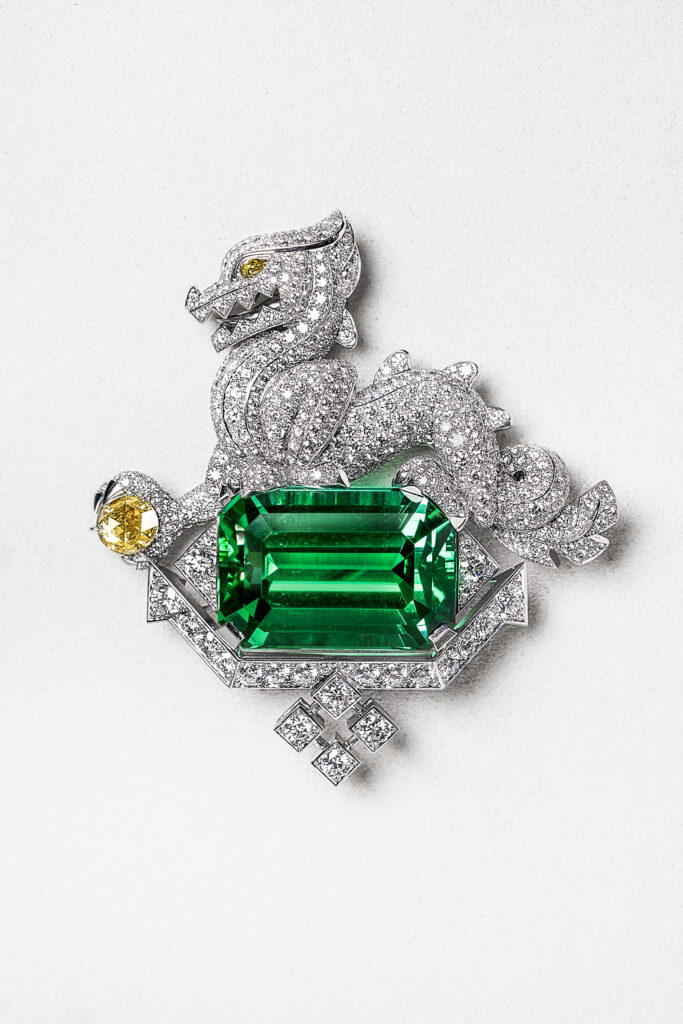
Cartier’s fantastical bestiary includes this formidable magical creature in rare creations, such as the Bailong clip, another highlight from the new Le Voyage Recommencé collection. Translated from Chinese to “white dragon”, it boasts a diamond-encrusted dragon with striking yellow diamond eyes, elegantly perched atop a 30.11-ct octagonal tourmaline. One of its claws delicately cradles a yellow diamond, adding to the allure of this rare masterpiece. The design achieves a harmonious balance, seamlessly marrying the upper section defined by rounded, curved lines with the geometric diamond motifs below.

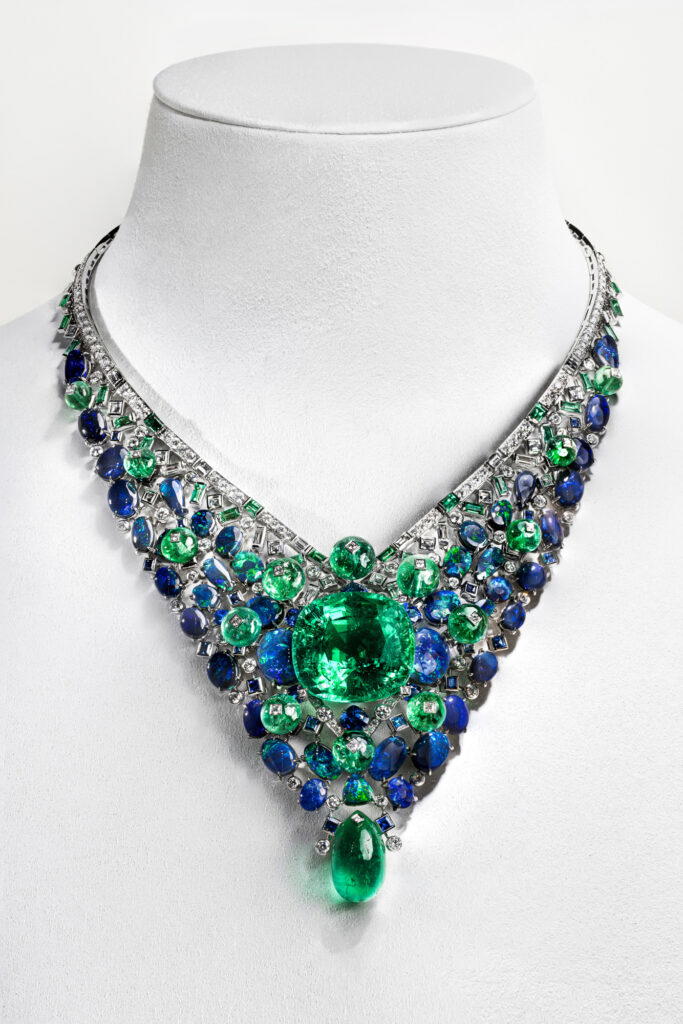
From China to Belize, once home to the great Mayan civilisation, Cartier introduces the Sambula necklace inspired by cenotes, freshwater pools found throughout the Yucatan Peninsula. The design features two Colombian emeralds (66.09 and 19.47 cts), emerald beads, sapphires, a constellation of iridescent opals, and precisely calibrated diamonds. Its composition expertly blends organic forms with geometric accents while illustrating the blue and green interplay that has been a hallmark of Cartier’s style for over a century.
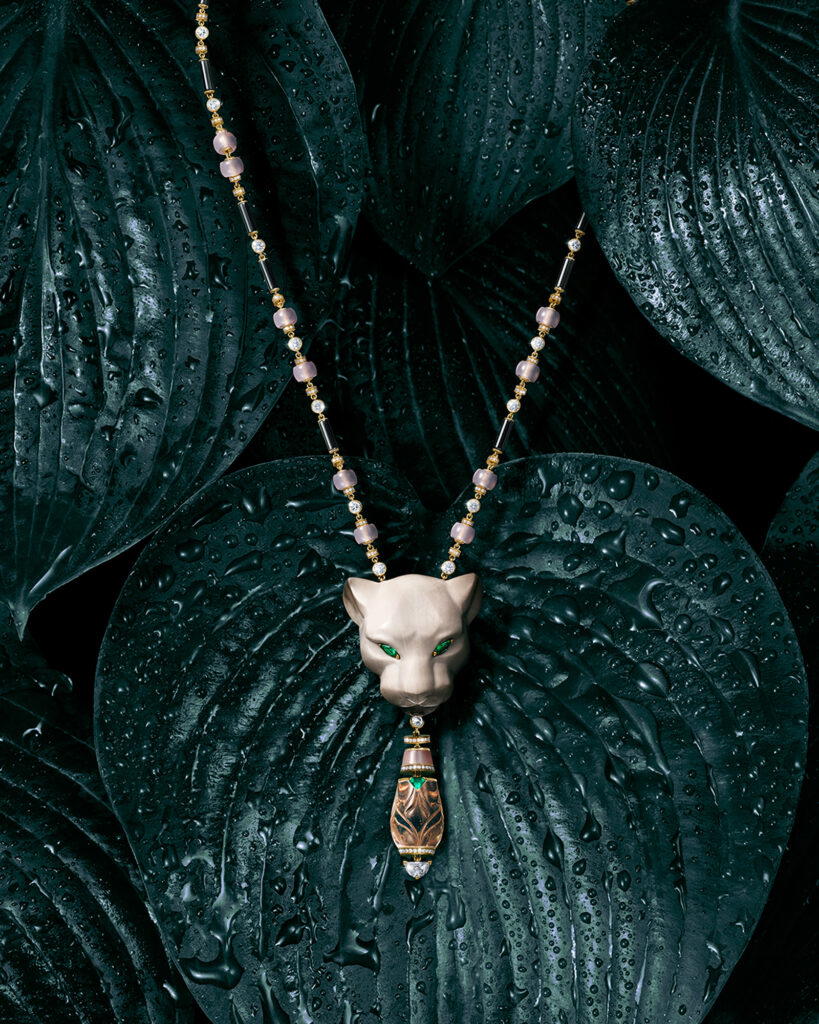
The journey continues to the birthplace of glyptic art in the Middle East, where the Hypnotic Panthère necklace pays homage to Cartier’s iconic panther, which has reigned supreme since 1914. The pendant, resembling the head of the large cat with fur-like lines, is meticulously crafted from a rare block of calamite—a fossil plant dating back to the Lower Carboniferous period. Suspended from a yellow gold chain adorned with tubes of onyx, pink chalcedony, and diamonds, the majestic panther oversees a morganite pendant with intricate floral motifs.
Cartier is one of the few maisons in the world with its own glypticians. The rarity of glyptic art lies not only in its historical roots, dating back to the times of the Egyptians and Mesopotamians, but also in the demanding techniques that elevate it to the status of high artistry. In recognising the rarity of such expertise, Cartier worked to expand its expertise. From having one master glyptician in 2010, it now has a commendable team of five.
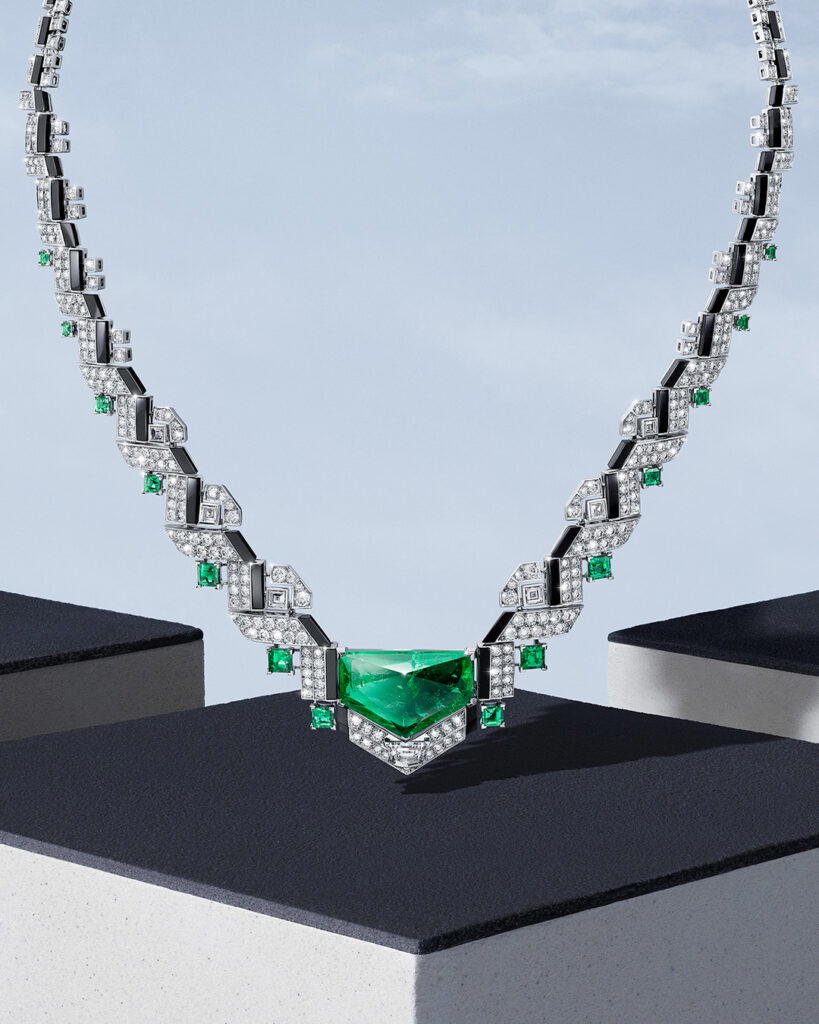
Other pieces that stand out in the collection include the Nauha necklace and the Attrare ring. The elegant necklace features the classic colour combination of green and black, and showcases an emerald that weighs 14.17 cts in a pentagonal cut. Combining a shield-cut diamond, square emeralds, smaller diamonds, and graphic lines of onyx, the necklace creates a rhythmic visual effect that amplifies its stunning allure.
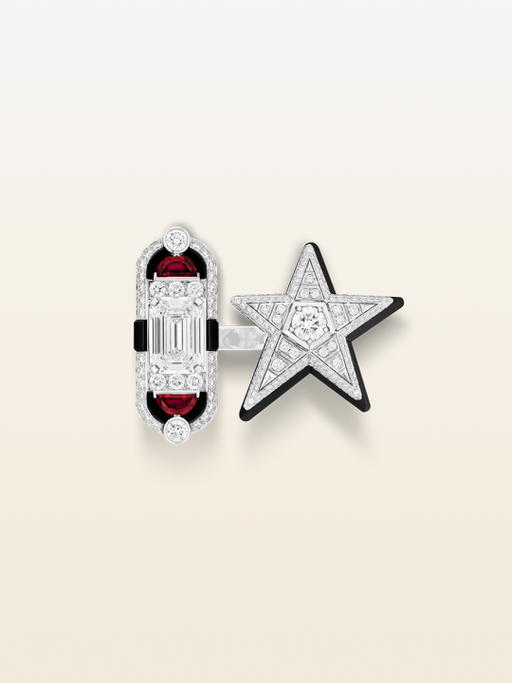
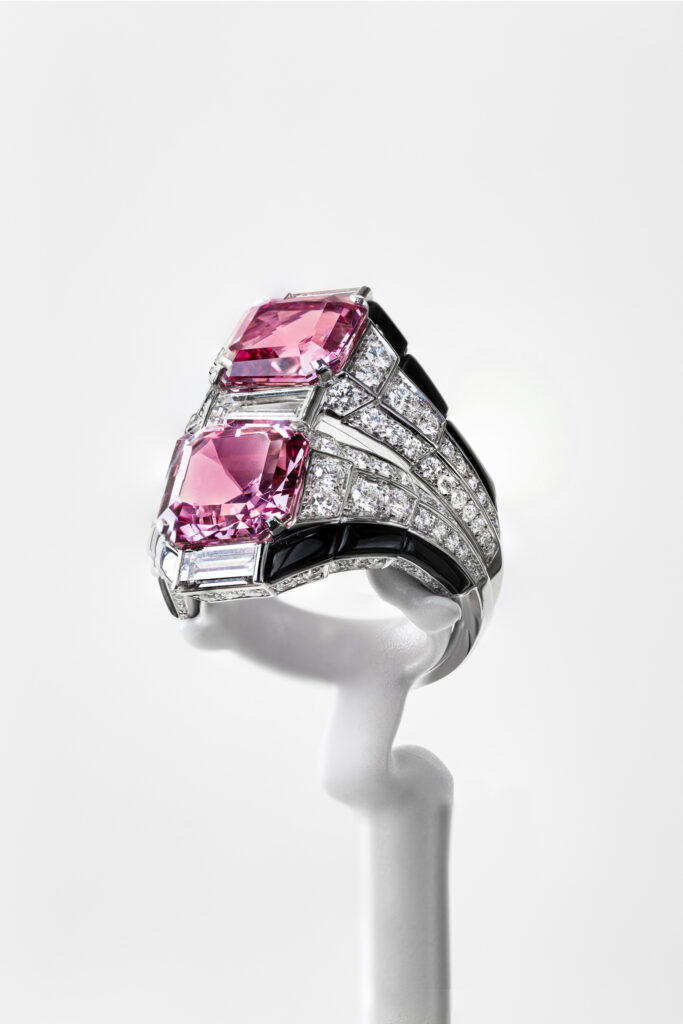
In the Attare ring, Cartier employs black strategically to emphasise the symmetry of the design. Two spinels of identical shape, weight, and colour combine in this contemporary Toi & Moi iteration. An intricate mirror construction is anchored by a baguette-cut diamond, and accents of onyx enhance the ring’s intricate profile with tiered contours that create a captivating interplay of light and shape.