
While most people wish to give back to their communities, they are uncertain about how to do so. Eleven years ago, I would have agreed that impacting society meant distributing food to lower-income families, volunteering at a soup kitchen or visiting the elderly, just to name a few. After my volunteer experiences, this has changed.
I once spent two hours at a nursing home struggling to assist elderly residents. There was nothing wrong with the seniors I had interacted with, but it was more a matter of language barriers and my lack of experience.
I did far better when I helped a friend’s non-profit with its finances using my accounting background. I was able to help them tangibly with something they would have taken months to complete otherwise. In this way, they were able to focus on delivering services to the communities they serve, rather than struggling with accounts.
It’s not that spending time with the elderly isn’t impactful. I realised that the social sector had a large skill and talent gap. It often operates with limited resources and incredibly tight budgets.
As the focus of social organisations is typically on service delivery and operational processes, this creates a skills gap in corporate functions, such as marketing, sales, finance, and information technology. It is also common for many employees to take on multiple roles, particularly in smaller organisations, for which they often lack the expertise. As a result, they may not be able to scale their direct services or serve more people because of inefficiencies in daily operations.
Then, I believed social corporations could thrive if just 5 percent of the talent from the commercial sector was harnessed.
Empact, the social organisation I founded in 2011, began this way. Our mission has always been to build the work capacity of social organisations so they can make a greater impact on society.
Skills-based volunteerism
Volunteerism based on skills can fill that void. Through various programmes, we channel the skills of volunteers into social organisations. We do this by partnering with corporates in the private sector and leveraging their employees’ skills to develop the capabilities of social organisations’ staff.
As well as benefiting others, companies can also fulfil their corporate social responsibility objectives tangibly, while engaging their employees.
The new social impact model I envisioned looks like this, with organisations and sectors working together to help social organisations scale their impact.
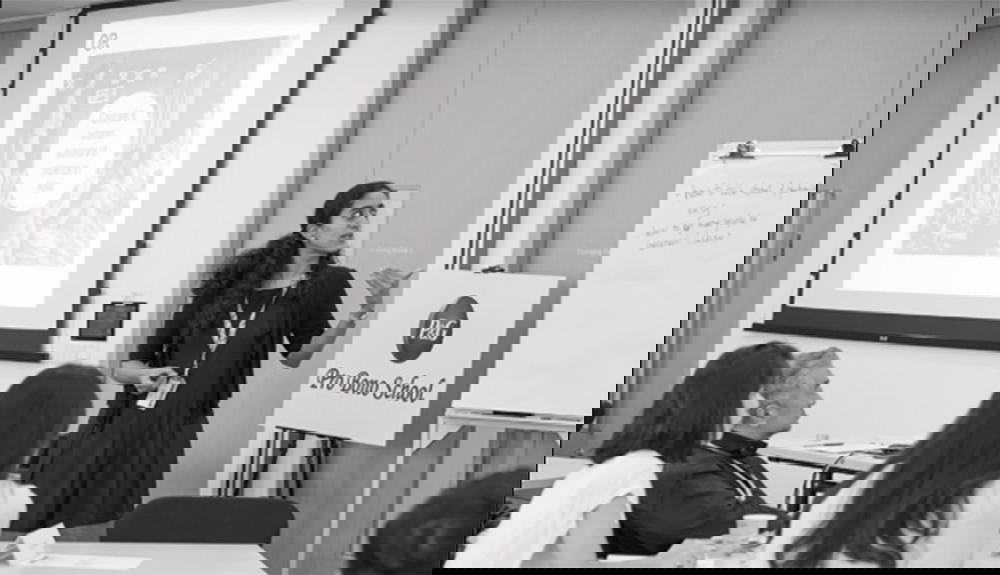
Here’s an example. To plug this skill gap in 2016, Empact developed Pro Bono School, in partnership with our corporate partners P&G and Credit Suisse, and with support from the National Youth Council under the National Youth Fund, to help social sector leaders and staff improve their skills.
The Pro Bono School is run by skilled corporate volunteers. Depending on their core expertise, they adopt different modules. A typical one-to-many training is followed by one-on-one consultations with skilled volunteers to apply the training to the social organisation’s context.
For instance, P&G has run many Pro Bono Schools in marketing, media, sales, and human resources. Additionally, as part of its volunteer programme redesign, Credit Suisse has conducted modules on cash flow management and projections, as well as technology needs assessment. A total of 1,289 social sector leaders from 413 unique social organisations have participated in 37 sessions.
Many social enterprise models are actually examples of private-social partnerships. As social enterprises improve the access of underserved groups to goods and services, a partnership with the private sector is often required, whether in the distribution chain or developing the product.
Another model is social enterprises that provide work opportunities for marginalised groups. A private sector partner can, for instance, help hire or purchase the goods and services produced in such cases.
“Step outside the norms of volunteering and giving. Apply your skills and knowledge, partner with organisations in different sectors, and contribute to the social sector. Your impact will surprise you.”
Peter Yang
For such partnerships to be sustainable, they need to benefit all parties involved. All must therefore be transparent about their objectives and aligned on what they hope to achieve through the partnership.
In Empact’s Pro Bono School, what is difficult to do alone is made more effective by collaborating with like-minded partners and leveraging their strengths.
Donors and funders must also recognise that capacity building is critical to enabling social organisations to deliver their impact effectively. There has been a shift in awareness over the past 10 years, but there is still some way to go in shifting mindsets.

So, here’s my advice: step outside the norms of volunteering and giving. Apply your skills and knowledge, partner with organisations in different sectors, and contribute to the needs of the social sector. Your impact will surprise you.