Sunlight gently filters through the fabric dividers at Na Oh, whose name means “the journey from inside out” in Korean. It illuminates the elegant and welcoming space with its soft furnishings and ceramic ware. These complement its four-course prix fixe menu, available for lunch and dinner.
The 40-seater restaurant was created through a partnership between acclaimed restaurateur Corey Lee and Hyundai Motor Group Innovation Center Singapore (HMGICS), a sleek complex located in the far-flung Jurong West industrial estate. After earning three Michelin stars for his San Francisco restaurant Benu, Lee makes his debut in South-east Asia with Na Oh.
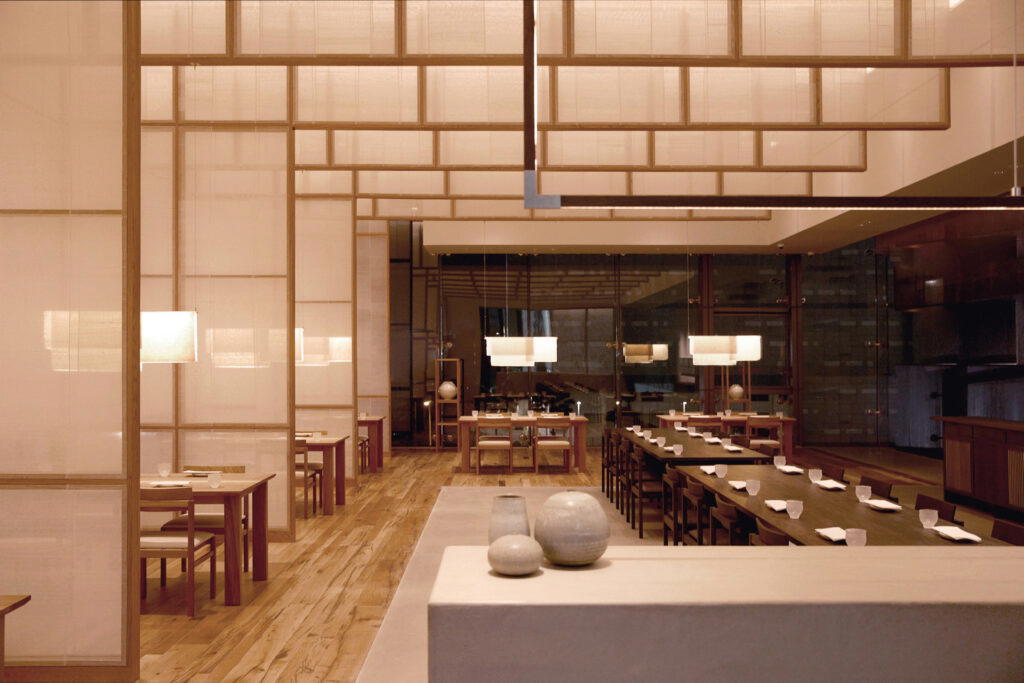
Initially, Hyundai approached Lee with the idea of providing something that would enhance its visitors’ experience through food. “This premise is so different from how restaurants are typically opened, as a business opportunity. I was inspired by the potential to do something unique in this space,” he says.
Besides Na Oh, HMGICS also has electric vehicle servicing facilities, a Smart Farm run by robots, and a Skytrack test drive course. With its inviting feel, the contemporary Korean restaurant contrasts with the building’s modern machinery and stark white space. Traditional methods like fermentation and preservation, are integrated with modern culinary techniques to elevate seasonal ingredients.
To ensure consistency and safety, Lee emphasises that fermentation is carried out in highly controlled environments. “My goal is to keep the technique in the background and only showcase the inherent flavour of an ingredient or preparation.”
The Buckwheat and Mugunji Jeon, a crowd-favourite appetiser, encapsulates this perfectly. Despite its rich and complex flavour, the mugunji, or aged kimchi, balances well with the slightly sweet batter of the frittered pancake.
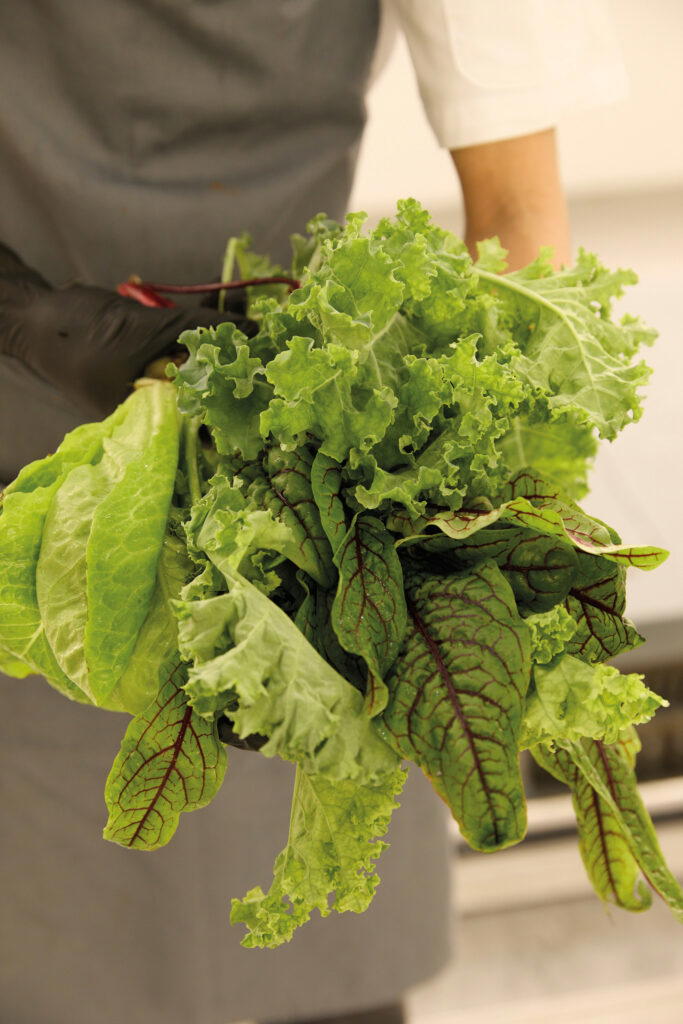
The jeon is served with a salad made with leaves from the Smart Farm. It also happens to be Lee’s favourite on the menu because it’s approachable and delicious for anyone. “It combines the innovation of HMGICS with the traditional flavours of Korean cuisine, resulting in a singular preparation that feels truly Korean,” he explains.
HMGIC’s Smart Farm plays a significant role in the seed-to-table experience Lee hopes to give diners. The two-storey vertical Smart Farm can produce more than 30kg of fresh vegetables daily. In addition, it is the world’s first robotic smart farm for customer experience, and the first one ever to be open to the public.
There are currently nine types of vegetables grown there, including ice plant, red coral lettuce, Swiss chard, mustard, kale, romaine lettuce, and mizuna. In the next phase, diners can expect greens such as chrysanthemum, nasturtium, perilla, and marigold.
“It’s nice for diners to experience and see the life cycle of what they are eating. A greater understanding leads to greater appreciation. When it comes to food, you connect more with a dish when you’ve seen how some of the ingredients are grown,” Lee muses.
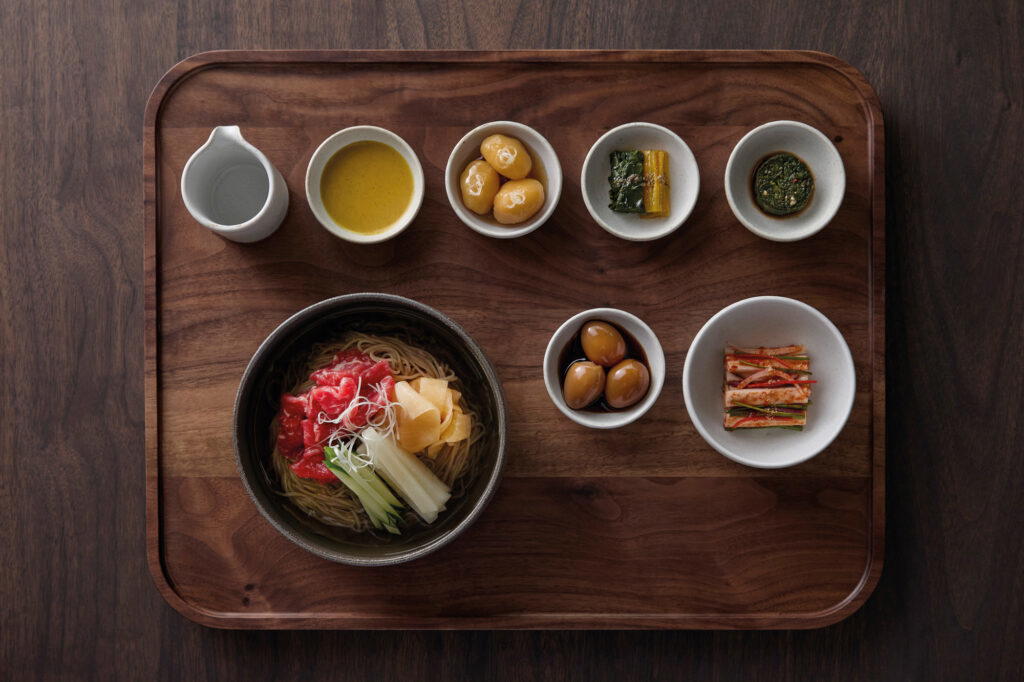
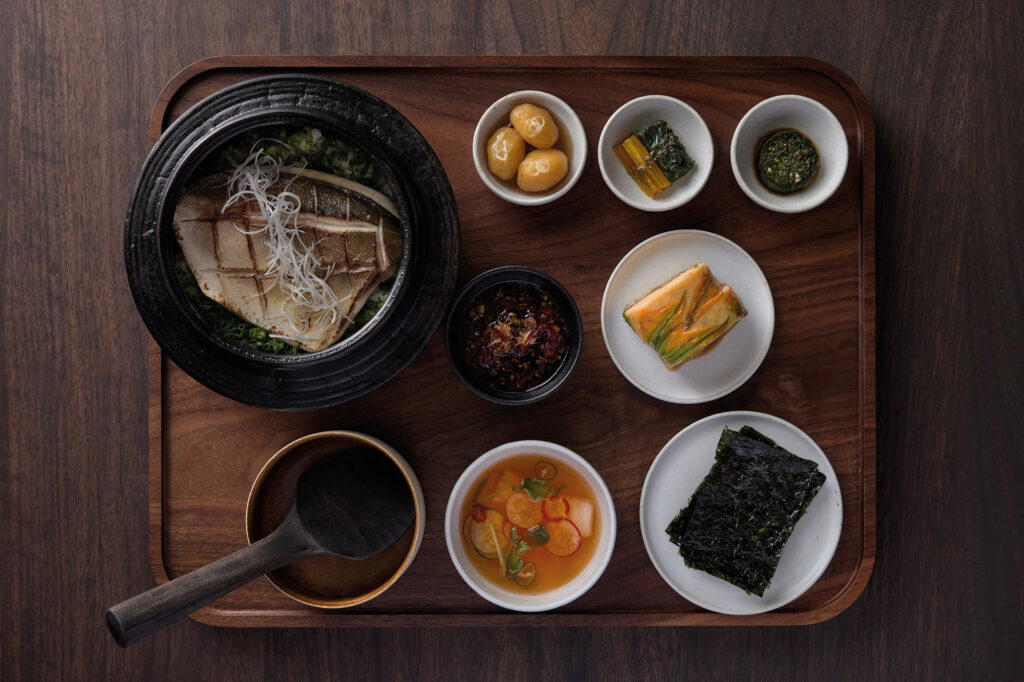
Each season, Na Oh serves just one four-course prix fixe menu in the style of jinjitsang, a Korean meal accompanied by a variety of side dishes. For summer, diners can pick a main from the trio of Golden Queen Rice and Butterfish Gamasot, Samgyetang, and Pyongyang-Style Cold Noodles.
Presented in a refreshing broth of dongchimi, or radish water kimchi, the silky strands of cold noodles are an apt choice for a sweltering day. Shaved raw beef loin, marinated quail eggs, and cabbage geotjeori complete the flavourful dish.
Helming a restaurant located within a high-tech facility like HMGICS inevitably allows Lee to draw parallels between his culinary innovations and Hyundai’s. Beyond the Smart Farm, an innovative approach to sourcing produce, the restaurant also uses the latest cooking equipment and techniques.
“For example, Samgyetang, or poached chicken with ginseng, is typically cooked in a ttukbaegi clay pot over an open fire. We cook ours in a gamasot or Korean iron pot inside a smart oven that regulates the temperature and humidity precisely. Innovating allows us to capture the essence of traditional dishes, while maintaining precision and consistency in our preparations,” Lee adds.