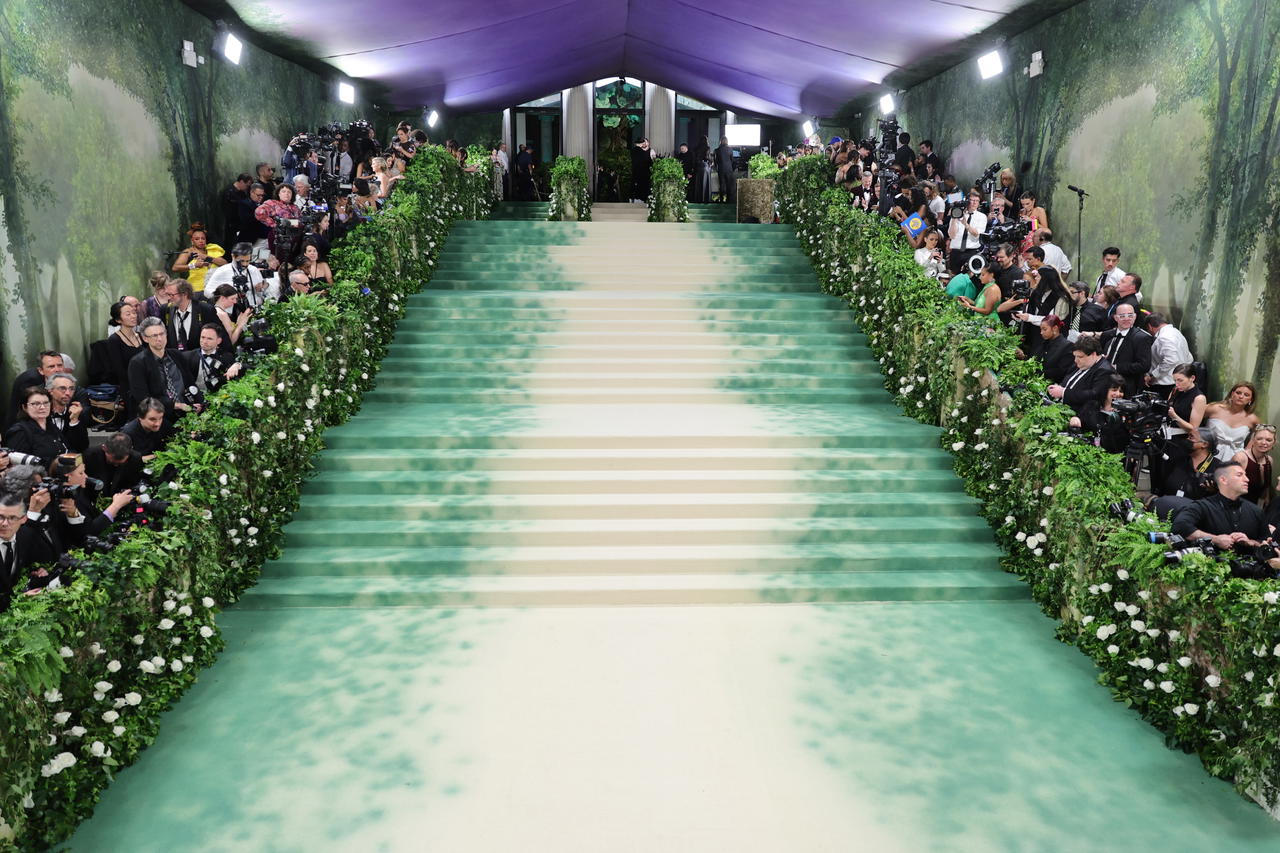
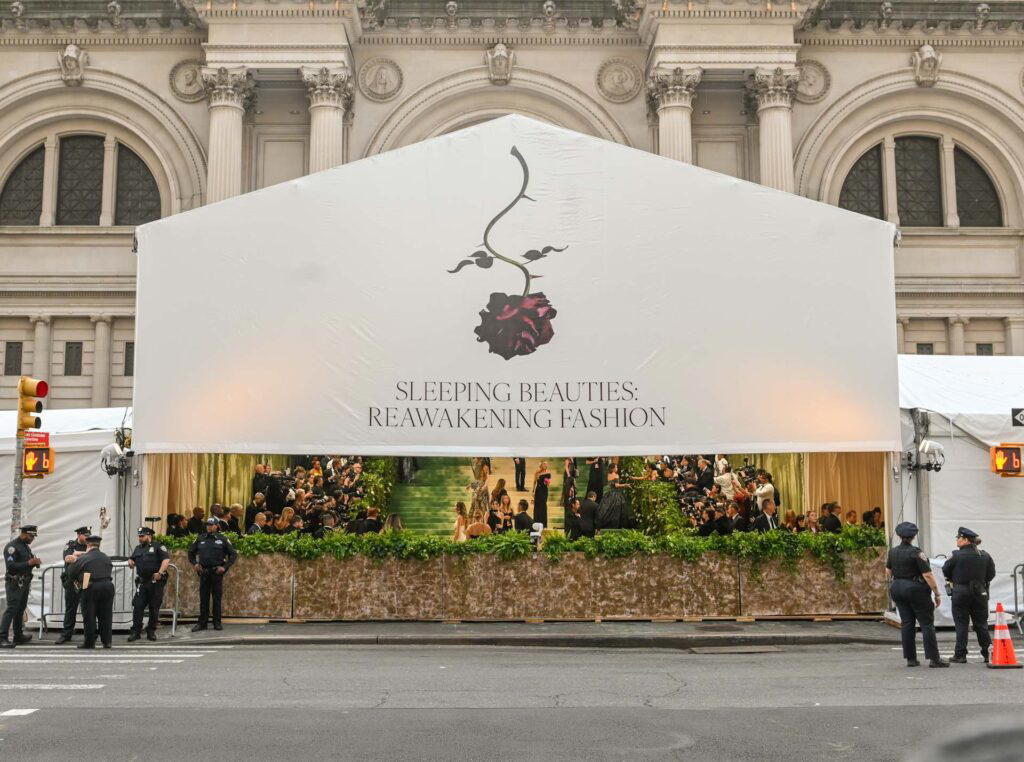
Although published 62 years ago in The Magazine of Fantasy & Science Fiction, J.G Ballard’s short story ‘The Garden of Time’ accurately foreshadowed the events that unfolded at the Metropolitan Museum of Art on the first of Monday of May. The fable, set as the fundraising gala’s dress code, also grounded the Costume Institute’s exhibition, Sleeping Beauties: Reawakening Fashion. Its curatorial focus on delicate historical garments explores notions of rebirth and renewal by using nature as a metaphor for fashion’s impermanence.
However, the Met’s turn to Ballard feels peculiar. The late British writer, heralded as an avant-garde provocateur, was no stranger to public controversy and vitriol. His seminal novels like The Atrocity Exhibition, High-Rise, and Crash are cultural commentaries notorious for their perverse, hallucinatory narratives. Fetishised celebrity icons collide with mass media spectacles of cruelty. Disintegrating luxury towers host orgiastic mania. Hoodlums fuel their death drive by eroticising mangled automobiles.
Easily overlooked in Ballard’s extensive career, ‘The Garden of Time’ is an early work of speculative fiction that portrays the bleak demise of two aristocrats. While residing in their secluded Palladian villa, Count Axel and the countess witness a storming mob, akin to Goya’s Black Paintings. As Ballard writes, “pressing forward in a disorganised tide” is the “encroaching multitude”, “a nightmare from which (Count Axel) had safely awakened.”
From there, we follow the couple as they attempt to preserve their Arcadian sanctuary. Count Axel strategically alters time and space, sending back the madding crowd with crystal time flowers. Each plucked stem delays the impending doom, their quantities albeit limited in the withering garden. The countess uplifts the mood by playing Mozart on her harpsichord. Together, they seal rare manuscripts, straighten vases, and lock the doors protecting these bastions of culture. Still, nothing matters. The ivory tower is overrun, defiled, and left in ruins. What remains of the aristocrats are stone effigies in their likeness, forgotten in a thicket of belladonna-laced thorn bushes.
Beauty and the Beast
Plenty of Internet fodder covering this year’s Met Gala theme and exhibition have described the ideas of impermanence and class conflict in Ballard’s story. Online commentators were quick to draw parallels between real-time happenings and the literary text. Celebrities represented the aristocracy while protesters along Madison Avenue stood in for the mob. The air of sophistication under the Met’s white tent was unpierced by news of humanitarian crises. The red carpet was devoid of political sartorial statements. And just hours before the event, Condé Nast struck a deal with its former employees who threatened to stage a picket line.
Such interpretations highlight the situation’s poetic irony. But Ballard’s words cut deeper than a knife. In ‘The Garden of Time’, there are no heroes or villains. It is a parable about rulers who fail to use their powers justly, evading accountability for exacerbating divisions. Civilisations sleepwalk into oblivion, leaving nature’s heartless brutality as the last word. And yet, humanity remains undifferentiated by the destruction and loss of our material culture.
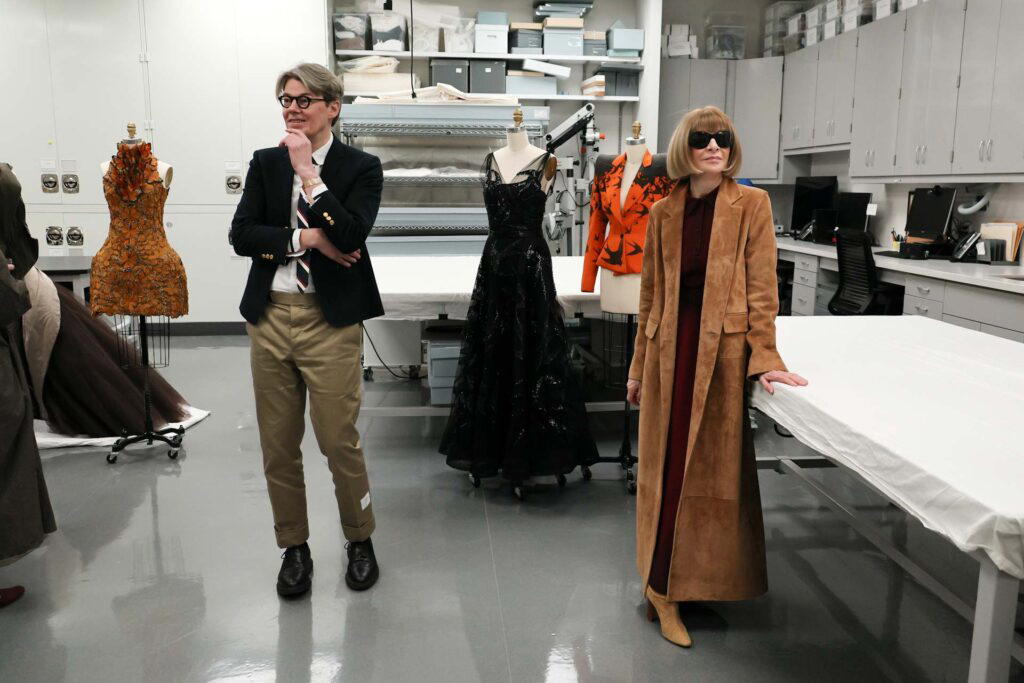
Within the context of a gala that promotes excess to support the preservation of global fashion history, the Ballardian premise invites wider interpretations. You can argue that Vogue’s Anna Wintour and chief curator Andrew Bolton filled the shoes of Count Axel and the countess, respectively. Were the celebrity invitees, Tiktok, and LVMH’s Loewe their time flowers? Or was the aristocracy concealing its decline by erecting higher garden walls and displaying their refinery?
American publicist Eleanor Lambert’s original idea of a charity ball for high society philanthropists had been overrun ever since fashion editor Diana Vreeland staged tie-in costume exhibitions that became celebrity-driven bonanzas in the 1970s. Now under Anna Wintour’s tenure, a heady mixture of exclusive celebrity guests, pop culture, and brand sponsorship deals is the poison of choice. And this year, commercialisation is only getting bolder. Case in point? A Loewe pop-up store selling luxury bags and scents greets visitors at the gallery’s entrance. It is questionable who the Met museum is for and what it expects out of its audience.
Sure enough, the addictive fundraising formula generates publicity and breaks records for the Costume Institute annually. As per The New York Times, 2024’s edition raised over $26 million. Every participant involved in the cultural phenomenon stands to gain something financially. But why reach dizzying heights at the expense of cheapening a public cultural institution? When the affirmative character of culture loses substance, no garden can deter the rabble or inevitable ecological disaster.
Perchance to Dream
Over at Sleeping Beauties: Reawakening Fashion, the exhibition bids audaciously to resuscitate fragile garments in the Met’s collection through technological innovation. The goal of presenting the multi-sensorial qualities of over 200 pieces promises a new museum-going experience, but the curatorial approach feels shallow. Sectioned into three parts—Land, Sea, and Sky—the exhibition simplistically presents how fashion designers take inspiration from nature. Rather than exploring ways they engage with concepts about the natural world, the show focuses on the decorative iconography of flora and fauna.
The Met's Sleeping Beauties: Reawakening Fashion
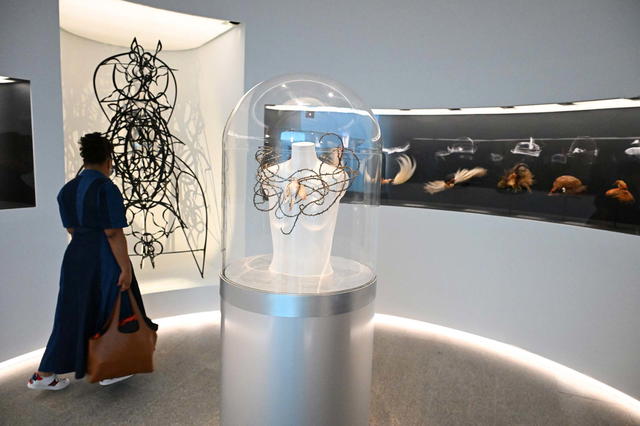
A view of looks on display during the press conference for the 2024 Met Gala celebrating "Sleeping Beauties: Reawakening Fashion" at The Metropolitan Museum of Art on May 06, 2024 in New York City.Photo: Slaven Vlasic/Getty Images 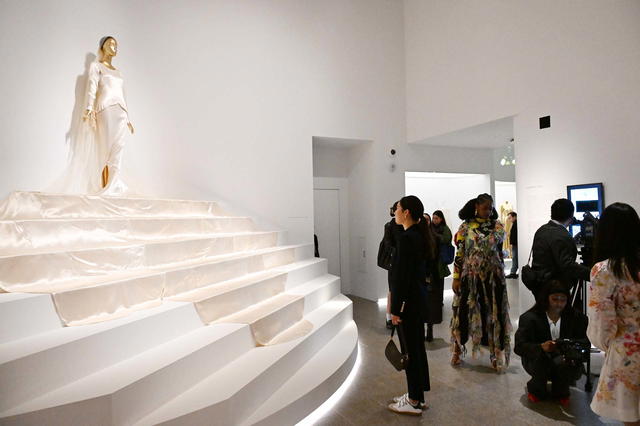
A view of a look on display during the press conference for the 2024 Met Gala celebrating "Sleeping Beauties: Reawakening Fashion" at The Metropolitan Museum of Art on May 06, 2024 in New York City.Photo: Slaven Vlasic/Getty Images 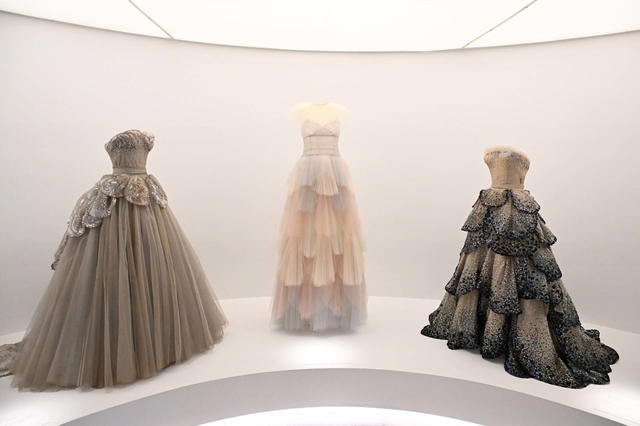
A view of looks on display during the press conference for the 2024 Met Gala celebrating "Sleeping Beauties: Reawakening Fashion" at The Metropolitan Museum of Art on May 06, 2024 in New York City.Photo: Slaven Vlasic/Getty Images 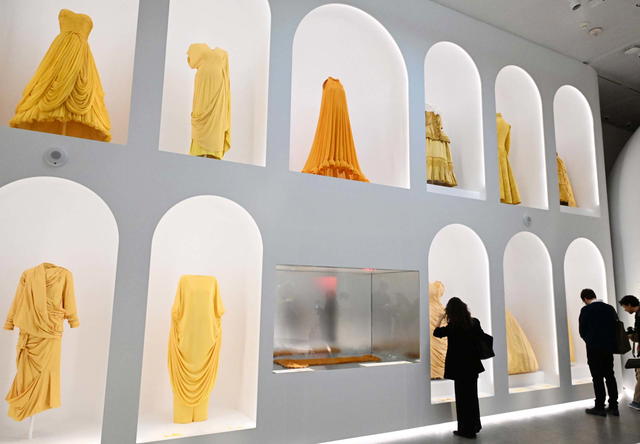
A view of looks on display during the press conference for the 2024 Met Gala celebrating "Sleeping Beauties: Reawakening Fashion" at The Metropolitan Museum of Art on May 06, 2024 in New York City.Photo: Slaven Vlasic/Getty Images
Visually, the exhibition space cuts closer to a sterile science lab. Limp garments in their vegetative states are exhumed from the back rooms, laid to rest in glass coffins and suspended as upright corpses in bell jars. Of course, there are bona fide pieces on display that are wondrous to behold: 19th-century gowns by Charles Frederick Worth, Alexander McQueen’s 2001 razor-clam shell dress, and Jun Takahashi’s terrarium dress from the Undercover runway last year. It is a rare chance for the public to glimpse these beauties, many of which are centuries-old and impossible to be recreated today.
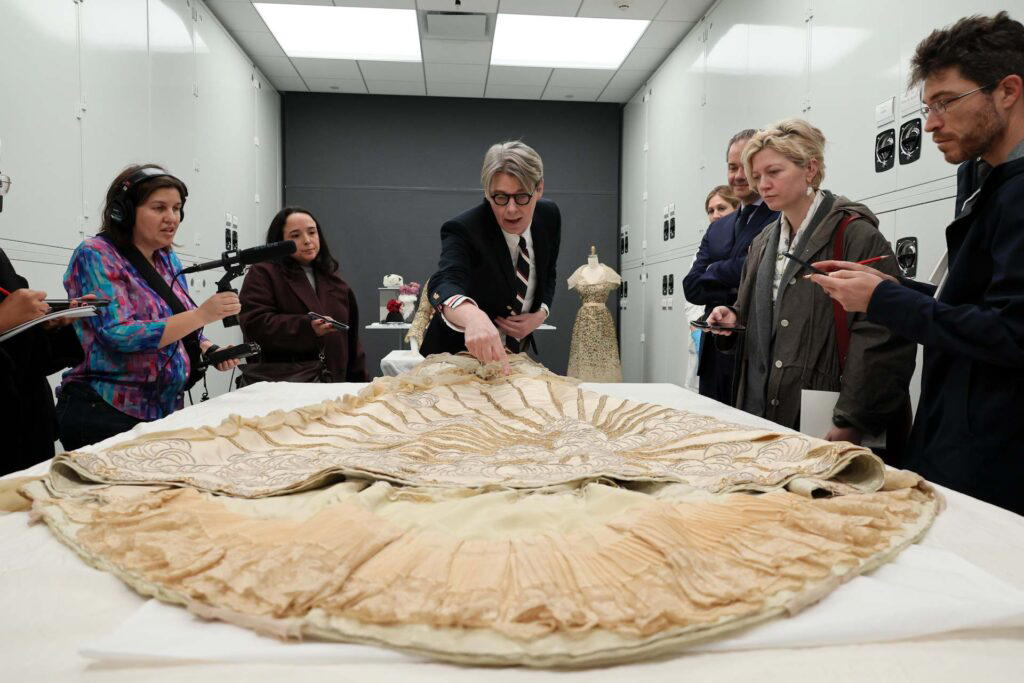
However, explorations into the work of archivists and conservators who make these pieces endure time are less apparent. What could have been an exhibition about the significance of preserving historical objects channelled more energy towards the engagement of the five senses with technology. A scratch-and-sniff wall, interactive interfaces designed by OpenAI, and holographic illusions are just some tricks used to revitalise clothes. Although the bodiless apparitions animated by Nick Knight at SHOWStudio have potential for conservation efforts, they are limited in conveying the aura of the original wearers and their personal histories.
The Cut shares that Sleeping Beauties is a replacement for a John Galliano retrospective. But the Met feared public backlash given the designer’s antisemitic outbursts in 2011. Nonetheless, plenty of attendees wore ensembles by Galliano. The Met’s concerns of being tone deaf were not assuaged either. The Ballardian turn proved to be a paradoxical move that back-fired and turned the tide against celebrities.
A self-proclaimed “scout who is sent on ahead to see if the water is drinkable or not,” Ballard envisioned societies relishing in subordination and accelerationism. If Ballard was still around today, he would have found the cognitive dissonance of carpet-bombings and red-carpet glamour all too familiar. The chaotic bricolages conjured from his zany imagination and headlines from the Cold War era now define the millennium’s reality.
Certainly, ‘The Garden of Time’ was lost in translation. But no theme in the Met Gala’s history has sparked such explicit public discourse on social inequality—all while parading and profiting from it. Perhaps, Katherine Mansfield’s short story “The Garden Party” or Suzanne Collins’ The Hunger Games would have unleashed less confusion.