When you travel, life often seems like a dream. But have you ever been on an adventure where every day was a nightmare? In this story, everything that can go wrong on an expedition to the mysterious white continent is told, along with a very simple epiphany: nothing is impossible when you don’t give up.
After multiple interviews two years ago, I was finally selected to join the International Antarctic Expedition. I worked with global experts on the climate policy and action to prevent the revision of the Madrid Protocol, which currently protects the continent from human exploitation. As an environmental researcher travelling across all the continents for five years, it felt like a true calling. So, I quit my job in Singapore, sold all my belongings, and moved on.
The journey to Antarctica wasn’t easy, however. As I reached the tip of South America (Argentina) in March, I learned that I was positive for Covid-19 less than 48 hours before the ship left. I was not allowed to board. Instead, I was confined to a mountain lodge with little connectivity. My health took a toll during this time.
As well as Covid-19, food poisoning, and other issues, I experienced a broken toe at sub-zero temperatures. The 10 days that followed were some of the darkest of my life. I had spent the last two years preparing for this expedition, only to watch the last ship of the season sail without me.
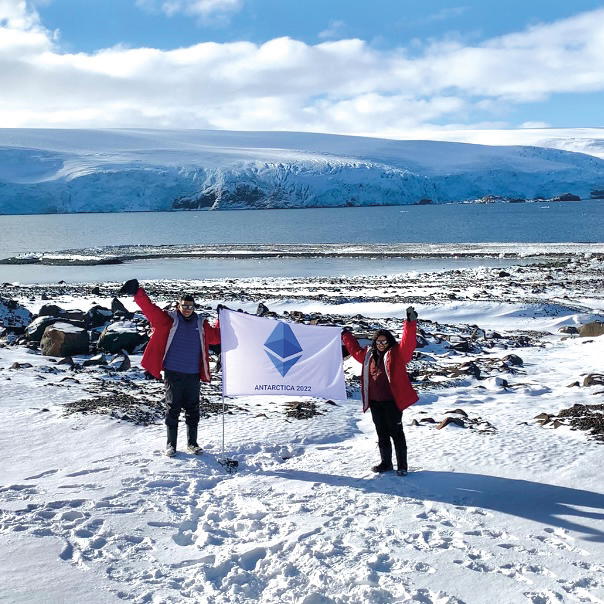
I’d travelled from Singapore with my friend Aditthya. As a close contact, he also stayed back to prevent potentially infecting others on the ship. So, we were the only ones left behind at the southernmost city in the world — Ushuaia, Argentina. Despite this, we never gave up. Following my recovery, we contacted every ship operator in Ushuaia to see if anyone could spare us a space on a ship, cargo vessel, or even a sailboat to help us cross the Southern Ocean and reach Antarctica.
But the continent’s brutal winter begins around the end of March, so crossing the ocean was not only risky, but also potentially fatal. None of the ship operators wanted to attempt crossing the Drake Passage — with waves as high as 12m — until austral summer the following year.
Then we considered flying to Antarctica over the ocean and convinced a Chilean company to let us take a small propeller aircraft in April. We raised $30,000 in 48 hours by flipping NFTs to support this reroute.
However, bureaucratic problems arose despite our efforts. To name a few hurdles, we had to navigate closed land borders between Argentina and Chile, obtain mobility permits from Chile, and deal with delayed banking processing times. Whenever I felt like giving up, I would call my parents and stress-cry. I remember asking my mum if I should give up and go home. Her advice was the same as when I’d asked her if I should quit my job the previous year — taking risks is better than having regrets.
Flying an aircraft to Antarctica is no joke, especially in April when the winter is ruthless and deadly. There are no airports or runways in Antarctica. We also needed to get there before nature caught up to us. Each day we delayed, we would lose 13 minutes of daylight.
In Punta Arenas, we started paying attention to things we had never considered, such as wind speed, visibility, cloud height, overcast skies, and other factors because they determined whether we would make it to Antarctica. We were on edge with anticipation. From April 4, we got dressed in polar gear every morning at 5am and met with the pilots to discuss the weather. If it was good, we would take off; if not, we would return to the hotel and wait until the next sunrise.
Day 1, April 5: Wind speed > 30 knots.
Visibility = Poor. We tried. We failed.
Day 2, April 6: Wind speed > 29 knots.
Visibility = Poor. We tried. We failed.
Day 3, April 7: Wind speed = Normal.
Visibility = Normal. We tried. We took off!
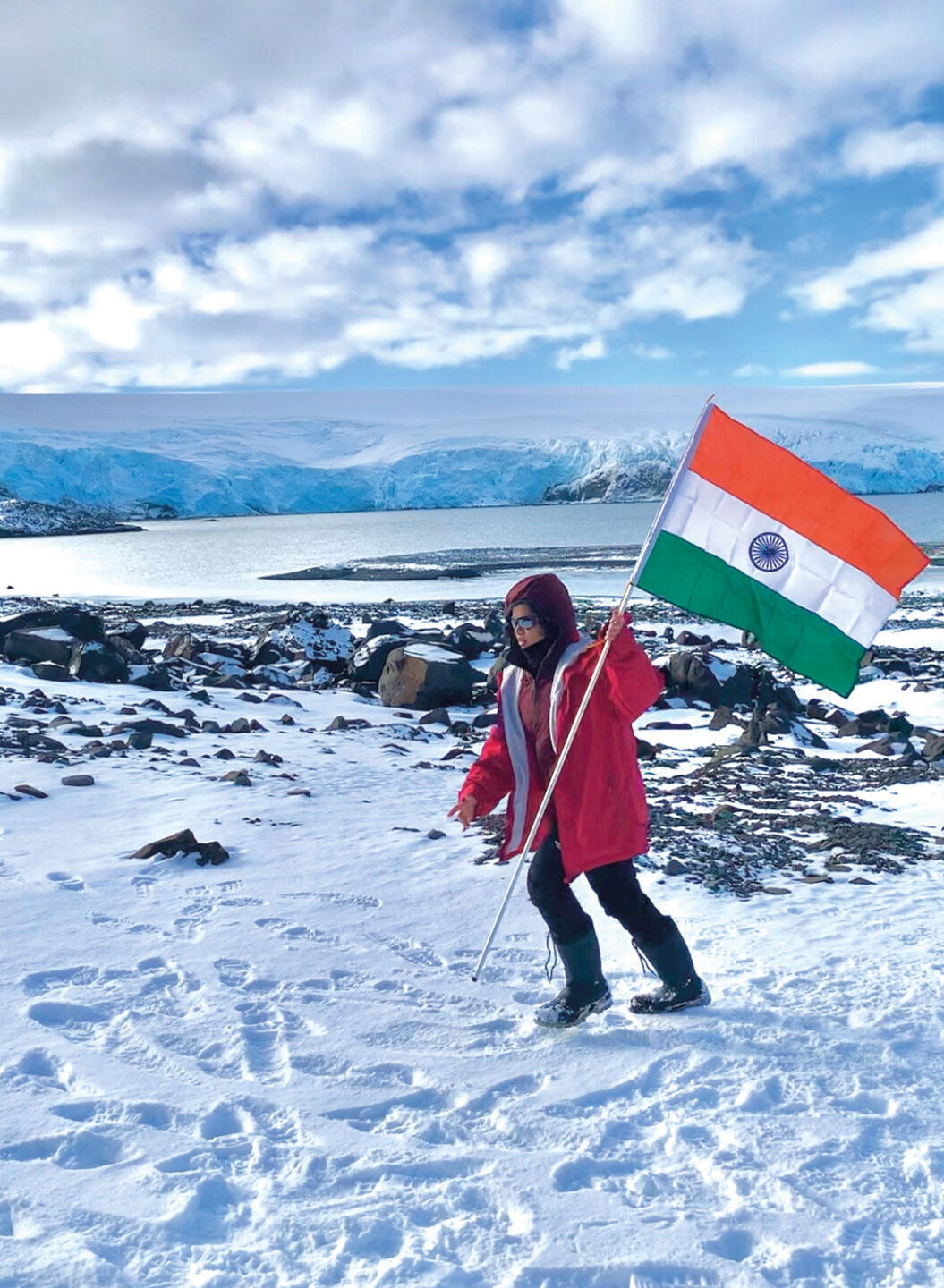
Filled with fear and excitement, we watched South America disappear under us and landed in Antarctica, looking like another planet, at 10:50am. There is such a disconnect from the rest of the world, yet you still feel alive. It’s just you and your thoughts in the empty whiteness. It doesn’t matter what your nationality, race, or religion is. Antarctica is where you are just a human. Everyone is excited to meet other humans and hear their stories. You are constantly reminded that you are alive and need to stay alive, which awakens your survival instincts.
After landing near the Russian base, we took a Zodiac boat across glaciers, land, and other military bases. The Chilean military base in Antarctica even permitted us to connect to the Internet for a few minutes, thanks to Chilean Antarctic explorer Jorge Skarmeta. By minting the world’s first NFT in the seventh and last continent with the data we had, we also made history. The proceeds from its sale will go to organisations working on solving our global climate crisis and educating future generations.
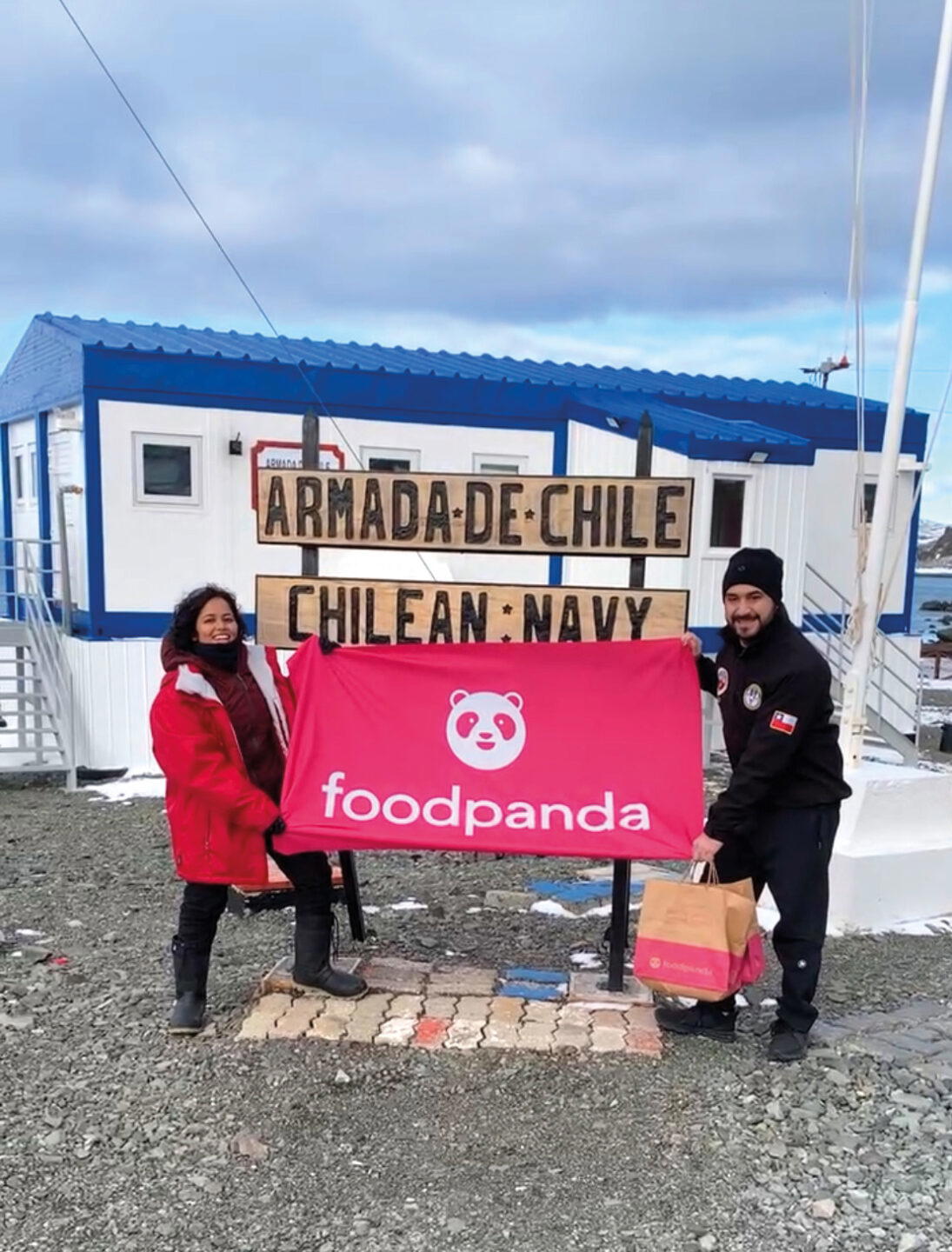
As we are ardent believers and users of the space, implementing this was important to us as it marked the expansion of Web3 across all seven continents. What’s more, in collaboration with foodpanda, I’d made the world’s longest delivery from Singapore to Antarctica, spanning more than 30,000km and four continents to share some of Singapore’s finest snacks!
Later, we learned that we were the first exploratory aircraft to land in Antarctica in April. That’s when it dawned on us that we hadn’t just reached Antarctica, but had done so against all odds.