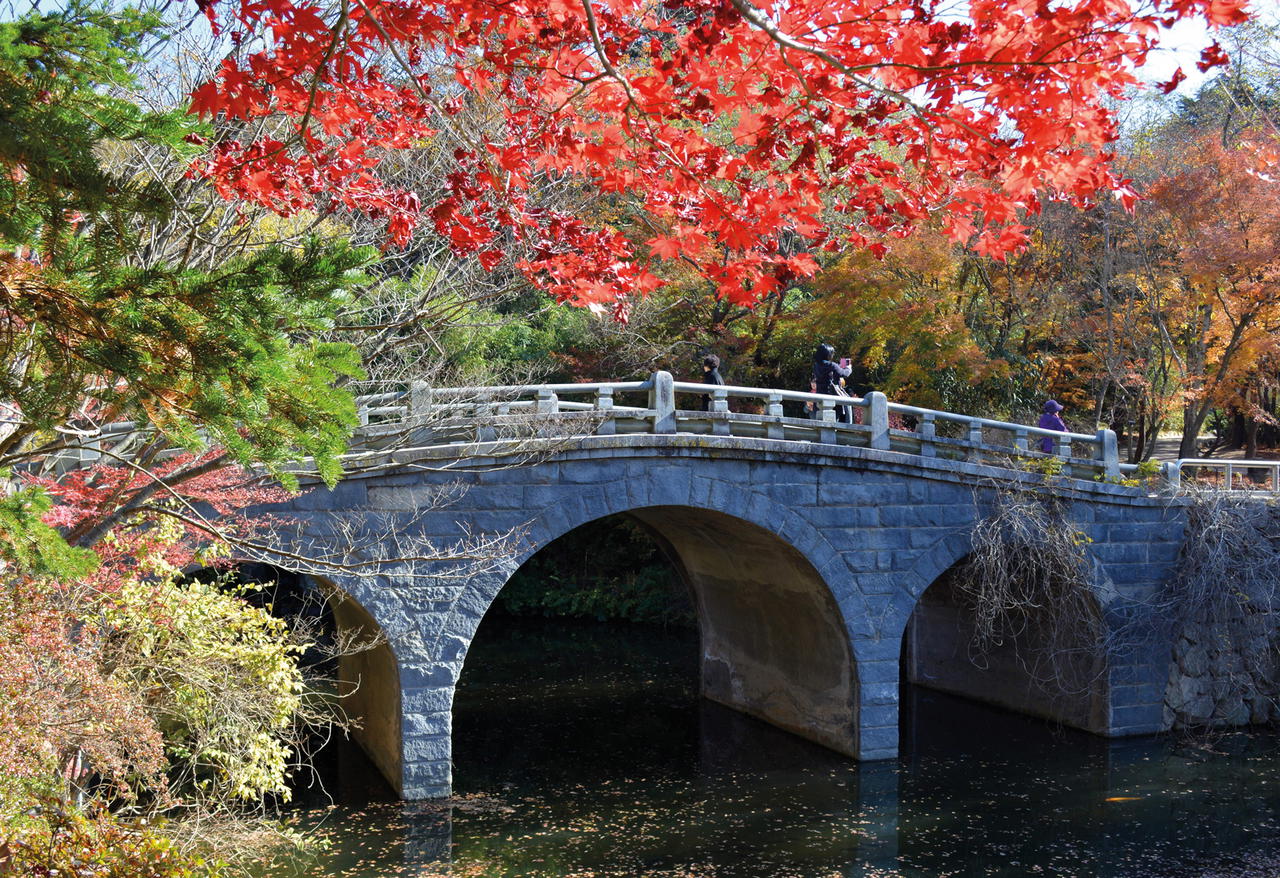
Manufacturing has helped South Korea become an economic powerhouse. The country’s newest wave is eco-tourism. As the hyper-modern nation pushed to become more environmentally friendly, the concept flourished, which helped it to lead Yale University’s country eco rankings and only trail Singapore and Japan. Many businesses and individuals have become cleaner and greener because of this movement.
In Seoul, rooftops, balconies and courtyards hum with sweetness amid the city’s futuristic skyline. One of the world’s most densely populated metropolises, it has limited space for agriculture. As a result, urban beekeeping has become an increasingly popular eco-friendly activity.
Helping drive this trend is 38-year-old Park Jin, a Seoul native. Nine years ago, he quit his office job to start a beekeeping journey that has resulted in over 40 urban bee farms around the capital and a thriving urban honey café.
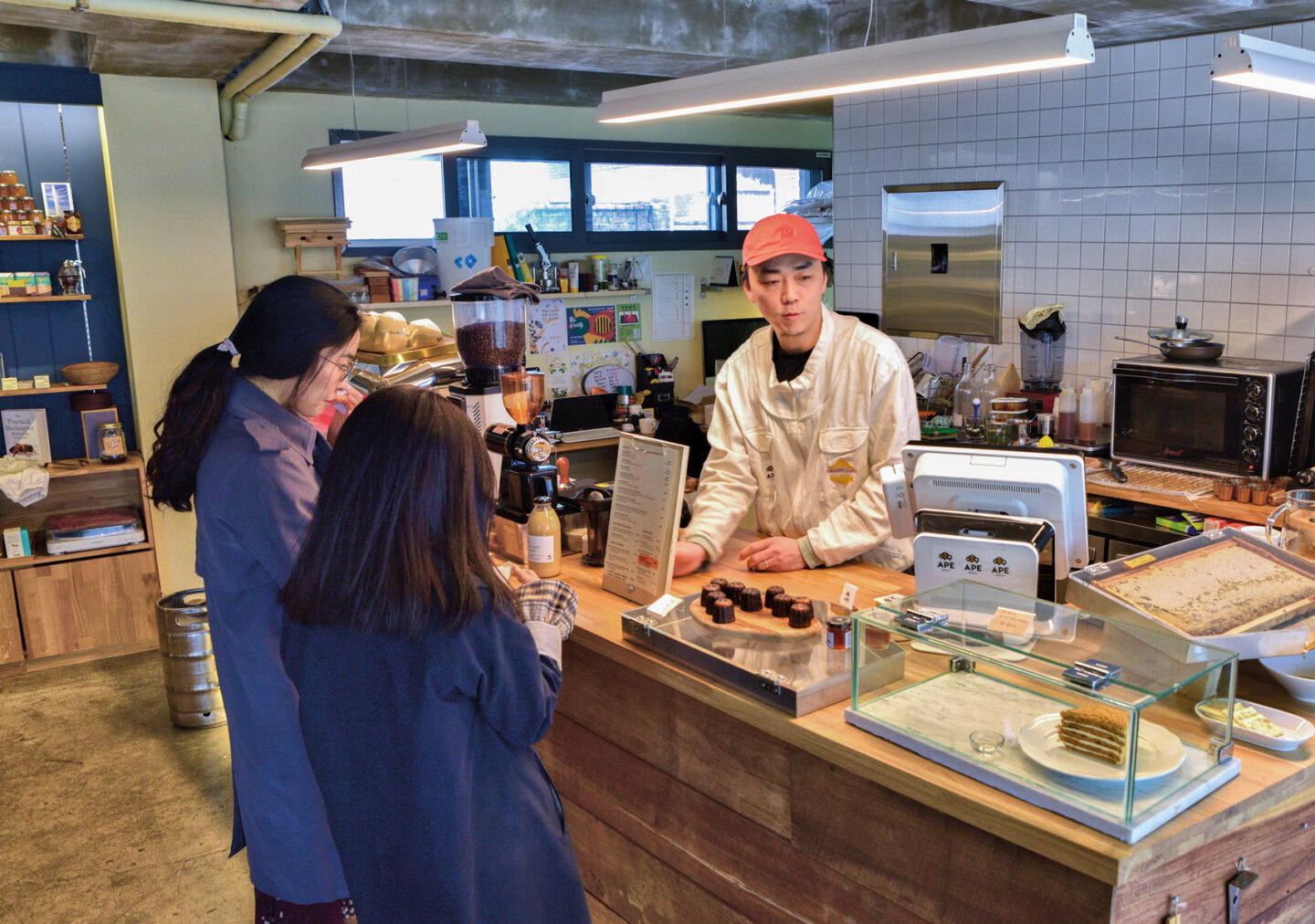
I met Park in APE Seoul in Hyehwadong, a neat suburb east of Seoul’s sprawling complex of royal palaces. As we chatted, I sipped on a delicious honey-infused cappuccino, complemented by one of APE’s speciality treats, a honey canelé. The addictive French pastry has a hard, crispy shell ensconcing its soft cake centre.
I was told that a major national event led to Park’s pivot in life. In 2010, the government was panicked by an outbreak of the sacbrood virus, which infects honey bees. A directive was issued to beekeepers ordering them to destroy their hives. One fell swoop wiped out a 2,000-year-old pastime.
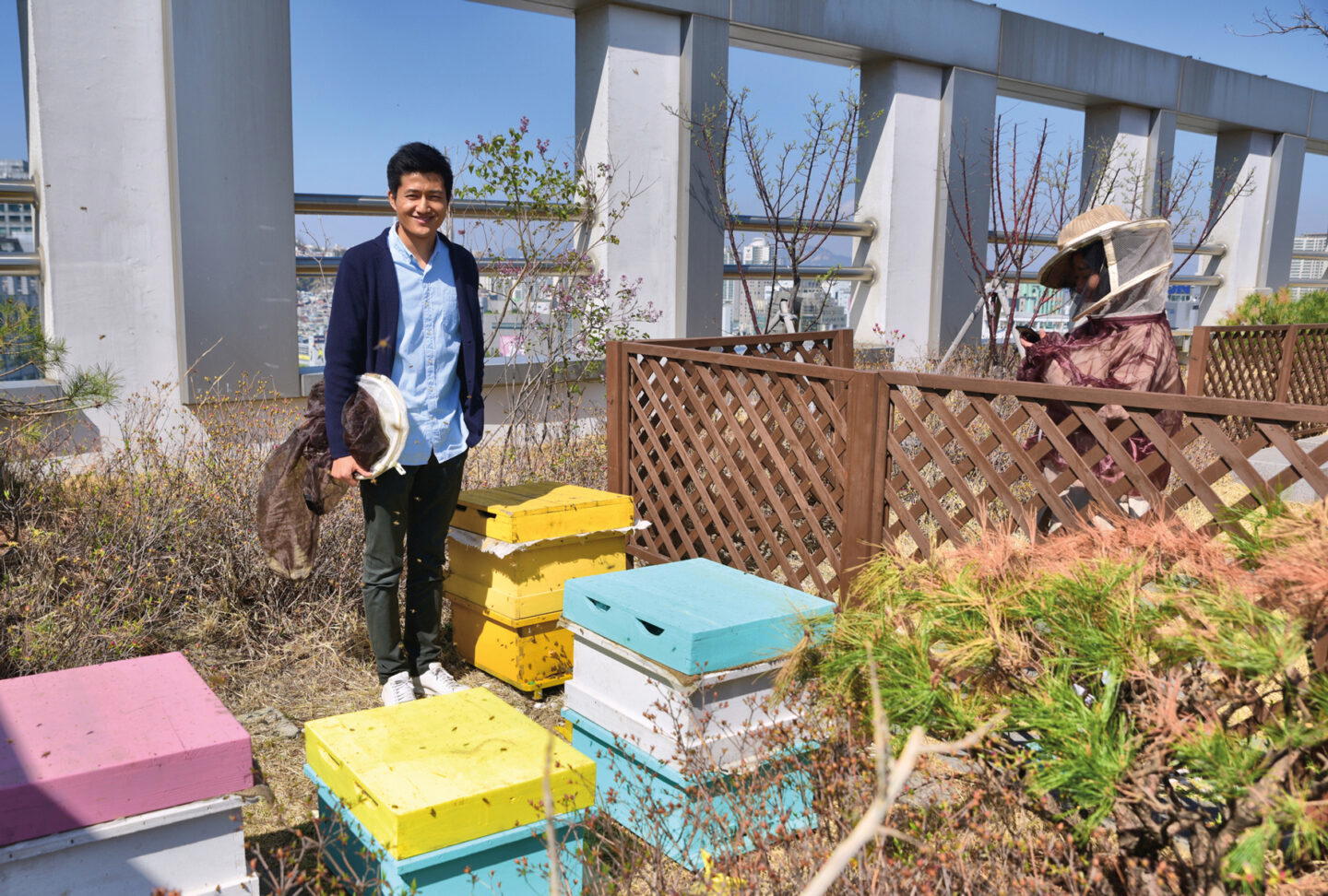
“Most of the bee population in South Korea died and never returned even after a few years,” Park says. “The ecosystem needs bees for other insects and plants as well. Our environment suffered. I wondered if I could help.”
He studied urban beekeeping, which barely existed at the time in South Korea. After learning the hobby’s basics, he created Urban Bees Seoul, a collective of beekeepers, and established dozens of “honey bee hubs” in Seoul and nearby towns, each hosting up to 50,000 bees.
He sets most of them up on the vacant rooftops of businesses, and shares revenue from the honey he sells online and at his café. Park’s collective also holds beekeeping workshops, which tourists can join via the Facebook page.
Tread Right
Just a 30-minute ride south of APE Seoul café, a different nature-driven movement is taking place in Seoul Forest, one of the city’s most serene locations.
Over the last 17 years, a giant team of volunteers has nurtured this former water treatment facility. It has become one of the city’s most scenic and well-trodden parks and a centre for environmental education. Featuring sections dedicated to arts and culture, as well as educational experiences, alongside an eco-forest and riverside park, Seoul Forest has over 40,000 trees.
Each year, this urban oasis awards internships to hundreds of Seoul teenagers to learn the basics of horticulture. Tourists discover the history and goals of Seoul Forest at its visitor centre before admiring the majestic butterfly garden and its winged inhabitants. They complete their visit by walking across the footbridge that offers views into its eco forest teeming with wild animals including deer.
Beyond these ground-up initiatives, environmentalism also extends to gleaming commercial enterprises. Large-chain hotels have integrated sustainability into their operations — from JW Marriott Seoul’s extensive grey water system to Millenium Hilton Seoul’s gardens that are watered with leftover fluids from water bottles. Sustainability is no longer an afterthought confined to cursory notes coaxing guests to recycle.
Rooted in Conservation
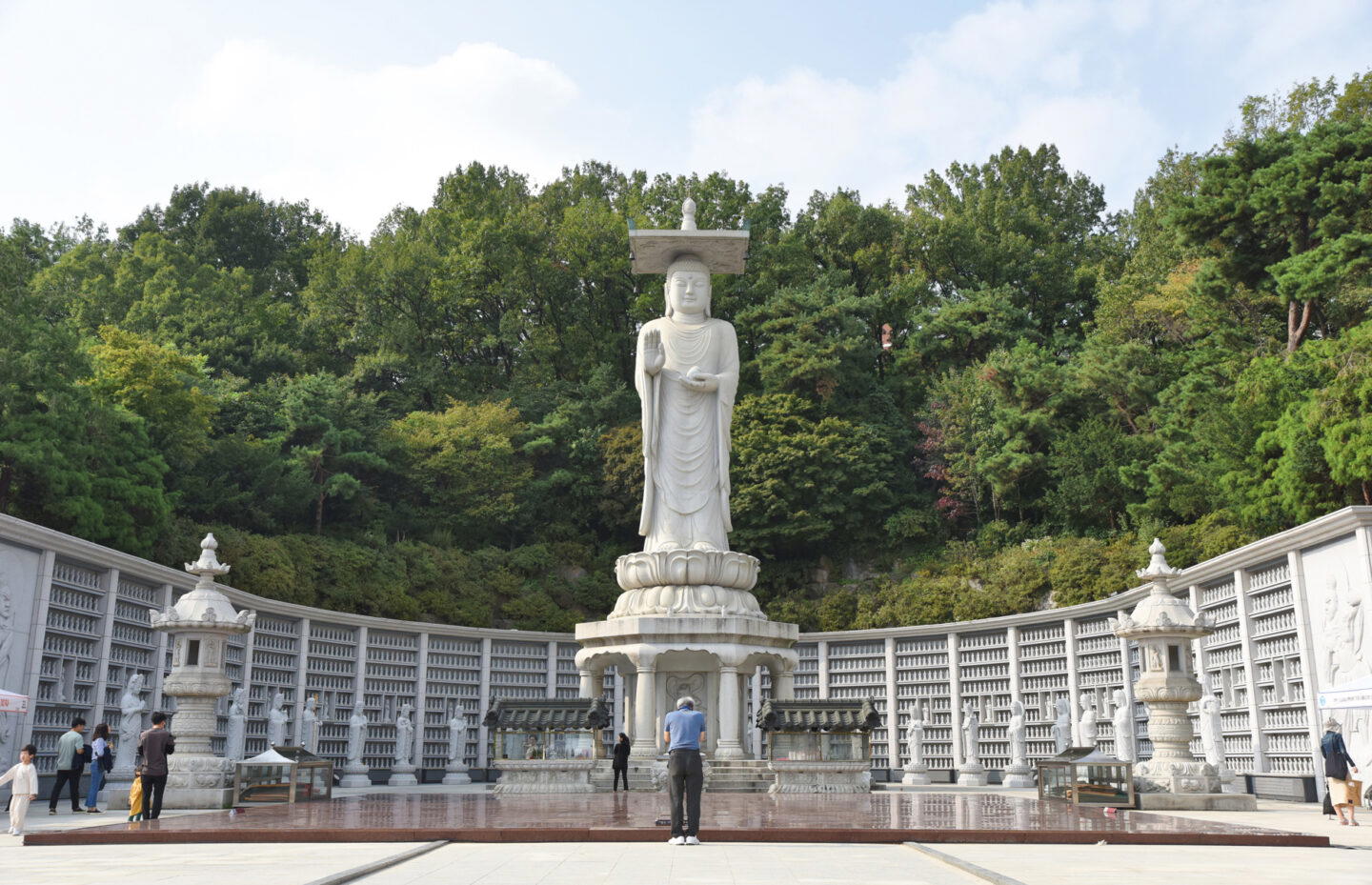
South Korea is not new to the concept of environmental preservation. Busan, a picturesque port city 325km south of Seoul, is home to an ancient order that worships and protects the environment.
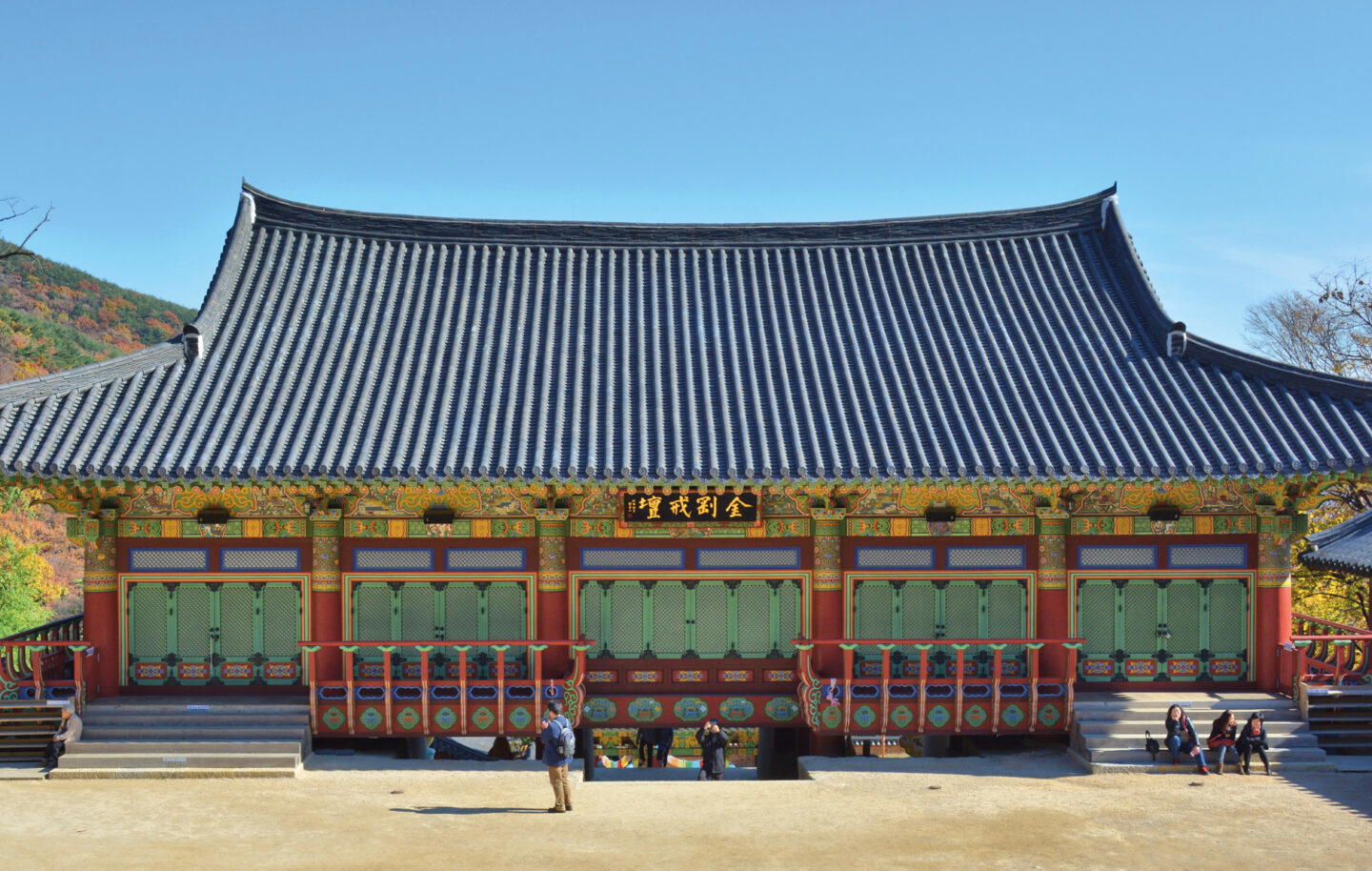
Clinging to the eastern side of Geumjeongsan Mountain and overlooking the city is 1,300-year-old Beomeosa. It is just one of over 20 Buddhist temples that participate in a Templestay tourism initiative in the country.
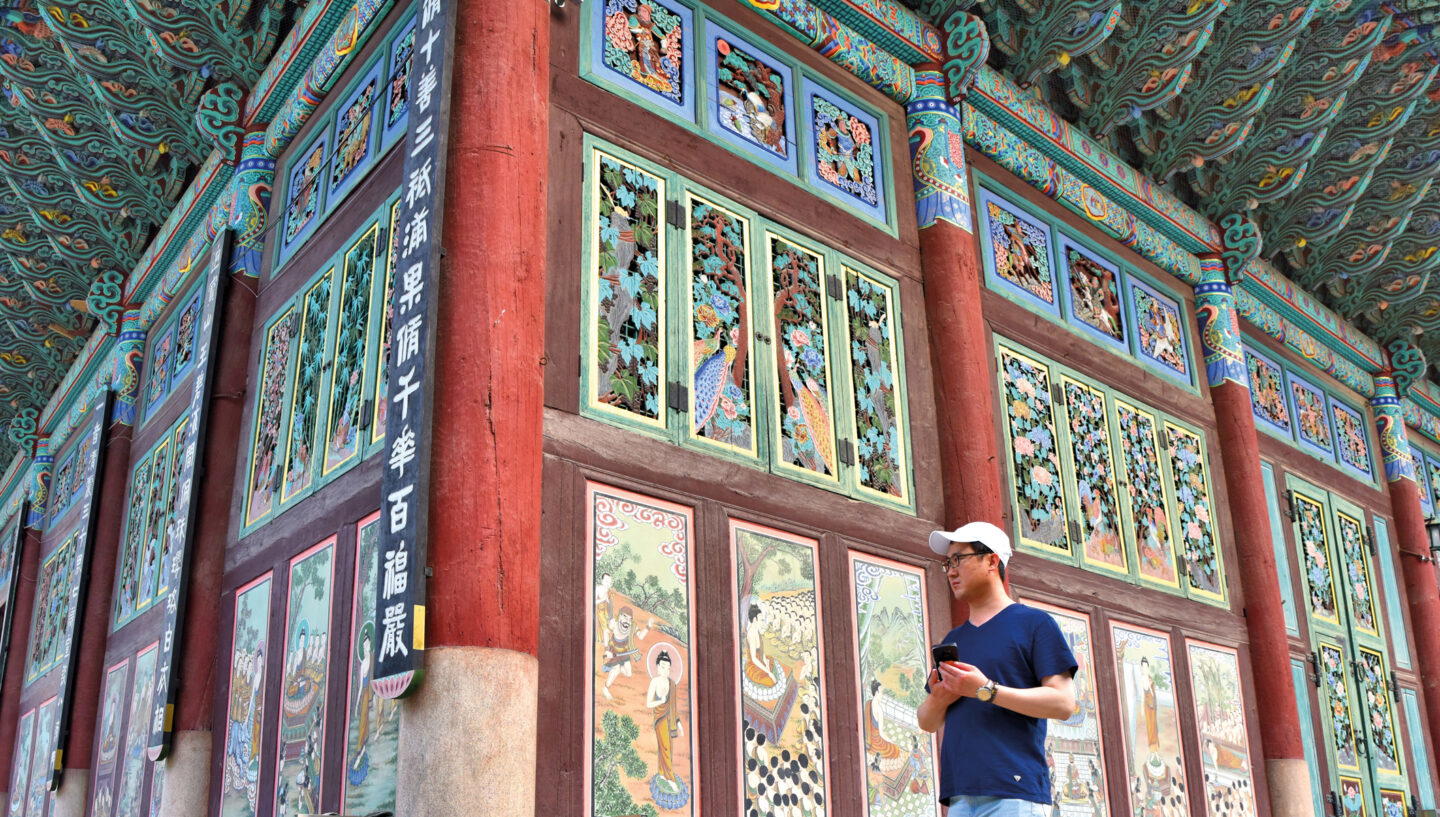
The Jogye Order of Korean Buddhism offers one- or three-night retreats specifically tailored to foreigners. These exist in harmony with nature. Moreover, it extends to the construction of temples, which merge with the natural environment. They accomplish this by disturbing as little natural vegetation as possible and eschewing needlessly large or ostentatious human-made structures.
The Jogye Order details how it has protected Korea’s natural ecosystems by opposing reckless development projects and “promoting sustainable, reusable energy sources, as well as participating in climate change response activities”.
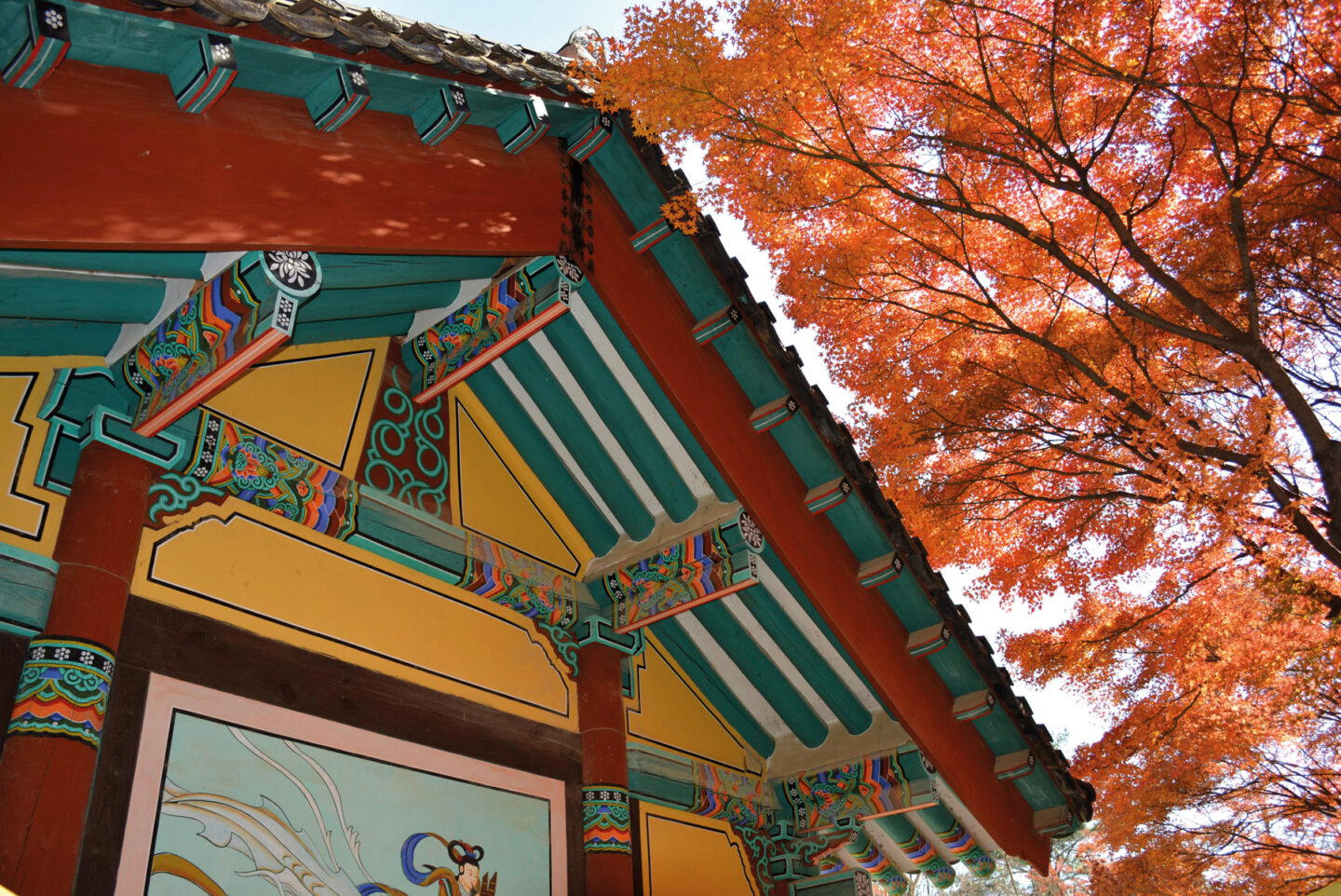
During the order’s Templestay programme, visitors can eat, sleep, and wander the temple’s leafy grounds, taking in the serenity and entering a meditative state. They can also connect with monks and other participants through monastic activities such as group meditation, customary prayers, tea rituals, and meal offerings. Also taught are traditional Korean crafts, such as making lotus flower lanterns. Aside from Busan, temple stays are also available in cities including Seoul, Daegu, Gyeongju and Incheon.
However, if a traditional ascetic sojourn isn’t your shtick, the populous seaside escape hums with other guilt-free haunts. These include Ecotopia, an organic vegetarian restaurant that specialises in tofu steak and other similar dishes.
Known for its ancient history and futuristic smart cities, South Korea has always been a paradoxical nation. Tall buildings sit beside old statues built over two centuries ago. Despite these contrasts, its green revolution perfectly bridges the past and the present. It’s a model for other cities.