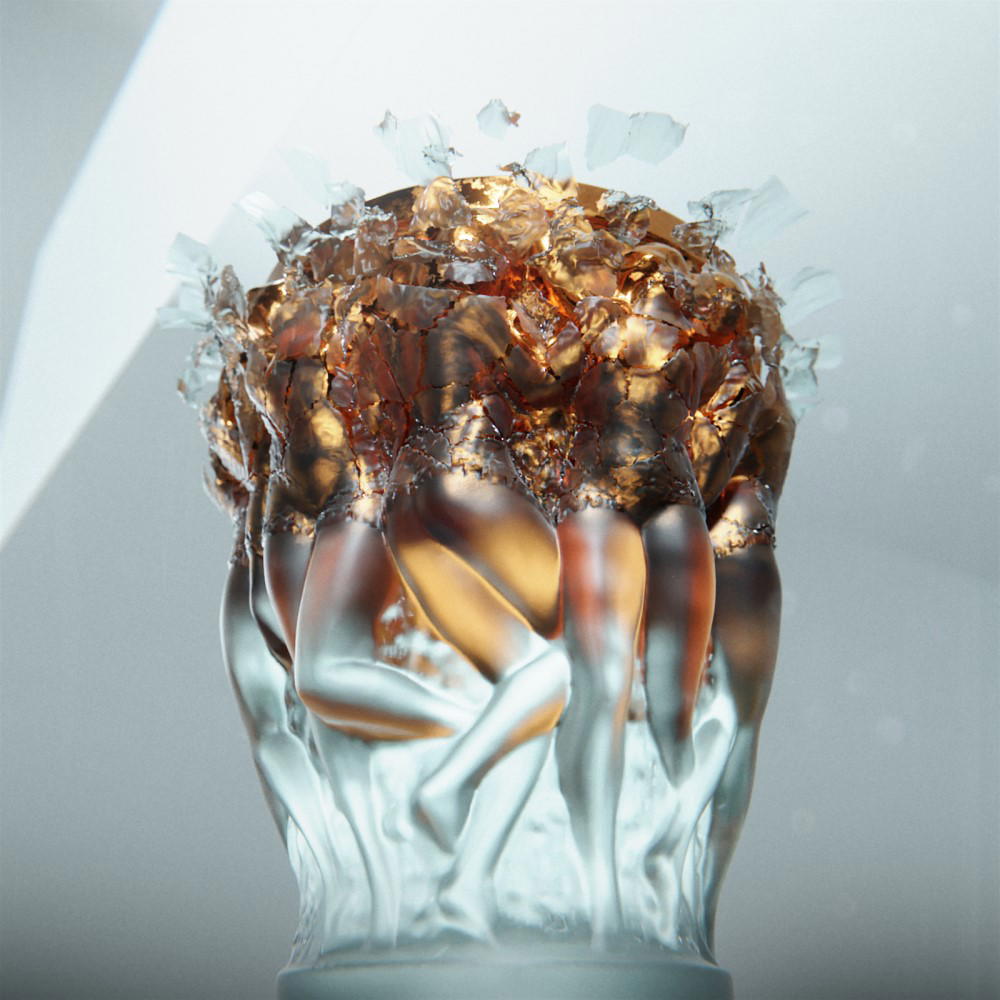
The late Rene Lalique didn’t start as a glassmaker. He initially crafted jewellery, making pieces for renowned maisons like Cartier and Boucheron, but eventually abandoned the discipline in favour of glass by 1909, opening his first studio just outside of Paris. News of Lalique’s renowned artistry spread far and wide and he had to open a second factory in Alsace to cope with demand.
The 1920s was a prolific era for Lalique, with some of his best work created in this period. The Bacchantes vase was his most notable piece. It features neoclassical nudes of the young priestesses of Bacchus — the Roman god of agriculture, wine and fertility — and was first released on 22 July 1927. The vase remains in production till today under his eponymous brand.
Originally crafted from opalescent, amber or smoked glass, the Bacchantes vase is now produced in crystal. There have been multiple iterations. A satin version came out in 1947 and Lalique produced a limited-edition black crystal piece in 2004.
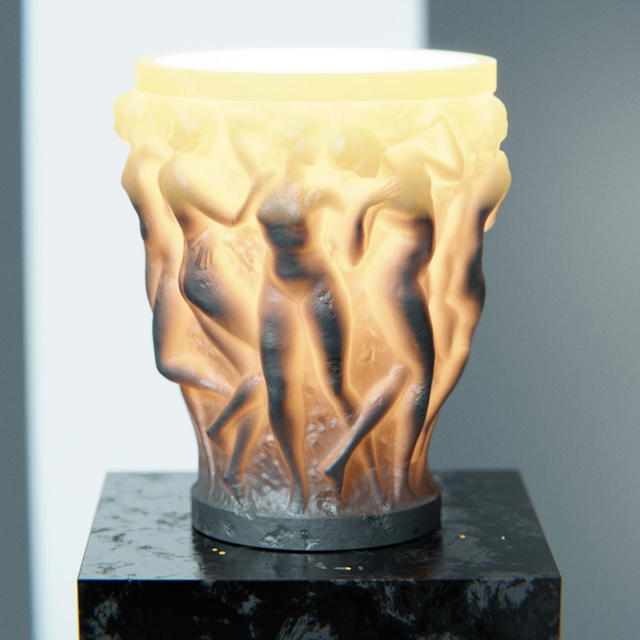
One of The Impossible Vases NFT from Lalique. 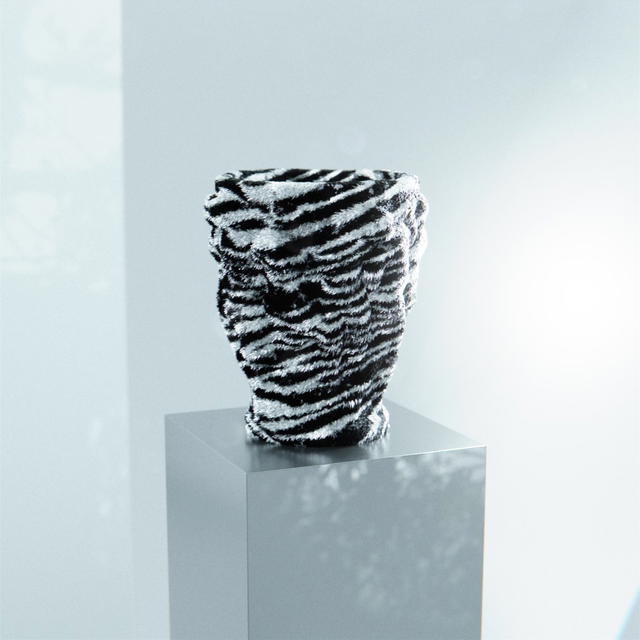
There are a total of 10 NFTs available.
This year, in line with the times, the Lalique Group is releasing the Bacchantes vase as a non-fungible token (NFT). Current artistic and creative director Marc Larminaux designed the collection, dubbed The Impossible Vases. NFT holders will receive a digital Bacchantes vase that can be displayed in the user-owned virtual world Decentraland and an invitation to the Lalique crystal factory in Alsace. They’ll also be part of the Lalique NFT community.
And not to worry, NFT holders can also appreciate the Bacchantes vase in the flesh. Lalique is shipping the crystal vase to their homes. The Impossible Vases collection will be launched on 7 October 2022 on OpenSea, each selling at a fixed price equivalent to 10,000 Euros. There are 10 NFTs up for grabs.