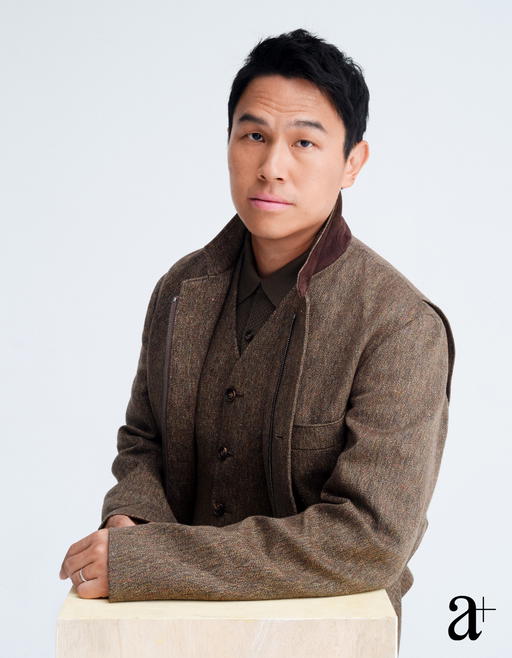
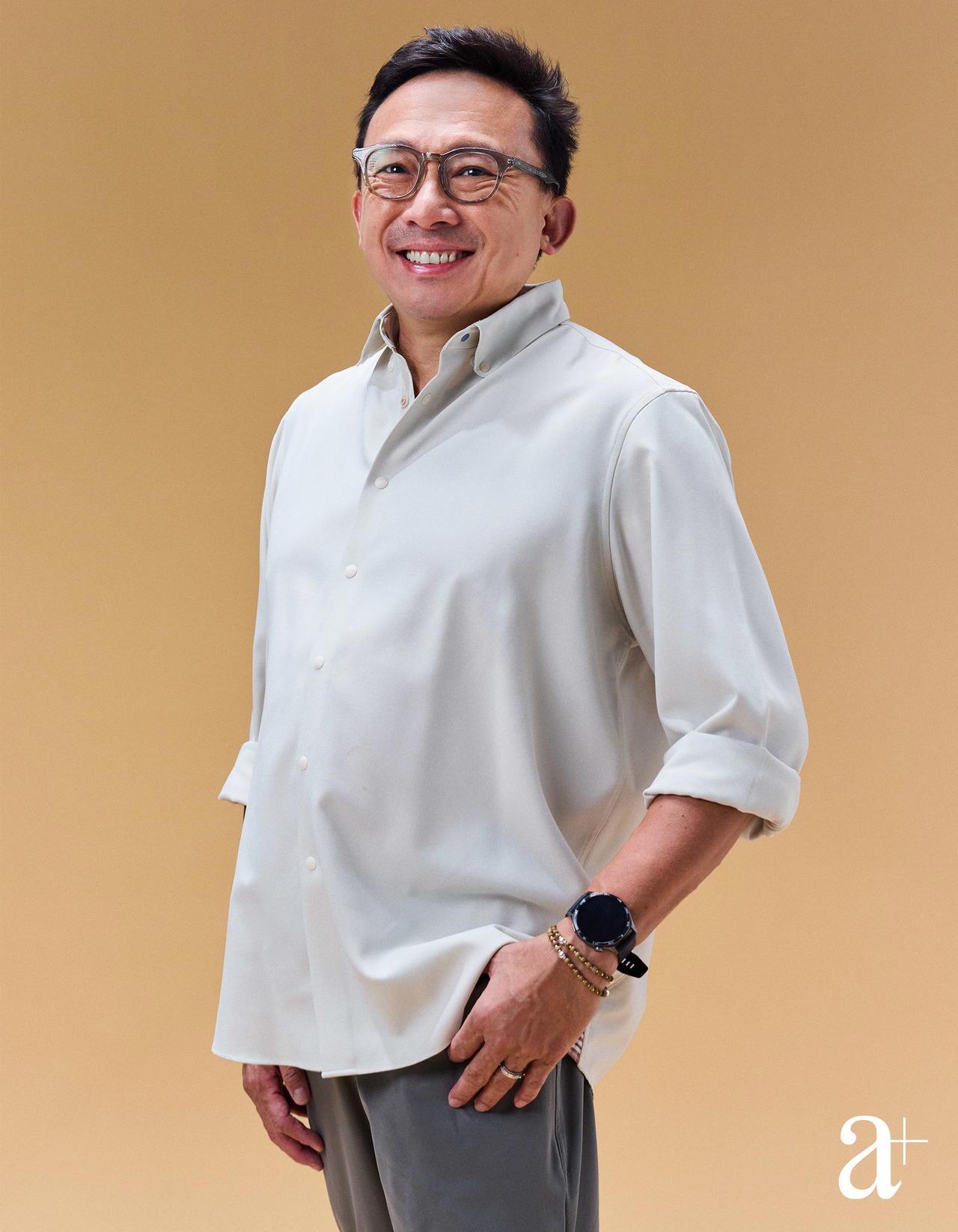
As someone who enjoyed drawing and mathematics and science as a child, Khoo Peng Beng found architecture to be a perfect blend of both worlds. “That combination naturally drew me towards the profession,” he says.
Khoo and his wife Belinda Huang are co-founders and directors of Arc Studio Architecture + Urbanism. Founded in 1999, the firm has designed some of Singapore’s most iconic urban projects, including Pinnacle@Duxton, Sentosa Village Hotel, and the Camden Park condominiums.
Pinnacle@Duxton remains one of his favourite projects for Khoo, a full-time professor at the Singapore University of Design and Technology (SUTD) since 2024. “I am deeply proud of how it has stood the test of time and become home to so many families,” he says, adding that HDB’s development demonstrates how a solution for necessity could become a platform for innovation and possibility.
He also loves how it reflects Singapore’s approach to combining density, liveability, greenery, and social cohesion, with sky gardens and “new grounds in the sky” visible in many developments in the country now.
This year, Pinnacle@Duxton was showcased at the President’s Design Award’s 20th anniversary celebration—P*DA20: Power of Singapore Design—at the National Museum of Sustainability.
This theme runs through Khoo’s work, balancing design with sensitivity to the natural environment.
“Environmental awareness and sustainability were already part of the architectural discourse when I was at university. I have always believed that our well-being and even survival depend on our relationship with the earth and one another.”
Khoo Peng Beng on interconnectedness
That discourse has broadened over the years. “It began largely as a matter of accounting for resources and reducing environmental impacts. Later, the focus expanded towards resilience, adaptability, and systems thinking. Today, our research at SUTD explores regenerative design, which is fundamentally human-centred design.”
Khoo also helmed the Singapore Pavilion at the Venice Biennale in 2025. The multi- sensory “Rasa-Tabula-Singapura” exhibition examined superdiversity and how Singapore fosters space for diverse cultural heritage.
“Superdiversity emerges from our experience of building a multiracial and multicultural society. Over time, we have developed ways to host differences while creating common ground. The result is not uniformity, but rather an emergence of a richer, more fluid culture built on unity in diversity,” explains Khoo.
“Often, this is taken for granted, but it requires continual effort, trust, consistency, and care. It entails creating safe environments in which people can engage, contribute, and express themselves fully. This is one of Singapore’s most significant lessons to the world.”
As a professor, Khoo views academia as a natural extension of his practice and a privilege and responsibility to shape the next generation of designers, architects, and creative leaders. “Design raises profound questions about well-being, identity, human connection, and innovation. In that sense, each project is also a form of research,” he says.
Currently, his work investigates the interplay of human, artificial, and ecological intelligence through the launch of Design·AI Innovation and Venture Exploration (DIVE). The platform connects professors, builds opportunities, and creates partnerships and programmes for students to learn from real- world experiences.
“We are reimagining design education to prepare students for a world shaped by rapid technological and environmental change. We also believe that research must translate to real-world transformation.”
Photography Mun Kong
Art direction Annalisa Espino Lim
Grooming Sarah Tan using Charlotte Tilbury & Goldwell