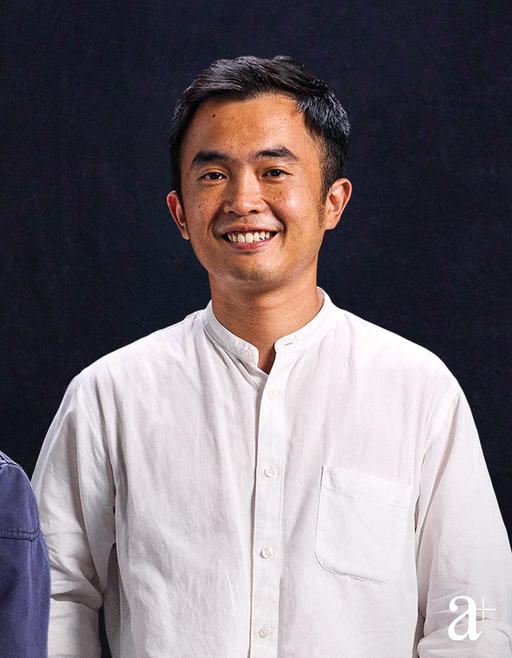

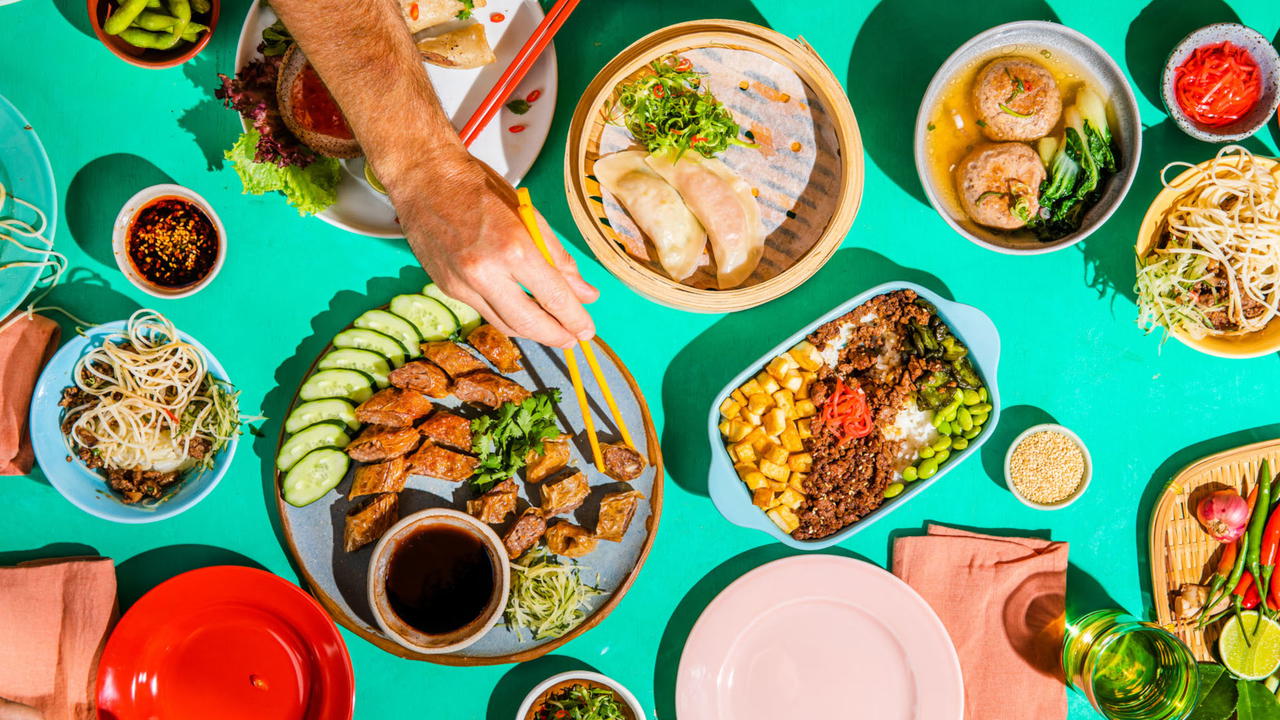
The pandemic evinced that Singapore is not impervious to disruptions in food supply chains and food insecurity. And in wanting to minimise those issues and lead a shift away from industrialised agriculture—where large-scale, intensive production results in land depletion, soil infertility and water pollution, among other adverse environmental effects—Singapore-based food tech startup Karana is leveraging on the jackfruit to restore balance in the connection between crop to consumer.
Why the jackfruit? It is a highly sustainable crop and can be farmed in ecologically mindful ways. Plus, its meaty and juicy flesh means it can be used in a whole host of plant-based substitutes, flying the flag for a more diversified and plant-forward diet. Thus far, Karana’s trademarked minced jackfruit has been turned into patties, sausages, meatballs and even ngoh hiang, while its gyoza product promises 48 percent less fat than regular pan-fried dumplings.
But the company does not just want to promote the inclusion of jackfruit in our cooked dishes—it wants to push the potential of jackfruit as a food staple. Co-founders Dan Riegler and Blair Crichton tell us about Karana’s approach to nutrition, building a new food order and the next steps they will take to meet growing demand.


Karana drives a deviation from meats and heavily-processed plant-based ingredients like wheat and soy derivatives. How much healthier is processed jackfruit? Does it meet the protein values of meat replacers?
Crichton: Unlike wheat and soy derivative products that use protein isolates, which require heavy processing, extracting, and denaturing of the base crop to restructure it into a meat like texture, jackfruit has a naturally fibrous texture that requires minimal processing and no denaturing or altering of the base fruit—we use the whole plant, which aligns with those following a whole foods diet.
Karana’s approach to nutrition is holistic; we are not focused on a single macro or micro-nutrient but rather looking to offer products that are healthy, transparent, and clean label. Data indicates that the number one reason for people adopting a more plant-forward diet globally is driven by health. Addressing health concerns isn’t driven by protein, in fact many of the benefits come from fibre content in whole foods.
Karana has taken the approach of offering a whole-food led meat replacement by utilising the high fibre jackfruit. In-fact most consumers get too much protein and not enough fibre. So whilst our ground-meat product is a source of protein, we emphasise the holistic nutrition rather than just a focus on protein content—the nature of our product allows us to do this compared to animal meat, which doesn’t contain fibre or even a soy protein isolate that has had much of the fibre stripped out in processing.
Deterioration of crop quality during storage and transport can limit the nutritional potential of the fruit. How invested are you guys in harvesting and post-harvest handling processes?
Riegler: We are very involved in our value chain and actively working to build more traceability and monitoring into the post-harvest supply chain and processing. We also have great partners who we work very closely with as well as a team on the ground in Sri Lanka with deep expertise in agriculture and supply chain management. We also source from Sri Lanka, where there is a deep knowledge and culture around jackfruit and very high standards around crop and product quality.
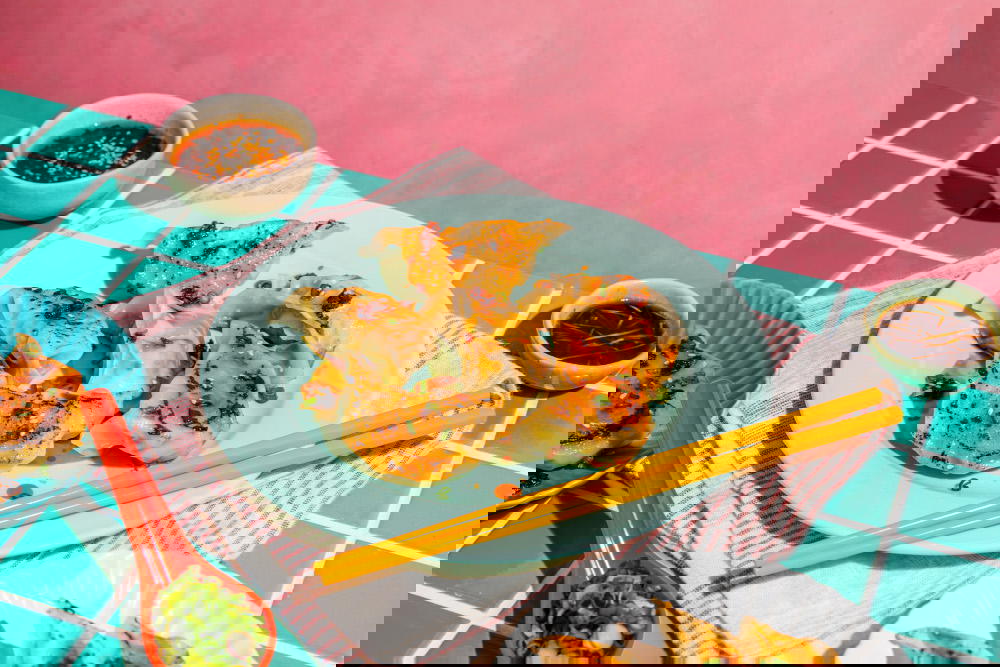
Tell us more about Karana’s involvement in the new food order built around regenerative soil and biodiversity supporting crops.
Riegler: We believe that our food system requires urgent transformation, away from the consolidated and extractive model that has been developed over the last 50-70 years and towards a new food order: a food and agriculture system that is more nature based, more decentralised and diversified, and empowering indigenous practitioners and wisdom to drive us towards a system that is regenerative, nourishing, accessible, and most importantly, delicious, building a direct connection between consumers and the most sustainable crops in the world.
We believe there is no silver bullet or single solution to accomplishing this and it will comprise small, medium, and large solutions to integrate new and old crops and models of sourcing and food production into our deeply entrenched and established current system of distribution and production.
When considering new crops, we focus on three principles: sustainability, like tangibly improving soil health, preserving biodiversity and providing a source of nourishment; nutrition, like bringing novel and delicious ingredients to market without stripping the nutrients and completely changing the format in which we consume them; and functionality, which involves turning delicious products that add value to chefs and brands with existing flavour and product portfolios.
The tree crop has a low carbon footprint, and according to Karana, also plays a key role in reforestation and the increase of biodiversity. How so?
Riegler: Perennial tree crops in general are great for soil health, and jackfruit in particular can be grown without tilling the soil or using inputs like fertiliser. It also does not require irrigation, and in Sri Lanka, it is often grown on slopes where it helps retain soil and limit erosion. In addition, jackfruit trees have a long history of supporting a range of other crops that they grow intercropped alongside.
We have seen jackfruit being used as a shade crop for cacao, coffee, vanilla, pepper across the vast network of small scale agroforest farms that we source from, which have a huge range of biodiversity in the crops they grow and the natural flora and fauna that exists within them. This is true regenerative forest farming that has been successfully practised for generations and is exactly what our food system needs to shift to.
At Karana, we are looking to take these fantastic farming practices and emulate it in our locations where we source, educating farmers and giving them the tools to transition into a more sustainable agro-forestry model, using Jackfruit as the anchor tree crop, and thus moving to reforest land and have a biodiverse farming system.
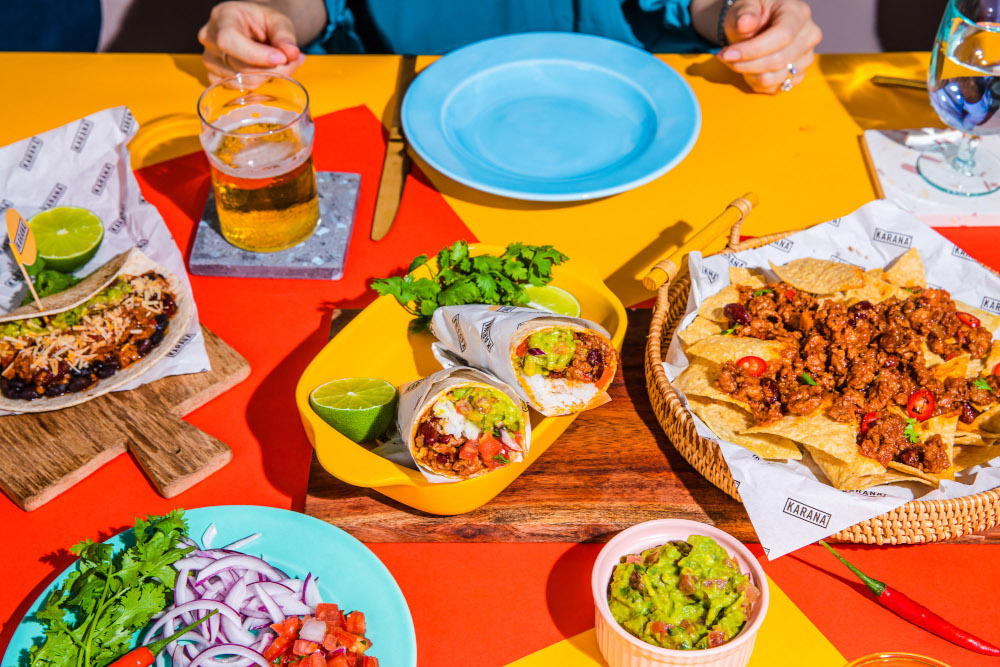
What are the next steps in your mission to make the fruit a food staple?
We want to make it as easy as possible for everyone in the world to use jackfruit in the ways that best suit them. As such, we are building a platform that enables both restaurants, food-service operators and food manufacturers to tap into Karana jackfruit as an ingredient that they can seamlessly use. For us, this means making it as accessible, easy to use, and intuitive as possible to be incorporated into operations just like they would meat.
Our innovation and R&D team is building a pipeline of value-added products like meatballs, baos, and patties that will enable easier uptake by operators, particularly in the post-pandemic world where many in the hospitality industry are short of staff. We have also recently started growing our industrial business, which offers our product platform to existing food manufacturers. This has the benefit of being able to tap into their scale and distribution as well as offering them a fantastic ingredient to incorporate into their products.
We’re super excited to be launching the first co-branded retail products with goodfoodpeople by SaladStop! in Singapore under this model. They will be launching a wellington, chorizo meatballs, and gyoza, all made with Karana into retail in the next month!
We also continue to build out our food-service offering and are working with restaurants across Singapore, Hong Kong, and California in the US. Next month we’ll be launching with Plantega, a plant based bodega chain in New York City, and we hope to be nationwide in the US by the end of the year.
How has the Singaporean market taken to the jackfruit alternative thus far—is more awareness needed?
Crichton: Response has been great, with over 40 restaurants serving our product and we get great consumer feedback. But this is still just a drop in the ocean and we want to be in thousands of restaurants and working with more food companies selling products made with Karana jackfruit.
In general, we think a fair bit more education is needed in Singapore, both for more sustainable food choices as a whole and specifically for our products. One of the reasons we work with restaurants is that we find that chefs are great ambassadors for educating consumers and generating that awareness.
Singapore has built a fantastic ecosystem for food tech companies to conduct R&D but more could be done to raise awareness amongst the general public and to encourage sustainable food choices. This needs to be done through a mixture of government efforts, marketing from individual companies and through industry bodies working together.