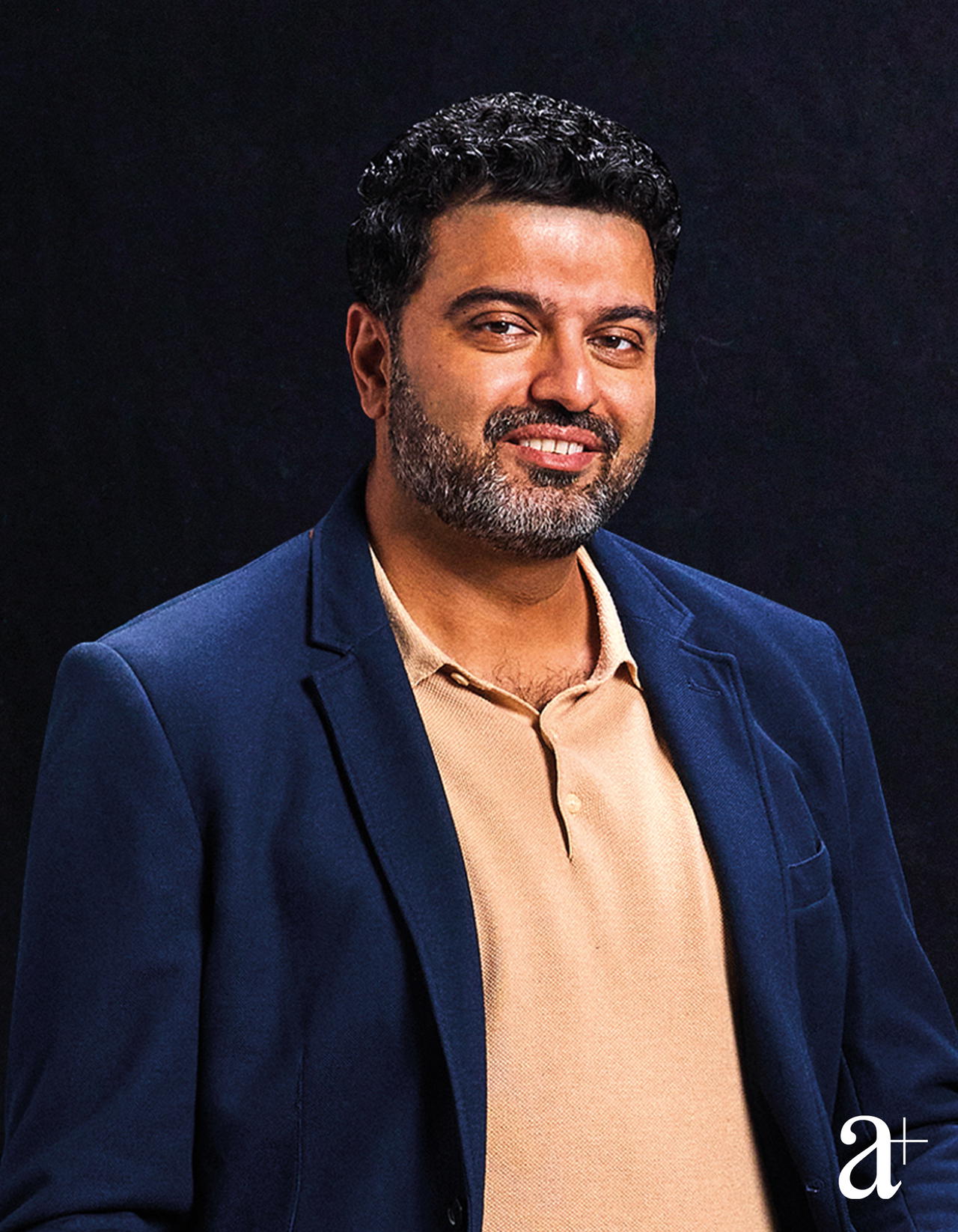
A lot has happened since our first conversation with Jatin Kumar. Last year, as the Chief Technological Officer with Xinterra, he developed COzTERRA, a technology that captures carbon dioxide on textiles before converting it into compounds that wash away.
Now on a career break, he mentors deep-tech founders, helps his wife Nidhi build a clean food brand The No Junk Pantry, and explores new ideas in AI, materials, and sustainability.
“I am not done with AI for materials,” says the deep-tech entrepreneur and materials scientist. “This is not my first time through the cycle. I know what works and what doesn’t.”
COzTERRA has found a new home since your last interview with us. What did you learn from the experience?
COzTERRA evolved from a whiteboard concept into a proven technology with real commercial traction. The people who had first-hand experience with it wanted to take it even further. I used to think success was a technical achievement. It is now closer to durability: How has what you built survived your involvement? Does it still matter if you are no longer holding its hand? Instead of searching for success, I look instead for the work, effort and performance worthy of such recognition. Success tends to follow. Even if it doesn’t, you still have pride that you put in the best effort and achieved what you’d set out to do.
What lessons from deep-tech have you applied to building The No Junk Pantry?
The biggest lesson I learnt was to understand your customer. While you may think your idea is great, you need to ensure the people you’re building it for agree with you. It means understanding what customers are willing to pay, the regulations surrounding the industry, and how your product creates real value.
At The No Junk Pantry, we start by inviting them to taste something delicious, then discuss the clean ingredients. Rather than selling the product, we’re reframing the problem. I see the challenge as more than building good technology; the key is adoption. People must believe they will benefit from the change. Understanding their psychology is just as important as understanding your technology.
“Singaporeans are extraordinary at one thing: investing for the future. We save for rainy days. We plan for retirement. We think generationally about financial security. That same muscle needs to be applied to the planet. Sustainability is an investment.”
Jatin Kumar on why mindset shift is important to build a more sustainable Singapore
the current conversation around AI revolves around chatbots. what else do we need to pay attention to?
The framing of “chatbots” already undersells what is happening. These models are becoming general-purpose thinking partners, capable of assisting across almost every domain of your life. That is genuinely remarkable and I do not want to be dismissive of it.
But two things worry me. First, that we are beginning to mistake AI output for human creativity. While a model can produce something that looks like an insight, it cannot have one. The distinction matters, and I think we are losing sight of it. Second, dependency. If we stop exercising our own ability to reason because we can always ask a machine, we will atrophy in ways we will not notice until it is too late.
The bigger concern, though, is not how we use these tools on ourselves. It is what we choose to build with them. AI has placed an unprecedented level of capability in the hands of ordinary people. The ability to write software, generate media, and design systems used to require years of specialist training. And look at how much of that capability is being spent on deepfakes, disposable content, and pointless applications. The power is real, yet ambition is not always matching it.
For me, the obvious answer is to direct that capability at problems that actually matter. And that answer has always been in the physical world—in atoms, not information. But that is a longer conversation.
WHERE SHOULD Singapore focus our efforts to make meaningful progress on sustainability?
Every drop counts. That is where it starts: making conscious efforts, even when they require a little discomfort, especially when they do.
Singaporeans are extraordinary at one thing: investing for the future. We save for rainy days. We plan for retirement. We think generationally about financial security. That same muscle needs to be applied to the planet. Sustainability is an investment. It may affect your cashflow today, but the returns are felt by your children’s generation. Frame it that way and it starts to make sense to people who are already wired to think long term.
Once that mindset shifts, the initiatives are right in front of us. They will come as second nature. Europe took several generations to build a sustainability culture. Singapore has always been a master of the one-generation evolution. We have done it before with education, housing, and public health. We can do it here too, if we set our minds to it.
What does a more sustainability-conscious Singapore look like to you?
The Singapore I want to live in is one in which sustainability has become invisible, not because we stopped caring but because the right choice has become the norm. And that is the Singapore I am working towards in my own small way.
Photography Mun Kong
Art direction Ed Harland
Grooming Sveta Klyn/The Suburbs Studio, using Chanel
Hair Karol Soh, using Revlon Professional and Nars
Photography assistant Hizaun Zailani