

We can’t have too many skincare and beauty products, brands cajole. Sustainability asks for the opposite, but buying less requires us to buy differently.
Refills, reckons Rohini Behl, Chief Sustainability Officer, L’Oréal South Asia Pacific, Middle East & North Africa (Sapmena), are one way to make this shift. “When consumers love a product, refilling the jar or bottle allows them to maintain their favourite beauty ritual at a better price, while generating less packaging waste. It’s proof that consuming less doesn’t mean compromising or having to give up anything.”
The L’Oréal #JoinTheRefillMovement campaign aims to make doing so more accessible and affordable. In Singapore, seven brands—Yves Saint Laurent Beauty, Armani Beauty, Lancôme, Kiehl’s, La Roche-Posay, Kérastase and L’Oréal Professionnel—are offering refills islandwide and on e-commerce platforms.
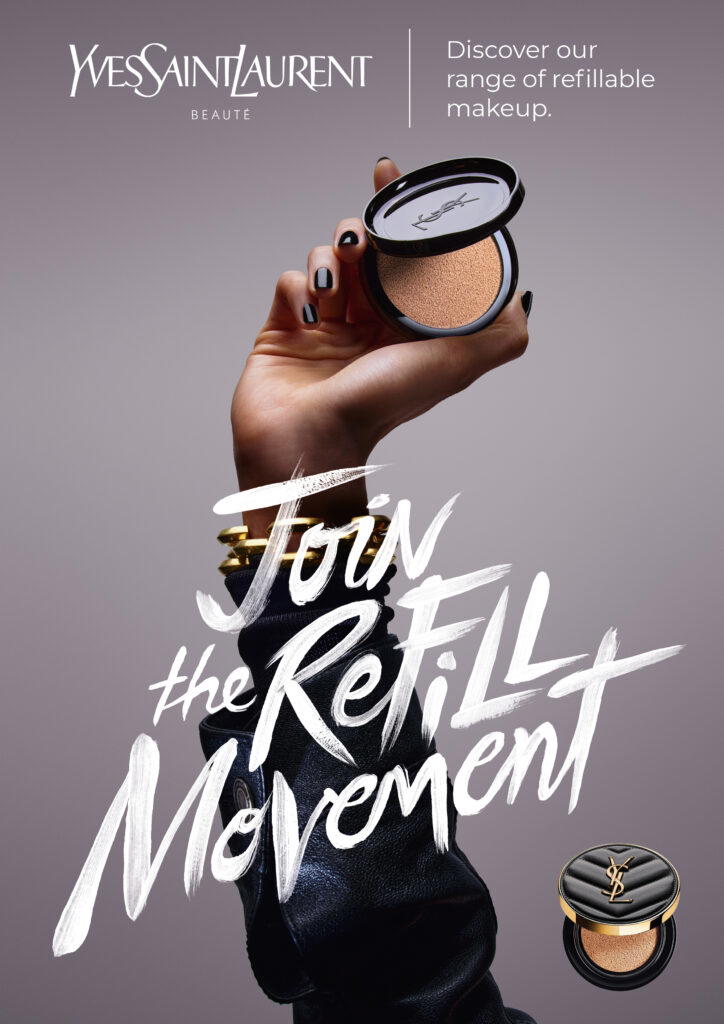
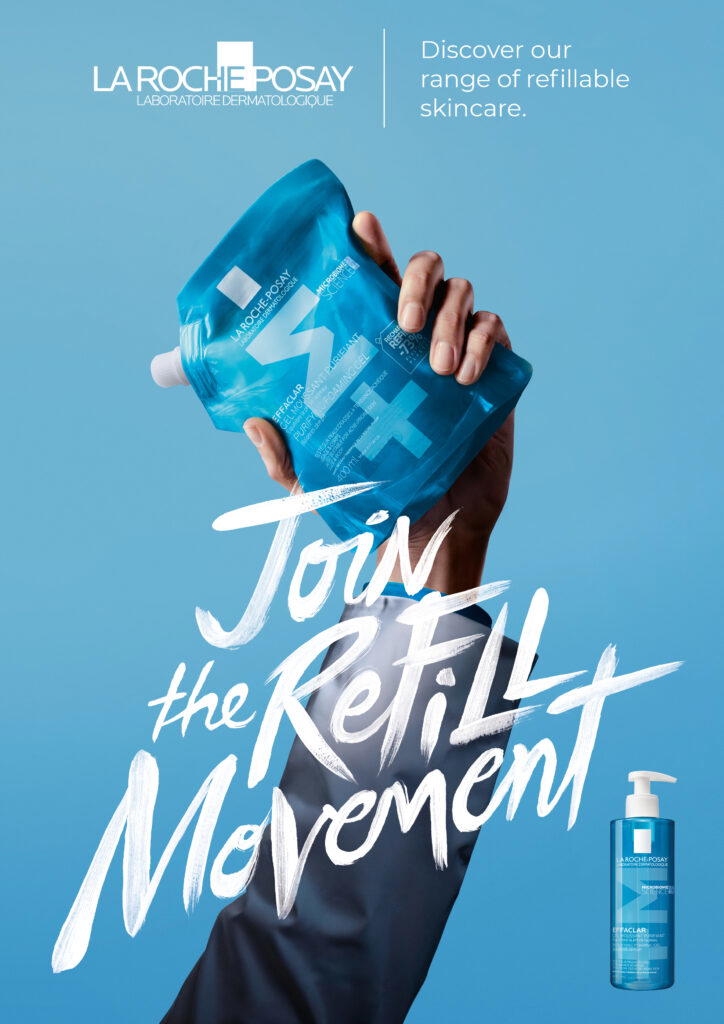
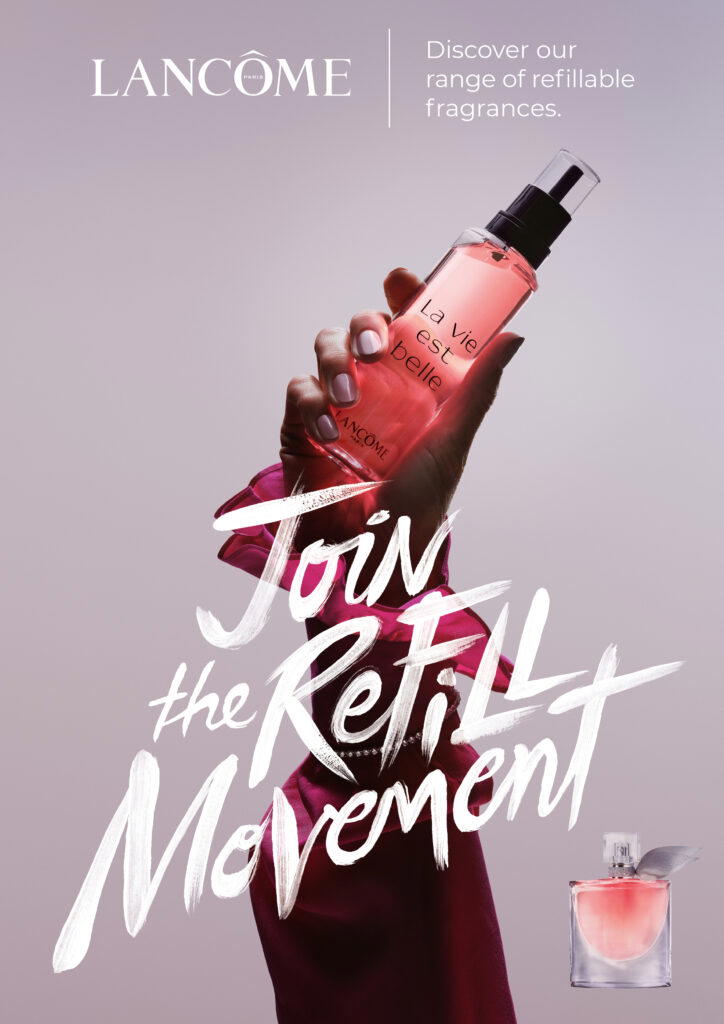
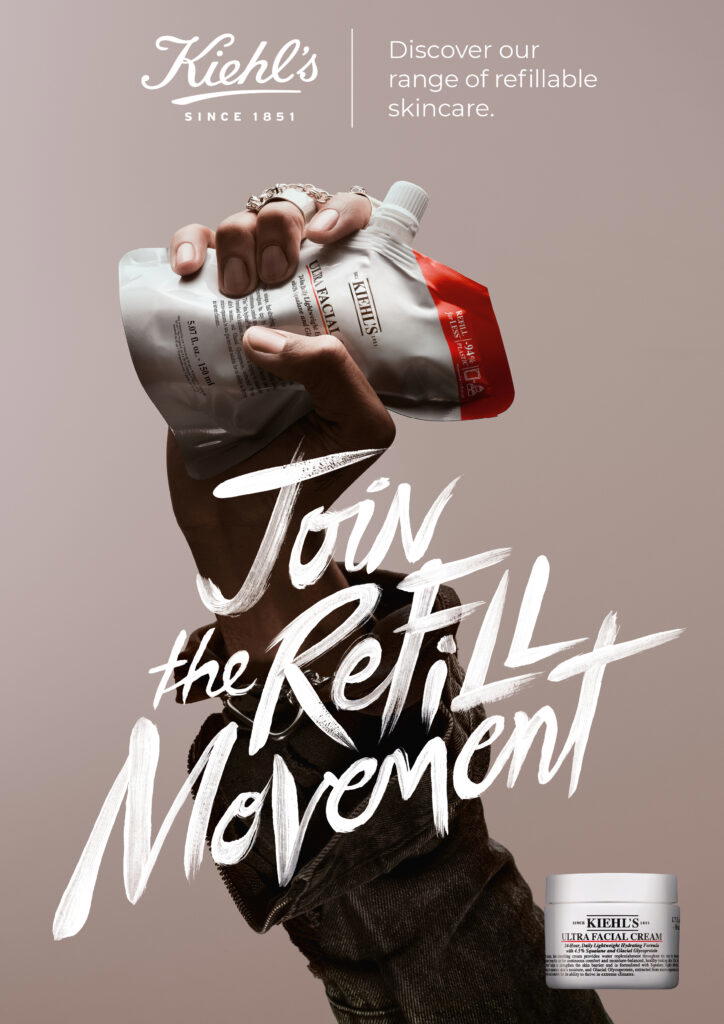
Every product in the campaign offers consumers a precise measure of the impact from their very first refill. As an example, a Lancôme Absolue Longevity Soft Cream refill reduces 100% glass, 95% metal, 42% plastic, and 36% cardboard, compared to a fresh jar. A Kiehl’s Ultra Facial Cream refill, meanwhile, helps save 94% plastic.
It marks a positive step for sustainability in Singapore, which aims to achieve net zero emissions by 2050. Refilling isn’t sacrifice; it’s intention. Behl adds: “Refills will only make a difference if people choose them consistently, as part of daily shopping, rather than an occasional gesture.”
“Building desire around ‘less but better’ means shifting the value proposition to quality, efficacy and longevity. A product worth investing in, finishing and replenishing is better than replacing it.”
Refill Counters At Beauty Boutiques


The beauty industry struggles with sustainability. In your opinion, what’s the most urgent challenge to overcome and why?
Closing the intention-to-action gap. Figures from market research agency Kantar reveal that while 84% of consumers want to be more sustainable, only 20% translate this desire into daily habits. This matters in the fast-moving consumer goods industry, where consumer use accounts for up to 90% of Scope 3 emissions.
In beauty, consumers expect sustainability, convenience and desirability to exist together. The moment a sustainable choice feels like a compromise, the habit falls apart. Driving change and adoption requires refills to be genuinely effortless: visible on the shelf, easy to find online and offline, and priced so it’s the obvious choice rather than a virtuous one.
The challenge isn’t just about designing a better bottle but about changing behaviour at scale across millions of individual purchase decisions.
L’Oréal introduced environmental targets 20 years ago. What important lessons did you learn from this journey?
Two decades in sustainability have taught me immense humility and focus. First, people trust progress over promises. It isn’t enough for organisations to have sustainability goals. We must show independently verified, transparent steps along the way. I’m incredibly proud that our work in this area has been recognised by the Carbon Disclosure Project. It awarded us a triple A rating for 10 consecutive years, across all three themes: tackling climate change, managing water sustainably, and acting to protect forests.
Second, business growth and responsibility are not in tension, even though they’re often framed that way. We halved the carbon intensity of transport across the Sapmena region while doubling our products over the same period. That’s proof that a business can decouple growth from emissions.
Finally, real change cannot be done by one organisation alone. Some of our biggest shifts only worked once we brought retail partners, suppliers and consumers into the process together, rather than just trying to drive change from inside the company. With refills, for example, we need our retail partners to drive visibility and consumers to build the habit for real change to happen.
“Consumers aren’t choosing between their favourite product and sustainability. Refills deliver the exact same formulations they love, just in packaging designed to significantly cut resources and environmental impact.”
Rohini Behl, Chief Sustainability Officer, L’Oréal South Asia Pacific, Middle East & North Africa
L’Oréal launched your sustainability programme L’Oréal for the Future in 2020. What insights were useful for shaping #JoinTheRefillMovement?
With L’Oréal for the Future, as part of driving circularity, we have a clear sustainable packaging strategy based on three major pillars, known as the “3 Rs”: Reduce, Replace and Recycle.
Two years ago, our Luxe division launched the first #JoinTheRefillMovement. By 2025, all four divisions had joined; this year, we expanded the movement across brands, divisions, and markets at scale. We’ve grown our refill offering 3.7-fold across our portfolio since 2019. This expansion directly responds to real consumer demand, addressing the say-do intention gap, and putting sustainable choices in the hands of consumers.
Beyond accessibility, consumers need to trust the impact too, which is why each of our refillable options carries its own specific, measurable claim. For example, one Lancôme Absolue Longevity refill saves 100% glass, 95% metal, 42% plastic and 36% cardboard, compared to buying a new jar. We want people to see the impact of their choice immediately, not take it on faith.
When we asked consumers why they’d choose a refill, 87% said it was to save money, compared to 68% who said it was to reduce their environmental impact. That insight fundamentally reshaped how we talk about refills and why we believe it’s the better option: better value, less waste.
How can SINGAPORE help shape the region’s approach to more sustainable beauty?
Singapore is fast becoming a destination for responsible consumption, where consumers actively seek out and expect more sustainable ways to shop. Its research infrastructure, talent, digital maturity and discerning consumer base make it a natural anchor for how we think about sustainable beauty and commerce across the region.
Southeast Asia is home to young, digitally savvy consumers and Singapore can learn from its neighbours. In Indonesia, 90% of consumers aged 18-24 are willing to pay more for refillable options; it shows that demand for circularity is real and growing. In the Philippines, three in four consumers prefer sustainable and eco-friendly brands, actively seeking out brands that offer ways to offset their impact on the environment.
You’ve shared about wanting to make refills “cool”. How did you transform refills from functional to desirable?
Making refills desirable starts with removing any sense of compromise. Consumers aren’t choosing between their favourite product and sustainability. Refills deliver the exact same formulations they love, just in packaging designed to significantly cut resources and environmental impact.
And the savings go both ways: refilling a Prada Paradoxe EDP bottle, for example, saves 44% glass, 61% cardboard, 67% plastic, and 100% metal, while also typically costing consumers less than buying a new bottle each time. Once that value is clear, refilling doesn’t feel like a sacrifice but a smart, intentional choice.
Beyond the tangible benefits, there’s an emotional dimension too. Just as skincare has become a wellness ritual, a moment of self-care and intention, so can refilling your favourite fragrance or serum. This shift from utility to ritual is what makes refills genuinely desirable.
Find out more about L’Oréal Group ESG Reporting here.