Beneath the circus tent (“chapiteau” in French) at the Bayfront Event Space, I’m pulled into the whimsical world of Cirque du Soleil: Kooza. As stage lights slice through the dark, the crowd gasps in unison as heart-stopping leaps and sharp landings reverberate under the big top.
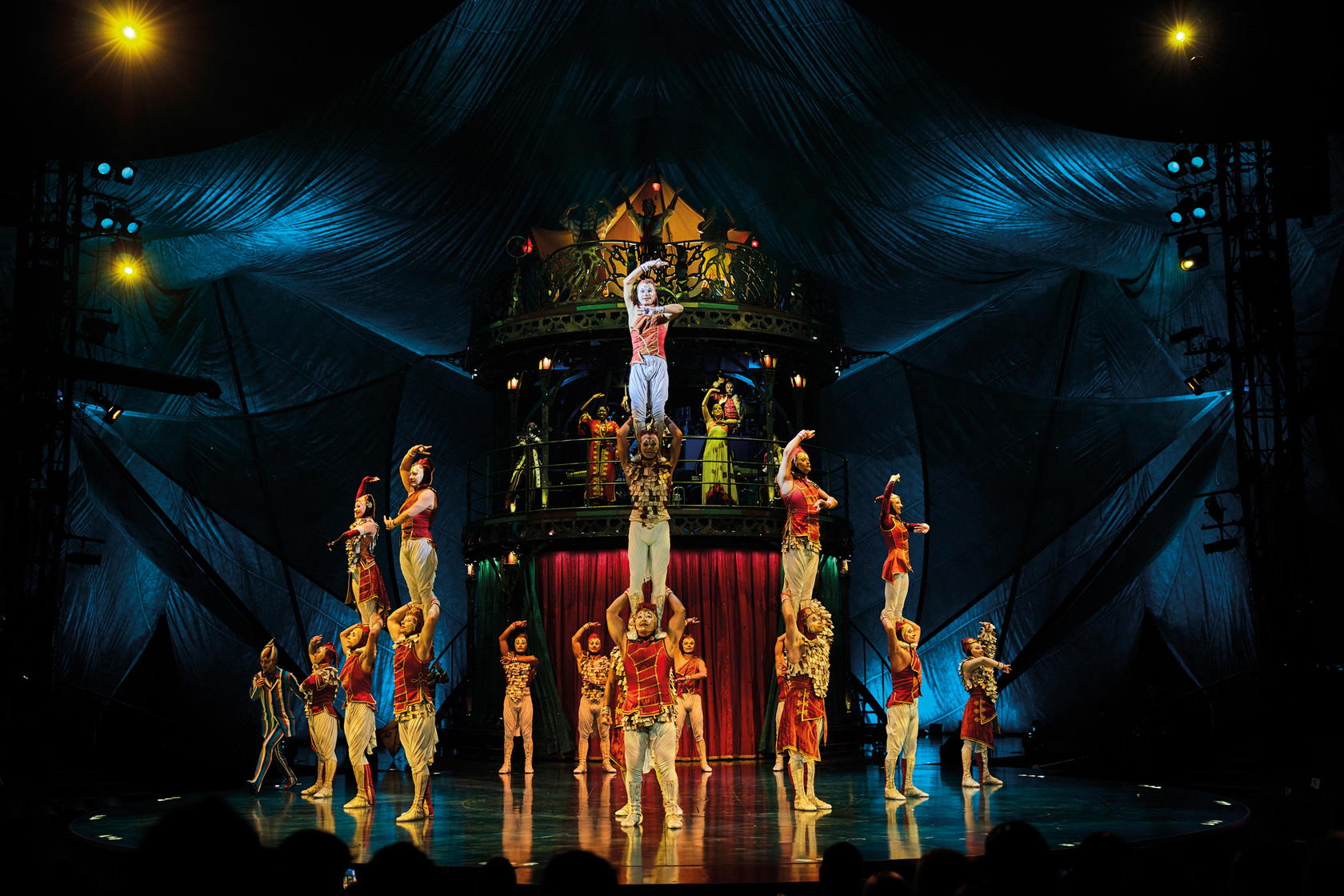
Part of the show’s thrill lies in the way it combines old-school circus feats with theatrical spectacle. Its acts are both technically demanding and visually surreal, heightening the sense of controlled chaos that defines the production.
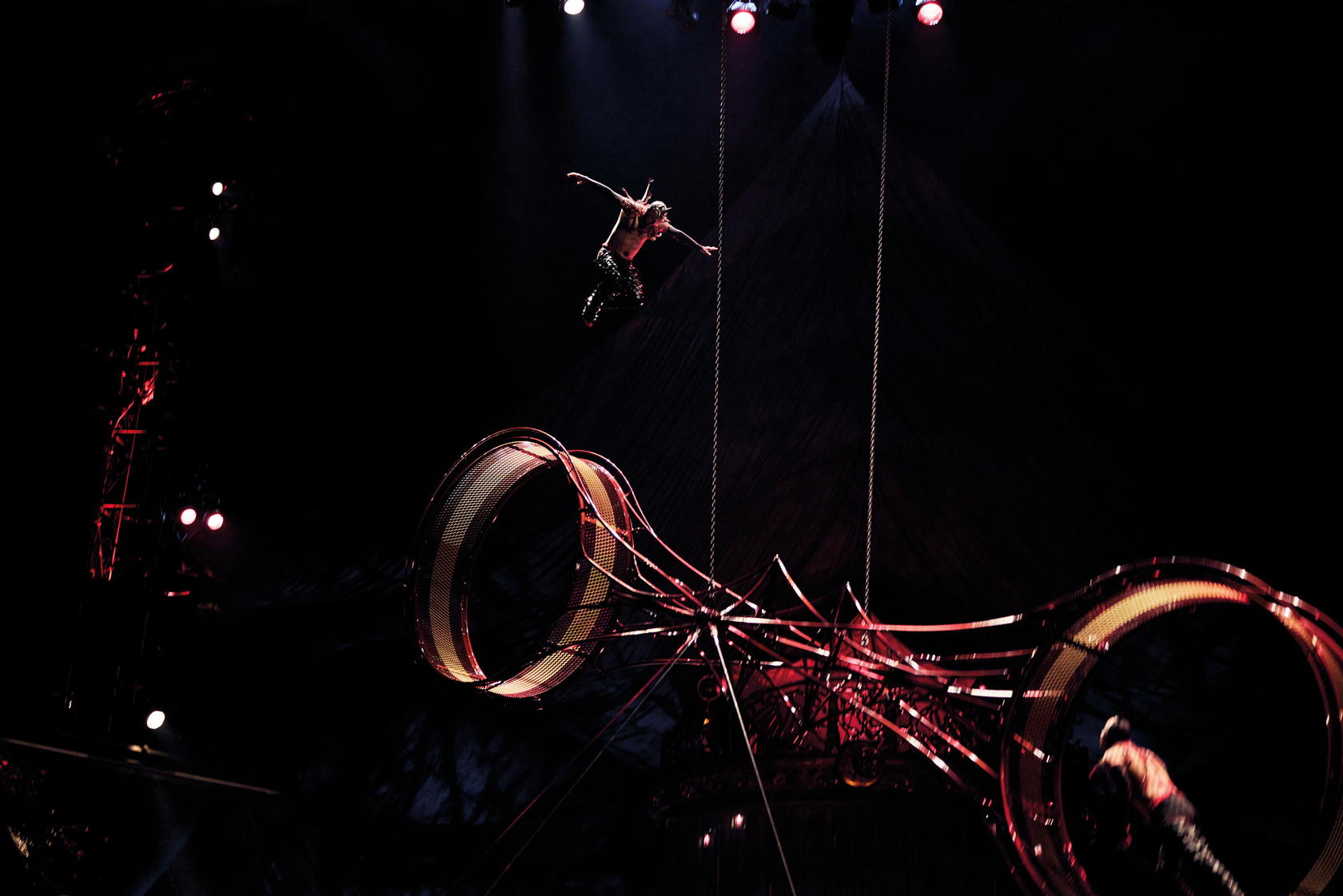
In the ‘High Wire’ act, tightrope walkers ride bicycles across a narrow wire before assembling into a pyramid high above the ground. In ‘Wheel of Death’, two acrobats dart in and out of a 725kg apparatus with twin spheres as it spins at dizzying speeds, before leaping onto the outside of the moving structure.
‘Teeterboard’ opens with artists performing multiple twisting somersaults in mid-air, then repeating the feat nine metres above the stage while wearing metal stilts. ‘Balancing on Chairs’ showcases hand-balancer Victor Levoshuk’s gravity-defying handstands while perched atop a tower of eight chairs.
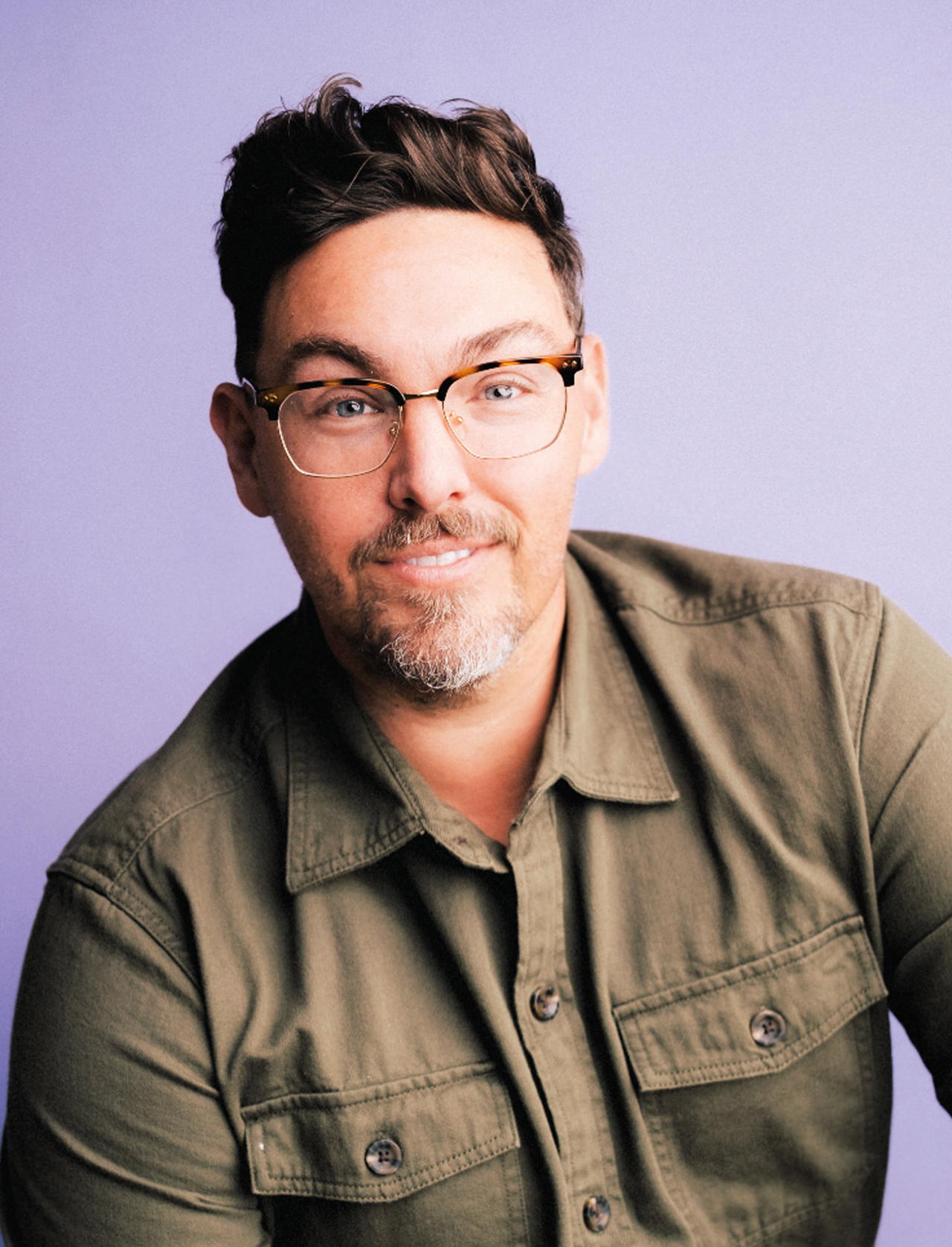
For Artistic Director Jamieson Lindenburg, these “simple acts with a contemporary twist” are integral to the colourful, chaotic world he envisions for Kooza. In the production, The Innocent, a naive, childlike, and melancholic clown, finds himself in an exotic kingdom filled with zany characters like the King and the Royal Clowns during his journey to self-discovery.
More than eight million spectators have seen Kooza performed in over 70 cities spanning five continents since its debut in 2007. It runs until 29 March in Singapore. Lindenburg, who was born in Florida in 1984 and studied theatre and stage direction at Marymount Manhattan College in New York, has worked in the professional arts industry for more than two decades. He started with Cirque du Soleil as a performer (Quidam; Varekai) before transitioning into the artistic department and taking on his current position in 2025.
With its slapstick comedy and high-risk acrobatics, this show creates an unforgettable performance. From an artistic perspective, why is humour such an essential counterpoint to danger?
Clowning plays a crucial role in traditional circuses. Kooza’s three clowns are its true stars. They distract you from what is being set up behind them. Their interaction with spectators—whether it’s cheekily throwing popcorn at them or bringing up someone to mime with them—brings the show closer to the audience and gives them a chance to catch their breath.
The Trickster guides The Innocent on his adventure. What role does he play in defining the show’s emotional journey?
In everyday life, The Trickster represents the unexpected and surprising moments as well as the light and darkness of the human experience. He teaches us life lessons and reminds us to expect the unexpected. He also serves as a big brother and mentor of sorts to The Innocent. He is there to surprise, scare, and inspire.
How has your journey at Cirque du Soleil — from usher to performer — shaped the way you direct artists?
I have an immediate empathy for artists, having been one myself for many years. I hope that energy is returned, and that they feel the same for me as their artistic guide, someone who has walked the same path and understands what it’s like on the stage every night.
Tell us more about your responsibilities.
Part of my job is to guide artists and foster real human connection on stage. Because Kooza is live, no two shows are the same. We work hard on presence—reading the room, responding to the audience, and letting the day shape the performance. The schedule is gruelling, so I also encourage artists to pace themselves and keep checking in with themselves.
The world has changed a lot since Kooza was first performed in Singapore in 2017.
We’re happy to be back in Singapore, a city so rich in culture and the arts, and a fitting reflection of the diversity within our circus, where there is something for everyone. I try to encourage our artists (53 in Kooza) to reimagine familiar scenes and routines. New choreography and changes to the acts can be exciting, depending on each performer’s skills and personality. Every country also leaves its mark, and we often weave local idioms and slang into the clown acts.
The show, our industry, and humanity are always evolving. At a time of global trauma and uncertainty, our goal is simple: to offer an escape and lift the spirit.
How has the show evolved to appeal to an increasingly digital audience?
Now, more than ever, it is essential to attend live shows. We may be fooled by an AI-generated composition or a synthetic photograph, but we cannot fake live performances. I hope the combination of live art has a subjective effect on audiences, creating an experience that is uniquely theirs. The thrill of the unexpected is something to cherish.
It’s my way of rebelling against manufactured art and creeping digital colonisation. For those considering the SAP VIP Experience, each visit begins in a dedicated air-conditioned lounge with canapes, an open bar, and exclusive Kooza souvenir gifts. A new addition this year also gives guests the chance to take photos with selected artists.
When it comes to the circus as an art form, what excites you most?
The circus is all about the human condition and pushing the body’s limits. There is a superhuman aspect that still makes my jaw drop. My colleagues have dedicated their lives and talent to providing us with world-class entertainment by using only their bodies. This is what makes the circus such a unique art form that keeps me coming to work each day.
Finally, what do you hope audiences will take away from Kooza?
Its message is one of self-awakening and empowerment. I want audiences to feel hope in their hearts when they laugh at our clowns, as they listen to our amazing band, and watch death-defying acrobatics. As they leave the chapiteau, I hope they will feel inspired and ready to take on the big, beautiful world.