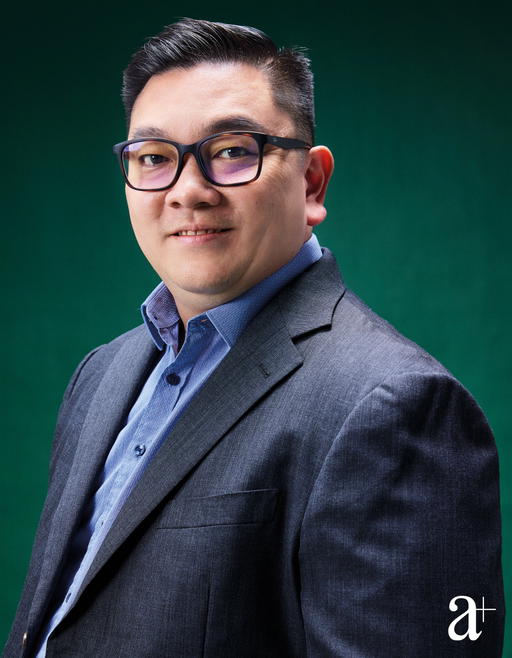

Patient expectations have evolved significantly. Relying on clinical excellence alone is no longer enough for private healthcare providers and they must now also provide convenience, transparency, and a seamless end-to-end experience, says Dr Alan Tan.
This all comes at a time when rising costs, tighter regulations, and intensifying competition are putting a strain on the economy, Tan adds. He founded private healthcare provider Republic Healthcare.
Republic Healthcare’s group portfolio includes Dr Tan & Partners (DTAP), which specialises in sexual health, STD and HIV testing, as well as men’s and women’s health; DTAP Express, a doctor-less clinic designed to provide quick, hassle-free access to health screenings; and S Aesthetics, an aesthetic services provider.
A medical doctor by training, Tan established Republic Healthcare after identifying a gap between acute general practice and specialist care. Based on the fact that it provides targeted services in selected areas along with traditional general practitioner care, he describes the company’s model as “GP Plus”.
Standardisation and flexibility are both needed to scale healthcare, according to Tan. “We need clearly defined protocols, workflows, and clinical standards to ensure consistency across all locations. At the same time, each clinic operates in a different context, so there must be room for operational adaptability.”
One of his biggest challenges is maintaining a consistent patient experience from first contact to post-treatment followup. This has been tricky because it doesn’t just involve doctors, but also front-line staff, systems, and processes. To address the issue, he has implemented structured training, performance tracking, and continuous process refinement. These are all supported by technology that improves visibility and coordination across the network.
Conceivably, private clinics play a crucial complementary role in Singapore’s healthcare ecosystem by easing pressure on public institutions, particularly in primary care, preventive services, and specialised outpatient needs. In addition, they offer patients greater choice and flexibility, which are increasingly important factors in a more complex healthcare environment.
For this reason, Tan sees the local healthcare landscape becoming more integrated with stronger links between public and private providers. There will also be greater emphasis on preventive care, digital health, and more efficient care delivery models. “The ability to deliver both accessible and sustainable care will be a key differentiator,” he avers.
Over the next five years, Republic Healthcare will focus on strengthening and scaling its core platforms. This includes disciplined expansion of its clinic network, enhanced digital capabilities, and continued refinement of its service models to meet patient needs more effectively.
“We are also exploring deeper integration across our primary care, specialised services, and aesthetics businesses to create a more cohesive patient journey.”
Tan shares five lessons he has learnt in the healthcare business.
1. Positioning is knowing what to say no to
During the early years of building DTAP, I focused on delivering good medicine. Like many founders, I believed that if we provided quality care, patients would come. What I underestimated was the importance of clarity, not just in what we do, but also in what we choose not to do.
This became particularly apparent as our clinics expanded beyond the first few. With each new location, we had the opportunity to broaden our offerings, but we also risked diluting our identity. The planning of one of our early expansions convinced me that we needed a sharper focus on positioning. We chose to concentrate on accessible, discreet, and doctor-led care, particularly in often underserved or stigmatised areas. From branding to service design, that decision shaped everything. Positioning is not a marketing exercise. It is a strategic commitment to become known for something specific, even if it means turning away other opportunities.
2. Services are not products, but experiences
My involvement in healthcare and aesthetics has taught me one recurring lesson: patients rarely evaluate services in isolation. They evaluate the whole experience. There was a phase where we expanded our service offerings significantly, believing that more options would drive growth. Instead, this led to internal and external confusion as patients were overwhelmed by the choices and our teams struggled to clearly convey value.
The turning point came when we reframed our approach. Rather than listing services, we structured them into guided journeys, simplifying decision-making for patients while maintaining clinical integrity. This wasn’t just a marketing adjustment; it was also an operational one. It required alignment across doctors, front desk teams, and systems. Both in healthcare and aesthetics, the service itself is only one component. The way it is presented, explained, and delivered ultimately determines its value.
3. A sustainable business model must balance access and efficiency
When we conceptualised DTAP Express, we were not driven by a desire to innovate for its own sake, but by identifying and addressing unmet needs. We observed a growing segment of patients who valued speed, discretion, and affordability without requiring a full consultation each time. Traditional models were not designed for this segment.
Introducing a hybrid approach— combining telemedicine with a streamlined physical touchpoint—required us to rethink conventional workflows. Initially, there were challenges, particularly in aligning clinical governance with operational efficiency. Nevertheless, the model proved resilient because it addressed two critical dimensions: accessibility for patients and scalability for the business.
The same principle has guided my other ventures, including those in education. A model that functions in theory must also work in practice sustainably. Additionally, it is not enough for a business model to deliver value once; it should do so repeatedly, efficiently, and at scale.
4. Innovation is born of constraint
There is a tendency to associate innovation with breakthrough ideas or major investments. In my experience, innovation typically emerges because of constraints. Whenever there was operational pressure, whether it was managing capacity across clinics or improving performance in underperforming outlets, we were forced to look closely at inefficiencies. Rather than introducing brand-new systems, we refined existing ones by improving follow-up processes, enhancing internal communication, and better utilising resources.
These incremental changes, although seemingly modest, had a compounded effect over time. In fact, my work in academic and institutional settings reinforced this observation: Resource constraints often drive more thoughtful and sustainable solutions than abundance. Furthermore, innovation is not always about doing more. It is about improving what you already have as well.
5. Culture is the architecture of consistency
The constant factor in healthcare, aesthetics, and education is people. Even so, building a consistent culture across different teams and environments remains one of the most complex challenges. In the initial stages, culture is often informal and shaped by the founder’s presence and values. This becomes insufficient as organisations grow. I recall a time when variations in service standards across clinics surfaced. While each team was capable, the lack of clearly defined expectations led to inconsistency in patient experience. Addressing this required more than communication. Systems such as clear protocols, accountability structures, and continuous reinforcement were needed.
In this sense, culture is not aspirational but operational. It is not reflected in internal statements but in the consistency of outcomes, whether a patient visits one clinic over another or if a student engages with an institution. Ultimately, culture allows an organisation to scale without losing its identity