Visiting Varanasi was my late grandmother’s idea. In her last days, she made me promise I would scatter her ashes in the Ganga River, specifically along the banks of India’s holiest and most ancient city. Famous for its stone-hewn ghats or steps leading to the river and terracotta buildings that comfortingly embrace the curvaceous form of the Ganga, the spiritual capital of India sees Hindus from around the world come to express gratitude for a life well lived. Some spend their last days on the banks of this sacred river, where they will be cremated.
It also forms the ingredients for an unexpected travel adventure.
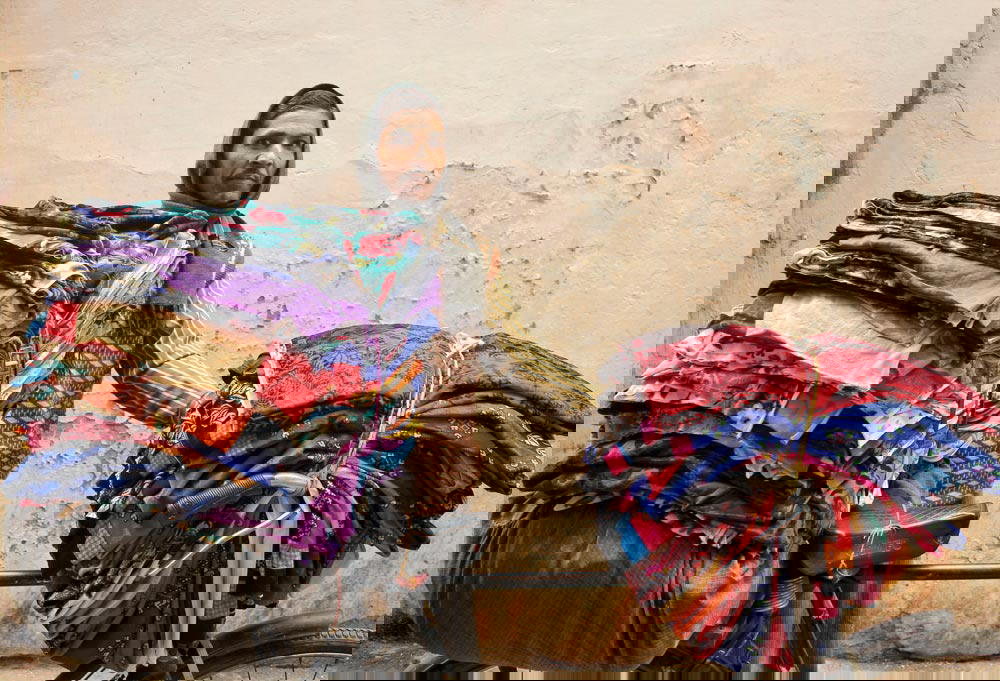
In exotic India, Varanasi, also known as Kashi or Banaras, rarely makes it to tourist must-visit lists. Holidaymakers usually make their way to Delhi, Agra—home of the Taj Mahal—and Jaipur before wearily heading home. A direct flight from Singapore, Varanasi’s unrelenting chaos is reserved for braver travellers, the kind eager for an experience that tests one’s boundaries and defies beliefs.
The city is split into new and old, but at the end of three days, I cannot tell the difference. Although the areas closer to the river—worshipped as goddess Ganga Mata—are the busiest, the entire city dances to a constant tune of honking vehicles, jangling teacups from roadside vendors and beseeching calls to prayer.
Religion is a business in these parts, something I realised the moment I arrived at Lal Bahadur Shastri International Airport. The best places to stay here are by the Ganga, and range from luxe (BrijRama Palace starts at a princely $350) to budget. If you prefer to stay away from the fracas, Ramada Plaza is 10km away and right by a small shopping centre.
Varanasi was recently the subject of a massive redevelopment effort by Indian Prime Minister Narendra Modi. He wanted to transform the pilgrims’ experience. While getting to the iconic Kashi Vishwanath Temple was certainly easy (still, expect long lines and security checks by armed guards), our guide Shivam navigated a rabbit warren of tiny paths to reach several other places of worship in Varanasi with remarkable ease.
Following him blindly instead of relying on a map meant I could better appreciate my surroundings. As we make our way through a labyrinthian maze in which a temple awaits—there are over 22,000 in Varanasi—I peer into shacks built into the stone, where children laugh and play as mothers idle over a hot stove. The few candies I had quickly disappeared into the hands of an eager child who had no qualms grabbing them from my outstretched fingers. My prize? A heart- melting smile.
Indeed, a car, a driver and a guide are necessities here. Your Eat, Pray, Love brand of street smarts will get you nowhere in North India. The most important job Shivam had was crowd control. The thoroughfare and sidewalk blend into one on the busy streets with man, machine and moseying mammals crowding for attention. Only he could push his way through the unthinkable crowds of the fervent and the faithful who come from all corners of the country to pay homage to Ganga Mata.
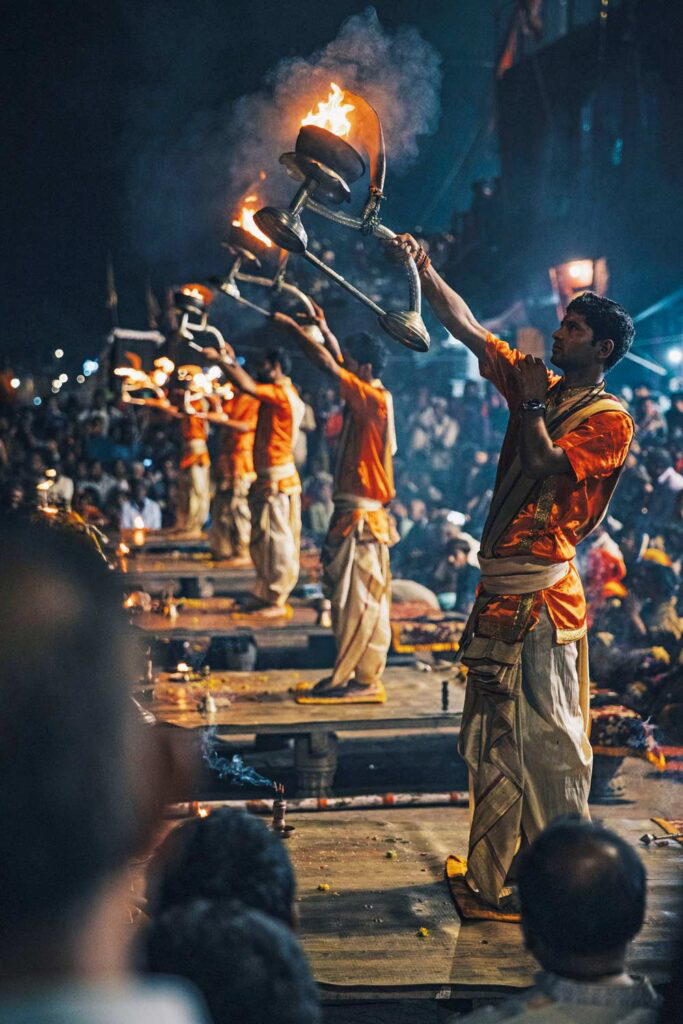
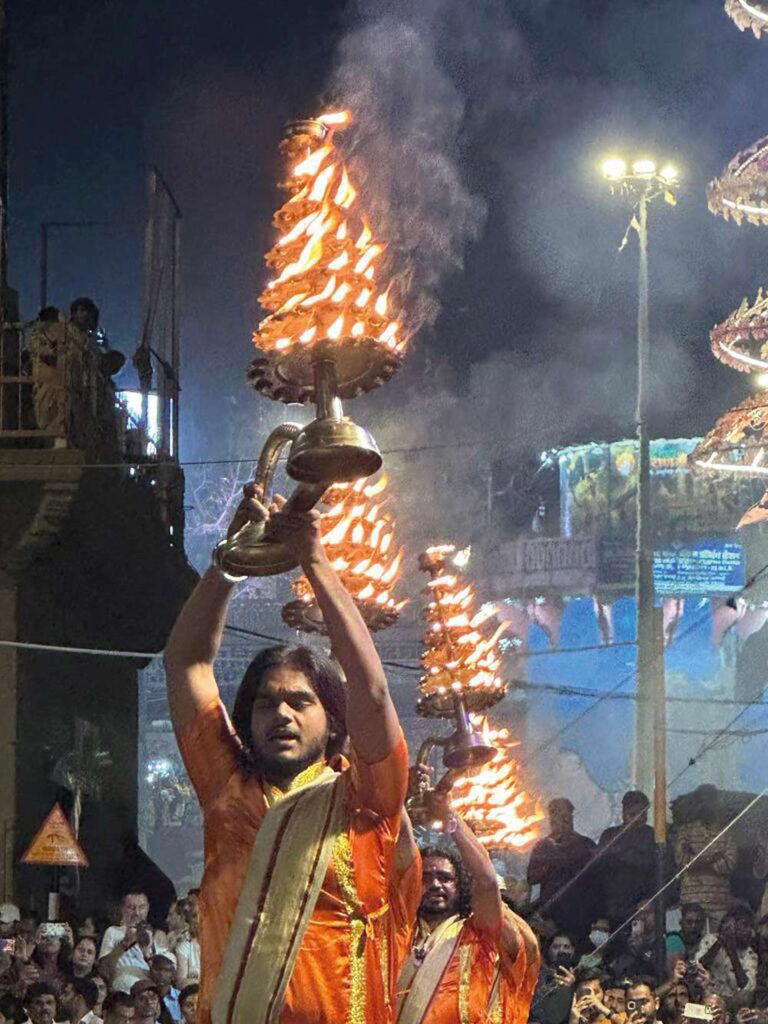
While it’s business as usual during the day, Varanasi comes to a halt in the evenings for the mystical Ganga Arati along the Dasaswamedh Ghat. It’s an interesting display of faith as the evening prayers culminate in a glorious celebration of light and love.
In a ceremony that’s been going on for as long as anyone can remember, priests light up multi-tiered ceremonial brass lamps and a well-synchronised, rhythmic chanting of holy mantras accompanies the sunset.
In the distance, I can see funeral pyres going on the Manikarnika Ghat, orange flames leaping into the inky black sky—death, like life, must go on.
A walk by the old city is a good way to end the night after the Ganga Arati. The winter months—December to February—are the best time to visit Varanasi. Evenings are especially pleasant as hawkers peddling everything from snacks to silverware throng the streets.
Pushing your way through the crowds is a skill I quickly gain—leave your mild-mannered South-east Asian ways at home, please—and is the only way I can make my way to the parking lot where our car awaits.
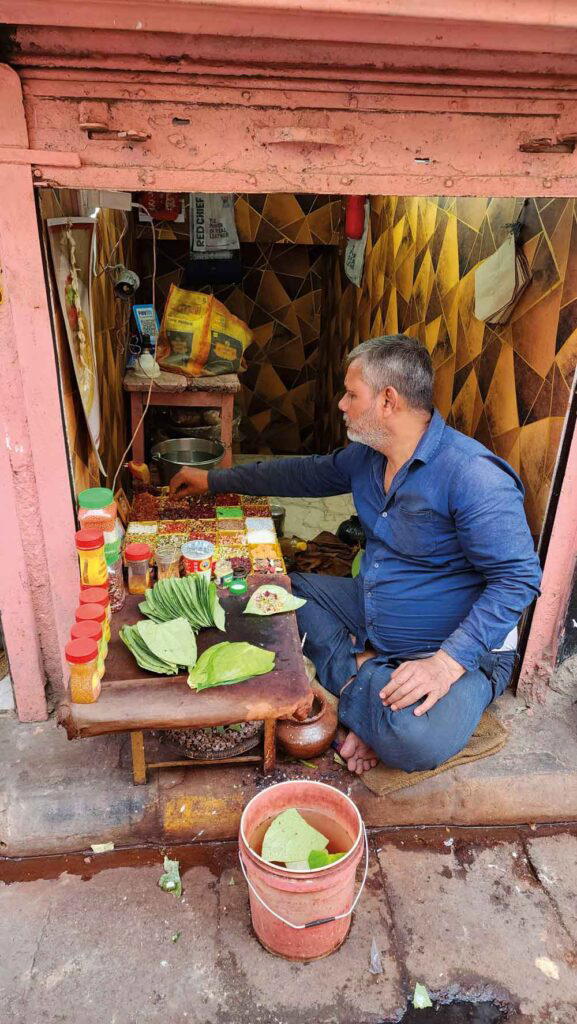
Chaat, traditional savoury snacks, are a must-have at dinner, and your guide will recommend a few. You should, however, make your point about cleanliness extra tenaciously.
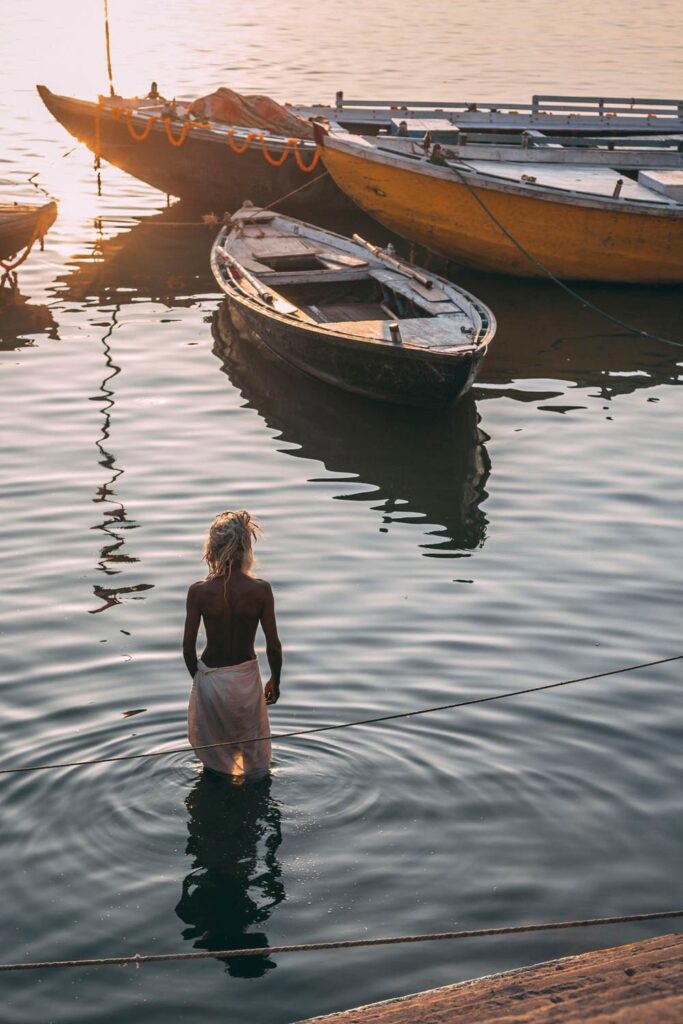
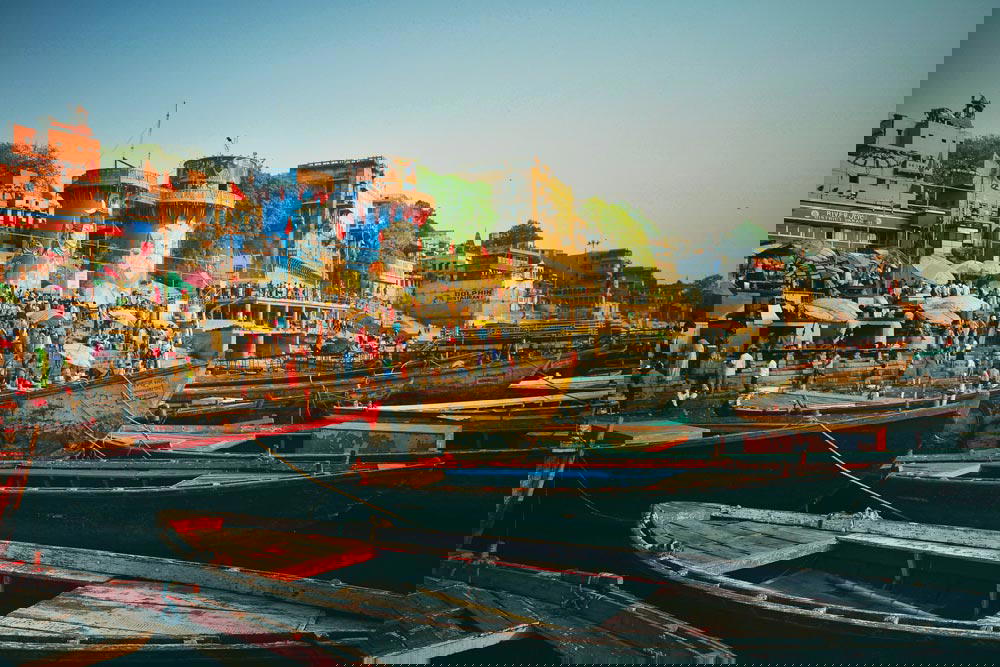
It is best to visit the river early in the morning before the crowds arrive. Only the priests got there before us, setting up shop for those seeking divine guidance. Just before 6am, our wooden vessel, piloted by a single wizened boatman, drifted laconically to the middle of the river, where we immersed the ashes.
The sun rises dramatically over the river—as if summoned by God—when we conclude the sombre ritual and the madding crowds of the city are left far behind.
Varanasi’s 84 ghats form a continuous line from one end to the other, so it is possible to walk their entire length, taking in the panoply of life and death. I dedicated a whole day to exploration with a stop for lunch at one of the many small eateries along the way, and concluded my day with a second round of Ganga Arati, but this time, on the less crowded Assi Ghat.
As I take in my last views of the river, moved almost to tears, a wandering mendicant slathers a paste of sandalwood and kumkumam on my forehead for a few rupees. Right behind him, a sprightly old man promises me that his “masala chai very best, no sick for you”. A couple in their wedding finery jostle for a picture, and a small child stares at what must have seemed to her like a real-life princess.
This is the city I had no intention of coming to just a few months before, and now I felt like a part of my heart was entwined in it forever.
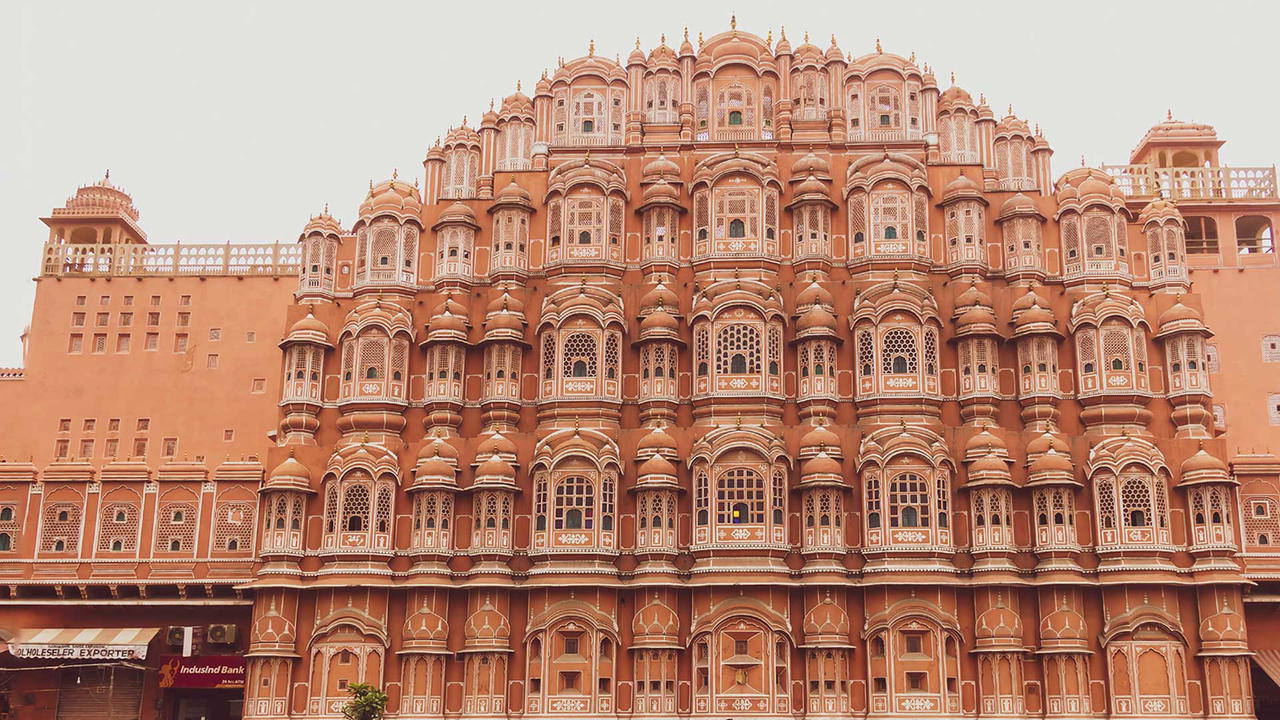
Incidentally, Jaipur was the next port of call for our motley crew of travellers. We were understandably excited about the sheer romance of India’s famed Pink City. The countryside of Rajasthan would be calmer and quieter, we told ourselves, but legend most emphatically did not morph into reality.
While Varanasi was disorganised and painfully busy, there was a rawness and honesty that made it endearing. The Pink City—more brown than anything else—may have had a more discernible sidewalk, but we felt like Varanasi, with its showy display of life, death, and everything in between, possessed an unexpected draw.
Jaipur is not without its charms, of course. A cosmopolitan city with rooftop bars and glitzy shopping centres to satiate the needs of the urban traveller, it brings together history, arts and crafts, and architecture in one fell swoop.
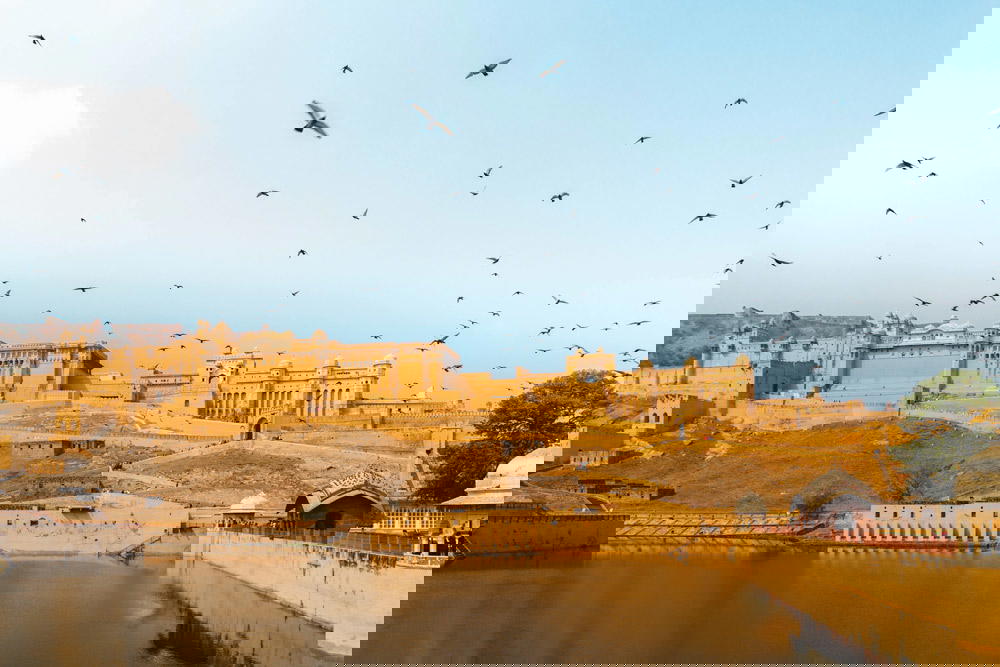
After a day, however, I wasn’t sure if I wanted any more of it. Amber Fort, with its imposing walls and serpentine staircases, made for beautiful pictures, but the romance of it all dies down quickly when you are ushered into an “arts and crafts” section—a clever way to encourage some government-sanctioned shopping. Masala chai and salt lassi serve as lubricants for retail therapy. Sadly, the actual history of the fort becomes secondary.
But Jaipur allowed us to dine and drink like kings and shop to our hearts’ content. This is not a bad way to spend a holiday. The Pink City’s many palaces also warrant a visit. James Bond fans intent on recreating scenes from 1983’s Octopussy should make a beeline to the City Palace.
Overlooking Lake Pichola, several historic monuments, such as Taj Lake Palace, Jag Mandir palace, Jagdish Temple, Monsoon Palace, and Neemach Mata Temple, are all close enough to each other for a day trip. However, they suffer somewhat from a lack of care, and the constant throng of salespeople pitching low- quality souvenirs gets frustrating. I don’t regret our Rajasthani pit stop, but I admit to being rather underwhelmed by such a supposedly storied destination.
My takeaway from this recent Indian sojourn was to stake a bold bet on an unexpected destination, choosing the path less travelled. The best adventures often come out of this.