If you’re the type of traveller that turns left on aeroplanes, then Air New Zealand probably won’t be on your radar for maximum mile-high pampering. There are carriers today that offer everything from showers and double beds to wardrobes and mood lighting.
Air New Zealand doesn’t even have a first-class cabin, and its business class seats were designed before the invention of the iPhone. Despite that, the airline consistently ranks as one of the world’s best, even taking the top spot in AirlineRatings’ annual rankings in 2020 and second place in the two following years.
It’s not so mystifying once you realise that what it lacks in outright opulence, it makes up for in innovation and genuine consideration for all passengers on board.
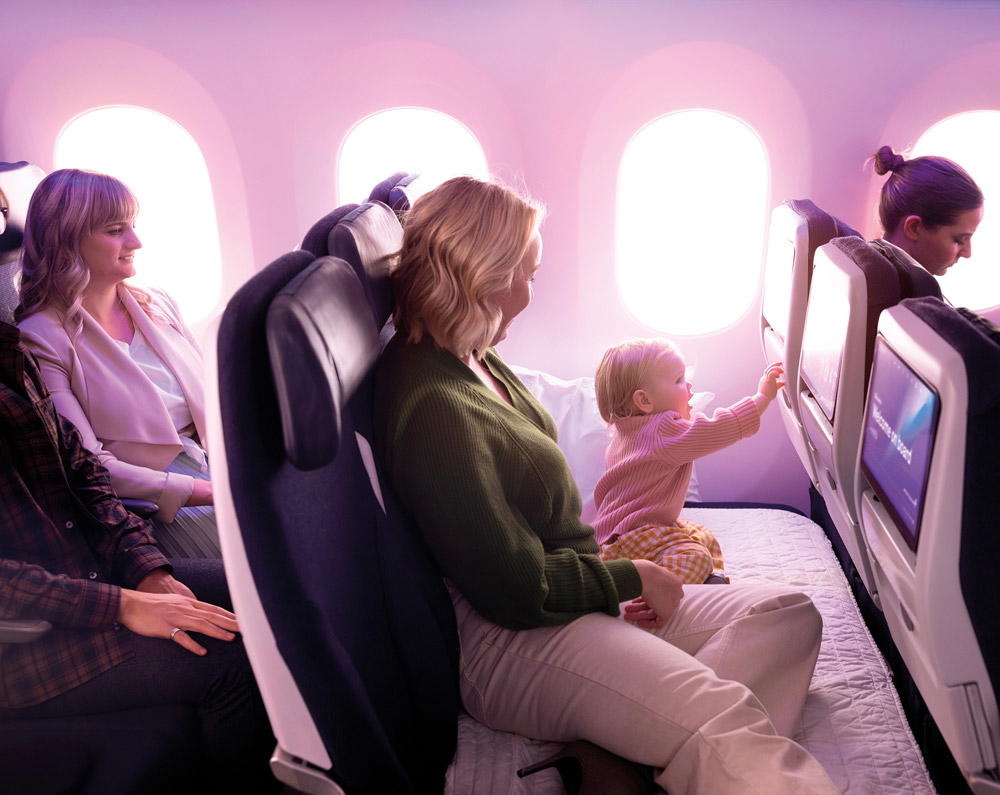
In 2011, it launched the Economy Skycouch, which enables passengers to purchase an entire row of seats and convert it into a spacious couch for couples or families with small children to cuddle up or play. Earlier this year, it unveiled the Economy Stretch, where the first four rows of the Economy cabin have seats with a roomy pitch of 88cm, offering 39 percent more legroom than standard economy seats.
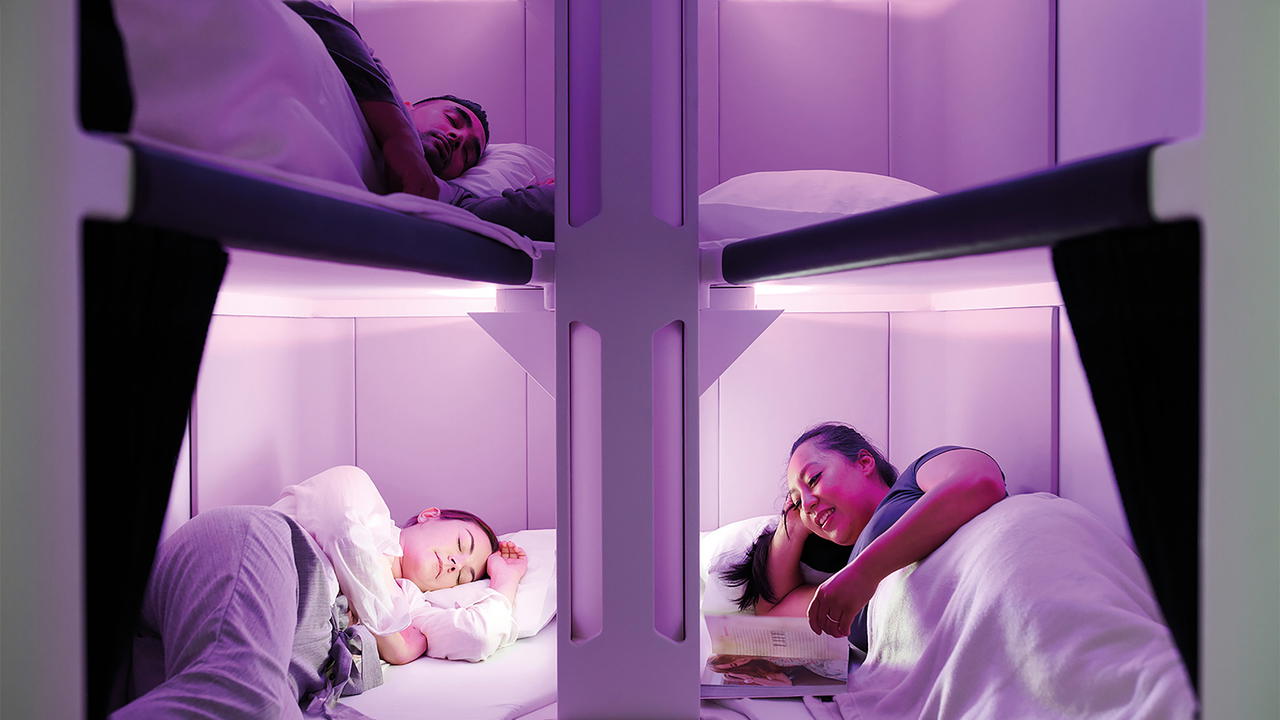
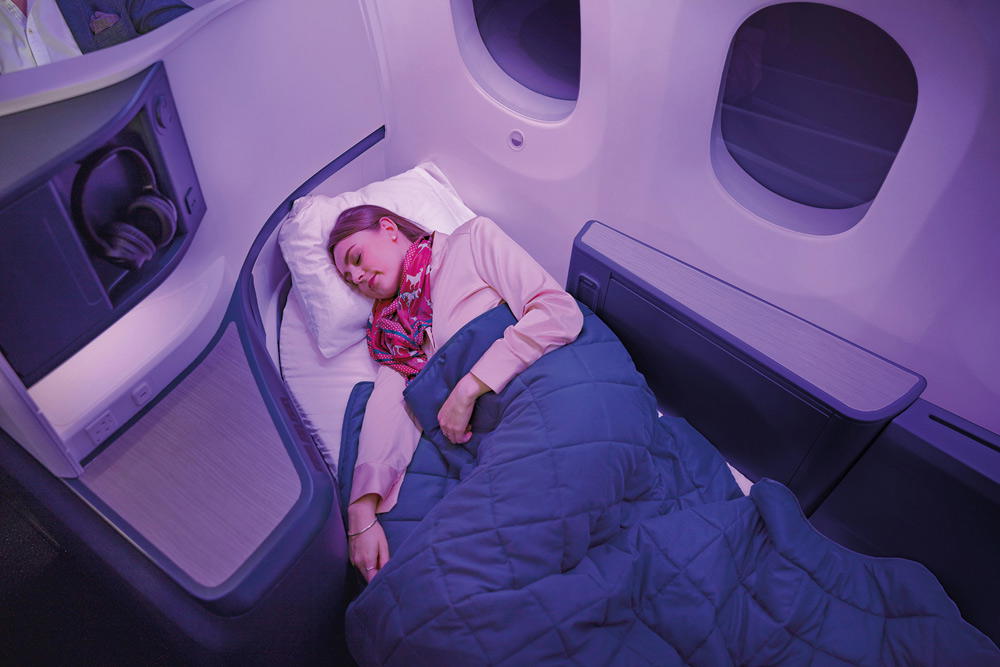
But the biggest change will debut in 2024. The airline has created the world’s first Skynest for its long-haul routes. It’s available as an optional upgrade for Economy and Premium Economy passengers. Six sleep pods will replace a whole galley in the Boeing 787 aircraft. Passengers can book them for four hours each time. “We designed it in response to customers who said ultra-long-haul flights were really an act of endurance,” says Louise Leaupepe, senior aircraft programmes specialist. “This is something that would allow them to escape the madness of the cabin and get some respite and rest.”
The four-hour block was chosen because it affords at least two cycles of restorative REM sleep.
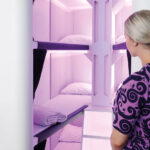
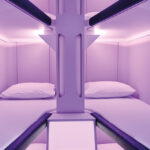
Each pod consists of a 208-cm bunk bed equipped with a reading light, USB ports, and a seatbelt. Mesh curtains offer enough privacy without leaving you feeling entombed. On its longest route, the 17-hour flight from New York to Auckland, there will be three sessions, though each passenger can only book one per flight. There will also be only one Skynest per plane.
The Premium Economy class is also getting refurbished. A new fixed back shell for each seat means reclining seats will no longer invade your personal space. The in-flight entertainment screen size has increased from 22.8cm to 33.8cm, and the seat pitch—one of the most generous in the industry for this class—will remain at 104cm. The back of the cabin welcomes a self-service snack stand to encourage passengers to get up and stretch their legs. “They rarely want to go into the galley because they see it as a workspace for the cabin crew and feel shy about going in there. This area will be completely separate from the galley, and the snacks are placed high enough so that little children won’t be able to reach them,” adds Leaupepe.
The most welcome change must be the transformation of its Business Premier class. The existing layout is bafflingly revealing, forcing two out of the three rows of passengers in this cabin to face each other throughout the flight. Add to that an awkwardly positioned, unwieldy screen and minimal storage options and you’ll feel as if you’re just riding a bus with a bed in it. Admittedly, though, Air New Zealand has some of the plushiest mattresses in the industry.
“We designed [the sleep pods] in response to customers who said ultra-long-haul flights were really an act of endurance. this is something that would allow them to escape the madness of the cabin and get some respite and rest.”
Louise Leaupepe, Air New Zealand, on the new sleep pods in Economy and Premium Economy
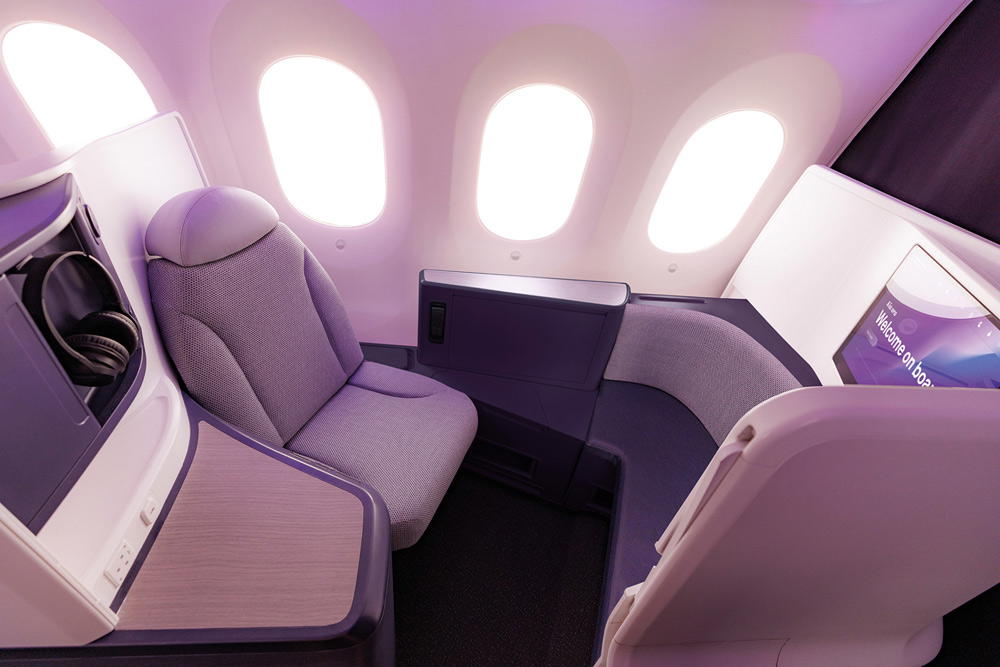
Refreshed cabins now follow the prevailing layout of front-facing cubicles, with five separate lights built into each seat to replace the ambience-destroying overhead reading lights. The in-flight entertainment systems are now a generous 60.9cm, and can be paired with your phone. The latter acts as a remote control if you don’t want to lean forward to navigate through the digital offerings.
Other thoughtful additions include the ability to pair your Bluetooth devices with the system, a wireless charging surface, and a redesigned backrest that makes it more comfortable to read or watch TV when leaning backwards.
The first row is dedicated to the new Business Premier Luxe category, which is so cavernous you can invite a companion to join you at mealtimes. “Unlike traditional airlines, only 20 percent of our passengers travelling in business class travel for business. Most travel for leisure. This might be their one treat in five or 10 years. They don’t need to work on board and just want some luxury, so interaction between couples is more important here than for business travellers,” shares Kerry Reeves, head of aircraft programmes, pointing out that the middle seat divider can also be retracted to create a shared space for couples.
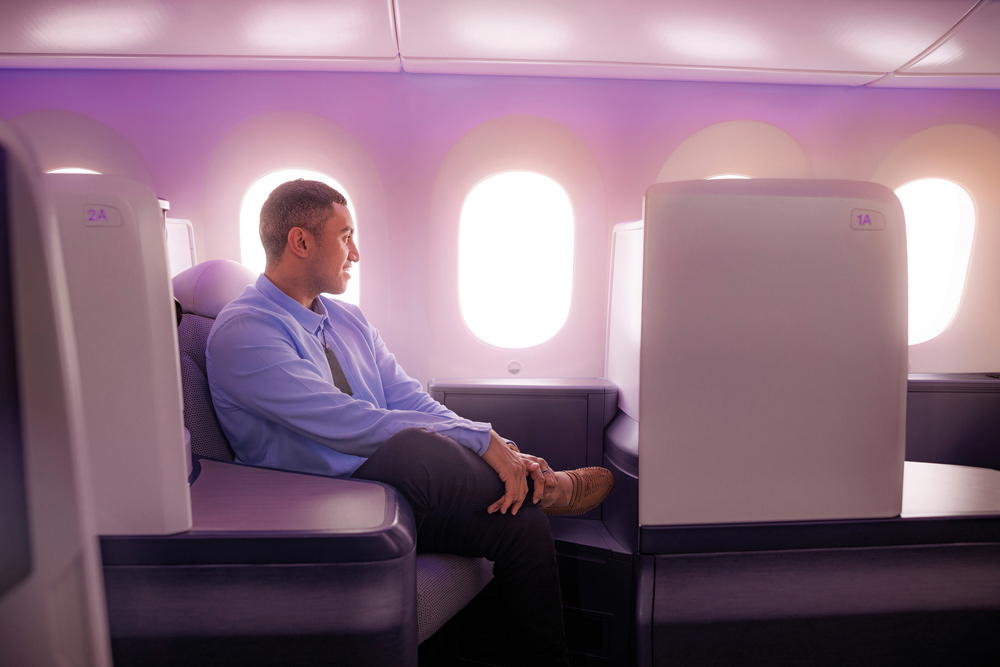
Creating opportunities for connection has always been at the heart of the Air New Zealand experience, but that wasn’t the reason it decided against having doors for the Business Premier seats. “Business Premier Luxe cabins need them because of all the extra space, but the feedback we received was that it didn’t really improve privacy for the Business Premier class,” explains Reeves. “Adding another 350kg worth of doors will have a tremendous impact on the environment.”
Flying is the most environmentally damaging way to travel, with over 2 percent of global CO2 emissions coming from the aviation industry. It may not sound like a lot, but considering that only around 3 percent of the global population flies regularly, it means our individual carbon footprints are significant.
Aside from reducing single-use plastics on flights, recycling more, and substituting eco-friendly materials wherever possible, Air New Zealand is committed to reaching net-zero carbon emissions by 2050. In the interim, it is aiming for a 16.3 percent reduction in absolute carbon emissions by 2030.
“Since the pandemic, people now want more personal space and comfort. But there’s also a heightened focus on sustainable travel,” says chief customer and sales officer Leanne Geraghty.
“We’ve been working with sustainable aviation fuel providers, done trial flights, and we are speaking with various government bodies and organisations to see if there is potential for producing such fuel here in New Zealand. This will be a large-scale change for the industry so it’s going to take time, but we don’t want to be followers. We want to be leaders in this space.”