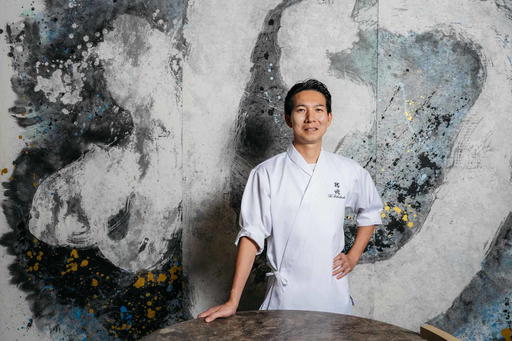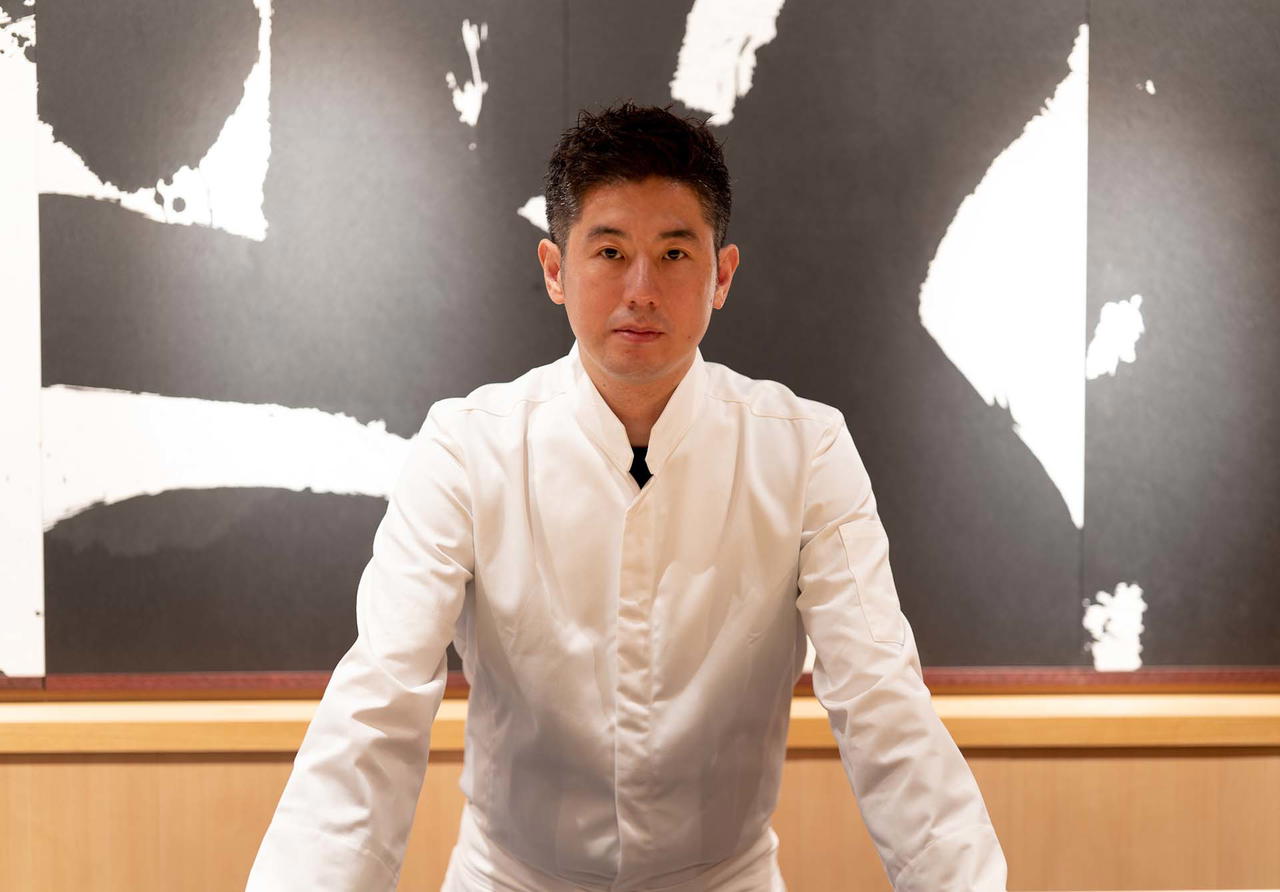
The eight counter seats are coincidental, says Ikkagoyo’s chef-owner Mitsutaka Sakamoto, and not because he wanted to usher in luck by capitalising on the auspiciousness of the number. Everything else in the restaurant, however, is a masterclass in meticulousness. From the cypress counter, carved from a century-old Nara Yoshino tree, to the specially made kaiseki tray from a lacquerware store in Japan, Sakamoto-san has spared no expense to create one of the most considered kaiseki experiences in Singapore.
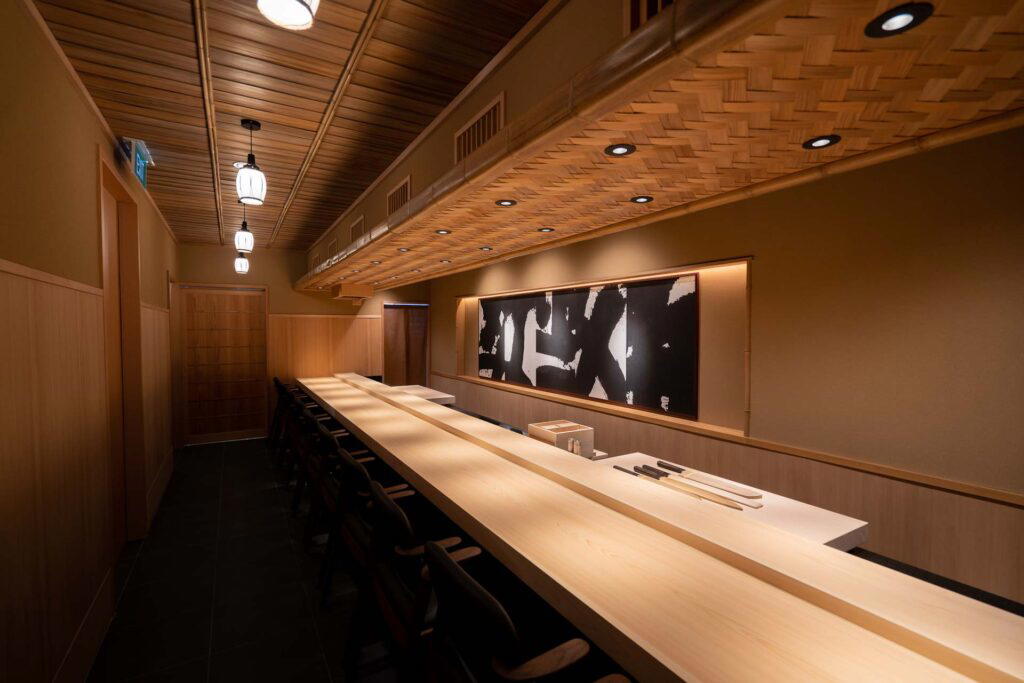
Even the washroom, with its wooden walls and fresh leaves carefully placed in the sink, is worth a visit. The restaurant is reminiscent of old teahouses in Japan, where travellers stop and refresh themselves before continuing on their journey.
The menu also changes every day, depending on the ingredients that Mitsutaka-san receives from his suppliers and what he can source from the market. But, he promises a hearty meal. It is incredibly hearty indeed—12 courses of cooked delights, with the promise of bonus dishes if Mitsutaka-san gets something appealing for the day.
Ikkagoyo is Mitsutaka-san’s first venture in Singapore after a decade-long career honing his culinary skills in Japan. He has a touch for the theatrics. For one course, he presents a tray wrapped in flammable rice paper. He then switches off the lights in the restaurant before setting it alight, revealing wild, seasonal vegetables from Shizuoka.
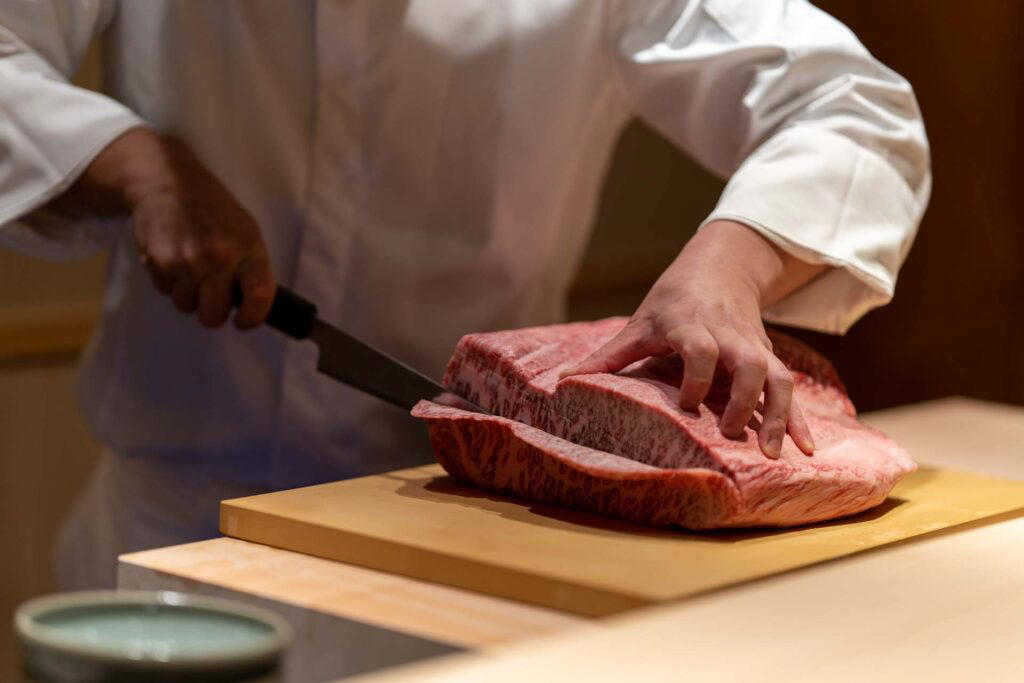
Another dish sees a large slab of raw Japanese A5 wagyu being brought out and placed in front of you. This is when you take out your phone to take a picture of the perfect marbling and delicious, delicious fat. Mitsutaka-san hams it up for the camera before retreating with the wagyu, placing it on his chopping board to be sliced. I asked him how much his knife set him back. He smiles and says it’s easily over a thousand dollars.
The wagyu, cooked shabu-shabu style in a katsuo dashi, is naturally a tantalising treat for your tastebuds.
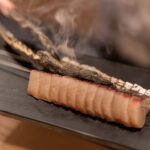
Mitsutaka-san’s strength clearly lies in his stocks, sauces and dips. Every accompaniment was wiped clean because I wanted every drop. The aged onions marinated with ponzu; the ogon dashi, or ‘golden broth’; the sweet Japanese plum sauce that came with the yellowtail—all of them reflected the chef’s dedication to creating the best experience possible.
The team only removes the husk of the rice on the day of the meal, to ensure that you eat the dish at optimum freshness.
Ikkagoyo does nothing spectacular or new. The ground that Mitsutaka-san treads is familiar territory and something you’ll find in other kaiseki restaurants in Singapore. But, he does them with aplomb and finesse. I rarely find these qualities in other kaiseki restaurants, and to watch Mitsutaka-san at work is a treat. There is a private room, but the best seat in the house is at the counter. The second might likely be in the washroom.