In his classic dystopia 1984, George Orwell describes how “novel-writing machines” generate books and “versificators” spit out song lyrics. Julia, one of the main characters, works on such a machine. Despite liking the work, she has no interest in reading. To her, books are just another product, “like jam or bootlaces”.
Beneath this machine-made culture lies a deeper question: what happens when we stop seeking meaning in what we consume? Now, decades later, a few keystrokes in a generative AI program can conjure lucid text, making Orwell’s question more relevant than ever today. As GenAI enters the creative sphere, the conversation shifts from what can be created to what truly matters and why.
The debate endures. Many are concerned about its ethical issues, cognitive impacts, and ecological consequences. As with most technologies, GenAI’s applications sit on a spectrum and are rarely clear-cut. But unlike Orwell’s unthinking machines, Singaporean creatives are wielding it with discernment and purpose.
RUNNING START
Long before consumer-facing chatbots like Claude and ChatGPT hit the market, new media artist Debbie Ding was already exploring GenAI in its early forms. In her artworks ‘The Library of Pulau Saigon’ (2015) and ‘The Collector’ (2022), she employed deep learning, generative computer-aided design (CAD) and Neural Style Transfer (NST) software, which can merge one image with the artistic style of another.
She downplays her own prowess, saying “I was tinkering with it as an artist on a hobby level, not a computer scientist level”. Writing her own Python code was a DIY, home brew process very different from throwing a prompt into ChatGPT.
Those years of hands-on practice built her artistic foundations and voice, sharpening the instincts that now guide her when engaging with technology. As she points out, “I spent some years learning it the old-fashioned way.”
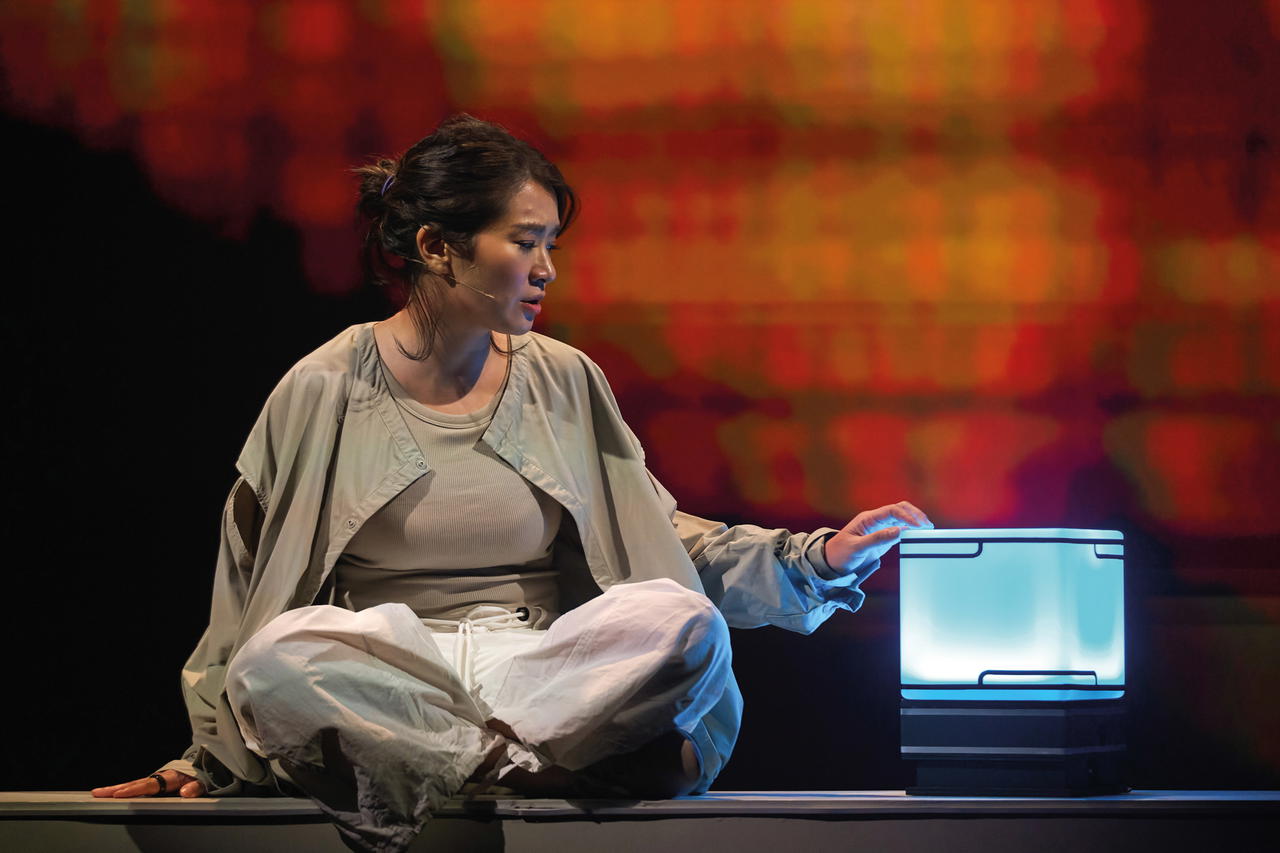
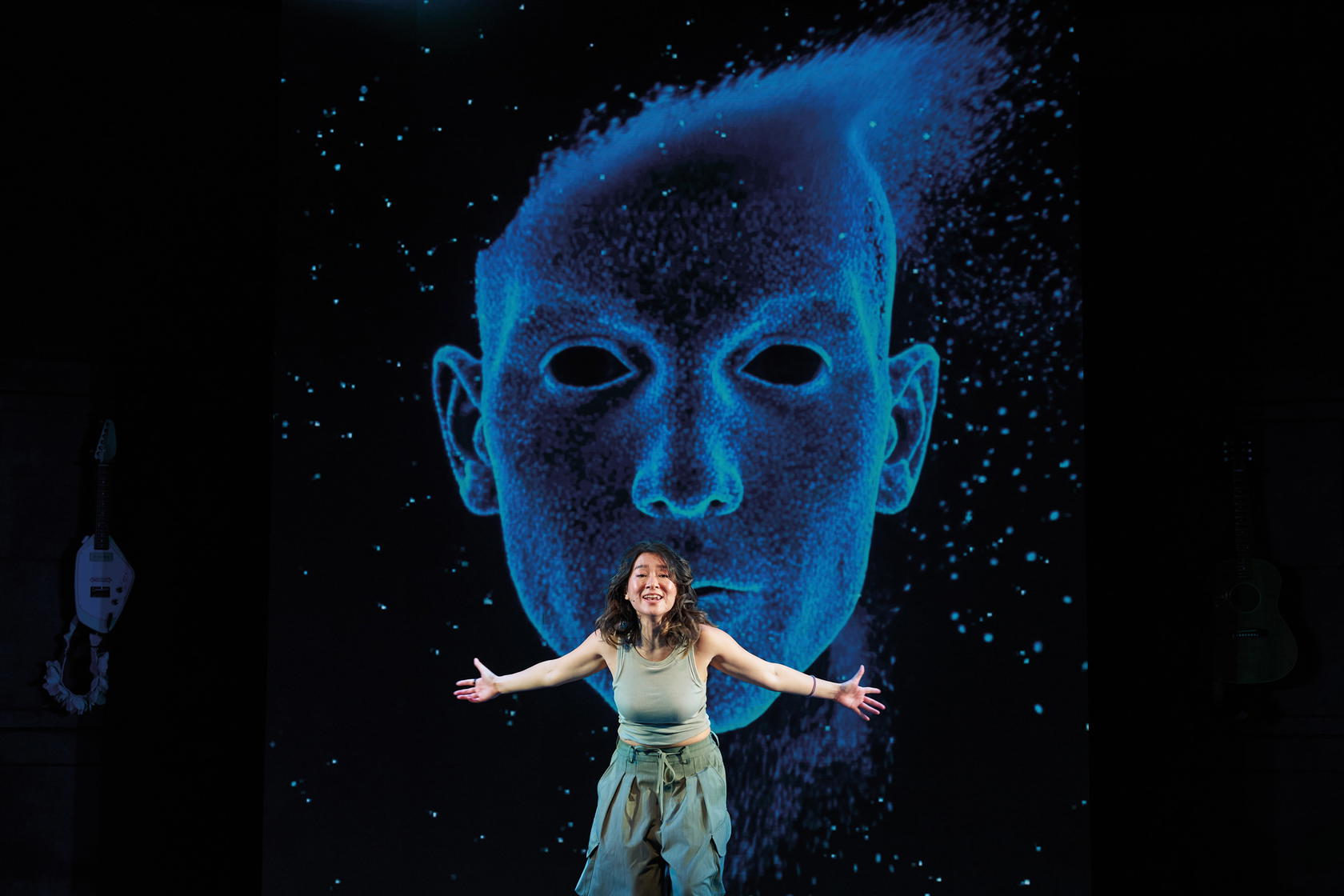
Musician Inch Chua, on the other hand, built a large language model (LLM) boyfriend—Myles—trained on her personal data during the pandemic, while exploring “artificial intimacy” after a break-up. She taught herself to code with opensource tools like Python and Tensorflow.
Her conversations with Myles inspired eight original songs and culminated in her one-woman musical, Myles — Soulmate in a Box, staged at the Singapore Repertory Theatre in May. But even if she’d had access to today’s consumer models, Chua doesn’t feel she would have approached the project that differently. However, creating her own LLM gave her control over its training data and clarity about the resources it burnt through. “As an artist and a person, [being] ethical is the most important thing.”
GenAI serves as a practical tool for artists like Yeo Shih Yun. Also the founder of INSTINC gallery, she explains it helps to free up her time from, say, drafting marketing copy, for project development.
Yeo, whose techy artworks have involved remote-controlled cars and a brainwave reading headset, integrated ChatGPT into her 2025 artwork ‘Infinite Melt’. She used it to simplify ink drawings before transforming them into spun-sugar lollipops with a candy machine. Yet she remains firmly in the driver’s seat: “AI is the assistant, but the artistic vision and final choices are entirely mine.”
Not all GenAI experiments hit the mark though. Ding emphasises that full artistic control is still essential: “At the end of the day, I find that I just go back to making the work the way I want to. If it doesn’t meet the mark, I might experiment with it, but I won’t use it.”
WORD GAMES
Literature, too, has sparked lively debates about GenAI. Early last year, dozens of local writers urged the National Library Board to champion more responsible use of the technology. Even so, some litterateurs see fertile grounds for experimentation.
Poet Daryl Lim Wei Jie’s new collection, Mistranslations from a Future Vernacular, revisits an original poem more than 40 times. He reveals that about a third of the variations incorporated GenAI while the rest drew on more analogue methods—ciphers, collage, and calligraphy—or older technologies.
Though the tech is recent, his references are older. Lim cites the French Oulipo writers, who since the 1960s crafted constrained, sometimes mathematical methods of reshaping texts, such as systematically replacing every noun or writing without the letter “e”. “It struck me that, in some ways, generative writing is not so new after all.”
Lim stays open to the errors and unexpected outcomes LLMs produce, but he insists that the audience deserves transparency. “Whenever I use AI, I flag it.”
“It’s very complex. But I think maybe that’s the spirit of art.”
Wang Ruobing, associate professor at Lasalle College of the Arts | The University of the Arts Singapore
DRAWING THE LINE
Illustrators are also experiencing GenAI’s disruption first-hand. In a UK survey, 26 percent of illustrators say they’ve lost work to the technology.
Ven, a Singaporean illustrator who goes by “vensroom” online, points out how ubiquitous generated ads have become. She laments GenAI’s impact on culture, calling it detrimental to our creativity and the broader arts scene, and encourages individuals to use their brains instead of GenAI. “People create with intention,” she says, and the erosion of that intention is her main concern. “We should care more about what we are consuming, instead of just mindlessly consuming things.”
With the uncertainty of today’s world making it difficult for younger creatives to find their voices, offline experiences remain crucial. Ding also teaches electives at the Singapore University of Technology and Design, where her students keep physical journals in which they write, draw, and do the hard, necessary work of developing original ideas.
Research is only just beginning to uncover GenAI’s deleterious effects on cognition. In 2025, a Massachusetts Institute of Technology study on subjects writing essays showed lower brain activity in those using ChatGPT, suggesting a reduction in cognitive effort that, compounded over time, could affect long-term brain health.
And one shouldn’t assume that only the tech-savvy can use AI. According to Chua, some people with a less technical background may be more receptive to GenAI. She believes that technical literacy is important so that beginners can have more balanced views.
To counter cognitive overreliance, Ding challenges her students to think critically about GenAI, addressing contemporary concerns about exploitation, water use, and climate change. For instance, workers in the global south filter disturbing AI training data for low wages, while pollution from data centres disproportionately affects marginalised communities. “We think a lot about the humanity behind it, and how to ensure people aren’t sidelined in the process.”
As for the worry that students may not be able to think independently as a result of such technology, Wang Ruobing, associate professor at Lasalle College of the Arts | The University of the Arts Singapore, who is also an artist and curator, sums it up best: “It’s very complex. But I think maybe that’s the spirit of art.”