
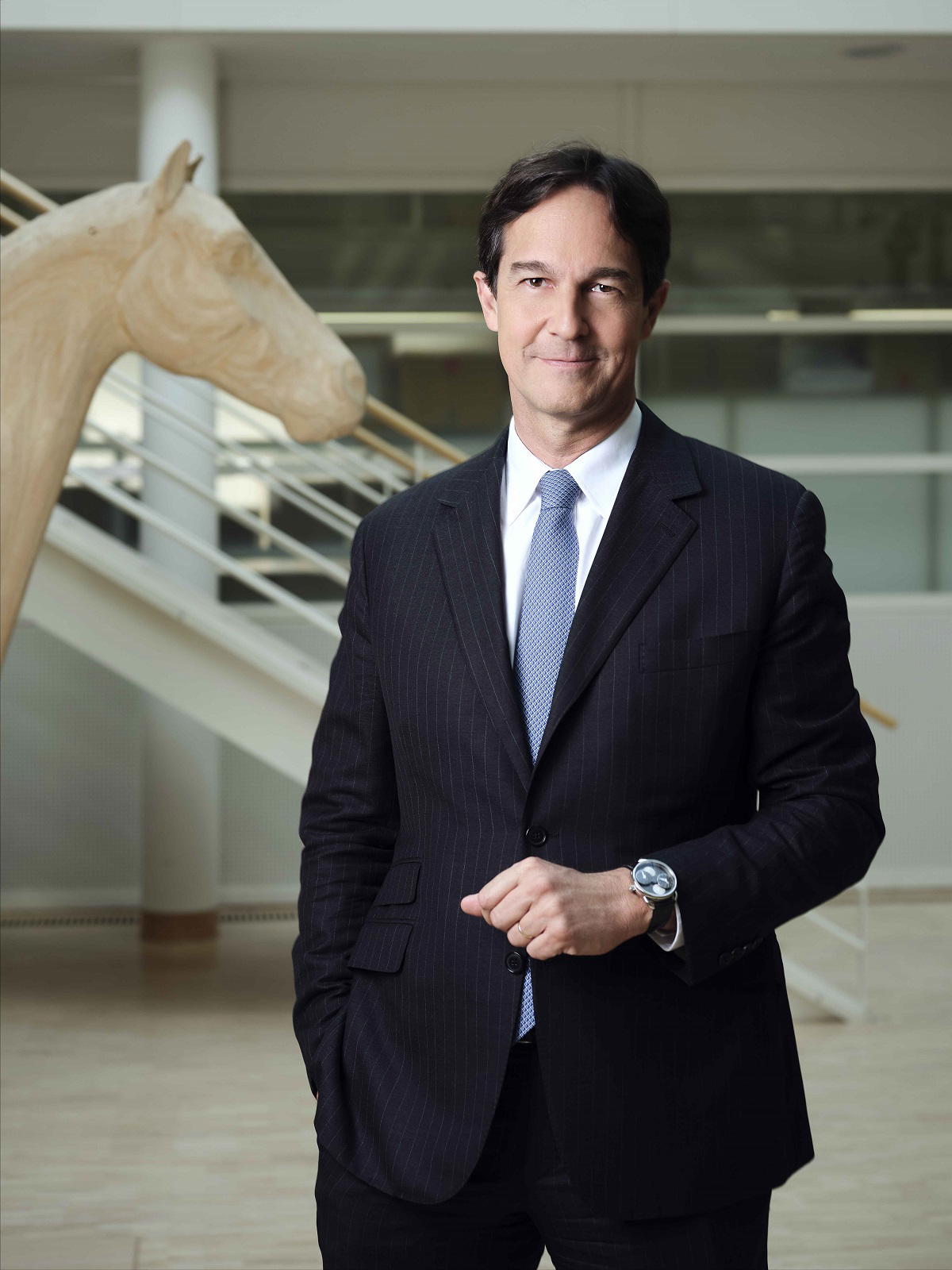
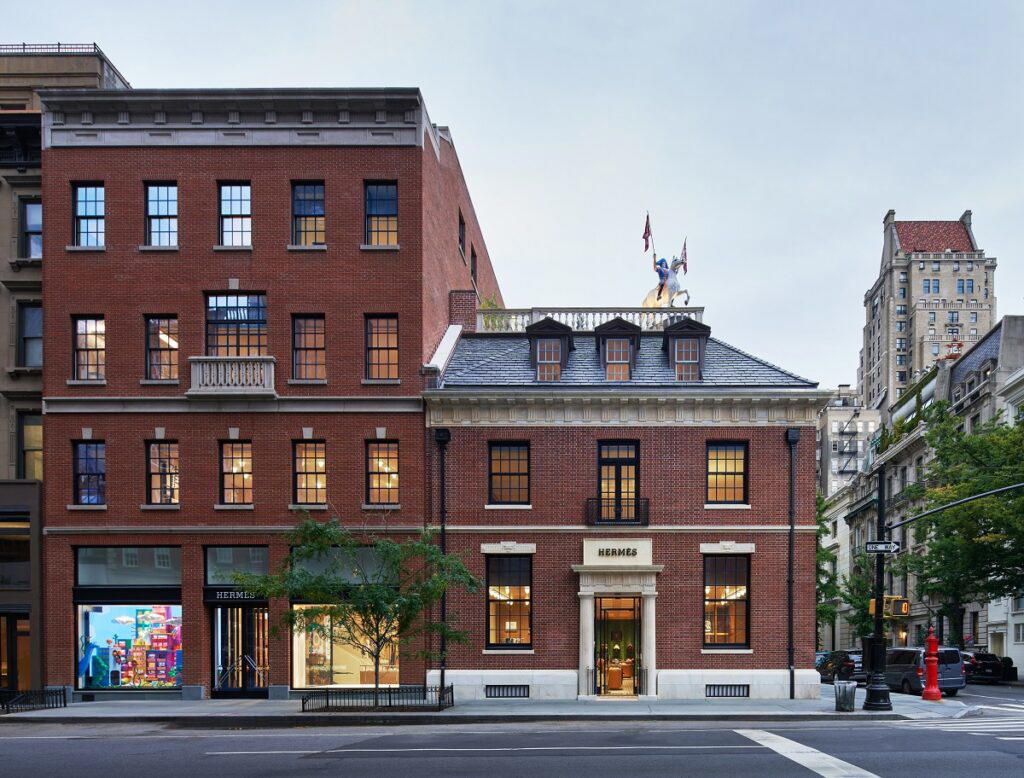
“It is one of our strengths that customers come into our boutiques not knowing what they will leave with. [That’s why] one of the first decisions we made long ago was to concentrate on the Hermès store rather than external distribution,” says Laurent Dordet, CEO of Hermès Horloger. In October this year, Hermès unveiled its palatial new home in New York City. The staggering seven-storey, 1,881-sqm Hermès flagship on Manhattan’s Upper East Side delivered a clear message about the viability of physical retail outlets.
Dordet is in Singapore to unveil new timepieces, including a sparkling all-white Arceau Le Temps Voyageur for ladies. Dressed in a khaki Hermès jacket, he looks right at home in one of the private rooms of the brand’s flagship store in Singapore. The 670-sqm four-storey boutique at Liat Towers underwent an extensive renovation in 2016. It now showcases all the house’s 16 métiers — from leather goods to ready-to-wear, dinnerware, beauty products, fragrances, fine jewellery, watches, and more.
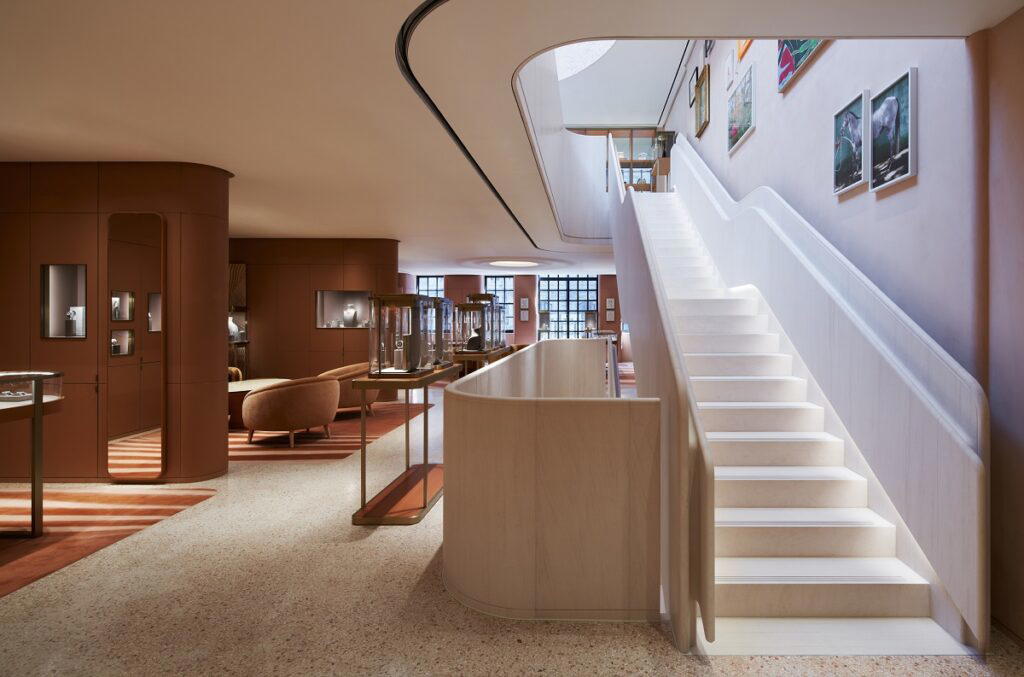
He shares that 80 percent of Hermès watch buyers are existing clients, who may have entered a boutique looking for sandals, dinner plates, or a gift for a baby shower, but left with a watch instead. “The power of the brand is huge, and the purchasing power of our customers is endless,” explains Dordet. It would take these factors, along with consumer fatigue caused by overexposure to the same watches from the usual players, to entice them to discover Hermès’ approach to timekeeping.
A veteran in the industry, Dordet also shares how a diverse new world of growing consumer demands and rapidly changing demographics has helped turn the tide. “Seen as an obstacle five to seven years ago, the fashion label is now regarded as an asset. Five years ago, people mostly looked to Hermès for bags and silk; other houses for fashion; and specific watchmakers,” says Dordet.
Today, these lines are blurred. “In Asia, luxury buyers typically go for the top five watch brands and then turn to something original. Since we are proposing something different, this becomes an asset,” he explains.
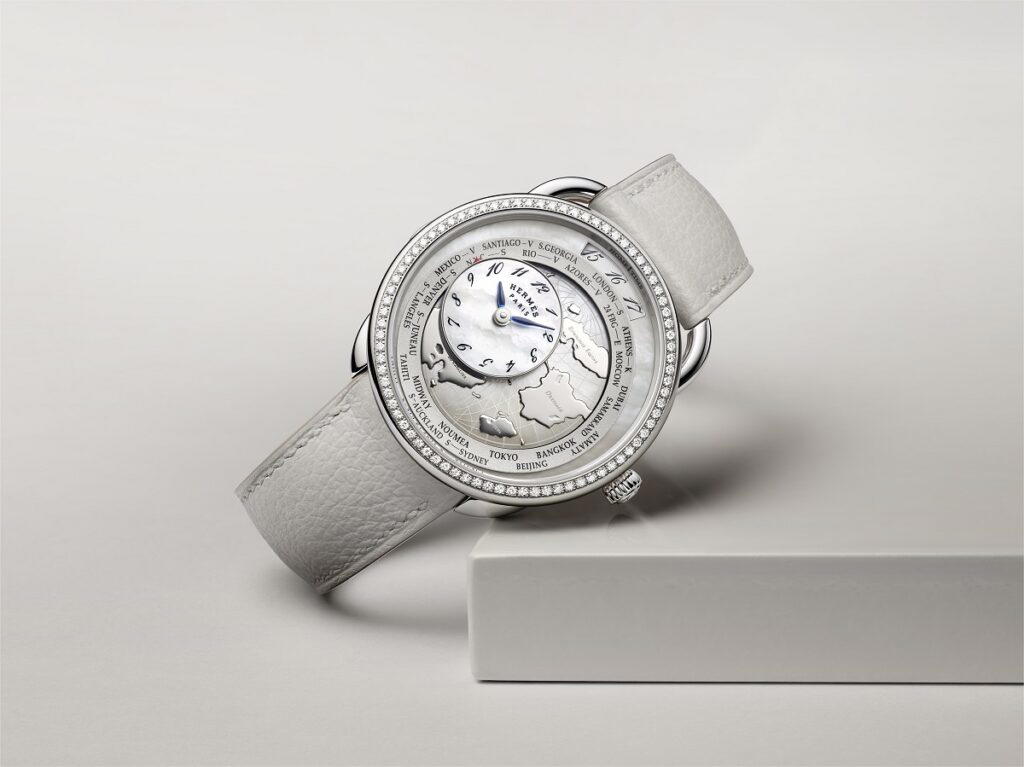
Saying Hermès watches are different is an understatement. Shaped by a dreamy philosophy, they are whimsical, artistic, and original. As an example, this year’s key launch, the Arceau Le Temps Voyageur, has a mobile dial revolving around a map of an imaginary world. Besides its GMT and world time complications, it is a poignant reminder to explore. The watch won both the Men’s and Women’s Complication prizes at the recent Grand Prix d’Horlogerie de Genève (GPHG).
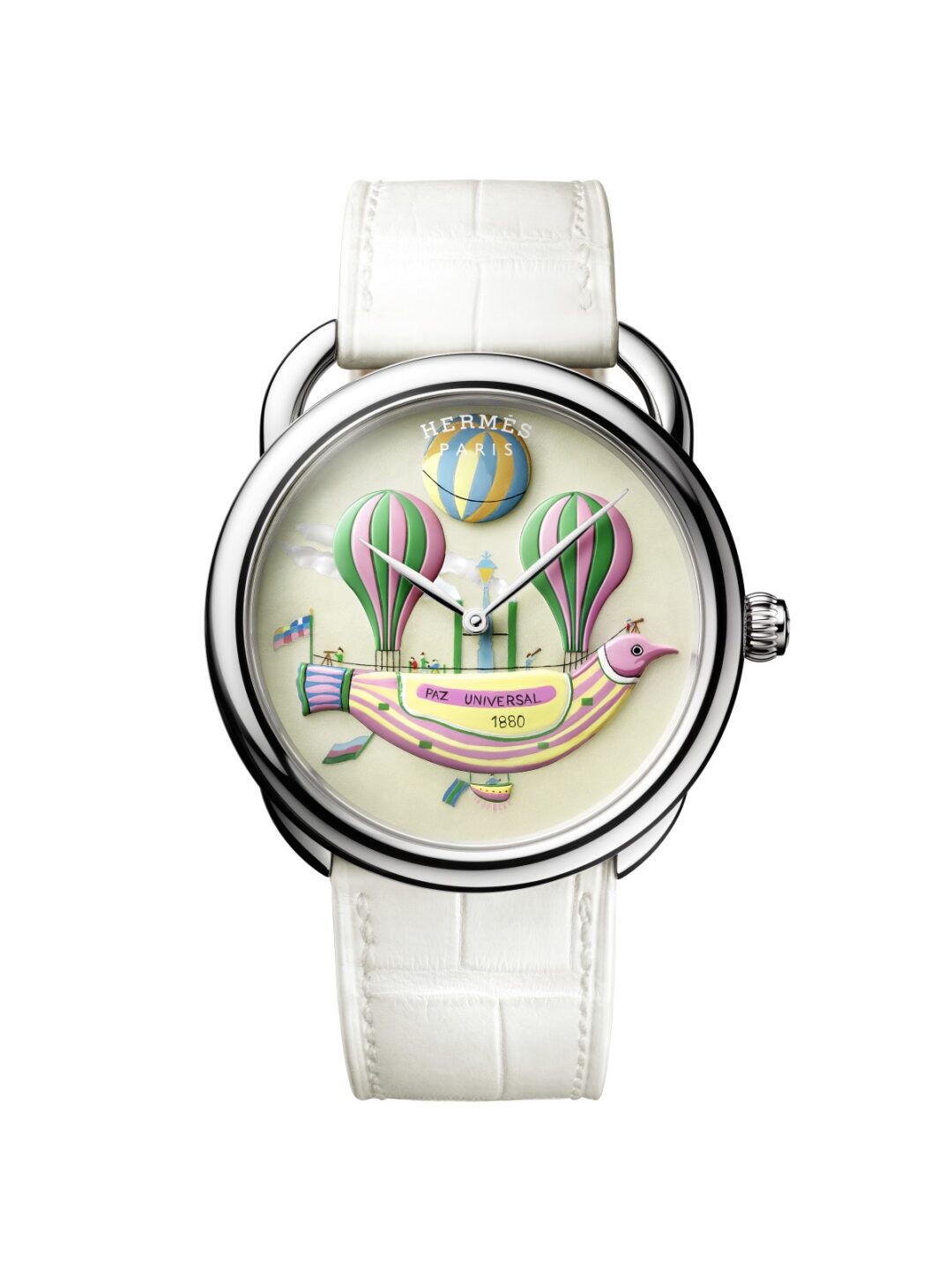
Another enchanting creation, Arceau Les Folies du Ciel, is inspired by a silk scarf designed by French artist Loïc Dubigeon in 1984. On its mother-of-pearl dial, two neoralite resin hot air balloons hold aloft a pastel-coloured gondola shaped like a giant dove. At 12 o’clock, a round balloon spins with each wrist movement.
“Our philosophy hasn’t changed. We believe in two things: First, we aim to be the best in quality and technique, despite how simple our watches are. The second goal is to be as different from other brands as possible. This means presenting an original perspective all the time, whether it’s a different style, a different fantasy, different humour — something different. If you present what traditional watchmakers have been proposing for centuries, you will not be able to compete. There is no point in coming into this industry if it’s to make the same products. So be radically different — shapes, styles, everything,” says Dordet.
Besides creating its unique vision of time, the brand also understands the importance of boosting its legitimacy as a watchmaker. Despite producing its first timepiece in 1912, it only invested seriously in its watchmaking identity 66 years later. In 1978, La Montre Hermès SA opened production facilities in Biel, Switzerland. The next decisive step came in 2006, when Hermès acquired a 25 percent stake in Vaucher Manufacture Fleurier. It also owns the majority share of Swiss watchmaking company Joseph Erard Holding, and Nateber, a Swiss company that makes dials.
“Our goal has remained the same: to be as legitimate a watchmaker as any other great watch brand, and for the brand to be seen as a watchmaker as much as it is regarded as a silk maker or leather goods expert. This is our reason for being. Hermès began making silk in 1937, 100 years after its founding. Today, people assume Hermès has always produced silk. No. It took us a while. We have time.”