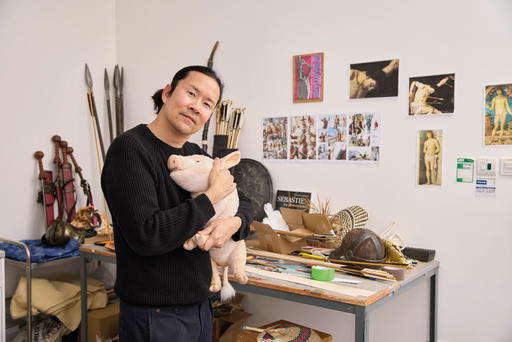
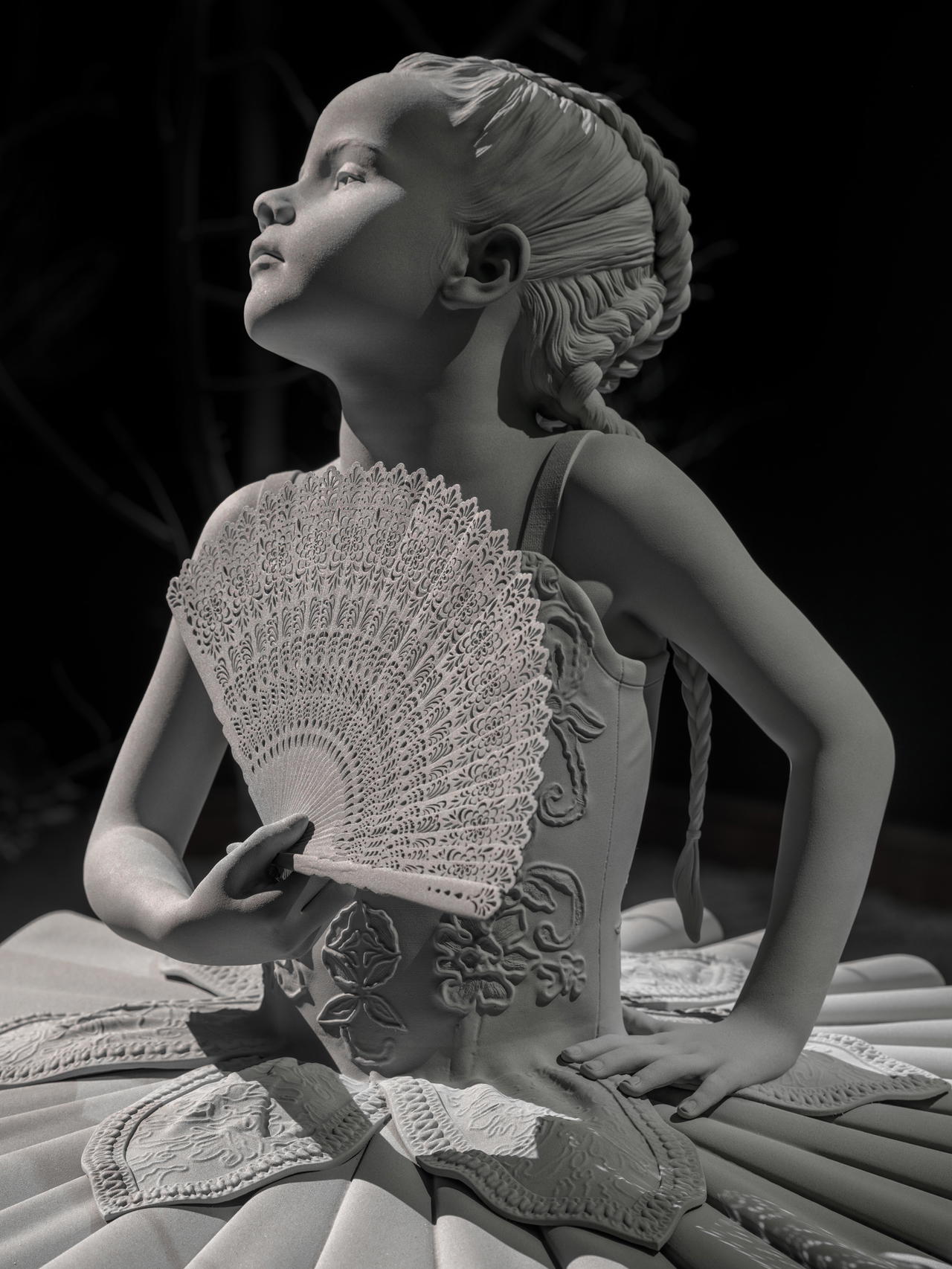
Hans Op de Beeck seamlessly navigates a diverse range of media, including sculpture, installation, video, text, drawing, painting, photography, film, theatre, dance, and opera. In each medium, he creates meticulous, achromatic dreamscapes that arrest time and suspend disbelief. Whether he paints a watercolour the size of a notebook or constructs an installation the size of a house, he invites viewers to reflect rather than react.
Each day, he says, “the world becomes louder and more visually overloaded. I stage the quiet and the unspectacular—a chill-out zone, resting point, moment to let go or to be no one and nowhere, if only for an instant.”
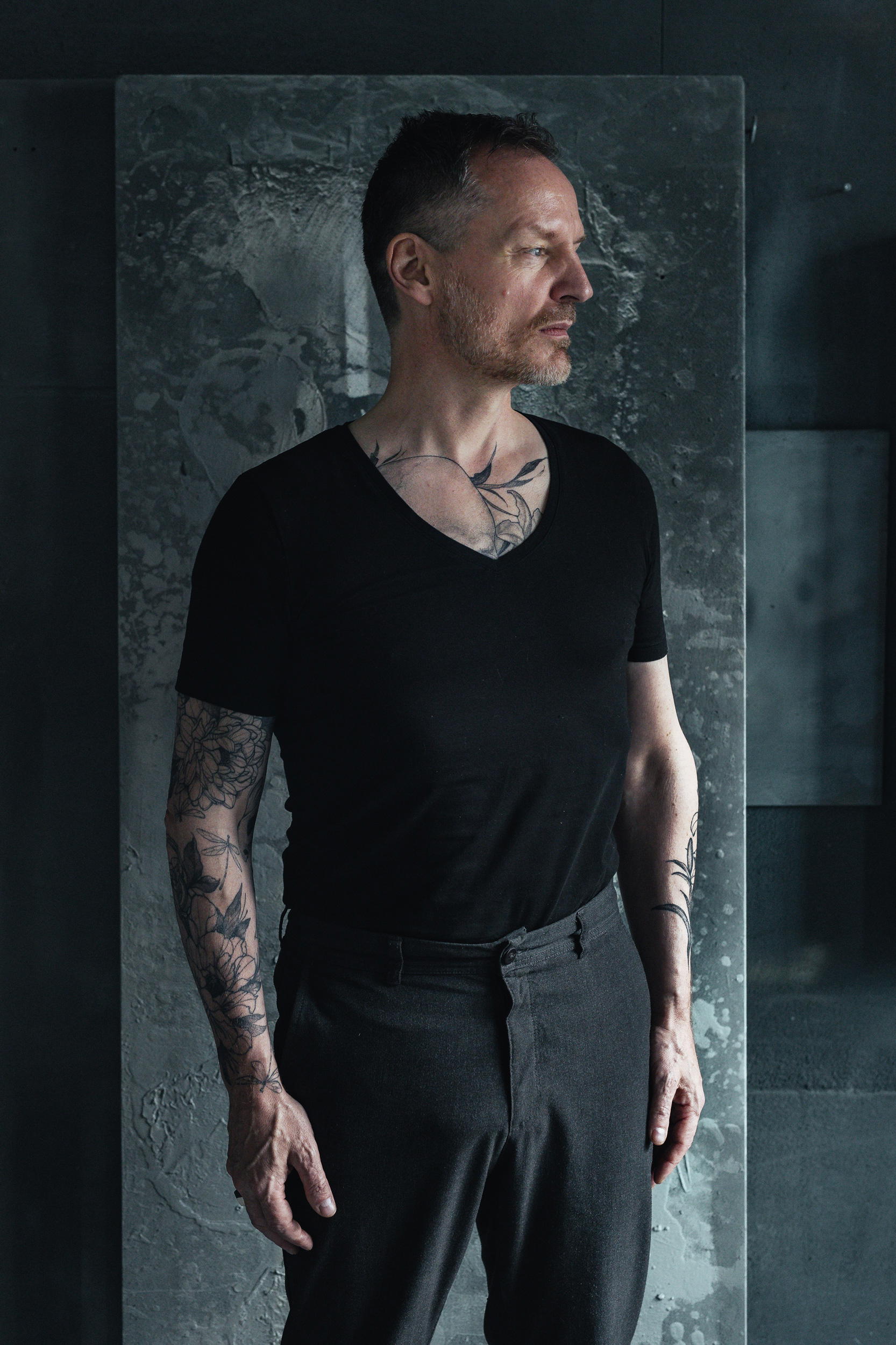
Op de Beeck was born in 1969 in Turnhout, Belgium. His parents, both schoolteachers, struggled through a turbulent marriage. His father’s bipolar disorder left his mother to raise his four children alone. From an early age, he was drawn to drawing, writing, acting, and making music. “It came naturally to me. Being a musician was a calling.”
After a stint at drama school and a string of odd jobs, Op de Beeck earned a Master’s in visual arts from the Higher Institute Sint-Lukas in Brussels, then trained at The Rijksakademie in Amsterdam, and participated in the MoMA PS1 Studio Programme in New York.
By 2004, his first solo museum show at GEM in The Hague cemented his distinctive style: melancholic, contemplative, and obsessively detailed. Later, in addition to exhibits at Tate Modern in London, and the Venice Biennale, his work has been shown in Singapore and Shanghai, as well as Rome and São Paulo.
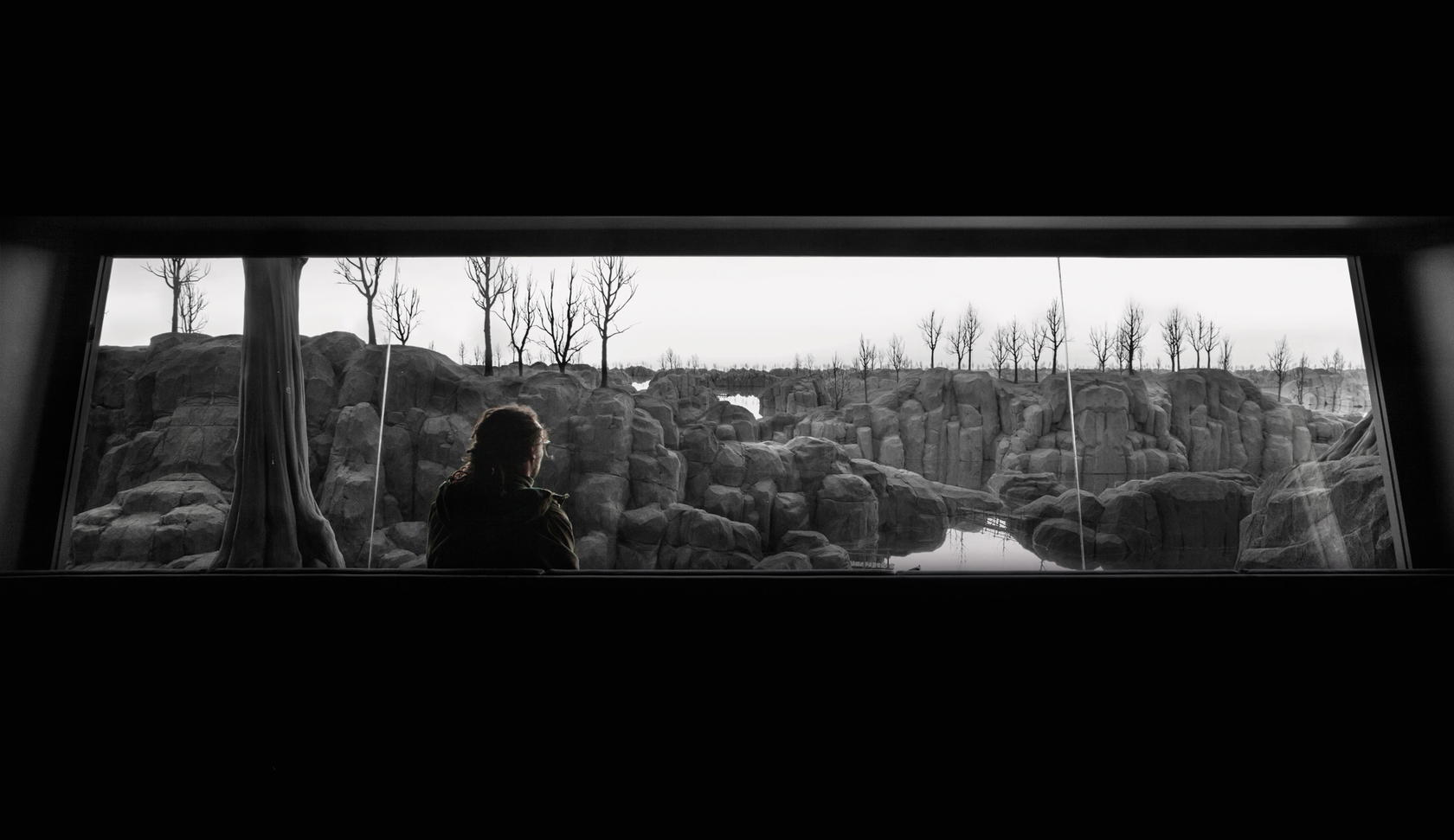
Although critics liken his installations to film sets, he roots them firmly in sculpture. In his studio, a six-person team, aided by specialist craftsmen, fabricates each element from scratch—no shop-bought props, no ready-mades. Plaster, wood, polyester, and glass become velvety grey worlds that sit in uncanny stillness, as though ash has settled on a modern Pompeii.
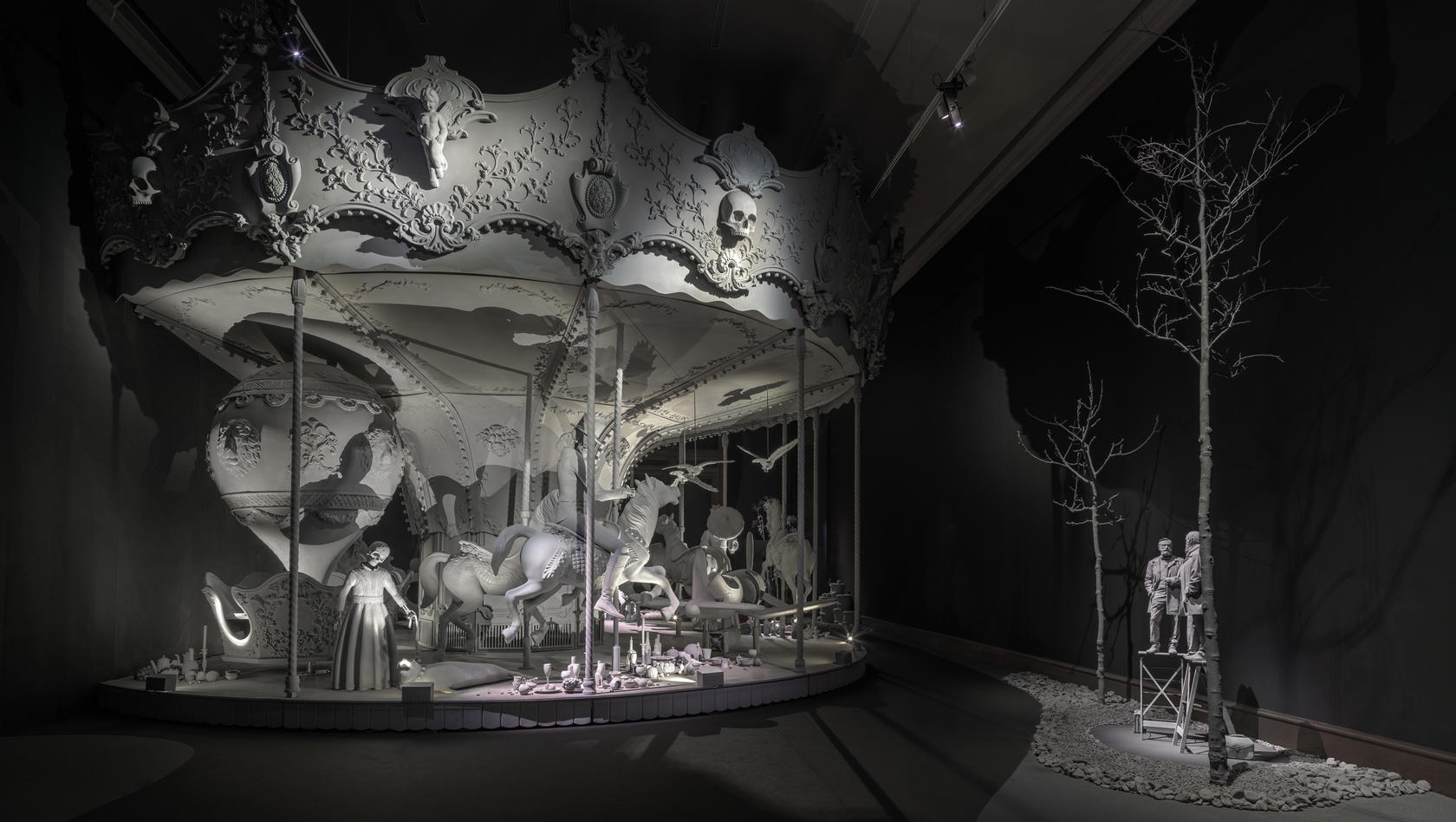
“If I were to make my sculptures of people in full colour, they would then be too focused on simulating reality,” he says. “My work is not about painstakingly copying or reconstructing life as it is, but quite the opposite. I prefer to abstract reality and thus create an evocation of a mood, an atmosphere, an internalised feeling. I love to evoke, not simulate.”
From 13 September to 31 October, he returns to Paris with his “On Vanishing” exhibition, filling both of Templon Marais’s spaces. Fresh from his institutional triumph, “Nocturnal Journey”, at the Royal Museum of Fine Arts Antwerp, he brings 28 new sculptures, watercolours and a black-and-white animated film.
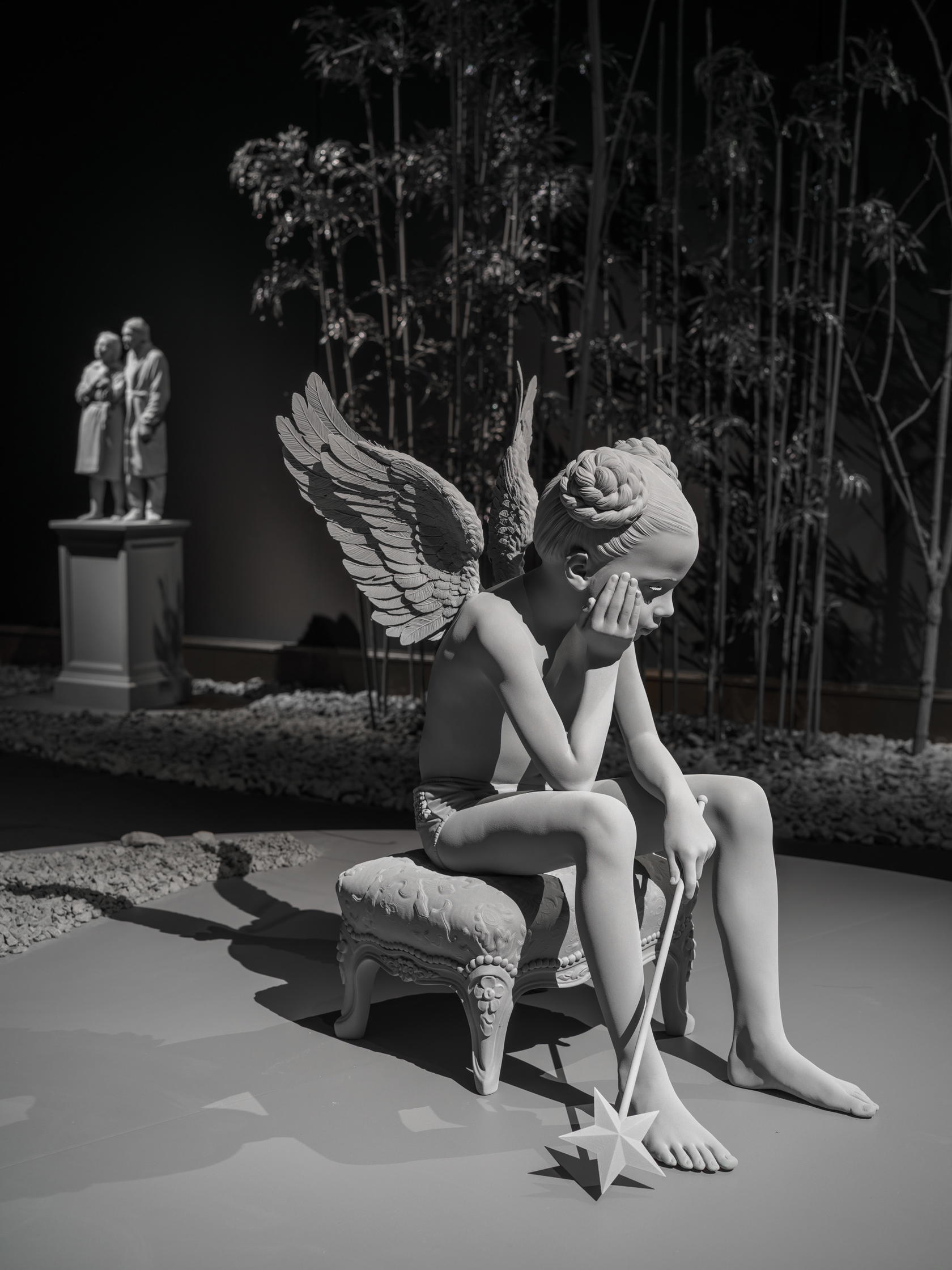
He arranges them as a Wunderkammer-style cabinet of curiosities to probe “the moments when we become zero, when language, logic, and reason fall away, and we drift into self-loss and timelessness”.
There is a sense of familiarity and strangeness in the scenes. An angel-winged child drifts into reverie; a display case holds a starlit funfair on a pier; and a life-size horseman shelters beneath a monkey-held parasol. The elegiac tone never hardens into despair.
“My works often touch on aspects of the tragic, alongside lightness and humour,” he says. “I do that from a conviction that representations of the tragic can be healing. It’s the age-old idea of catharsis.”
Op de Beeck borrows from classical genres—landscape, still life, memento mori, the human figure—yet anchors his work in contemporary life. Vermeer and Morandi inspire him, but everyday experiences truly fuel him. “The inspiration for my work comes from everyday life,” he discloses. “I am triggered by the way the world reveals itself to me, by what stirs people, and by what moves me. My work speaks mainly of life, its difficulties, absurdities, and incredible beauty.”
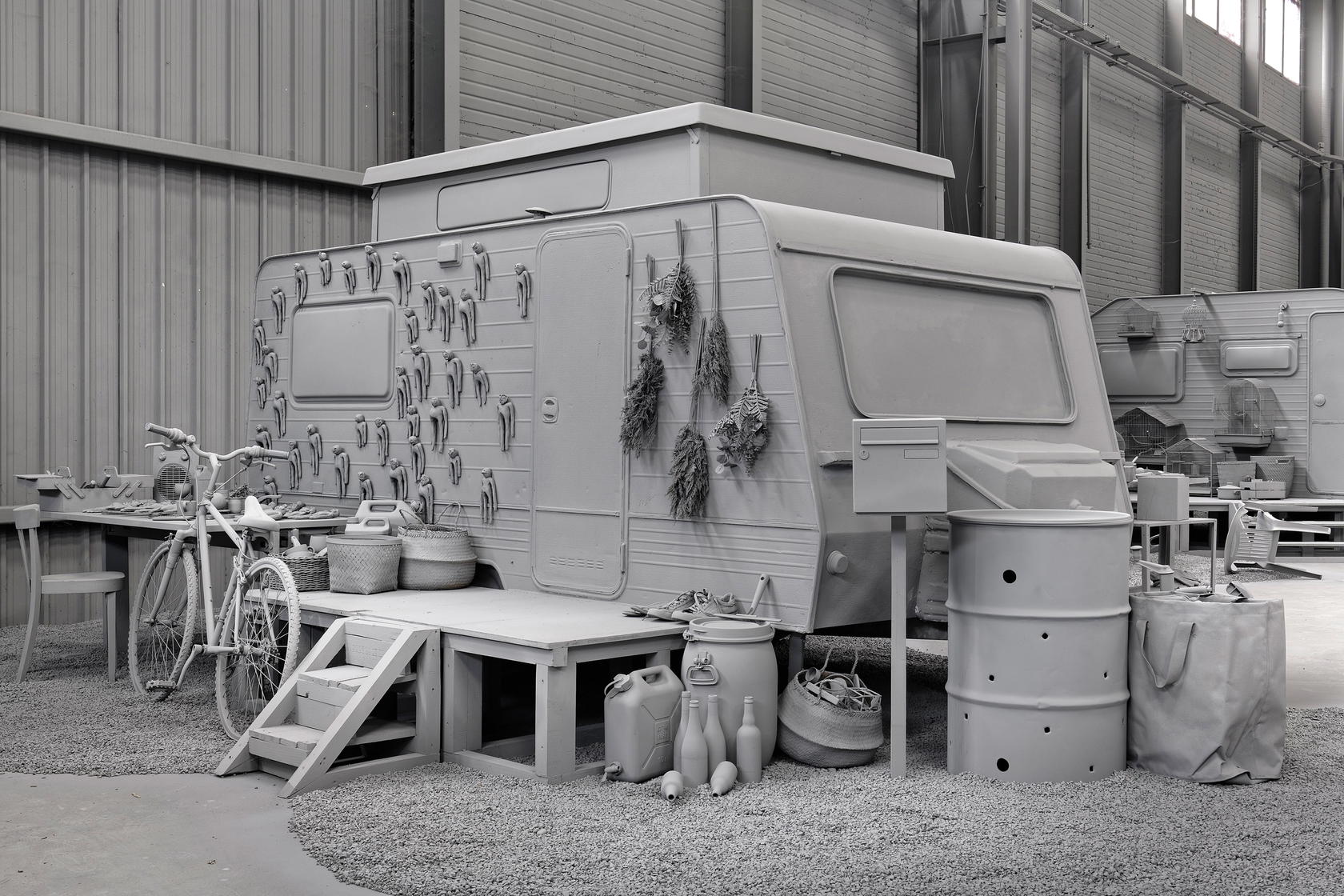
Although he invents every scene, he grounds them in situations viewers recognise. A motorway diner (‘Location (5)’), an abandoned trailer park (‘We Were the Last to Stay’), a skeleton-ridden merry-go-round (‘Danse Macabre’), or a fictional art collection (‘The Collector’s House’) all capture “nonevents”— quiet thresholds humming with narrative potential.
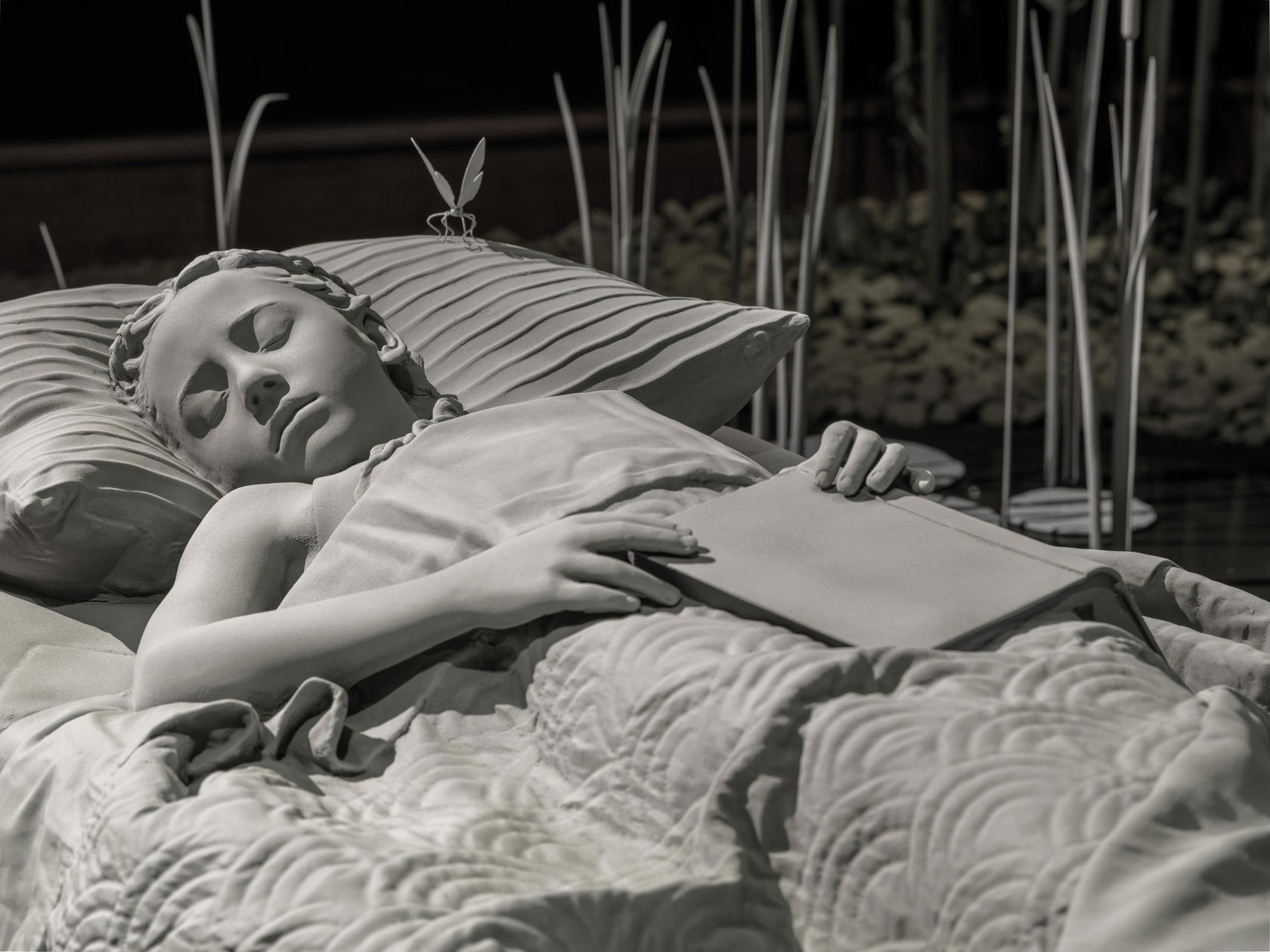
His theatre, opera, and dance resume—playwright, director, scenographer, composer, set and costume designer—feeds directly into these immersive pieces. “Think of the large installations as theatre without actors,” he says. “The spectator takes the lead.” In his play After the Party—a family drama featuring a scientist, twins, and a buried secret—he wrote, directed, and designed everything, embracing a gesamtkunstwerk ethos that influences his visual art.
Op de Beeck shuns didacticism and overt politics, yet he never withdraws from the world. “An artist’s role is clear: to deliver the best possible platform to unite us as human beings, offer possibilities to find a moment of solace and introspection, and bring beauty, healing, empathy and understanding.”
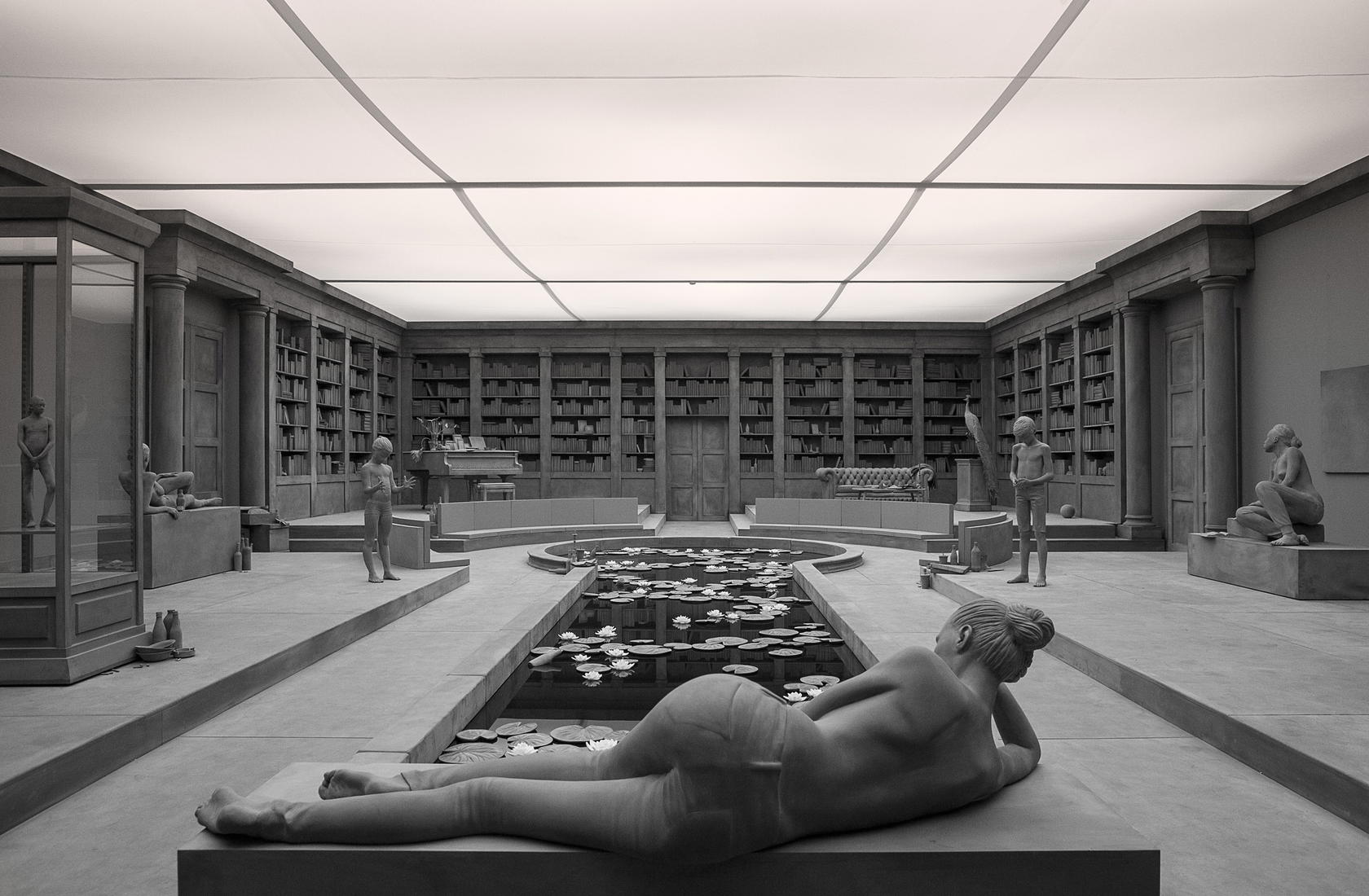
In an age of noise and conflict, his hushed, poetic creations remind us that ambiguity and slowness aren’t voids to fill but spaces to inhabit. To be “nothing” or “nobody” for a moment, he suggests, might be the most human act of all.