
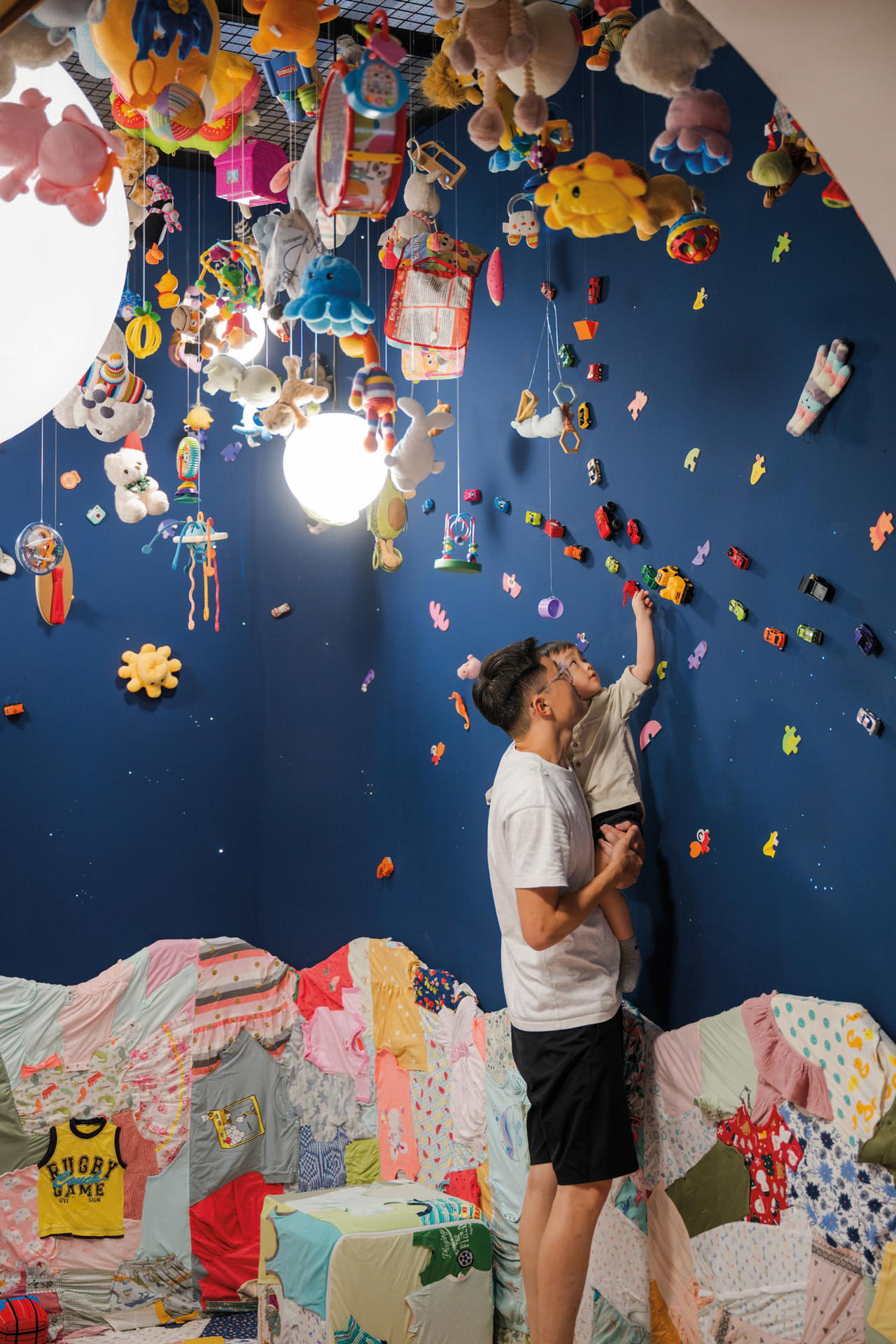
Are babies capable of appreciating art? Ong Zhen Min, Executive Director of Gallery Children’s Biennale at National Gallery Singapore, certainly thinks so.
“Inclusivity is at the heart of our mission, and we’ve always believed that meaningful engagement with art should begin as early as possible,” she says.
As one of the National Gallery Singapore’s signature events since 2017, it aims to inspire young and curious minds through art. This year’s edition, which takes place at various locations, features eight artworks highlighting baby-friendly experiences through tactile textures, gentle lighting, floor-level activities, and visual-auditory stimulation, runs until 29 March 2026.
Artists from Singapore—including Fern Wong, Wyn-Lyn Tan, and Vicente Delgado—join regional names such as YeSeung Lee (South Korea), Hiromi Tango (Japan), Souliya Phoumivong (Laos), and Co2_karbondioksida (Malaysia) in the exhibition.
Safe, developmentally appropriate elements have been incorporated to meet the needs of children of all ages—babies, toddlers, and neurodiverse children. An excellent example is Fantasy by Co2_karbondioksida, a whimsical mobile made from repurposed toys and donated children’s clothing.
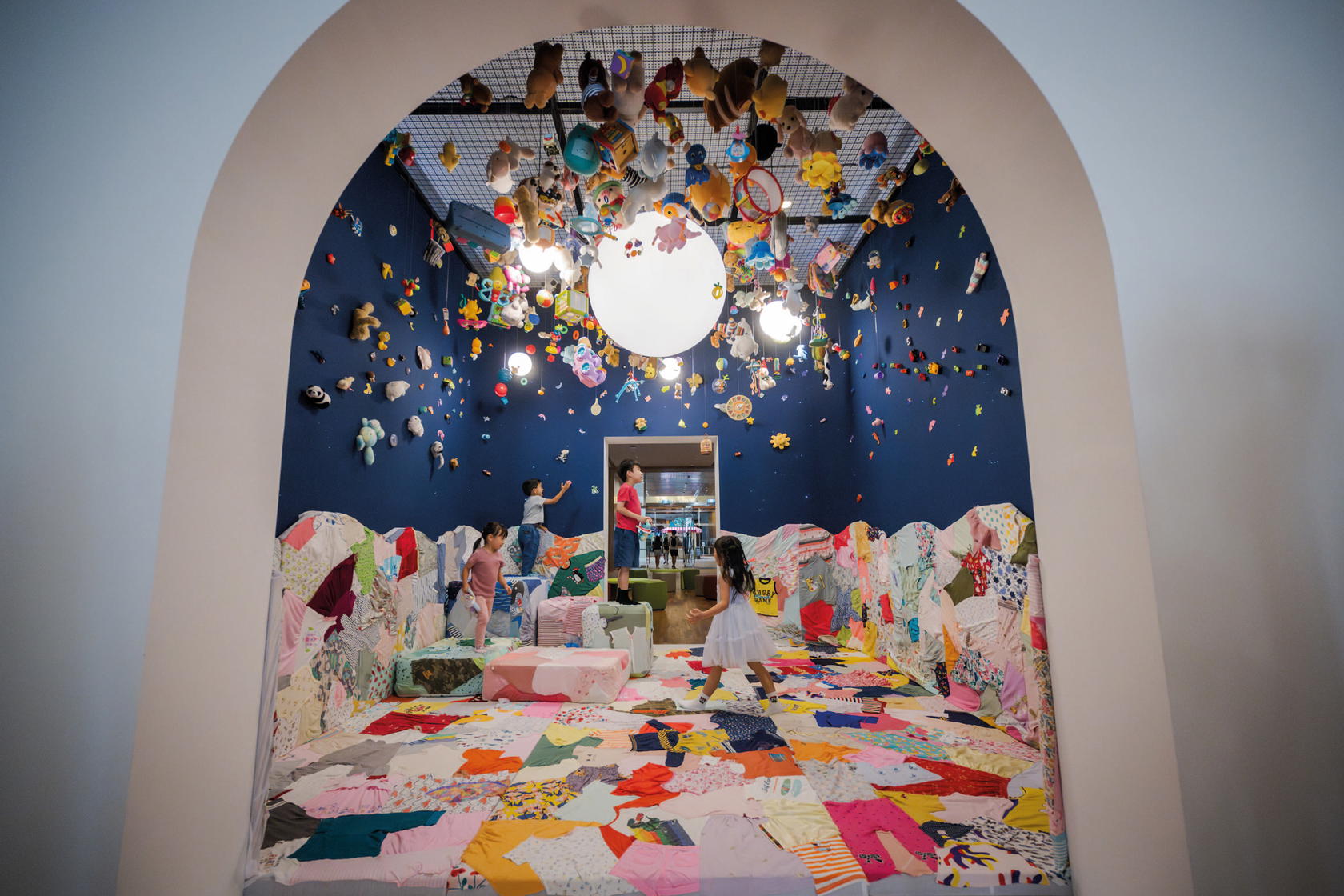
Little ones are free to explore and unwind in this calming space. For those who may feel overwhelmed in public environments, the exhibition’s Keppel Centre for Art Education location also features Calm Rooms and Calm Pods designed to offer additional support.
Titled “Tomorrow We’ll Be…”, Gallery Children’s Biennale 2025 aims to spark hope and imagination in young visitors. Coinciding with Singapore’s 60th birthday and National Gallery Singapore’s 10th anniversary, it also marks a moment for deeper conversations within families about creating a more inclusive and empathetic future.
This intergenerational spirit is encapsulated in ‘Home Is Where the Heart Is’, an installation inspired by Mohamed Salehuddin’s ‘Malay House, Malacca’ (circa 1960). Families are invited to step into familiar living spaces across time—a kampong house, an HDB flat, a shophouse—designed to prompt shared storytelling.
“As children visit these spaces, parents and grandparents can share stories about their childhood. These experiences deepen our appreciation of community, heritage, and the people who shape our stories,” shares Ong.