
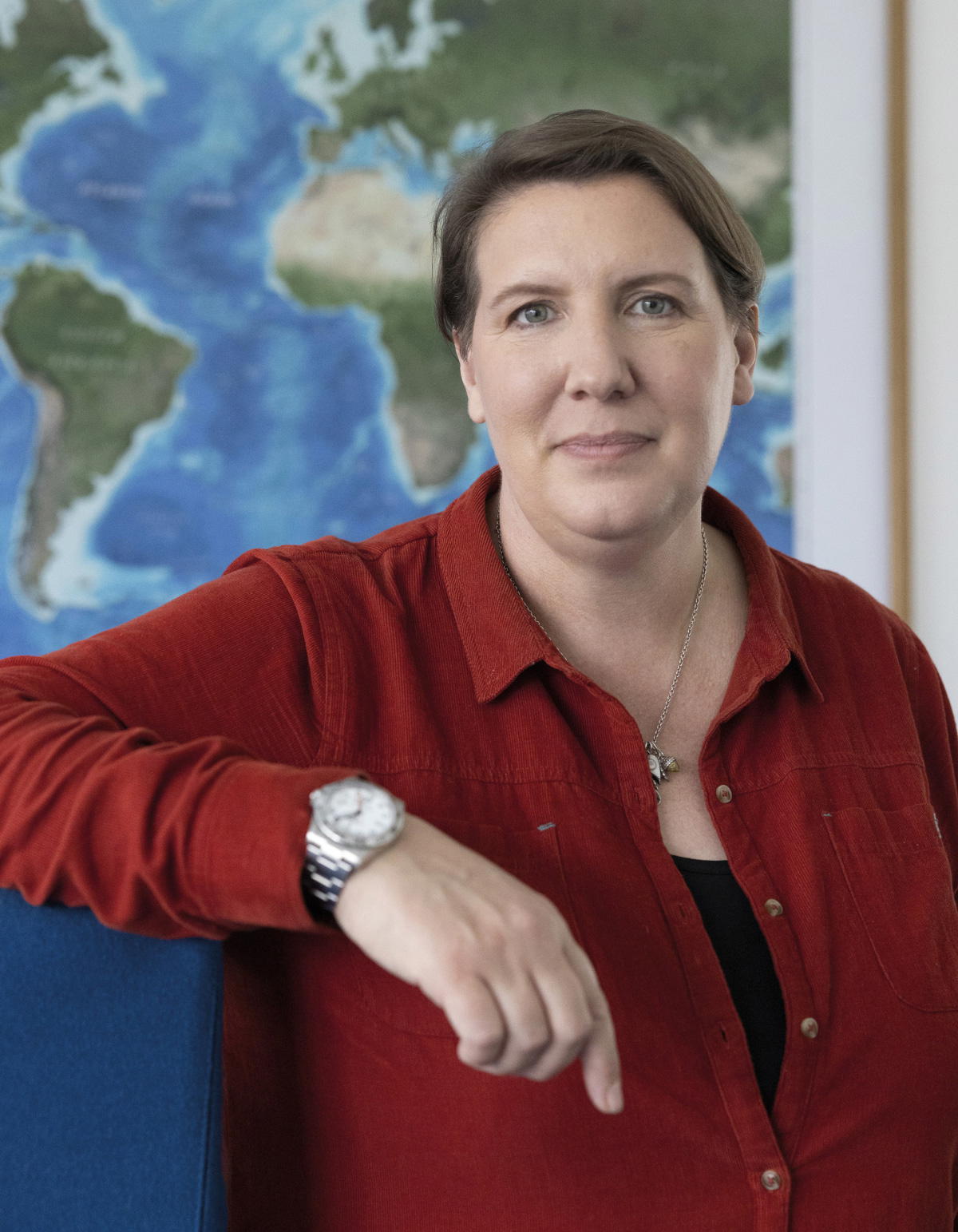
There are a couple of things Felicity Aston is known for, chief of which she is the first woman to cross Antarctica alone. The backbreaking traversal was completed on skis and earned her a place in the 2012 Guinness World Records.
Her other feats include leading an all-women team on an expedition across the Greenland ice sheet, walking across the ice of Lake Baikal (the world’s deepest and oldest lake), and leading an all-women EuroArabian expedition to the North Pole. For her pioneering work in polar exploration, she was made a Member of the Order of the British Empire.
The inspiration for her life’s work began when she was 19, when a job with the British Antarctic Survey placed her at a research station at the edge of Antarctica to record data about the region’s climate and ozone for two-and-a-half years. Awestruck by the grandeur of the glacial landscape, she made it her mission to protect our polar regions. Over the last few decades, she has conducted expeditions in countries like Greenland, Iceland and Canada. “All the cold places in the world,” she sums up.
In 2015, while on board a nuclear-powered icebreaker (a ship that navigates ice-covered waters by breaking away ice) off the North Siberian coast, Aston collected sea ice data as part of her work for a citizen science programme. It was later discovered that her findings were the only entry for the year from the central Arctic Basin, an area estimated to have lost 85 percent of the thickest multiyear sea ice by 2018.
This made her next objective immediately clear: she needed more data, and she needed it fast.
“You can collect some data from space, but there’s certain information you can only get from being on the ground, and it really struck me that we were running out of time to access this geography to collect information.”
Felicity Aston on the need to roll up her sleeves
Without it, she adds, computer models used to explain environmental changes in the Arctic and predict what lies ahead will provide an incomplete picture. So, she assembled a team of all-women citizen scientists to ski to the geographic North Pole for the project which became known as the B.I.G. (Before It’s Gone) Expedition.
Over four years, the women skied to Svalbard in Norway, Drangajökull, the northernmost glacier in Iceland, and Nunavut in Canada to collect surface snow and ice samples for analysis of the presence of microplastics, black carbon, and heavy metals. The objective was to determine why the Arctic is experiencing climate change three times faster than anywhere else in the world.
The urgency of their work was further accentuated when they experienced rain and temperatures above zero in Svalbard, and saw grass-filled valleys in northern Iceland when there should have been metres of snow.
Every helping hand counts and Aston is grateful that the Rolex Perpetual Planet Initiative not only brought attention to the project but also connected her with the community of Rolex Awards Laureates and Perpetual Planet Initiative partners.
For instance, it was through a Rolex partnership last year that she appeared on on a podcast hosted by Alex Honnold, a rock climbing legend and the first person to free solo—climb without ropes or other protective equipment—the full route of El Capitan in Yosemite National Park.
It is why she continues to seek out collaboration opportunities with the brand. “The Perpetual Planet Initiative with Rolex has championed people who are really pushing the envelope not only in understanding our planet, but how we make it better, how we provide these solutions.
“Being supported by the initiative is wonderful in terms of the credibility and community it brings.”