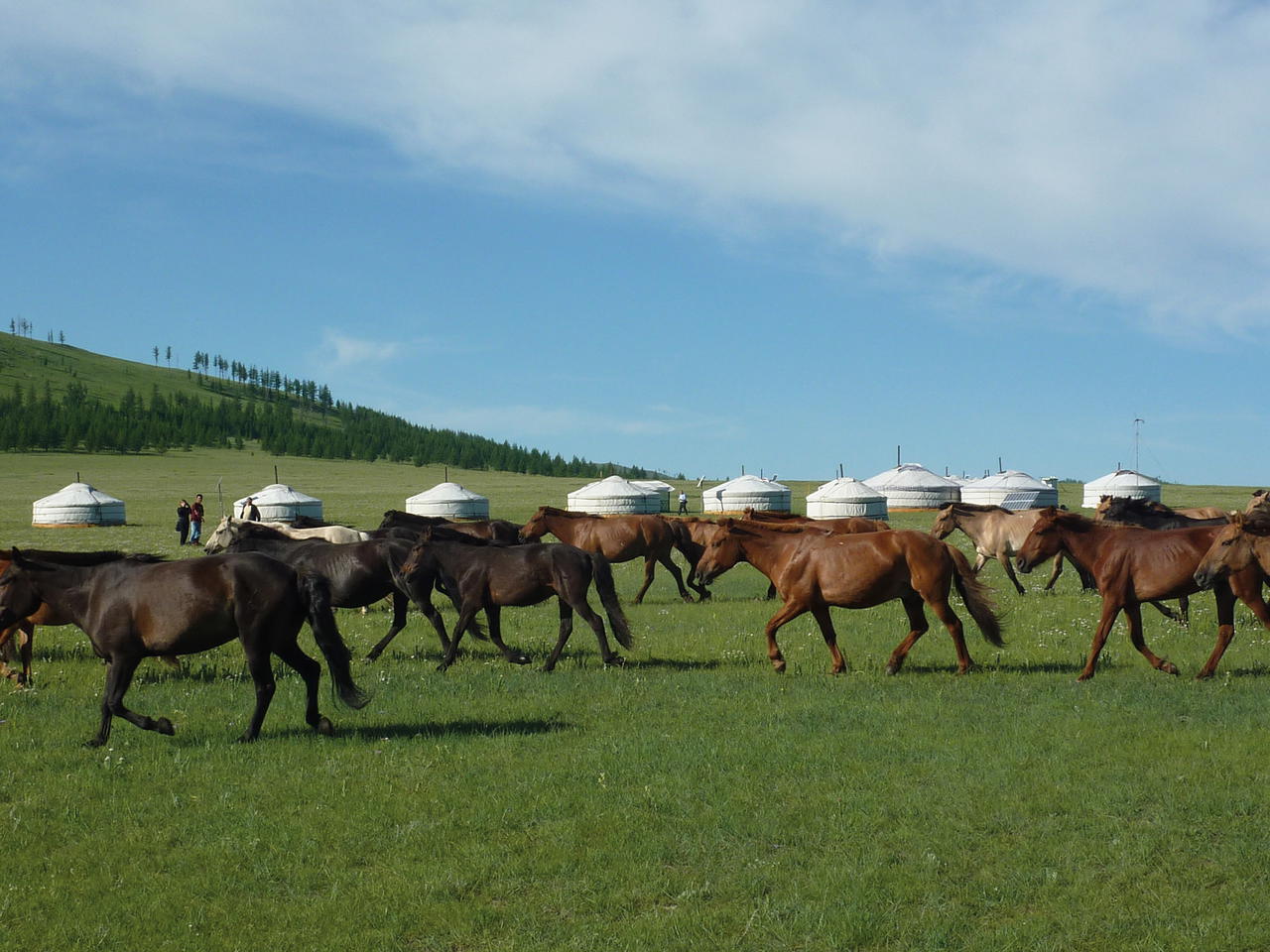
As my horse surges from a canter into a gallop, I slide into a two-point seat, freeing up its back and lengthening every stride. It speeds up, the wind whistling past my ears as the soft thunder of hooves drums a rhythm across the grass. The ground beneath us blurs into a sea of green as another endless valley unfurls before us, while dark clouds rumble overhead. I push through the storm with the herder assigned to me to Jalman Meadows Wilderness Camp.
We are riding along the remote edge of Gorkhi-Terelj National Park, three hours northeast of Ulaanbaatar, where Genghis Khan is believed to be buried beyond the meadows in the Khan Khentii Strictly Protected Area. There is no shelter on these open steppes, and the nearest winter camp—a weathered hut with livestock corrals—is 8km behind us. Even at full gallop, we won’t reach safety before the storm casts its shadow over us.
I’ve been in the saddle five hours, with two more ahead before we reach the camp. As we continue on our journey, the weather clears and we settle into a more relaxed pace for the ride to Jalman Meadows.
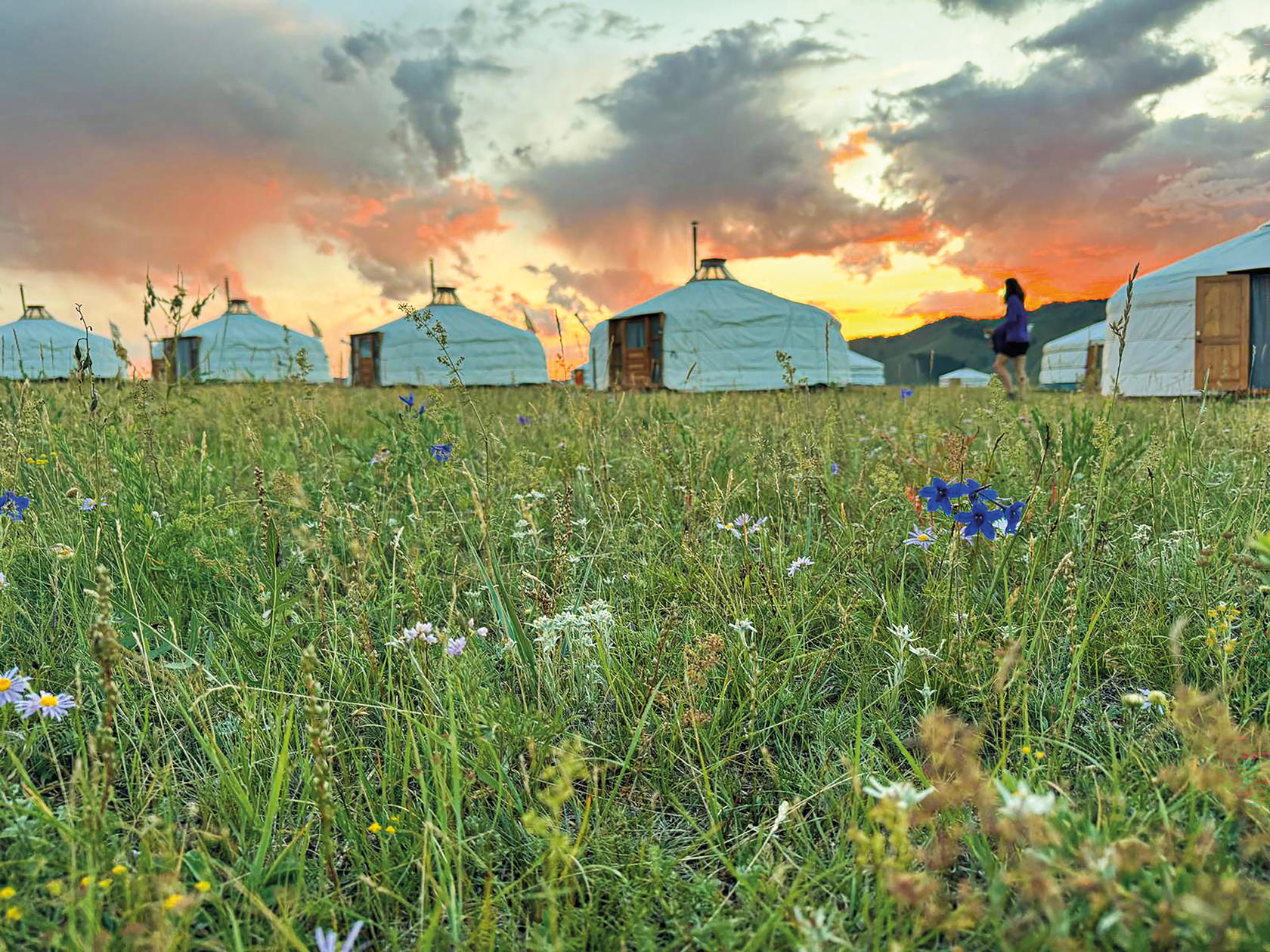
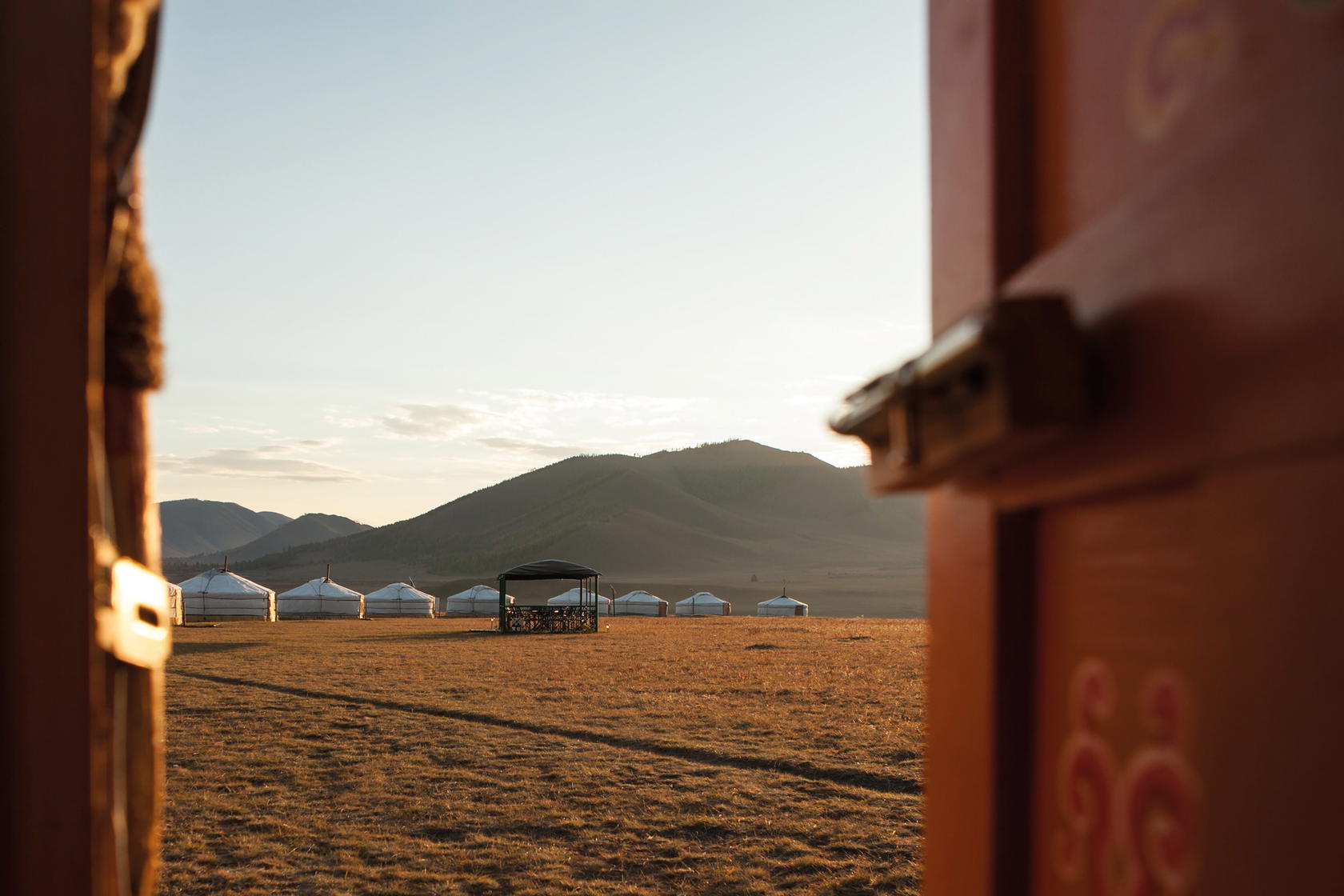
Not every guest here rides for seven hours. Some ride for half a day, some an hour and some not at all. Owned by Nomadic Journeys, a pioneer of low-impact tourism, the seasonal camp sits in the Upper Tuul River Valley.
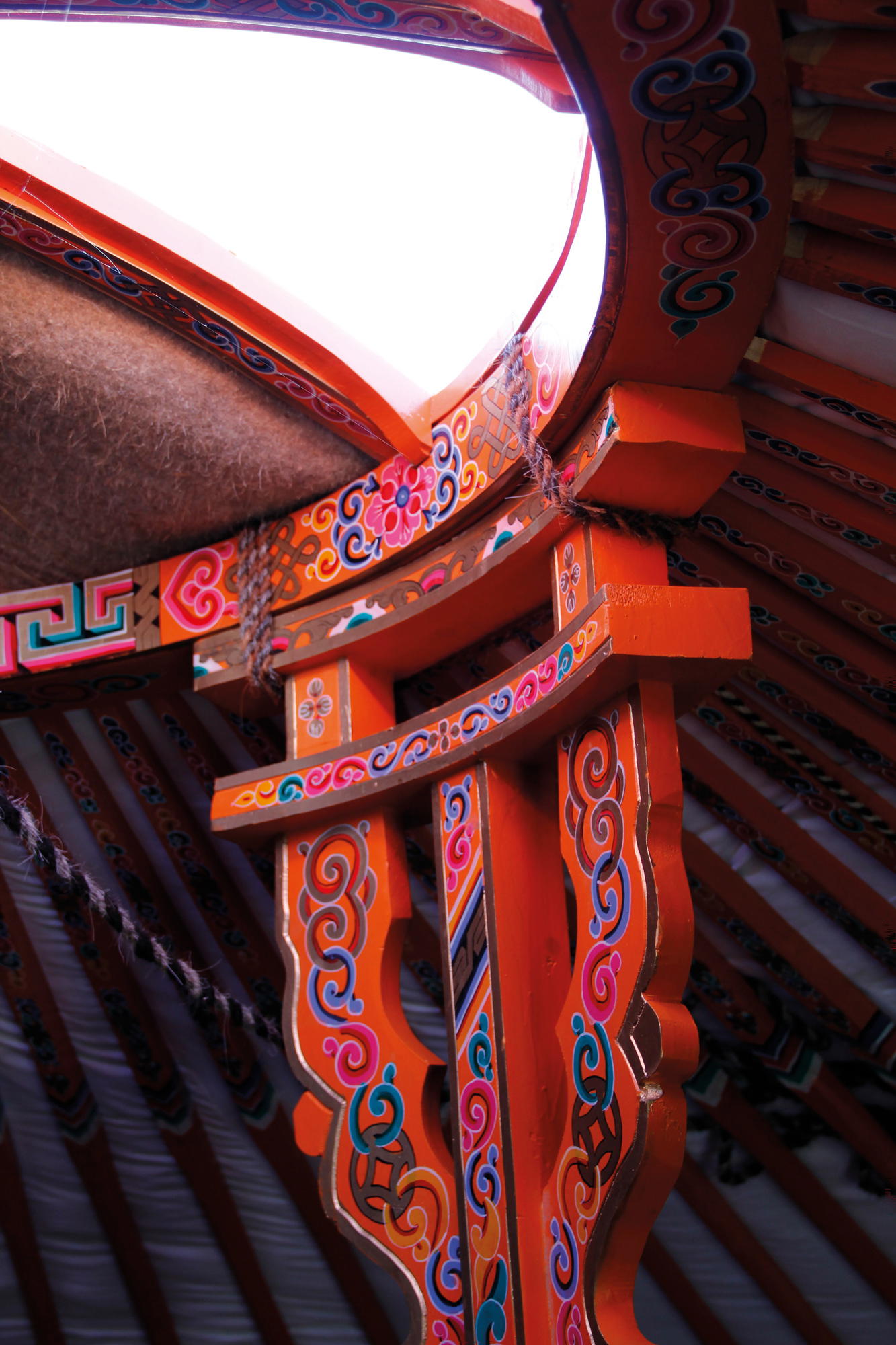
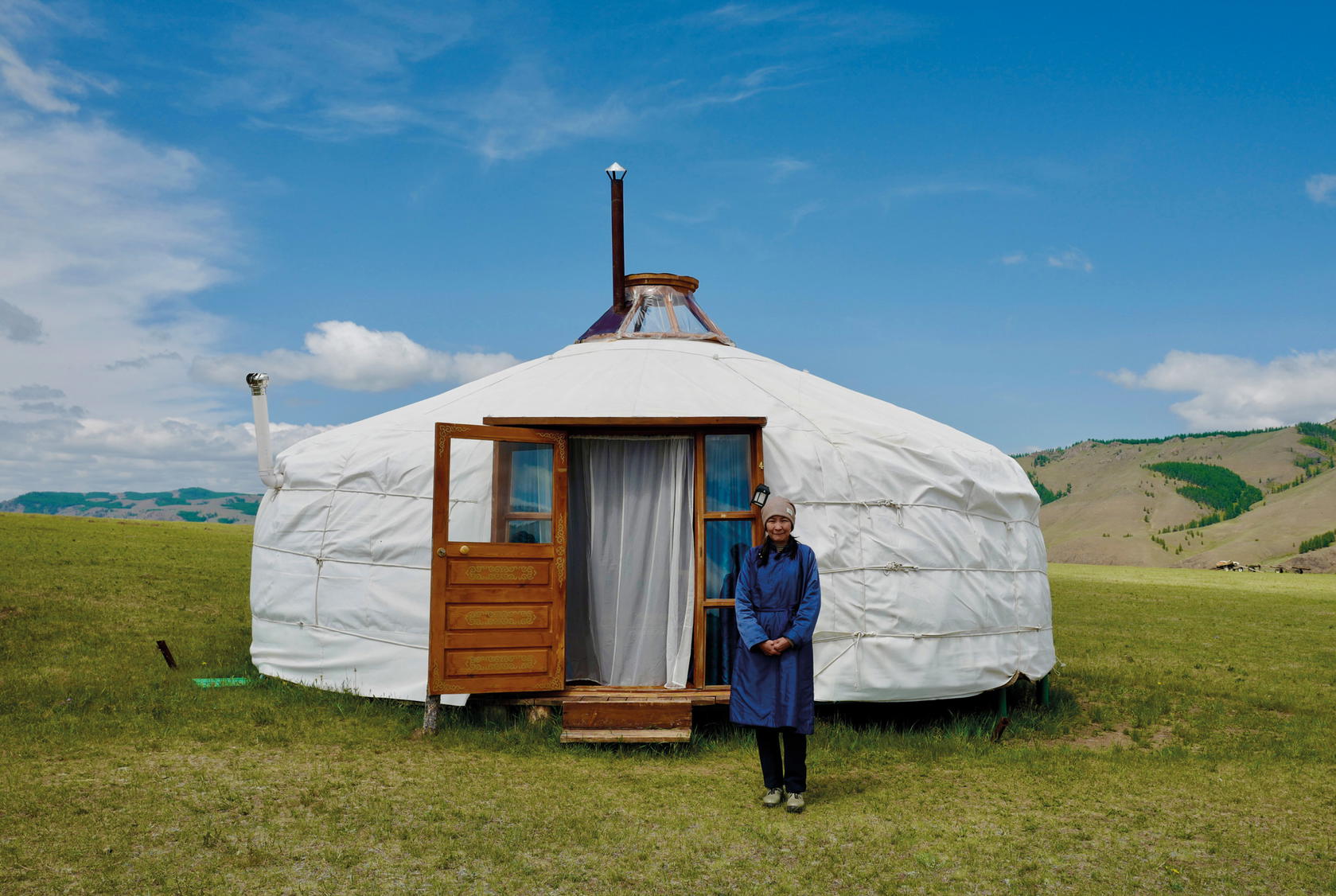
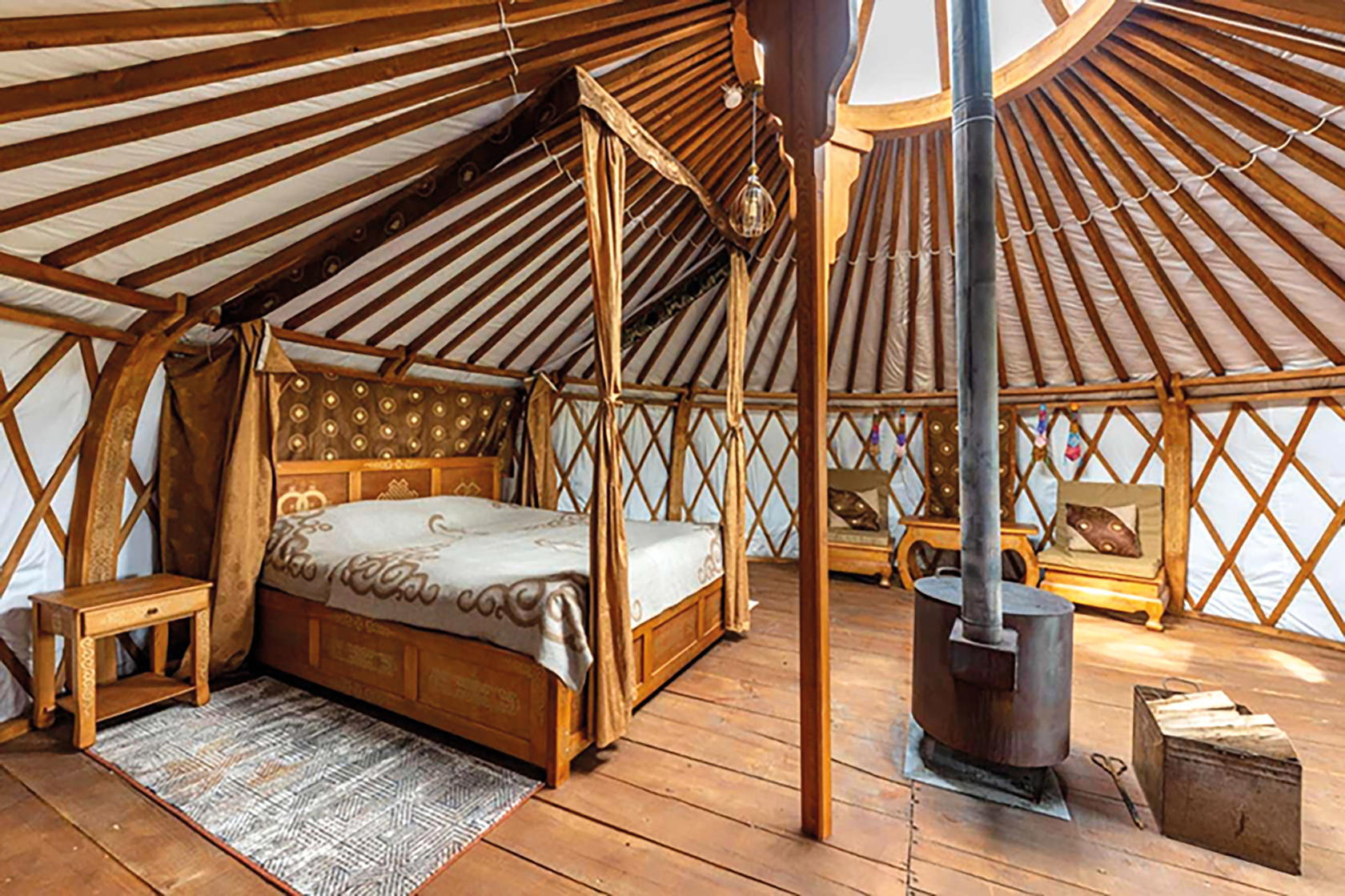
Its 14 gers—the circular dwellings that have sheltered Mongolian nomads for centuries—are furnished with hand-painted furniture, local artwork and cashmere blankets. Some have en-suite toilets, saving guests from the midnight walk to an outhouse. On the steppes, running water is not available, but here, a few gers are set aside for showers, with hand-powered shower heads and freshly boiled water—a luxury by ger-camp standards.
When I arrived the day before, the camp appeared almost deserted. Most guests were out riding, hiking, swimming in the Tuul River, reading, or unwinding with a massage. Today, children’s chatter and laughter drift over as I breathe in the epic landscape.
One of the staff members earlier led a yak pulling a wooden luggage cart with a colleague’s ruddy-cheeked kids perched on top. Then, as if in need of a rest, a Mongolian Bankhar, a landrace livestock-guarding dog, slowly pads over and flops at my feet for a belly rub.
That wooden cart hints at how the camp runs: yaks haul luggage, river rafts, and water from the river instead of motorised buggies. Solar panels supply most of the electricity, and staff mostly come from nearby communities. Local herders have also led the horseback excursions, since 1993, giving every ride a true Mongolian heartbeat.
This is my sixth trip to Mongolia, but my first to Jalman Meadows. On earlier visits, I would embark on a 10-day riding camp off the grid. Those journeys remain among my favourites, but they’re not always possible with my work. This place offers a fresh path: it captures exactly what drew me to Mongolia while making it accessible to those who can only spare a few days.
It also has Starlink, the satellite internet constellation which the Mongolian camp manager, Enkhetsegtseg Chuluunbaatar—often called Mrs Enkhtsegtseg by staff and guests—turns on for a few hours a day. It blends rugged wilderness with a dash of modern connectivity.
As The World Changes
There are few places that seize the imagination like Mongolia. The lure of riding towards an uninterrupted horizon, a land where fences are scarce across vast swathes of terrain, speaks to something primal. For urbanites surrounded by expressways, buildings, deadlines and screens, Mongolia offers a rare gift: space. Space to ride for hours without crossing another soul. Space to hear nothing but the wind and the distant bleating of sheep. Space to glimpse a life we’ve only imagined –where everything moves to the rhythm of horses and shifting light, not calendars and notifications.
Yet that world is changing. About 51 percent of Mongolia’s 3.6 million people now live in Ulaanbaatar, and the share who herd for a living has dropped from 57.7 percent in 1995 to 24.5 percent. Climate change, overgrazing and worsening dzud—brutal winters that bury pasture and livestock under snow and ice—have pushed families off the steppes. Those who stay get by with motorcycles, smartphones and satellite internet. If Mongolia has been on your list, don’t delay.
Ride Like A Nomad
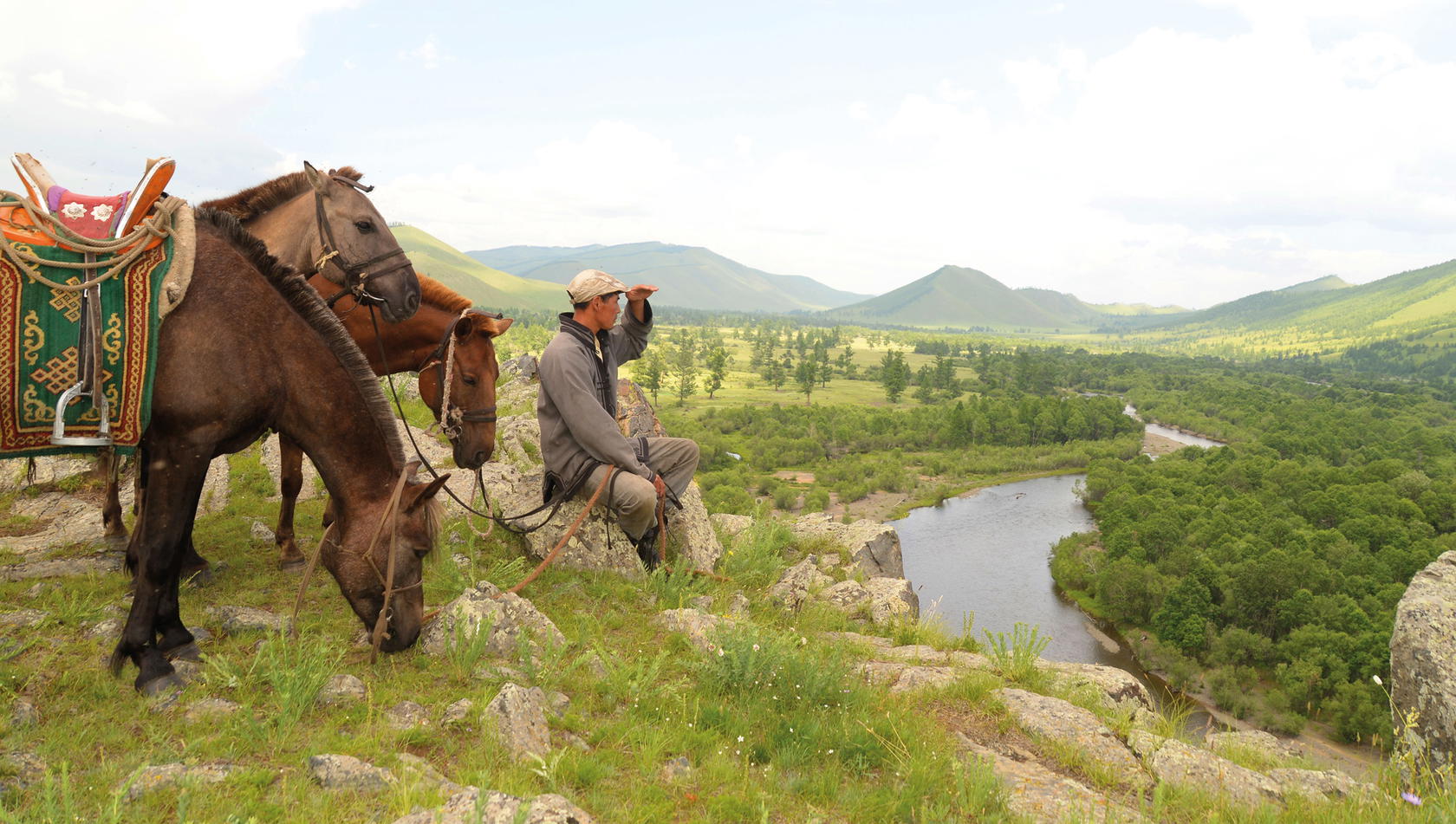
The following morning, I go riding with Ganbold, a 61-year-old nomad who lives nearby. We share no common language, but we don’t need one. Within 15 minutes, he’s watched me trot, canter and change gaits. Satisfied that I can handle myself, he breaks into a canter. Soon, we are galloping whenever the terrain allows.
The landscape opens around us. Valleys give way to sweeping grasslands where flocks of sheep graze, their bleating bouncing off the glade—a pleasure to an animal lover’s ears. We cross streams, pass old winter camps, and the occasional homestead, where guard dogs charge out barking and snapping at the horses’ heels. Ganbold barely flinches, and neither do the horses. They’ve done this before.
After a packed lunch of tsuivan, a Mongolian dish of stir-fried noodles with beef and khuushuur (deep-fried meat-filled pastries), the weather turns. We gallop back, arriving tired, but happy and dry. Ganbold gives me a thumbs up. From a Mongolian herder, I’ll take that as high praise.
Life On The Steppes
One afternoon, I hike to Jagaa’s ger. He has led Nomadic Journeys’ multi-day expeditions for over a decade, while his family cares for the camp’s horses and livestock. His eldest daughter works in the camp restaurant.
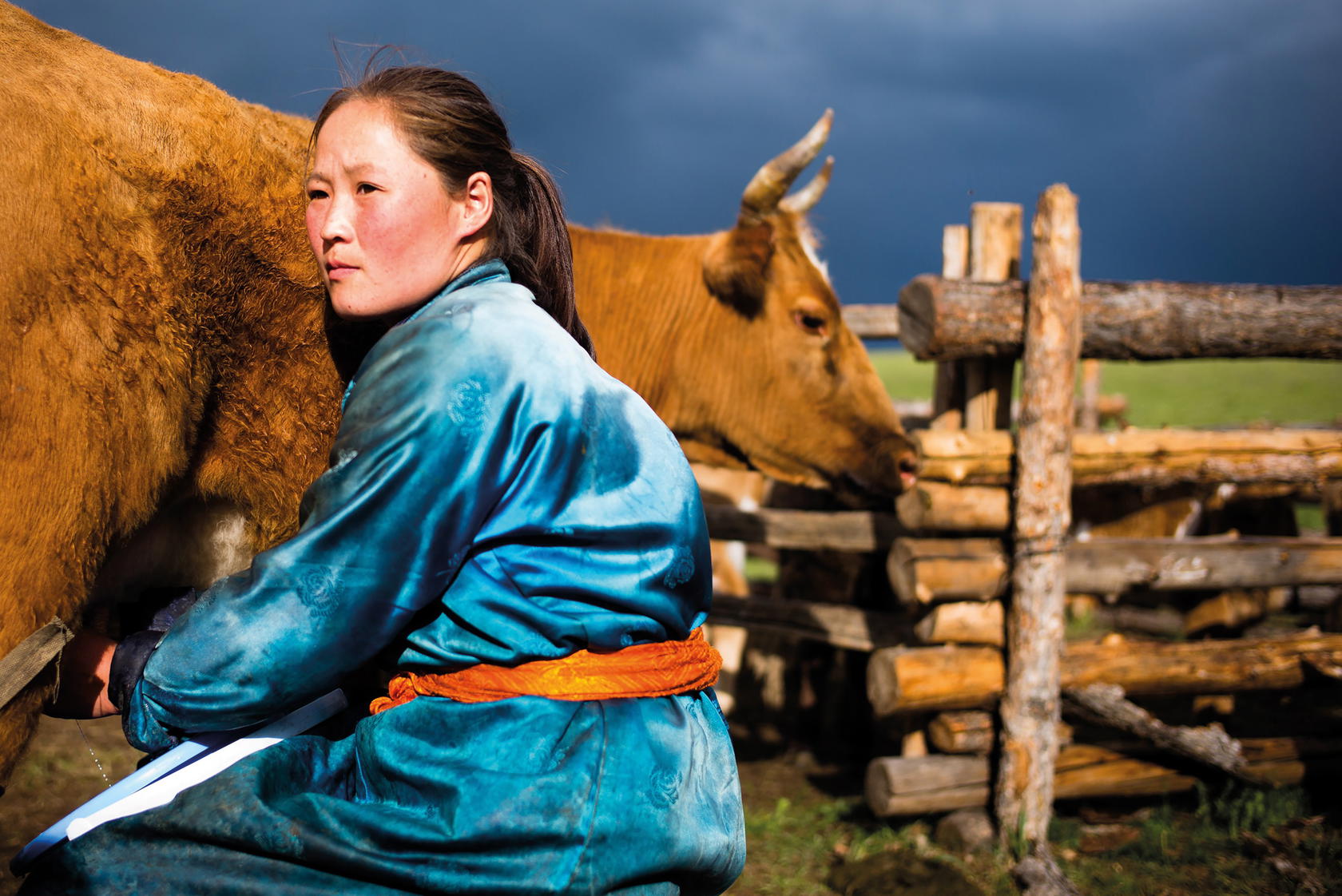
Jagaa’s wife welcomes us with Mongolian salty milk tea. She breastfeeds their four-month-old as she chats with us. They have six children, the eldest 18. Later, one of the daughters milks the cows, another task in a day that starts at 5am. It’s a long day, but Jagaa’s wife says that nobody goes to bed before 11pm anymore—not since they got Starlink.
They once had seven children. Mrs Enkhtsegtseg tells me their eldest son died two years ago after riding out alone; his horse came home without him. Out here, where there is no phone signal and no nomad wears a riding helmet, the freedom of the steppes comes with risks difficult for city dwellers to imagine.
Snow in June
Back at camp, the mood is livelier than when I arrived. A group has just returned after eight days on horseback across the Terelj steppes, led by Jagaa himself. Tired and sunburnt, they look radiant, and are talkative. Over dinner, we swap notes on swollen rivers and surprise thunderstorms. Some are already planning their return trip.
Meals here are simple and filling rather than gourmet, with Central European and Russian influences: potato salad and chicken schnitzel alongside Mongolian buuz (dumplings filled with minced beef). One evening, we are treated to khorkhog, a whole sheep’s torso stuffed with hot stones and slow-cooked from the inside out. Breakfast is my favourite meal: fresh yogurt and urum, the clotted cream from Jagaa’s cows, with homemade jam, bread and eggs.
The following afternoon, I join the others for a short ride. Wildflowers dot the steppes with yellow, purple, and white. With every step, our horses crush wild herbs underfoot, releasing their scent into the wind.
We laugh a lot as we take videos of each other, which I couldn’t ask Ganbold to do before. After the ride, some of us alternate between using the sauna ger by the river and taking a dip for some contrast therapy. Others read in the library ger or take a snooze.
On my last night, the temperature drops sharply. Staff gather around a bonfire outside the dining ger, singing folk songs as flames crackle into the night air. Guests join in, contributing a song each.
When I retire to bed, I hear rain pelting my ger. By morning, I wake to an altogether different world: everything beyond my ger is white!
The snowfall continues as our bus winds back towards Ulaanbaatar, past snow-covered coniferous forests. Someone starts singing Let It Snow. Another joins in. Soon the bus is filled with laughter.
It is a fitting end to four days and three nights: riding beneath warm sunshine, racing a thunderstorm across the steppes, making new friends, and waking up to snow in the middle of June.