Emerge @ Find has served as a showcase for emerging designers across South-east Asia since its debut two years ago.
Presented by DesignSingapore Council and curated by Suzy Annetta, Founder of Design Anthology, the 2024 edition in September featured over 60 designers from Indonesia, Malaysia, the Philippines, Singapore, Thailand, and Vietnam.
Additionally, it casts the spotlight on new design graduates. Another first was a partnership with online gallery The Artling, which offered more than 100 artworks.
In an era of consumer excess and environmental crises, its theme, These Precious Things, looked at how designers attributed value to objects. Keep the following on your radar.
1. Emeline Ong, Singapore



Having graduated in 2023 with a Bachelor of Arts in industrial design from National University of Singapore, Emeline Ong’s Pastille Collection transformed her brother’s discarded school notes into something new and permanent.
Her trio of dreamy, marshmallow-like monolithic tables in gentle forms and candy-coloured hues contrasted with a brutal finish, combining softness with rawness, thus creating an appreciation of the lasting value and potential of overlooked materials.
In addition to bearing her handprint and traces of construction, the collection highlighted an unusual casting process. Fashioned from a composite paper pulp mixture Ong created with a kitchen blender and painstakingly compressed into custom moulds, the tables revealed multiple layers and visible seams created by excess material during the demoulding process.
Although it was her first project, the Pastille Collection, inspired by her love for sugary delights and the joy of creation, made it to the Dezeen Awards 2024 longlist, proving her playful and deeply curious vision is already attracting international attention.
2. Alvin Tjitrowirjo, INDONESIA

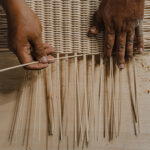


Indonesian designer Alvin Tjitrowirjo, whose furniture brand alvinT was founded in Jakarta in 2006, was among the returning exhibitors.
Handmade by skilled local artisans, his creations were a mélange of cultural preservation, traditional craftsmanship, sustainability, and contemporary design, which audiences may have spotted at Milan Design Week, Stockholm Furniture Fair, Maison&Objet in Paris, Designart Tokyo or New York Design Week.
Reinterpreting conventional materials like rattan into modern shapes, Tjitrowirjo’s Jiwa tribute shelf, resembling an altar, had a spiritual dimension that fostered emotional connections in contrast to mass-produced commodities stripped of their sacredness.
Believing that crafts and objects link us to our ancestors, history, communities, and humanity and express our gratitude for life and nature, Tjitrowirjo respects tradition without being bound to it.
For this contemporary spiritual piece, underappreciated, environmentally friendly, and abundant rattan served as the primary material associated with a solid teak structure. Using rattan sourced from farmers in Katingan, Central Kalimantan, he views the material as a possible answer to the climate crisis.
3. Thinkk Studio, THAILAND
Established in 2008 by Thai designers Ploypan Theerachai and Decha Archjananun, Bangkok-based Thinkk Studio is a research-driven practice that has grown into a 10-strong team.
After receiving a master’s degree in design from Konstfack University of Arts, Crafts and Design in Stockholm, Theerachai’s Const lamp was selected for exhibition at Rosanna Orlandi Gallery in Milan in 2012.
In contrast, Archjananun studied luxury and craftsmanship at the École Cantonale d’Art de Lausanne (ECAL) under renowned designers such as Edward Barber, Jay Osgerby, and Pierre Charpin.
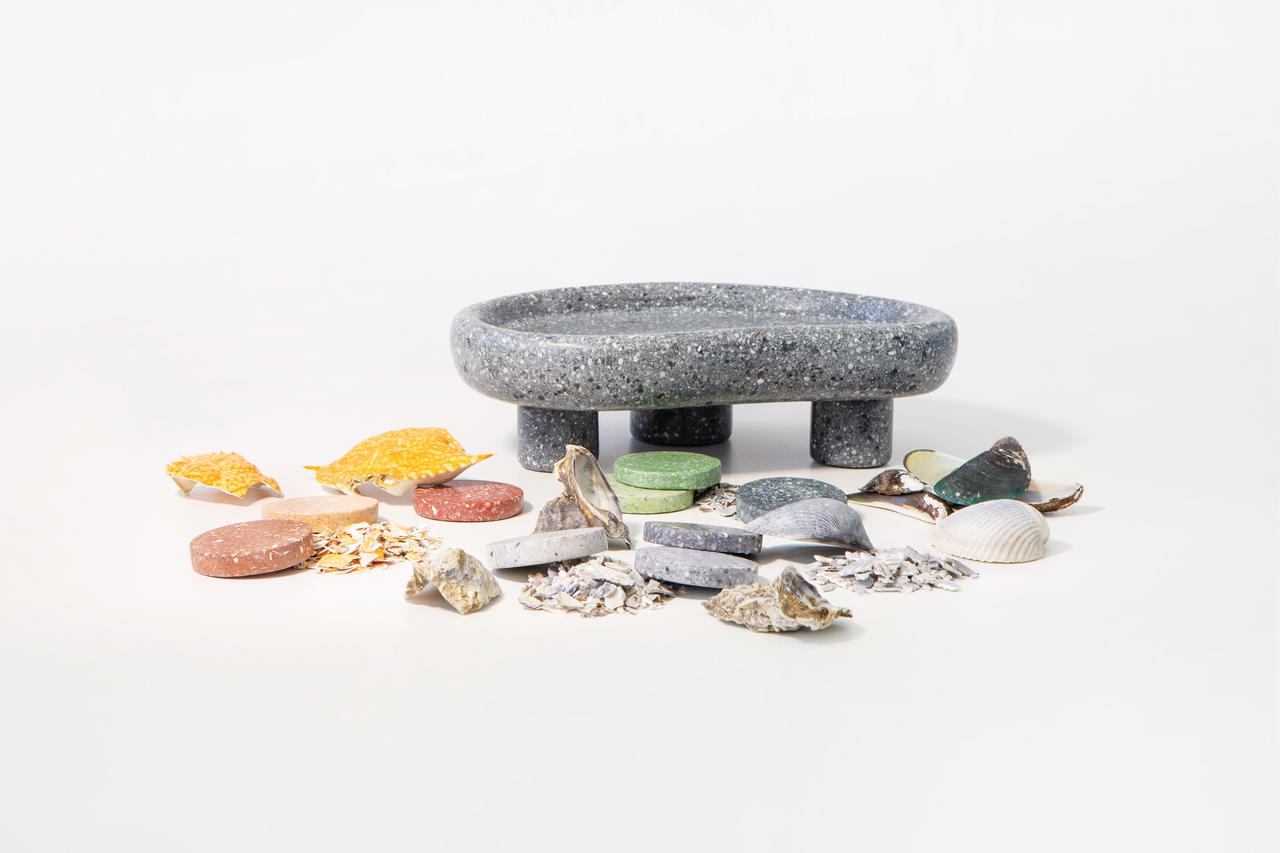
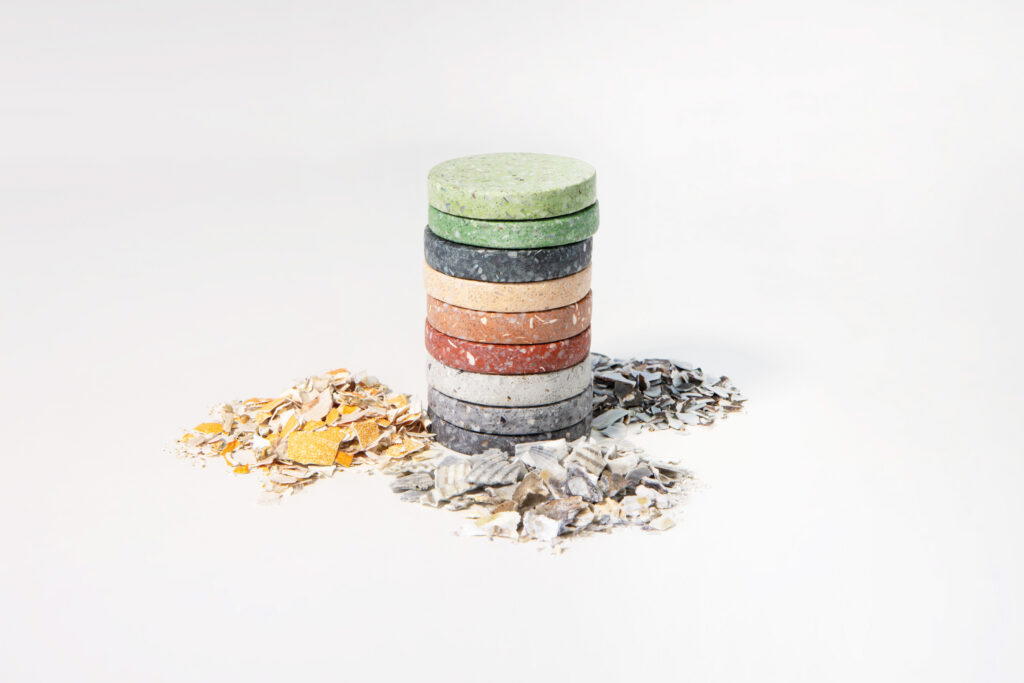
During Emerge @ Find, Thinkk presented its SeaMix Collection, which repurposed waste from fishing and seafood into oyster, mussel, and crab stones that echoed terrazzo. By creatively reimagining materials, the collection emphasised environmental sustainability, adding value to what was once trash.
4. Hana Surya, INDONESIA
Having learnt to sew from her seamstress mother as a child in Surabaya, Indonesia, Hana Surya has always found threadwork therapeutic. Her discovery of destructive fast-fashion culture led her to launch Jakarta-based Threadapeutic in 2015.
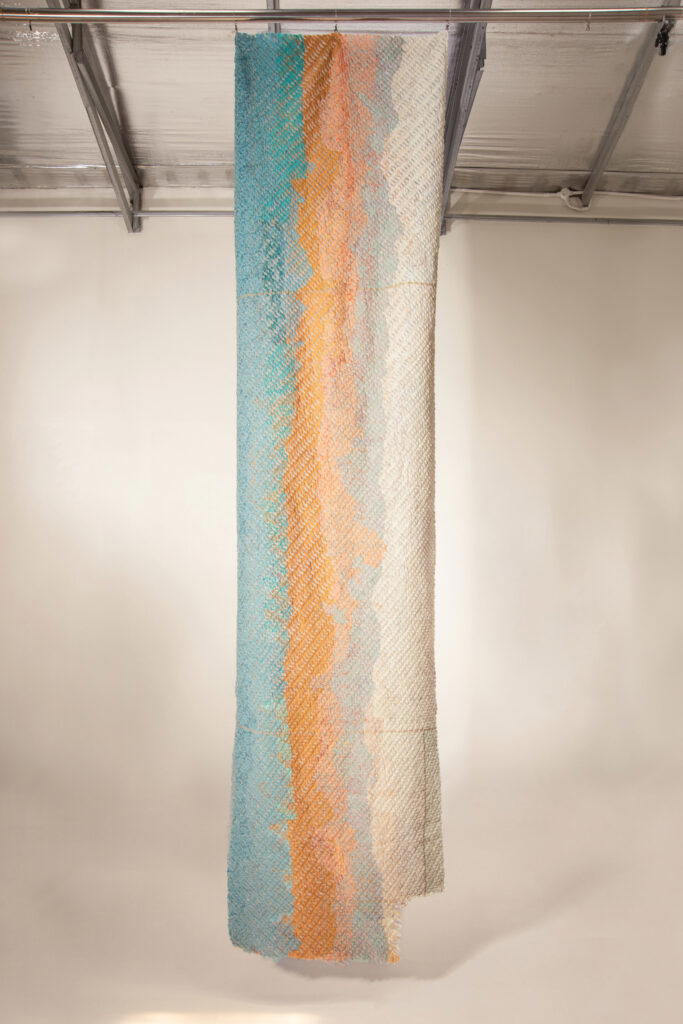
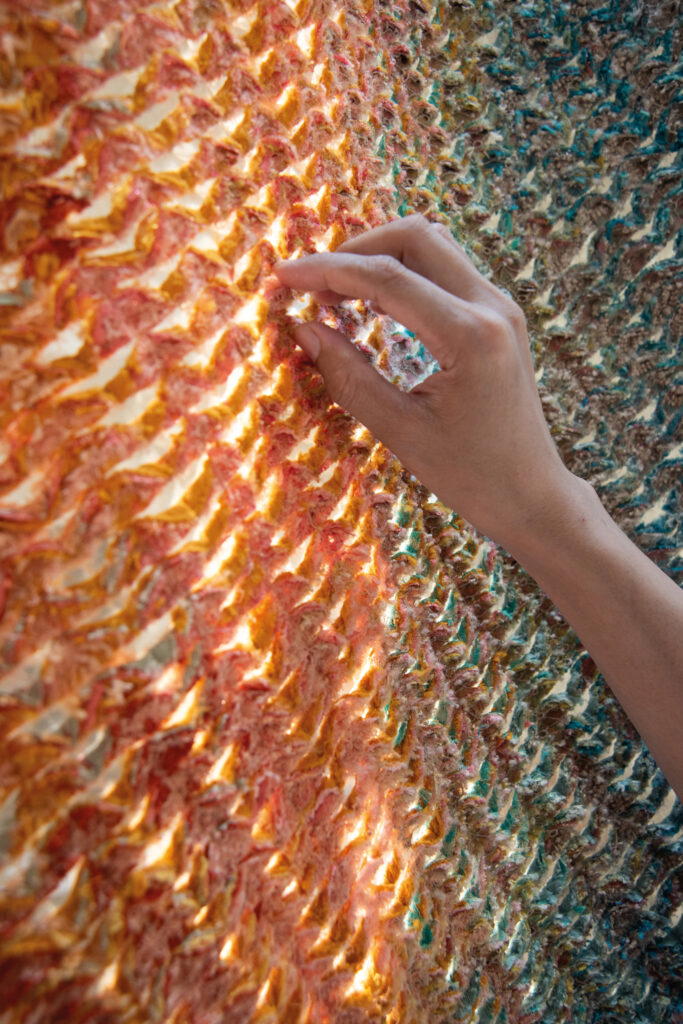
Her eco-conscious textile art studio experiments with fabric offcuts and deadstock from local fashion designers and upcycling partners, including batik boutiques, garment factories, and a hospital. To produce rich textures and colour play, Threadapeutic’s six textile artisans use faux chenille, a fundamental fabric manipulation technique, to turn post-industrial waste into one-off tapestries and architectural panels.
Exhibited in Paris, Tokyo and Bali, each piece takes approximately three months to produce. Presented at Emerge @ Find, the Gather and Shore wall hangings were collages of lace, brocade, and tulle offcuts from bridal ateliers in Jakarta, materials the studio earlier had difficulty working with.
Every cent Threadapeutic makes goes towards paying its artisans living wages, training other local craftspeople, and encouraging fellow makers to explore the potential of waste materials.
5. Karyn Lim, SINGAPORE
Singaporean industrial designer Karyn Lim reinvents product typologies and materials by combining craft and technology.
Having been mentored by French designer and artist Erwan Bouroullec and Rotterdam-based designer Sabine Marcelis, she has designed for labels such as Marsotto, La Prairie, Samsung, and Zanotta.
Aside from creating, she manages communications at furniture brand IndustryPlus and teaches design at the School of Art, Design and Media at NTU Singapore.
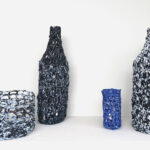
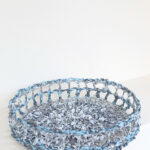
During Emerge @ Find, she showcased So Plast!c Vessels – Polymailers Edition, a sculptural tableware collection handwoven from used polymailers. It questioned the excessive use of plastic packaging in e-commerce and changed the perception
of disposables by converting them into precious objects.
Once collected and cleaned, Lim transformed single-use plastics into balls of “plarn” (plastic yarn), then crocheted them into see-through, net-like vessels of varying sizes and colours. A mixture of uniqueness and irregularity, some bits had barcodes or printing marks, symbolising the tension between transience and permanence.