Singapore Design Week returns in big ways this year after a two-year, Covid-impacted break. The two-week-long festival brings together a range of activities as well as gathering the talents of hundreds artists across multiple disciplines, ensuring that there’s something for just about everyone to discover and appreciate.
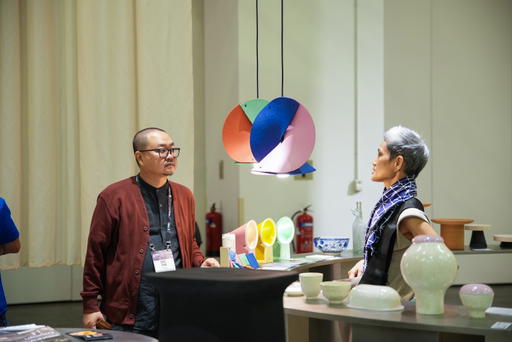
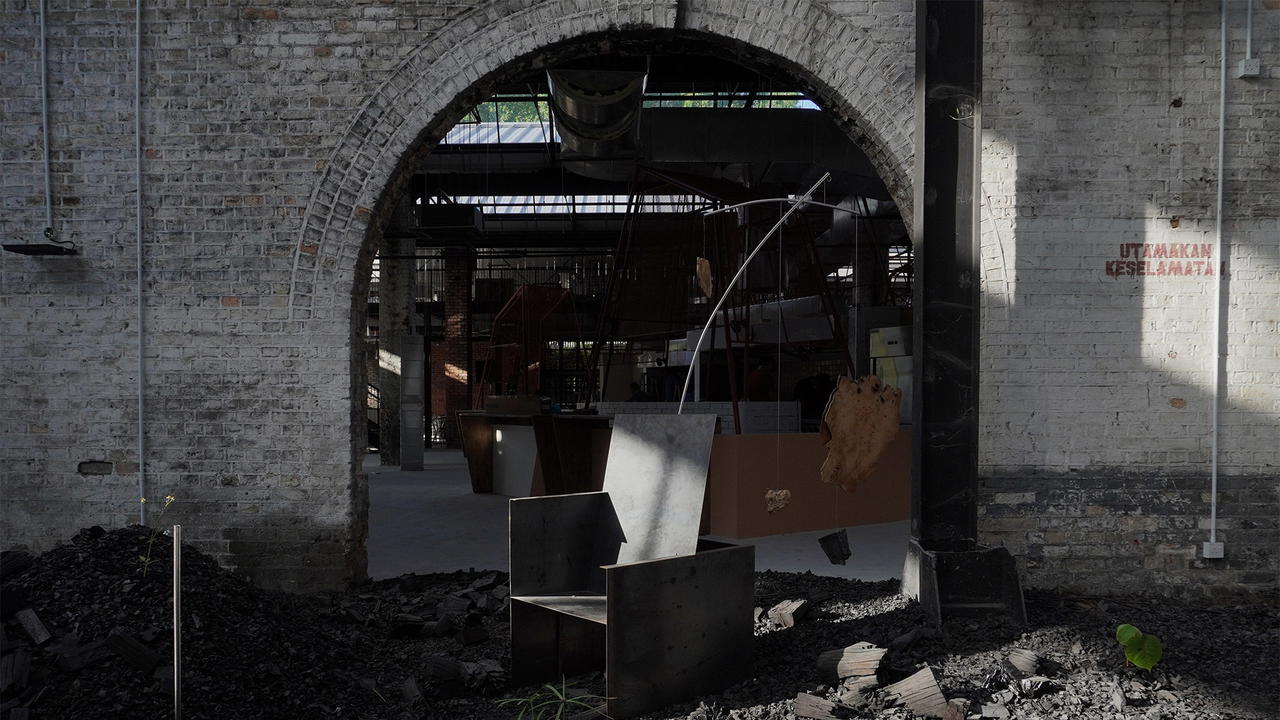
One first-of-its-kind showcase is EMERGE @ FIND. Part of the inaugural FIND — Design Fair Asia that will be held from 22 to 24 September, EMERGE @ FIND will see the best of both emerging and established designers from Southeast Asia. More than 50 designers from Indonesia, Malaysia, Philippines, Thailand, Vietnam and of course, Singapore, have been selected to show their works based on the theme of materiality.
The range of talent and disciplines (everything from pottery to furniture to spatial design) is pretty impressive, and for some of these designers, EMERGE @ FIND would make their first debut outside of their own countries.
We speak to a representative from each country — chosen for their unique perspectives and creative spirit — to find out more about what design means to them, and what we can expect from them.
Eva Natasa (Indonesia)
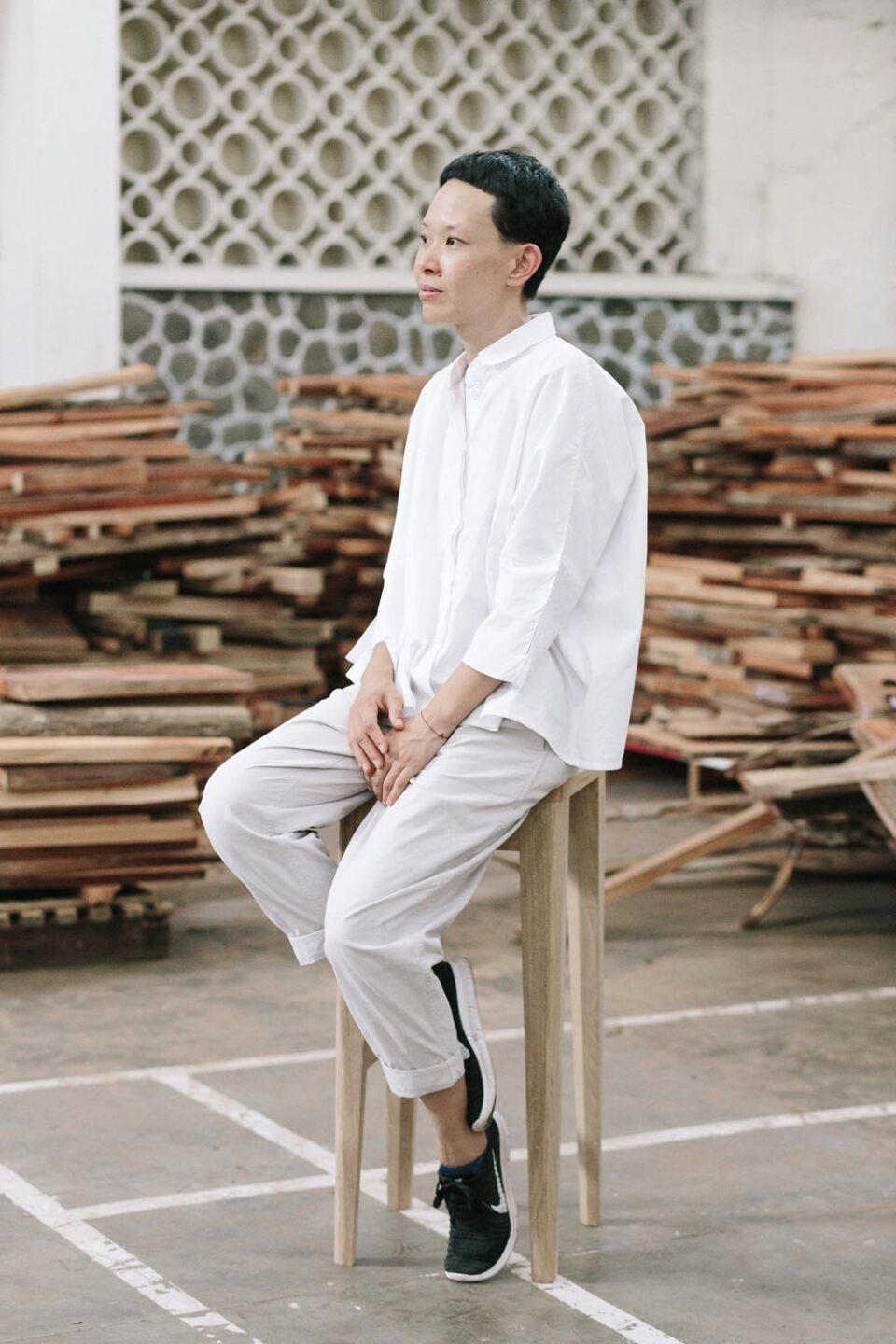
Your designs are almost exclusively crafted in wood. What drew you to the material?
In the beginning, it was love at first sight. I had just returned to Indonesia after years of living in the UK and Italy, and I was doing research about furniture in Central Java. As soon as I saw and touched teak wood, I just loved it and decided if I do furniture, it would be made out of wood. During the process of working with wood, I really learnt a lot. From the carpenter and the wood itself — it was a tree, so it is a living material, in a way, we also have to listen to it. I think that is what makes woodworking very special.
You talk about creating “furniture that inspire mindfulness in daily life”. Can you explain more about the concept and your design process?
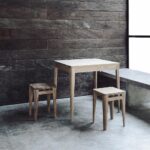
I do feel somehow we have been rather disconnected with nature; we don’t realise that many things we use come from nature. I am sure people know that wooden furniture come from trees, but somehow they ‘forget’ about it. They are not aware about it anymore, like they take it for granted that a chair is just a chair — they are not aware that it comes from a tree, made with the hands of people. We would like to create furniture to remind people about this because we believe when people are mindful, they would respect their surroundings and nature. This will contribute to the wellbeing of the people and also the environment. For example, our chair is not light and the original version does not have any coating, just hand-sanded. When people use our chair, they can see all the grains and tone of the wood, they can see the beauty and character of the tree it comes from. And because it has no coating, when someone leaves a mark, perhaps with a wet hand, they need to dry it quickly so they are ‘forced’ to interact with the chair and get close to it. Hopefully by taking a closer look, they will appreciate all the efforts that other living beings had put into a piece of furniture.
It is said that often the simplest, minimalist designs are the most difficult to execute. Do you agree? Why?
I think I partially agree. They can very difficult to execute but not the most difficult, because when it is simple and minimal, it is easier to see the imperfections. But I like imperfections too, and I think in life we also need imperfections.
What does design mean to you?
For me design is very personal, it is part of life. It is difficult to separate my design and design philosophy with my life.
In your opinion, what constitutes Indonesian design?
Since design has many categories (graphic, web, fashion, etc.) my answer is only based on the thing that we do: furniture design. I think it is not possible to define what Indonesian furniture design is without considering the context where the design is created and the history and heritage of the country. Indonesia is the largest archipelago in the world, it consists of over 17,000 islands and it has an abundance of natural materials. Indonesia also has a history of being colonised by various countries. While colonisation has its negative aspects, it also enables the exchange of different cultures. These three aspects create diversities of local wisdom and the craftsmanship which revolves around it, and this becomes an important foundation and inspiration for Indonesian furniture design, and a gateway to endless possibilities for design and creativity. To sum it up, I think what constitutes Indonesian furniture design is a dynamic mixture of local wisdom, craftsmanship and natural materials.
What can we expect from you for EMERGE @ FIND?
Consistency and persistence. Since we launched the brand in 2013, we only have one collection that is still actively in production. We have been designing the second collection for 7 years now but we won’t launch it when we don’t feel it is really ready and fills all of our criteria and standard.
Tan Wei Ming of Sputnik Forest Labs (Malaysia)
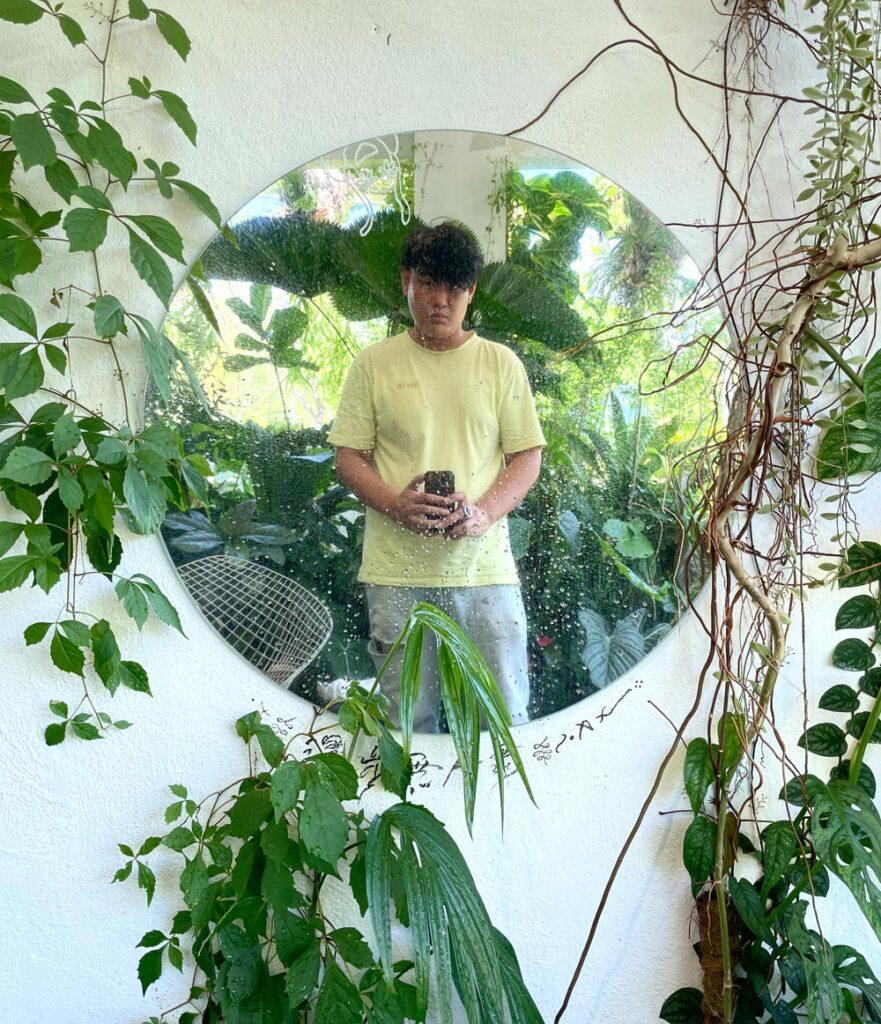
The relationship with plants and the urban environment is indicative of your practice. How did this come about?
Born and bred on Penang island, living on the tropical island, plants has always been our natural habitat.
There a sense of controlled chaos at times when it comes to your practice. How much of what you do involves manipulating plants versus letting nature do its own thing?
Many people try to manipulate nature, forgetting that they themselves are indeed part of it. Our actions are to understand and build a mutual kingship with the things around us in order to create as a response to our surroundings, much like plants that behaves on the same rules of Mother Nature.
Sustainability has evolved to become an integral part of the design process for just about every creative medium. How do you approach sustainability in your practice?
A more conscious way of consuming material has been the ever evolving drive behind our works, observation allows us to give better value to the material we choose by making more conscious use of energy and materials.





What does design mean to you?
Design is a lot an exercise of the imagination and patience; design can be part of the problem and the solution, design is our way of trying to solve this problems, be it visually or functionally.
In your opinion, what constitutes Malaysian design?
Malaysian design is alike the tropical forest — filled with variety and beauty.
What can we expect from you for EMERGE @ FIND?
Looking forward to meeting designers from different parts of this region, planting seeds of possibilities of future trans-boundary collaboration.
Lilianna Manahan (Philippines)
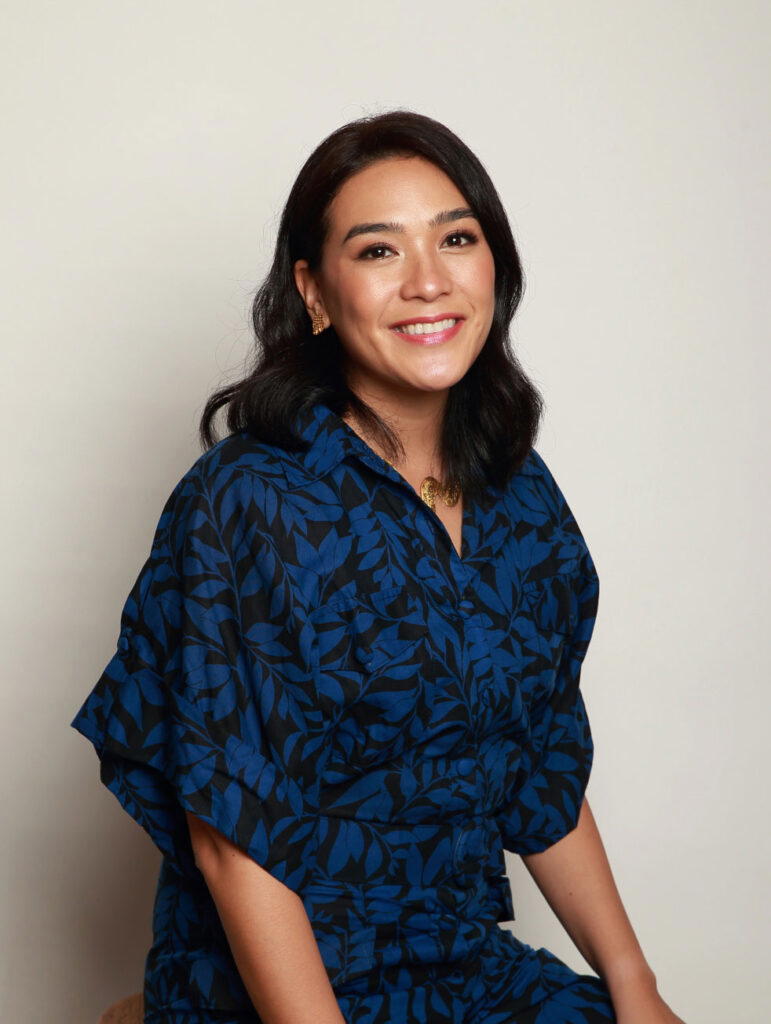
There’s a sense of whimsy and fun in pieces that you design, but at the same time, they’re grounded by real-life experiences and emotions. What is the process like for you, turning something philosophical like Creation or relatively banal like street food packaging, into quite fantastical pieces of art?
I think that in everything, there is hidden wonder to be found, and imagination is a tool given to us that we can use to find these fragments of wonder, and even help us understand the things that we might not really get if they were just explained to us. It’s much like reading a book where we find real life experiences and learnings in fictional books or music. I think the imagination allows us to connect these things not just in a fantastical way, but also helps us understand reality. So when I do my work, I find that sometimes in the process of trying to understand or appreciate something myself, I come across these fragments of wonder that sort of string together a bigger picture of a situation with all its ups and downs, hard truths and things that bring joy and humour. I find that it all comes together into a reality that can be grasped and appreciated in a context that is more attainable like daily life. It turns out this is something I enjoy sharing with people, and perhaps it’s these little wonders that are reflected in my work when I produce it.
You’ve worked with a range of materials. Is there a particular material that you favour?
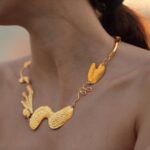
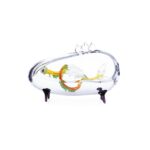
I love working with different materials and finding different applications on how to express the drawings I make. But I’ve found that I am drawn most to metal. I see that there are so many possibilities for metal to take shape, and I find that it looks good on its own or mixed with other warmer materials. What I like about it is that the process of shaping metal also hasn’t really changed much in a long time, like casting, hammering, and welding. This is why I’ve used a lot of processes in my work to show the different ways metal can be formed.



Sustainability has evolved to become an integral part of the design process for just about every creative medium. How do you approach sustainability in your practice?
I believe that sustainability is not just practiced in one way like recycling or repurposing something. I see that quality and the best use of a material can make a product sustainable. Using a certain amount of material to decrease wastage, and that each product is made in the most excellent way possible so that it doesn’t have to be replaced frequently are ways that I practice sustainability. I think using timeless materials will contribute to this. I also enjoy metal-smithing because the waste from each piece can be melted down and reused later on.
What does design mean to you?
Design is both a tool and a gift used to nourish the soul. It also brings ease and joy in an individual’s daily life.
In your opinion, what constitutes Filipino design?
Filipino design does not just express the aesthetic of the huge mix of cultures that makes up our country, but it also is a display of our unique sense of humour, our sense of community and togetherness, and love for craft and detail.
What can we expect from you for EMERGE @ FIND?
I will be presenting wall-mounted light sculptures, a concept that I’ve finally been able to produce after just being in my head for the longest time. I would consider this piece as the first of many works that shows my exploration in illustrating the different aspects of beauty and wonder. This piece is called ‘Bright Shadows’, a modular wall-mounted light sculpture that encourages the user to make their own compositions, and forms that consider light and shadow as part of the composition.
Genevieve Ang (Singapore)
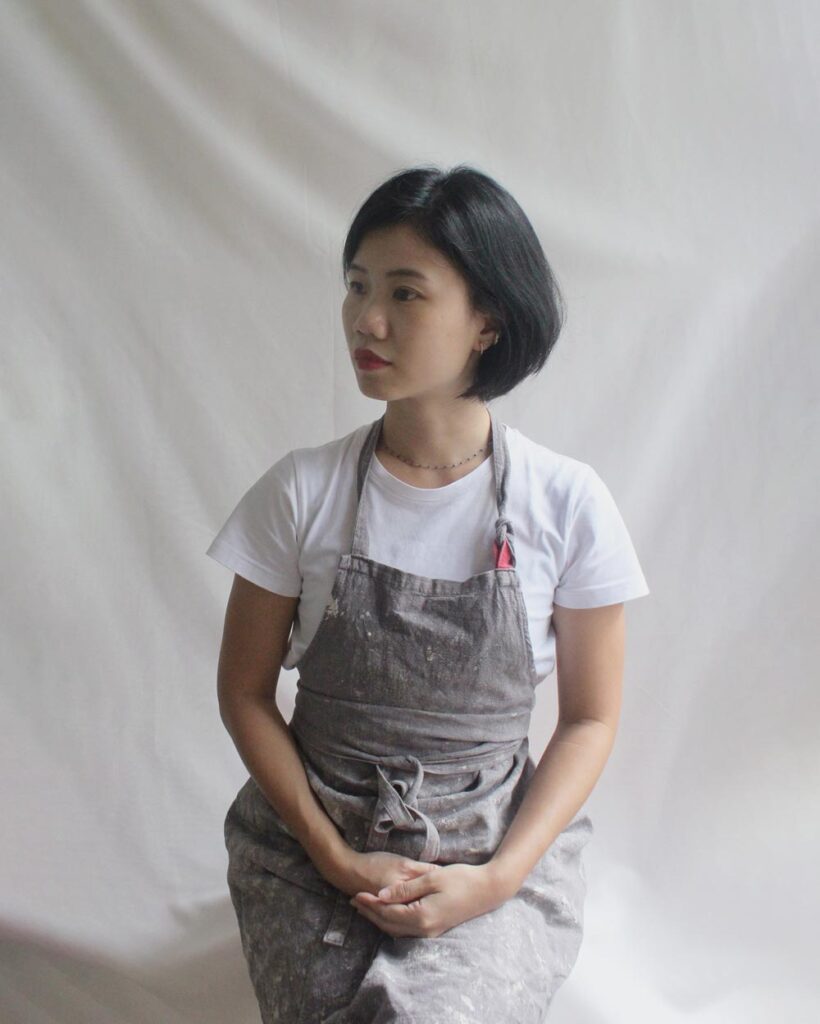
In the best sense of the word, your ceramic designs can be described as “cute” but also juxtaposed with a sense of unique oddity. How did you come to this aesthetic?
I started ceramics when I was 10 years old, a lot of what I do now is actually a reaction to what I disliked then. Being rebellious in nature, I have always resisted things that I was taught to do and had an urge to do the exact opposite. The glazes that were offered in my studio were very limited, there were many hues of brown and dark colours. Most of what I made then looked rustic and earthy. When I returned a decade later to work with clay, I wanted nothing to do with those colours and forms from my childhood and being architecturally trained, the modern aesthetics informed much of my current practice. Pure forms, abstraction and somewhat functional. The ‘cute’ probably is again a reaction to the seriousness of my education in architecture. I was tired and felt uninspired when I was working as an architectural designer and clay offered relief. These combinations of factors are probably the reasons for this current aesthetic I have established.
You’ve described yourself as a “toymaker”. Can you share more about that?
I think there are several reasons to why I described myself as a “toymaker”. The first is probably out of respect for the craft I practice. Ceramics is a craft that is steep in tradition. There is a saying that you can only master the craft after 30 years of working with clay. I have much to learn and I am always humbled when I meet follow ceramicists who are so focus in the areas of their pursuit.
The second reason is probably how I did not want to limit my works with conventional association with ceramics. Clay is everywhere, from tablewares, toilet bowls to floor tiles and to me, it is interesting to be able to use clay in all sorts of ways. In that sense, the idea of play comes in quite appropriately as I experiment to make all sorts of different products.
Lastly, I would like my works to bring delight and what is more delightful than toys?

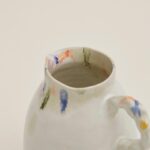

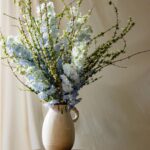
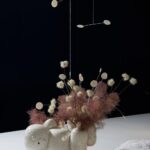
You’ve also collaborated with a number of brands of varying disciplines. How do you see collaborations as part of your journey as an artist?
I enjoy collaborating across different fields because it aligns with the idea of what clay is to me, which is the endless possibility of what this medium can do. I see collaboration as an important part of my journey as it forces me out of my comfort zone every single time. It helps me grow as an artist and also as a person as I start to understand as I meet new people who are equally passionate at what they do.
What does design mean to you?
Design is being able to adapt, express and innovate.
In your opinion, what constitutes Singaporean design?
Singapore design is a young and growing scene and because of that to me it constitutes a small group of very passionate individuals who are ready to propel their ideas forward. I would not say Singapore design is distinctive yet as compared to other countries, in fact, it is diverse and that could also be its uniqueness.
What can we expect from you for EMERGE @ FIND?
You can expect the biggest sculpture I have ever made and also forms that I have been experimenting but made into different products. My works will be under the title called ‘Cobalt Fever’, where I explore the origins of cobalt and the beauty of the blue this element has given us.
Charif Lona (Thailand)
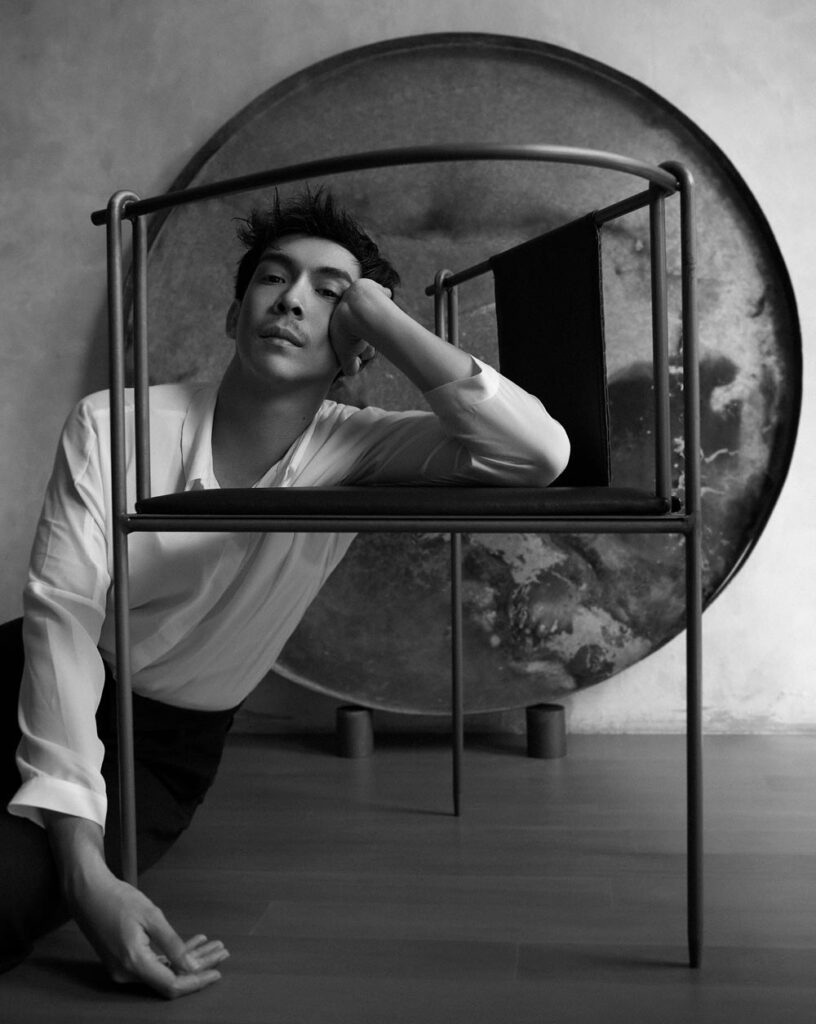
You’re the founder and design director of Studio Act of Kindness. How did the name come about and what is its design philosophy?
‘Kindness’ is sort of virtue that my parents taught a younger me to embody — to be compassionate, loving and to do what I love with good attention. I think it’s a simple yet powerful word that inspired my very personal ideas in which to improve the versatility and creative skill as a designer. The studio name reflects the philosophy of studio objectives and myself to be passionate, honest, and sincere and be versatile at everything that I am in charge of — even to pursue the dream, to remind the journey of who I have become and what I have done through this career choice. Also, I aim to create a team of people who value the same things and work well together. Being cohesive, adaptive, passionate and versatile is the key to accomplish the vision of the design studio.
I notice that your interior designs dabble a lot with colours and patterns. What is the process like when deciding what colour and/or pattern a space needs?
It may sound ironic that personally, I’m quite a monochromatic person, but clients usually see the colourful side in me. Fortunately, I think I deny to play safe when I have to manage the colour and pattern. I tend to adapt colour use from different inspirations as a type of technique that allows people to feel something without the need for any explanations — to make a statement about something through their own space, or define who they really are. It’s always right and wrong, in my colour theory because choosing colour is always subjective; rational versus emotional issue. Psychologically, it requires toleration and being sensitive enough to study in-depth user personality, character of space/place, occasion, appropriation and emotion. In a creative way, I love to juxtapose them with the scale, amount of use, differ them with material use, textures and patterns to create the uniqueness for each project.


Sustainability has evolved to become an integral part of the design process for just about every creative medium. How do you approach sustainability in your practice?
Sustainability is not only the way of life to acknowledge but it’s a conscious way to achieve in my practice. Luckily, I have chances for many projects to develop sustainability in different approaches. One of them is the collaboration project with Thai timber company Champaca wood to put discarded wood from engineered wood floor manufacturing to good use under the name of ‘Kindness Wood’. When they receive logs, about 70 percent will be graded into A-class. The remaining 30 percent with burls and other natural imperfections will be screened out. From the ‘From Flaw to Flawless’ concept we develop the idea of reclaimed material, which an amount of waste in daily production from the factory will be compound as a new log. Each log contains different types of waste, such as off-cut pieces, which offer the variety of wood patterns for different creative approaches.
What does design mean to you?
Design is indeed the core of our breakthrough as designers and thinkers. Design can be either a tool — the act of thinking visually about a problem and possibility — or a trajectory for us to imagine long-term goals and aspirations. To re-invent the past, to initiate and differ the future.
In your opinion, what constitutes Thai design?
As it has been skeptical to clarify the definition of ‘Thainess’, I think being indefinite makes us be, antithesis, vibrant and unpredictable in positive ways. (haha)
What can we expect from you for EMERGE @ FIND?
The ‘Fossil’ furniture design collection is defined as the artist’s self-reflection towards my creative journey and propensity. Inspired by the process of crystallising opal fossil, the creation of each piece of furniture replicates how the gemstone is formed to its finest shape, filling up spaces and later unveiling its preciousness as the fossils dissolved. The collection is a marriage of jewellery and furniture designs that consistently plays with craftsmanship, the value of rawness and the irony of industrial beauty.
Phuong Dao (Vietnam)

How would you describe your design aesthetic?
I like working with the form and content in design, exploring new materials. I was instantly more drawn to furniture because people interact with furniture everyday and it inspired me to impact everyday life in a positive way.
As a young designer, what or who are your influences in design?
When I was a child, I would often find beauty and importance in common objects that I would find. A simple stone could create a story about all the people who had held it before. I still have a childlike imagination with objects and collect and surround myself with things that I find. When I design I want to share these feelings with others.
Sustainability has evolved to become an integral part of the design process for just about every creative medium. How do you approach sustainability in your practice?
My background is in industrial design and I have to be aware that the design is suitable for mass production. Product design with industrialisation makes a huge impact on the environment, economy and society. I’m most passionate about the way my design can create awareness and change people’s attitudes and opinions to how we use materials. Moreover, I believe that waste materials deserve another use after their original purpose.
What does design mean to you?
Design is a method for meditation and it is my private space that I can explore and express who I am to people around me. I want my work to create good impacts on our lives.

In your opinion, what constitutes Vietnamese design?
In my perspective, nowadays, Vietnamese design is a mixture of traditional culture and modernity. It is really nice to see how we transform our handcraft culture from the past into the modern world.
What can we expect from you for EMERGE @ FIND?
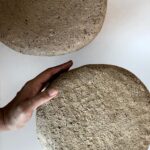
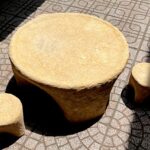
Well, I hope I can surprise everyone by bringing waste material into the EMERGE @ FIND showcase. It is called ‘Cà Ràng’ and it is a set of coffee table and stools made from waste materials that I have been developing. I worked with stories about Vietnamese traditional stove and transformed it into a new coffee table and stools product.
The EMERGE @ FIND showcase is part of FIND — Design Fair Asia and will be held at the Marina Bay Sands Expo and Convention Centre from 22 to 24 September 2022.