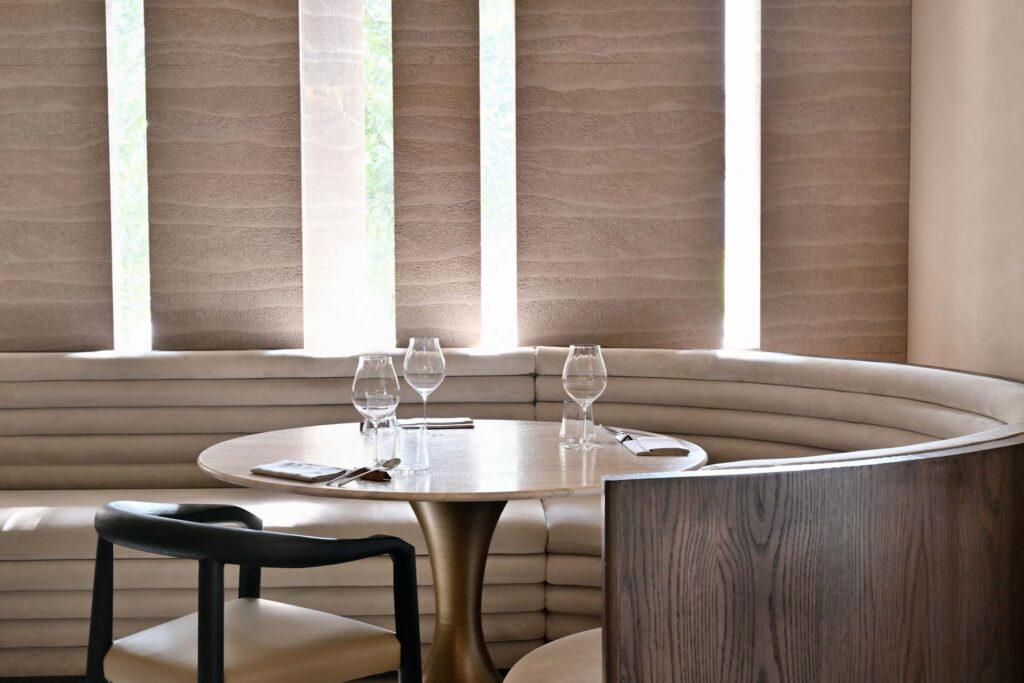
Most wouldn’t notice it. But I did. In Restaurant Fiz, several tudung-clad ladies, presumably Muslim, were among the servers walking among the tables and attending to diners. Behind them, just beside the kitchen, stood a beautiful dry aging fridge. At the back of the restaurant, hidden behind panels, another fridge stored several alcoholic beverages.
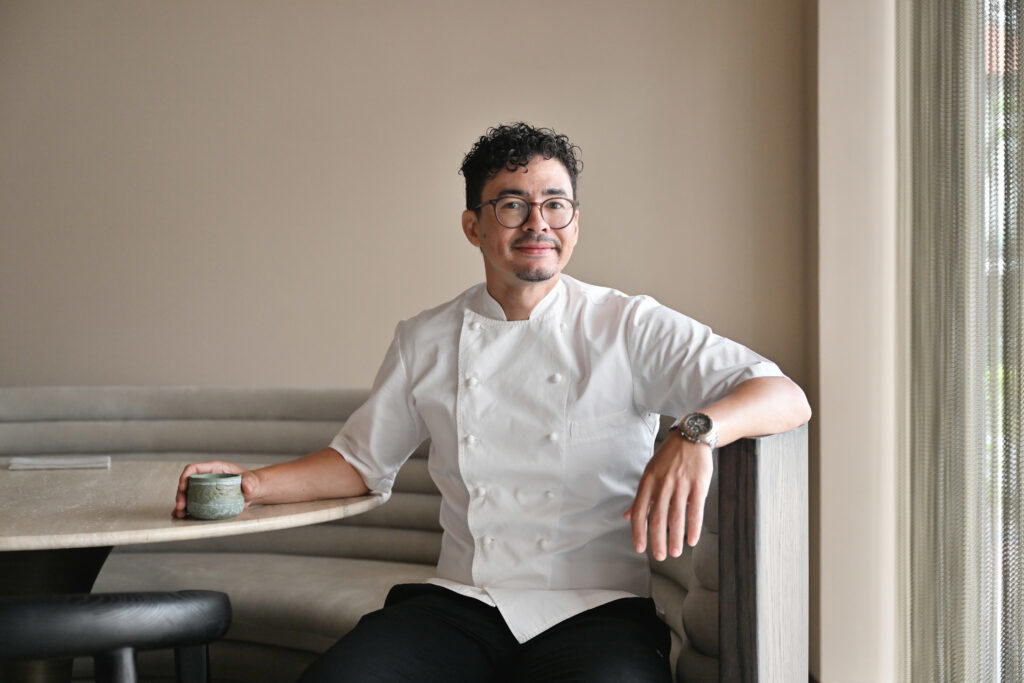
Chef Hafizzul Hashim is Muslim. There is no pork or lard in his menu, which pays homage to his childhood “growing up in Lumut”, a coastal town in Perak. It is, however, a telling sign Hafizzul served wine. In Islam, a Muslim cannot drink, serve or be involved with alcohol.
“We work only with meats that are certified halal, and we don’t use alcohol, pork or lard in our cuisine. We recognise that our patrons are diverse, and that more diners today enjoy a tipple with their meal. We want to be an inclusive experience,” Hafizzul explains.
I’m not here to cast judgement. God knows that I, too, am as imperfect as they come. Hafizzul’s food, however, is a perfect rendition of South-east Asian, and by extension Malay, cuisine.
Just like Hafizzul, I grew up eating many of the ingredients that he works with—firefly squid, petai, chicken, rendang, pisang, I could go on. It’s heartening to see these familiar favourites get their time in the spotlight, jostling for space besides the usual suspects such as caviar, foie gras and their ilk. You must have heard the typical refrain from your friends. Perhaps you’re guilty of it too. The makcik (Malay for older lady) at the nasi padang stall charges rising, volatile prices and one wonders why these “simple” dishes can cost so much.
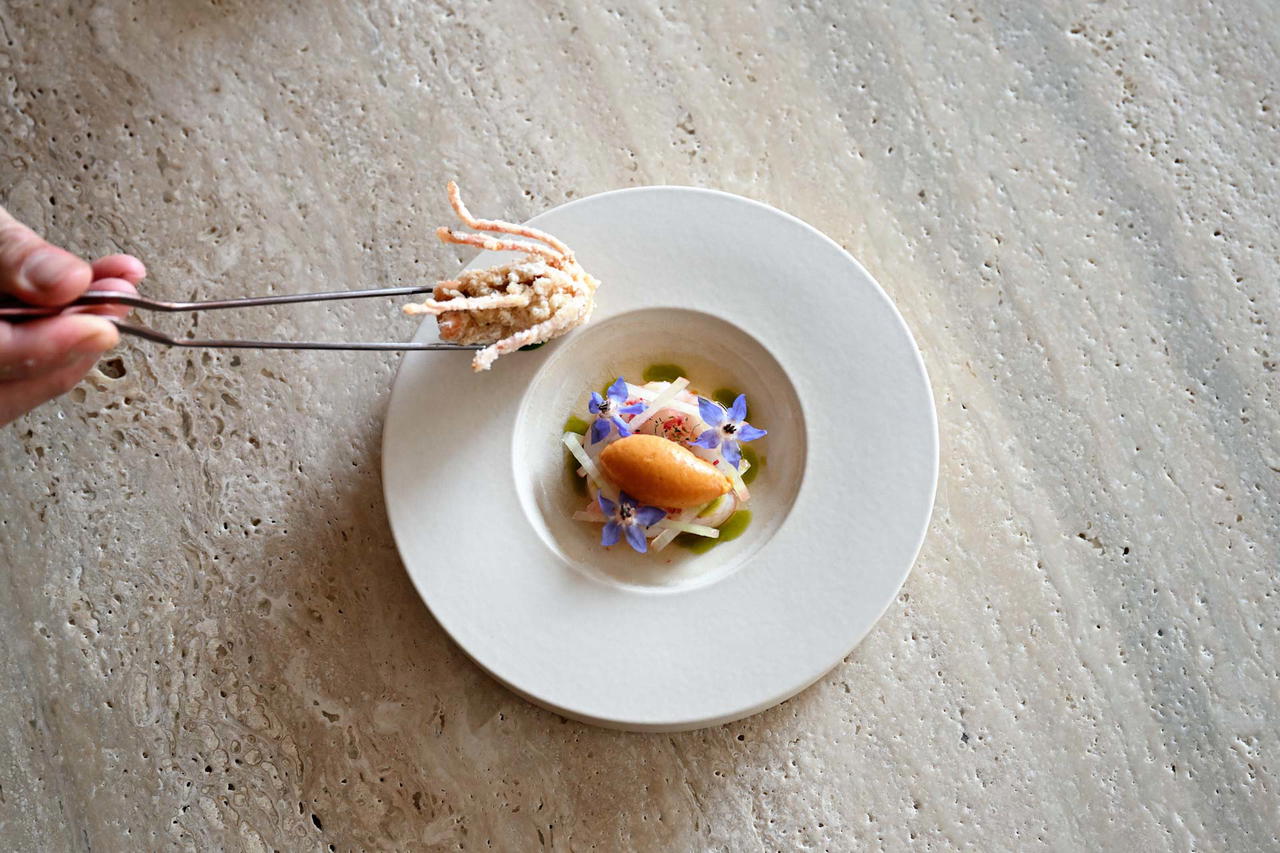
Chef Hafizzul demonstrates that there is nothing simple about these dishes. He treats every ingredient with reverence and teases out their subtleties with the same care shown by the makciks at the famous nasi padang stalls. The meal begins with three snacks comprising urchin, firefly squid, petai, and caviar. The squid is charcoal grilled and stuffed with fried sambal before being topped with aged bottarga roe shavings. It’s a delight and brought me back to my childhood walking along the streets of Geylang for the Ramadan bazaar.
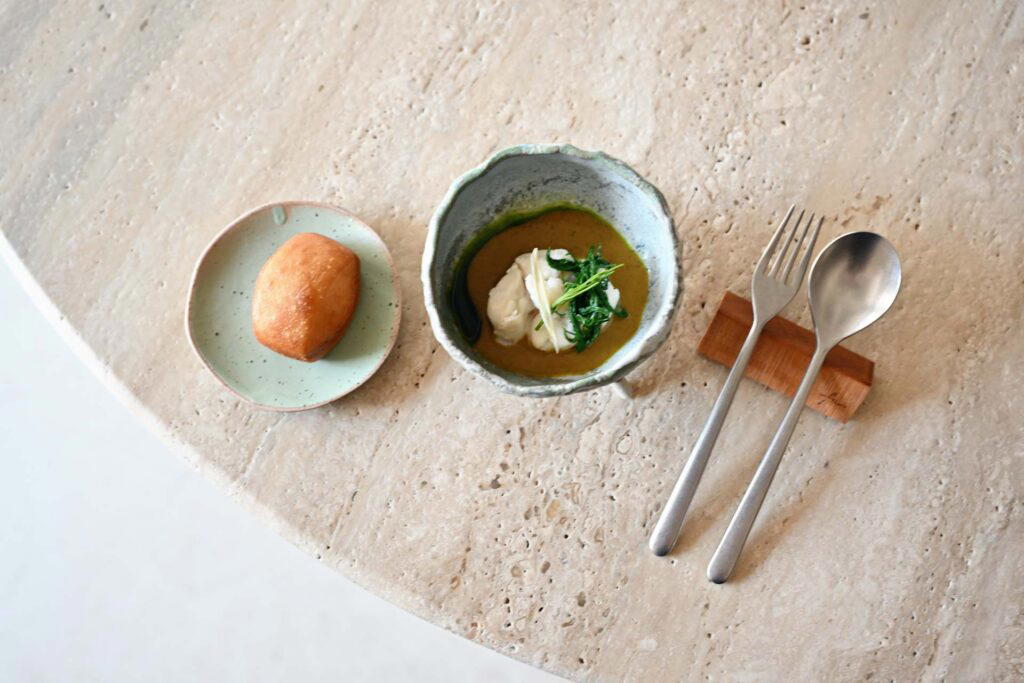
Another highlight is the seafood curry (pictured, above). It’s infused with yellow crab and served with piping hot housemade deep fried mantou. Chef Hafizzul adds blue swimmer and Australian spanner crab meat but poaches them with kaffir lime- and temu kunci-infused coconut milk. It gives the dish a nice, hearty flavour.
The eight-course meal culminates in Hafizzul’s rendition of nasi padang. It’s a culinary extravaganza, comprising beef gulai, ikan kurau, and three types of delicious vegetal side dishes. It’s a meal on its own, and to consume it at the tail end of a long dinner can be daunting. But you’ll eat every morsel because of how hauntingly tasty everything is.
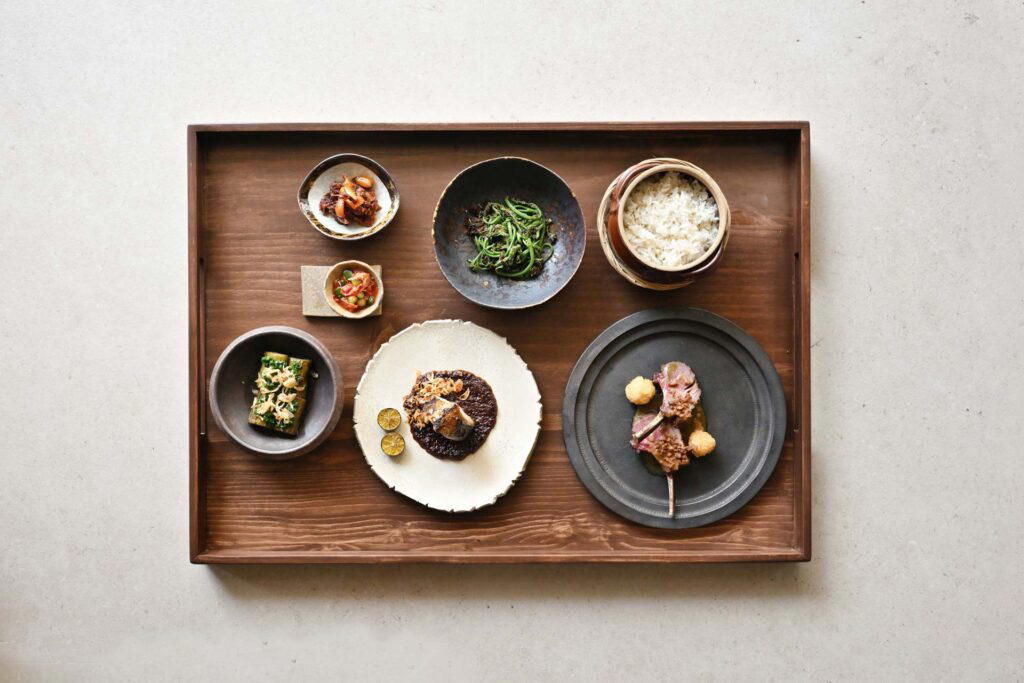
I have a soft spot for beef gulai. Hafizzul has painstakingly put together one of the best I’ve tasted. The beef tendon is brined overnight before being cooked in fresh coconut milk with lemongrass, galangal, kaffir lime leaf, black pepper, and fresh turmeric. The meat practically falls off your fork.
If I had to give criticism, it would be that there was too much food. Towards the end, I was feeling stuffed and could barely muster more eating. A shame because everything that I put in my mouth deserved to be finished. Still, with the exhaustingly large number of omakase restaurants in Singapore, it’s refreshing to visit a place that does South-east Asian cuisine well. Chef Hafizzul, take your bow.