
A panther rests in the suprasternal notch—the delicate hollow between the collarbones—its gaze distant, and its onyx-spotted body draped protectively over a 26.53-ct Ceylon sapphire.
Seductive, sculptural, and executed with architectural precision, the Panthere Canopee necklace is one of the final pieces in Nature Sauvage, Cartier’s three-part high jewellery exploration of the animal kingdom.
Unveiled in Singapore in April, the closing chapter continues Cartier’s enduring fascination with fauna, but delivers it with an unexpected restraint focused on movement, texture, and metamorphosis.

The relationship between Cartier and animalia is neither new nor fleeting. With the introduction of the black onyx and diamond panther wristwatch in 1914, a new design vocabulary was born. From a graphic motif to an emblem, the panther eventually evolved into a myth shaped largely by Jeanne Toussaint, Cartier’s legendary creative director, in the mid-20th century.
However, there is more to Nature Sauvage than feline inspiration. Since its launch in 2024, Cartier has passionately showcased how the collection draws from the wild, creating representations of animals adopting a sense of drama rather than mere imitation.
In this third chapter, the focus shifts from the animals themselves to their habitats, offering imagined landscapes fusing the natural with the surreal. It plays on Cartier’s signature dualities: abstraction and form, organic curve and architectural line, fantasy and precision.

Alexander McQueen.
Nowhere is this more obvious than in the Pantheres Versatiles necklace, which features the maison’s emblematic feline set with a 10.10-ct Zambian emerald. Its body, composed of onyx and diamonds, is at once sculptural and supple. In keeping with Cartier’s technical vocabulary, the necklace is modular, transforming from a classic choker into a dramatic piece that drapes fluidly down the back.
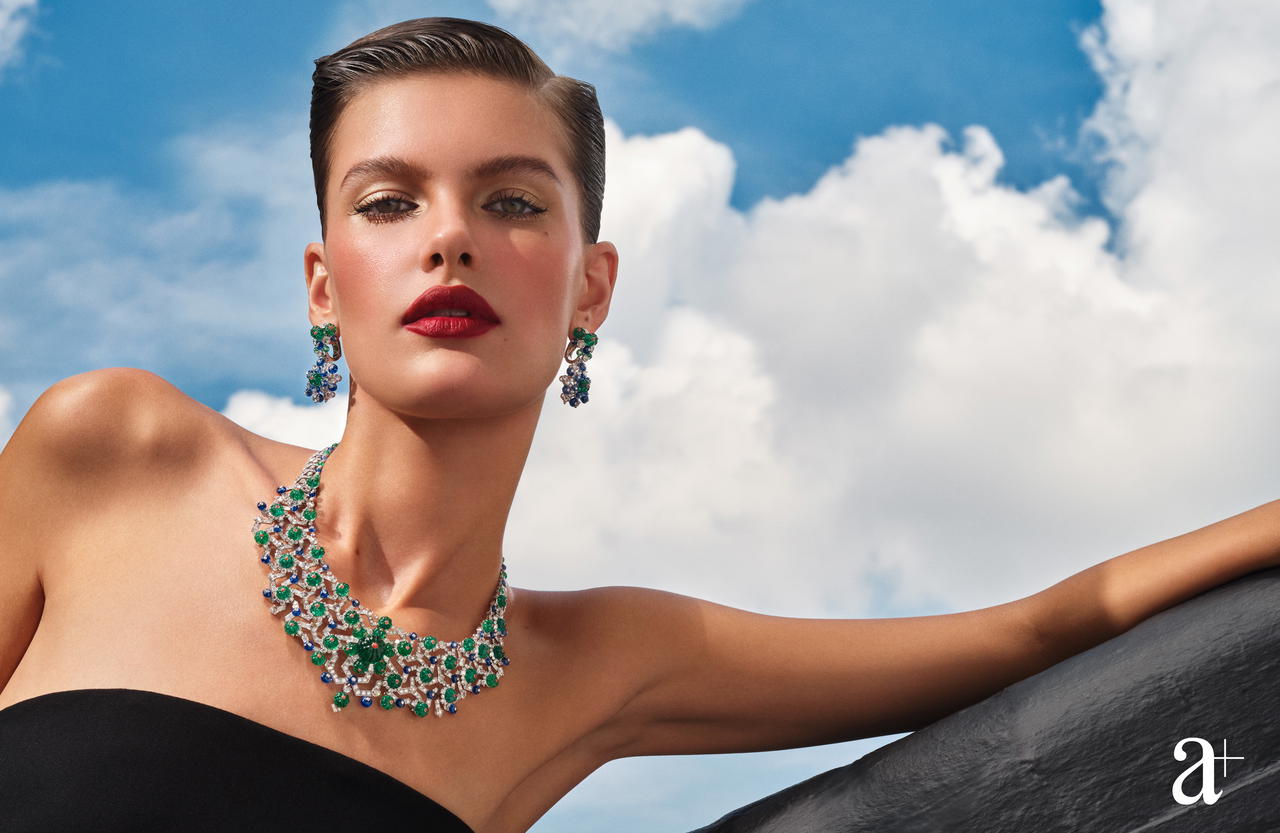
The Echinea Necklace, a tribute to the sea, is equally compelling. Cartier’s artisans carve emeralds into ribbed beads, then pair them with coral spines, sapphire droplets, and diamonds threaded through white-gold filigree. The result is a biomorphic lattice reminiscent of its 1920s designs, yet it feels entirely contemporary, alive with movement and depth.

And there is the Tiger Necklace, a striking collier that conjures the full physicality of the beast it depicts. Yellow, orange, cognac and white diamonds adorn its coat, its distinctive onyx spots hand-cut and individually set to mimic a naturalistic pattern. Its emerald eyes are piercing with intelligence, its muzzle is defined, and its form is muscular and powerful. One articulated paw adds a final flourish of movement to the piece, flexing Cartier’s technical muscle.
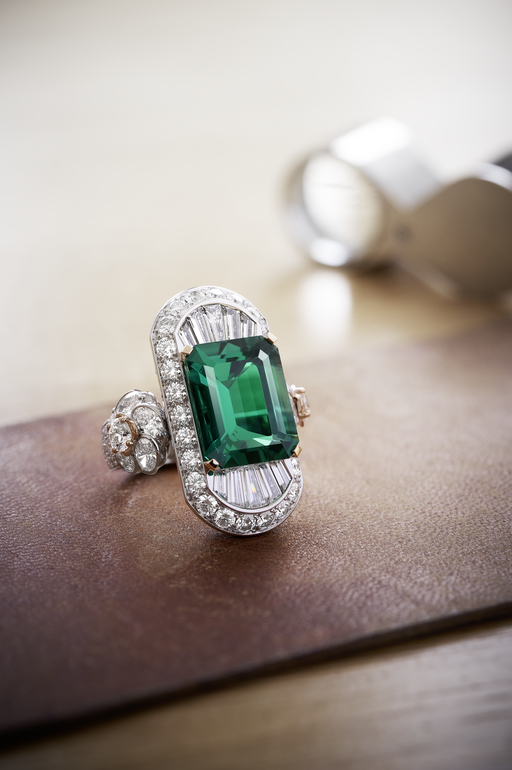
Nature Sauvage is distinguished not just by its exquisite display of exceptional stones, such as unheated sapphires, verdant emeralds, and glacial diamonds, but also by its commitment to innovative design that goes beyond decoration.

This is a collection fluent in trompe-l’oeil and illusion: wings that become cascades, claws disguised as flourishes, animals that reveal themselves only upon closer inspection. It is an optical game born of high jewellery prowess that illustrates how jewellery at this level has transcended from mere ornaments into the ultimate expression of style and creativity.
With Nature Sauvage, Cartier leaves behind a bestiary of imagined beasts and stylised habitats, reminding us that the wild can be more than just a muse when filtered through discipline and vision.
Photography Stefan Khoo
Styling Chia Wei Choong
Hair Christvian Wu, using Revlon Professional
Makeup Clarence Lee, using Make Up For Ever
Photography assistant Chong Ng