Jewellers have long drawn inspiration from couture, weaving narratives of elegance and opulence into each gem-studded creation. For Boucheron, this connection to the world of textured fabrics, feminine silhouettes, and intricate craftsmanship is deeply personal.
The founder of the house, Frédéric Boucheron, was heavily influenced by his father’s profession as a draper and grew up surrounded by silk and lace. Influenced by his passion for creating delicate and flexible embellishments, Frédéric aimed to turn gold and precious stones into elements inspired by the true essence of haute couture.
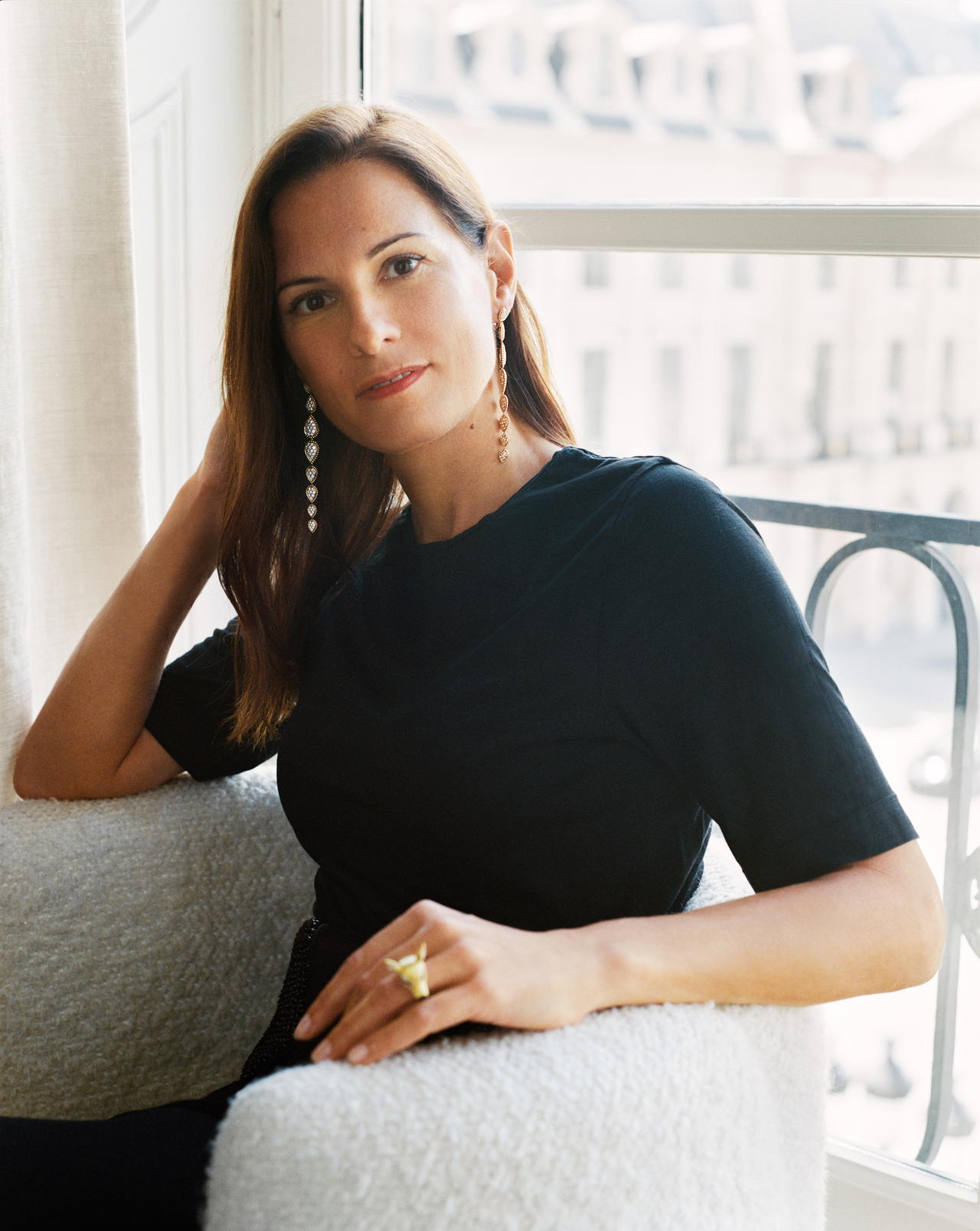
Inspired by this heritage, Boucheron’s creative director, Claire Choisne, explores couture in Histoire de Style: The Power of Couture, the fourth edition of Histoire de Style. She says, “We have many creations taking inspiration from the world of couture in our archives—knots, tassels, pom-poms, gold mesh, and the iconic grosgrain ribbon. I wanted to approach the theme of couture in a different way, sidestepping traditional extravagance and embracing a modern, powerful reinterpretation.”
To accomplish her goal, she turned to ceremonial attire for inspiration. The paradox of these outfits fascinates her as they give the impression of being rigid and severe but closer examination reveals sophisticated ornamentation.
The 24-piece collection is a departure from the typical gold hues associated with ceremonial ornaments. Instead, Choisne uses a white palette that includes diamonds, rock crystals, and white gold. Her vision is to infuse style, purity, and modernity.
Choisne’s choice of rock crystal is deeply intertwined with Boucheron’s heritage and reflects her personal affinity for the versatile material. By delving into the brand’s past association with rock crystal, which dates back to the 1860s, she honours Frédéric Boucheron’s revolutionary use of rock crystal in conjunction with diamonds.
“Frédéric admired the purity and transparency of the mineral. I wanted to pay tribute to his innovative spirit, as I love the contrast between the solidity of diamonds and the softness of rock crystal. My designs compelled the artisans to embrace an atypical approach to the mineral—polishing it on some pieces while frosting or sculpting it on others. I was fascinated by the work accomplished in the workshops. Ultimately, the creative application of diamonds and rock crystal transforms the ceremonial ornaments,” says Choisne.
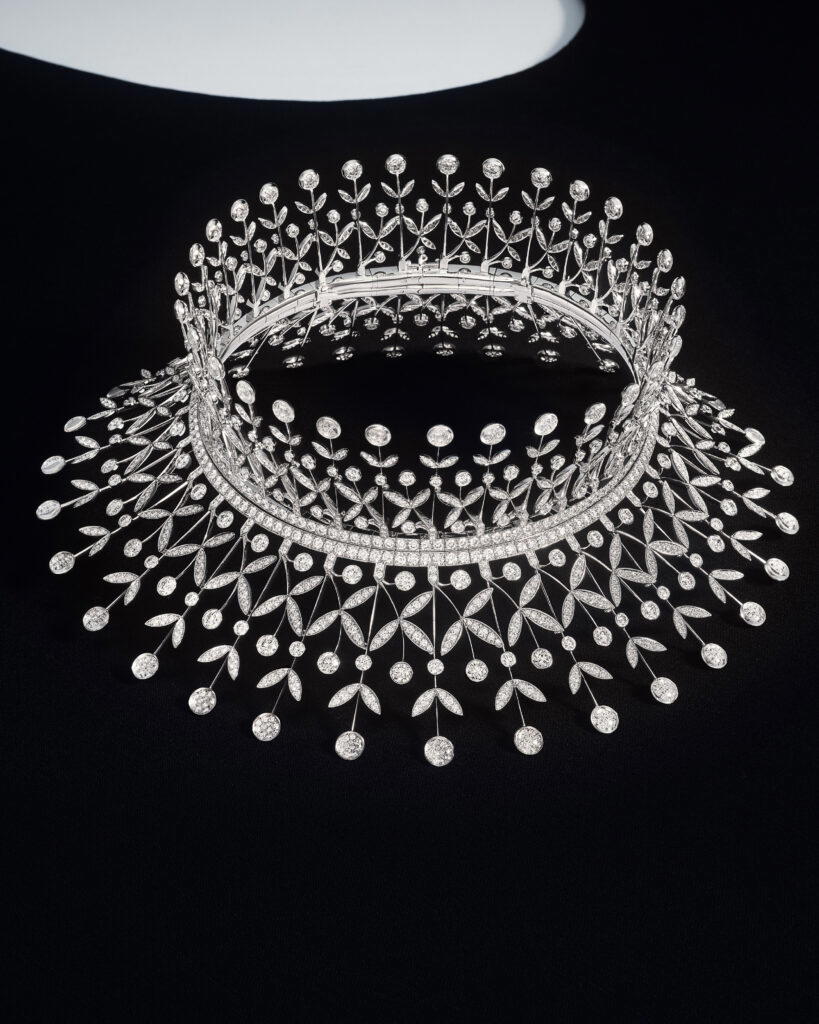
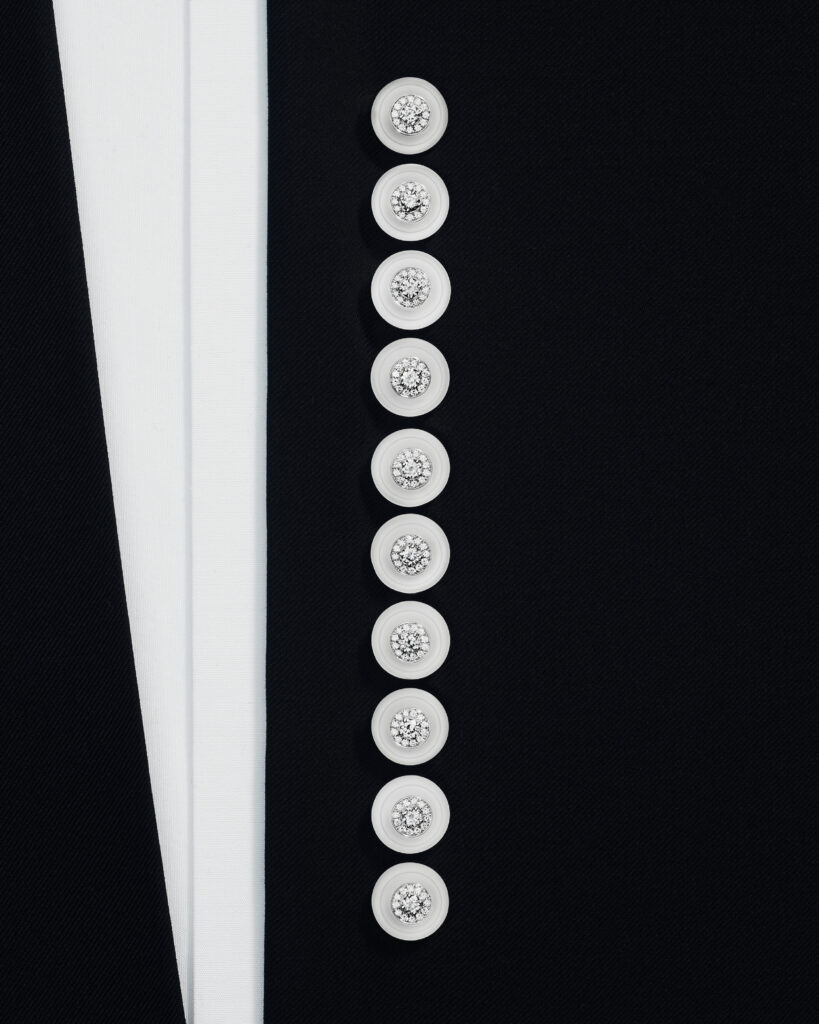
Using a delicate material like natural rock crystal comes with a slew of challenges. The first obstacle is finding enough rock crystal that meets the brand’s stringent quality standards. The next challenge is shaping it into various forms such as tubes, chevrons, medallions, aiguillette lace tags, and buttons to ensure the jewellery remains flexible.
Completing the collection took three years, from the initial concept to the finished pieces, and the process highlights the significant challenges in working with this fragile stone.
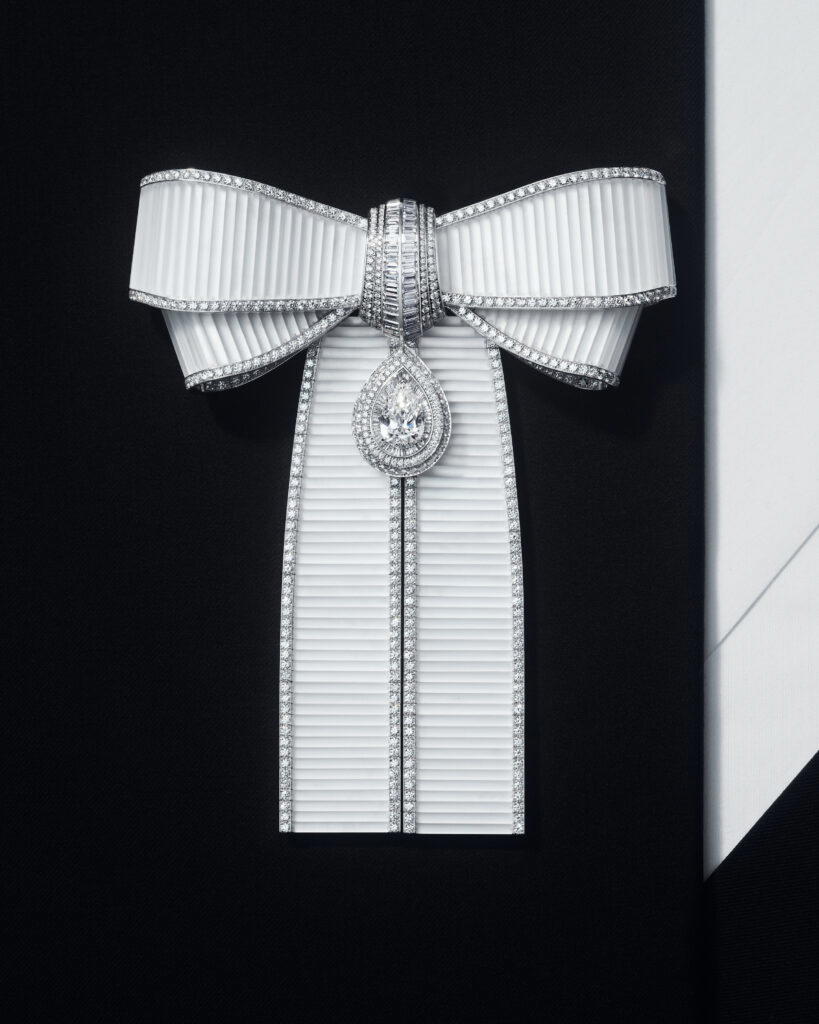
The Noeud set, which requires 2,600 hours of labour, is the most time-consuming masterpiece. With 435 hand-cut frosted baguette-cut rock crystals arranged in a white gold frame, it is a modern and graphic take on the grosgrain bow. Set with diamonds on the edges and interior, it is further illuminated by a pear-shaped 4.05-ct F VVS2 diamond.
Versatile in design, it can be worn six ways, with its detachable section transforming into a bracelet, and its bow into a brooch or shoulder adornment. The central stone finds a solo spotlight as a solitaire ring, complemented by two additional rings—one with a pear-shaped 5.16-ct D FL type IIA diamond and the other adorned with rock crystal and a 2.5-ct pear-shaped D VVS1 diamond.
“I wanted to create a graphic reinterpretation of the knot design and grosgrain, which are emblematic couture elements. I also aimed to recreate the radiance of the ribbon using a play of texture and light. This is why the team came up with the idea of combining the matte effect of frosted rock crystal with the sparkle of diamonds,” says Choisne, describing one of her favourite creations from this collection.
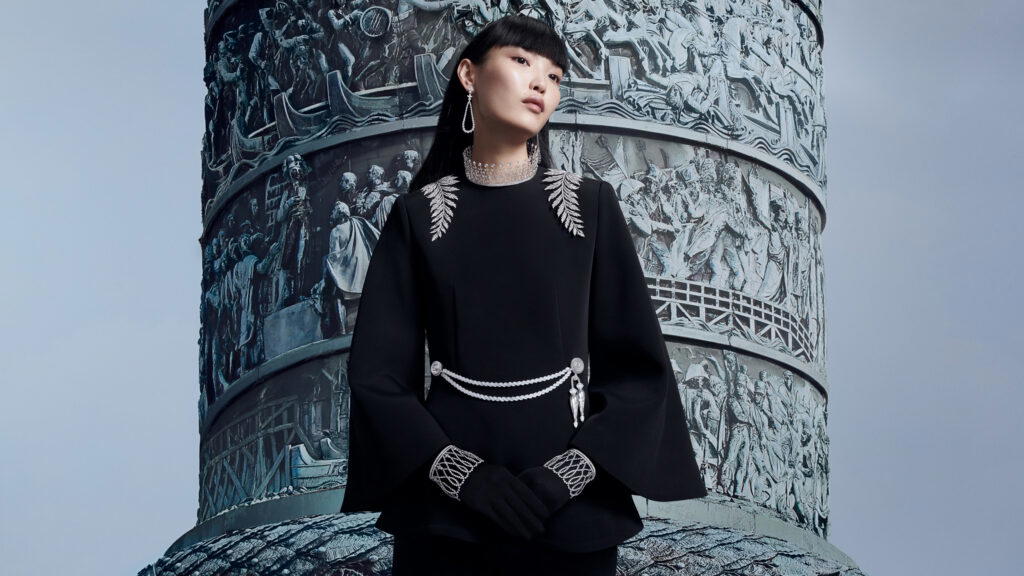
Another treasured design is Broderies, branch embroideries borrowed from ceremonial attire to take on the shape of the fern, a plant Frédéric Boucheron adored. Entirely paved with diamonds on a white gold frame, they are shaped so delicately that they appear to flutter in the wind.
“While many maisons were inspired by noble leaves like laurel, oak and olive, Frédéric was interested in less appreciated plants growing in the forest, such as ivy and fern. They are recurrent patterns in Boucheron’s collections because he loved depicting nature in a realistic manner. I’m happy we brought life to this set, creating delicate pieces that contain as little metal as possible,” explains Choisne.
Like the Noeud set, which can be worn in six different and creative ways, Broderies is versatile. It can be worn as brooches or transformed into scintillating hair pieces, thanks to an ingenious polyvalent fastening system.
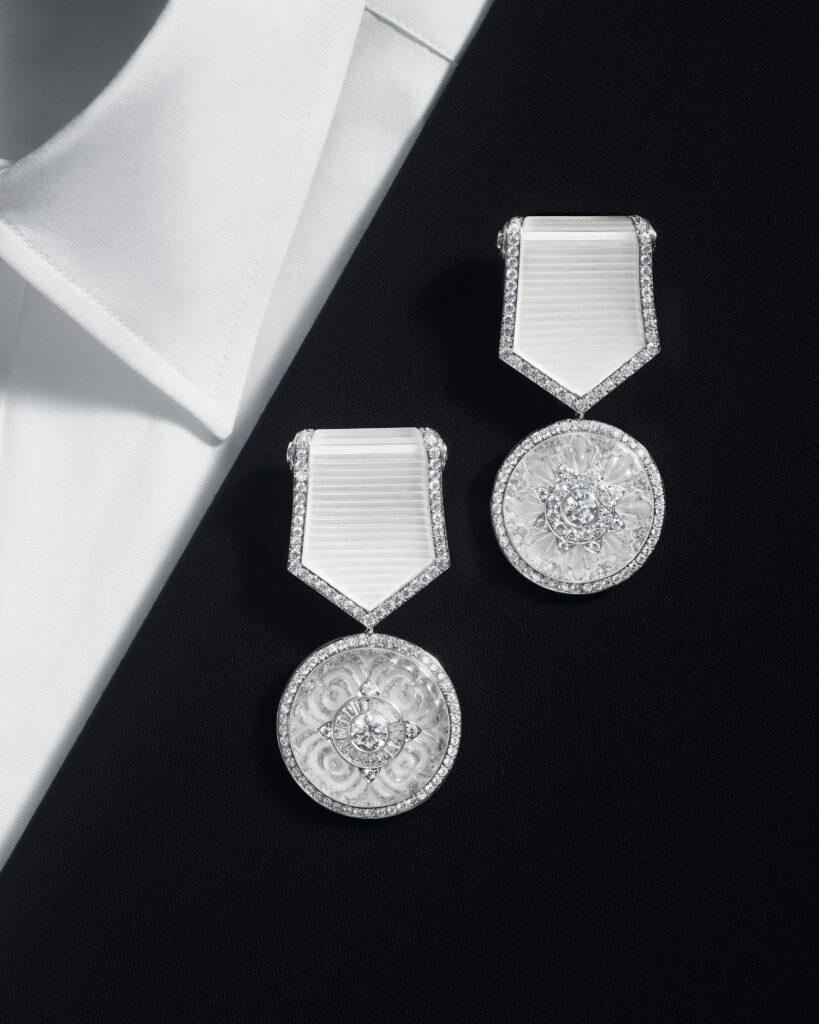
Other transformable designs include the Boutons set and Aiguillette, Médailles, and Col necklaces, all designed to be worn in multiple ways. This collection highlights the importance of convertible jewellery, where the magic lies in their versatility.
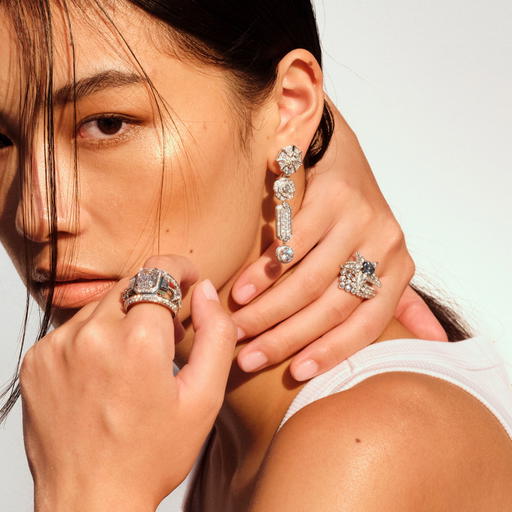
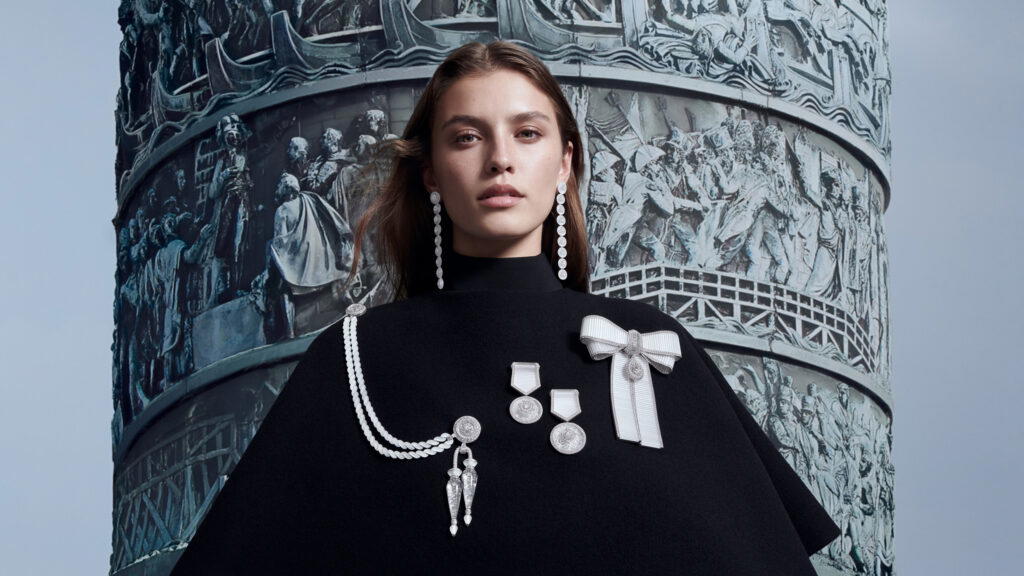
The Histoire de Style: The Power of Couture campaign features female models wearing sombre black capes, creating a striking contrast with the white jewellery. It is a departure from Boucheron’s previous campaigns, which prominently featured male models. With this, Choisne expresses her intent to challenge historical associations of ceremonial attire with male power. However, she emphasises that the collection can be worn by both men and women. “At Boucheron, we do not consider jewellery from the point of view of gender, but rather of style,” she says.
She anticipates that the collection will catalyse self-expression, inviting wearers to creatively interpret and play with the symbolic elements of power embedded within the pieces.