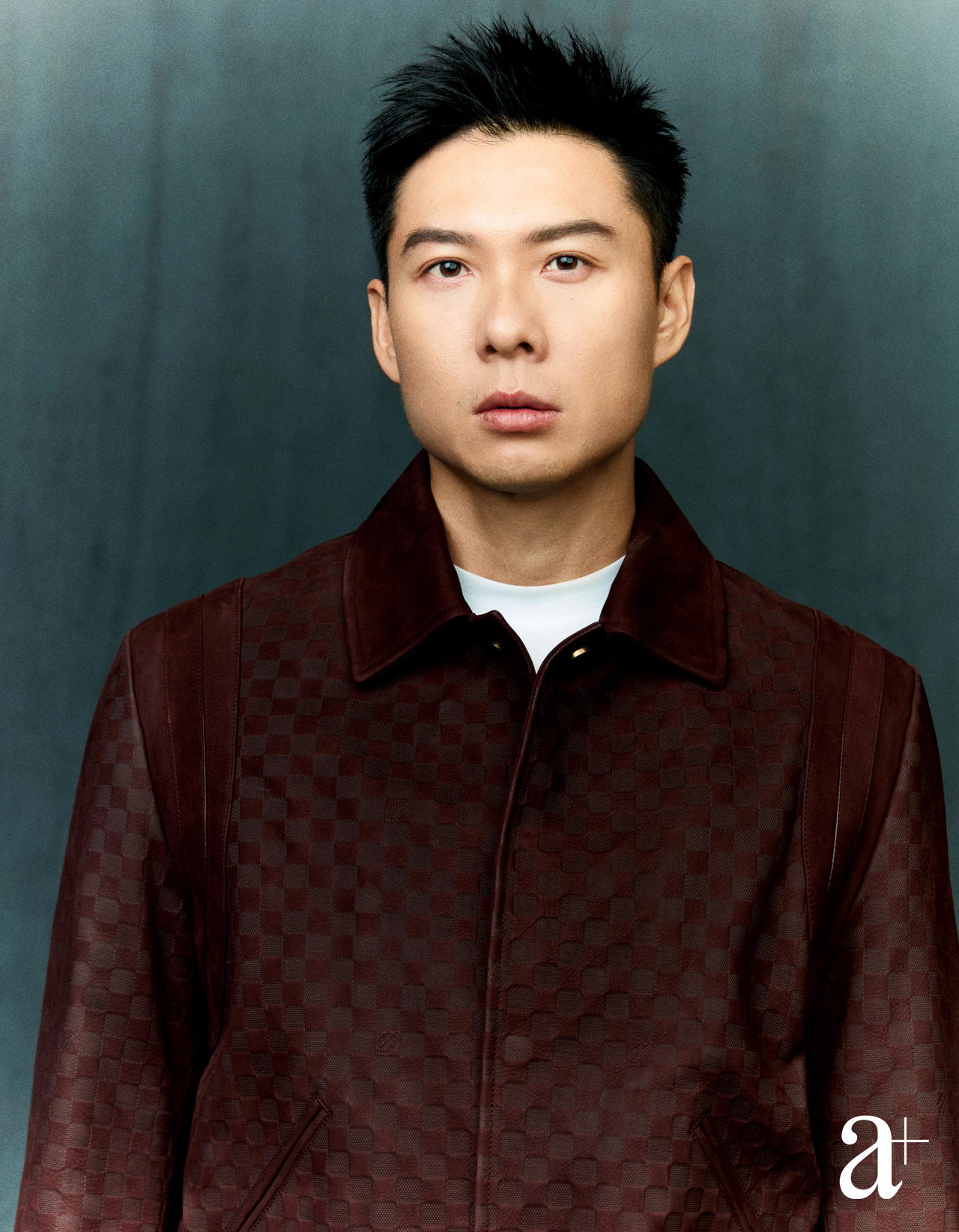
Singapore’s only Cannes Film Festival award winner—his 2013 debut movie Ilo Ilo snagged a Caméra d’Or—Anthony Chen is currently wrapping up his 13-year Growing Up trilogy.
Ilo Ilo, which also won Best Narrative Feature and Best Original Screenplay at the 50th Golden Horse Awards, was followed by Wet Season in 2019. Next year, We are All Strangers will hit the screens. Yeo Yann Yann and Koh Jia Ler star in all three films.
Along the way, Chen also directed his first Mandarin-language feature, The Breaking Ice, starring Zhou Dongyu and Liu Haoran, and his first English-language feature, Drift, which premiered at the 2023 Sundance Film Festival.
“Both were my first feature films made outside Singapore, and they were profound leaps outside my comfort zone. They were also a burst of creative energy; I shot them back-to-back within six months of the pandemic,” he recounts.
“These projects were special because they were a lesson in scale and connection, and I was the only Singaporean on both sets,” adds Chen who is currently based in Hong Kong and Singapore.
But he does not intend to rest on his laurels. As it stands, he sees film as a very personal pursuit. “A film isn’t just a project you finish; it’s a piece of yourself you must live with. My ultimate test is whether, years later, I can watch my work and feel that it served the story and characters honestly. Last year, I watched Ilo Ilo again and was proud to see that it held up.”
What themes do you incorporate into your work and what do you stand for?
I have discovered a recurring pattern or theme emerging across my films. I’m consistently drawn to stories about strangers who form profound, intimate connections. Often, these are unlikely relationships that blossom in the margins of society.
In Ilo Ilo, it’s the bond between a Filipino helper and the Singaporean boy she cares for. Wet Season is about a teacher and her student. The thread continues between a Liberian refugee and an American tour guide in Drift, and among three restless youths in The Breaking Ice. It fascinates me how we find understanding in unexpected places.
In life and in storytelling, I stand for honesty and fairness. While some might describe it as idealism, and my wife lovingly teases me about a certain childishness, I believe it is exactly that quality of refusing to become jaded that allows me to remain curious. It also allows me to see the world through empathy and find stories of human connection.
In your experience, how has the local film scene evolved over the past decade?
Local film has matured dramatically. We’re a small country, but the talent explosion has been incredible. Our films are now regularly screening at top-tier festivals in Cannes, Berlin, and Venice.
I feel a tremendous sense of pride for our new generation of filmmakers. They have unequivocally come of age. The next crucial step in our evolution is for the ecosystem to mature in tandem.
My deepest hope is that audiences will continue to embrace the bold, diverse stories our filmmakers tell, so Singaporean cinema will have a vibrant, sustainable future.
How do you navigate limitations in Singapore’s small market?
This is precisely why I feel that international film coproduction and storytelling is not just an option, but a strategic necessity for Singapore’s filmmakers.
By creating stories that resonate across borders and partnering with international talent, we can expand our audience and create a sustainable model that isn’t limited by geography.
Expanding our reach beyond our shores is the only way we can build the audience and resources needed to keep making the films we want to make.
What have been the biggest challenges in your career and how did you overcome them?
Juggling the dual roles of director and producer has been my most significant challenge. It’s an ongoing negotiation between artist and pragmatist. This is a push-and-pull situation that requires me to be two people at once across many projects.
I manage through rigorous discipline and a high-energy workflow. I’ve learnt to make every hour count. Although this stamina isn’t for everyone, it allows me to fully commit to both the artistic and logistical demands of filmmaking, which are non-negotiable for me. Colleagues often joke that Anthony doesn’t sleep. I do, but not as much as most people. Also, I am fortunate to be able to fall into a deep sleep very quickly.
What would you have been if you hadn’t become a filmmaker?
A chef. In addition to filmmaking, nothing brings me more joy than cooking. At their heart, both are similar. It requires the same combination of creativity and skill, but I enjoy it most because of its immediacy. Gathering people together and sharing something I’ve made is deeply satisfying. Cinema and food make the perfect combination.
Is there a Singaporean icon you’d like to see reimagined in a film and how’d you do it?
Without a doubt, Haw Par Villa. It’s both fascinating and strangely traumatic at the same time. As a child, I remember feeling completely haunted by that tunnel depicting the 18 levels of hell. Such a perfect physical space to reflect a character’s inner turmoil or guilt. It’s cinematic and unique and deserves to be immortalised.
For more inspiring stories in a+ all year round, gift yourself or loved ones a digital subscription.
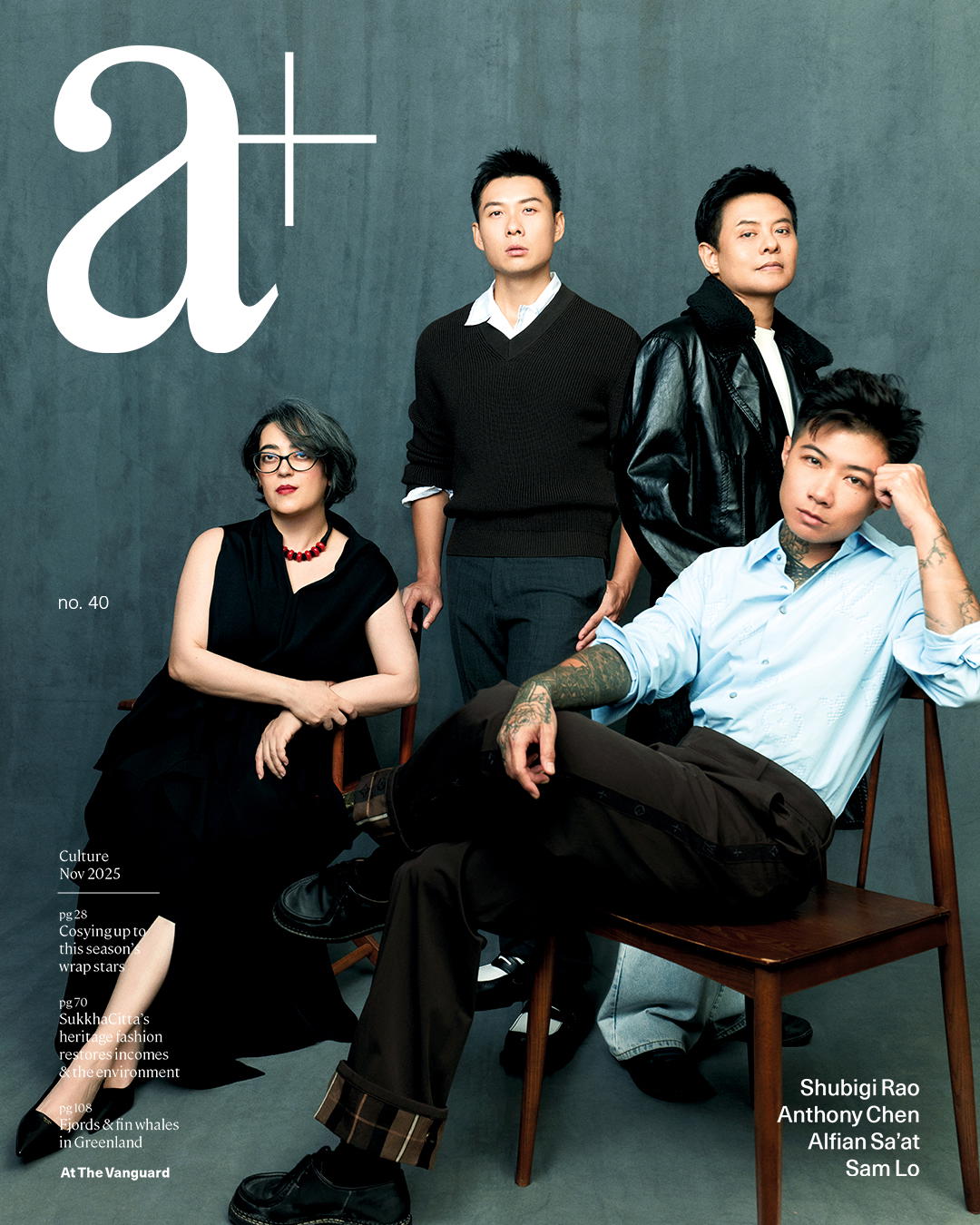
Photography Joel Low
Styling Chia Wei Choong
Hair Jenny Ng
Makeup Keith Bryant Lee, using Dior Beauty
Photography assistant Eddie Teo
Styling assistant Annalisa Espino Lim