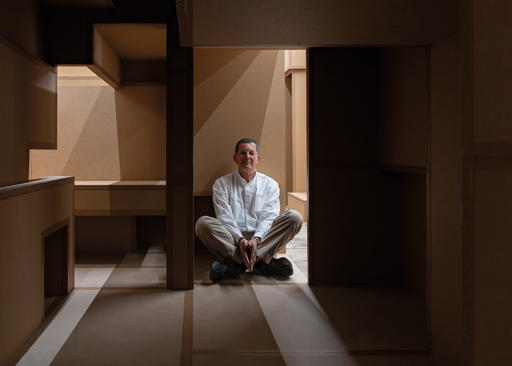

Some restaurants have a “look, but don’t touch” feel. Jiin Omakase is different. Beyond the table settings, a marble counter is adorned with miniature cat figurines—some relaxing in an onsen, others enjoying cherry blossoms or drinking at a bar—from the personal collection of Makoto Saito, Group Head Chef of Les Amis Group’s Japanese Collective.
Trays of crab shells and pristine seasonal produce, including Japanese amela tomatoes, are displayed alongside these trinkets that add a warm, eclectic preview of the meal to come. Guests, of course, are encouraged to pick them up, ask questions, and engage.
“People relax when there is something playful on the counter. When guests relax, the whole experience livens up. These are not just decoration; they are also our form of hospitality,” says Saito.
Les Amis Group’s new Japanese restaurant, which replaces Zeniya Singapore in Shaw Centre, emphasises omotenashi. This Japanese philosophy focuses on heartfelt hospitality, selflessness, and anticipating guests’ needs. Jiin expresses omotenashi through small gestures.
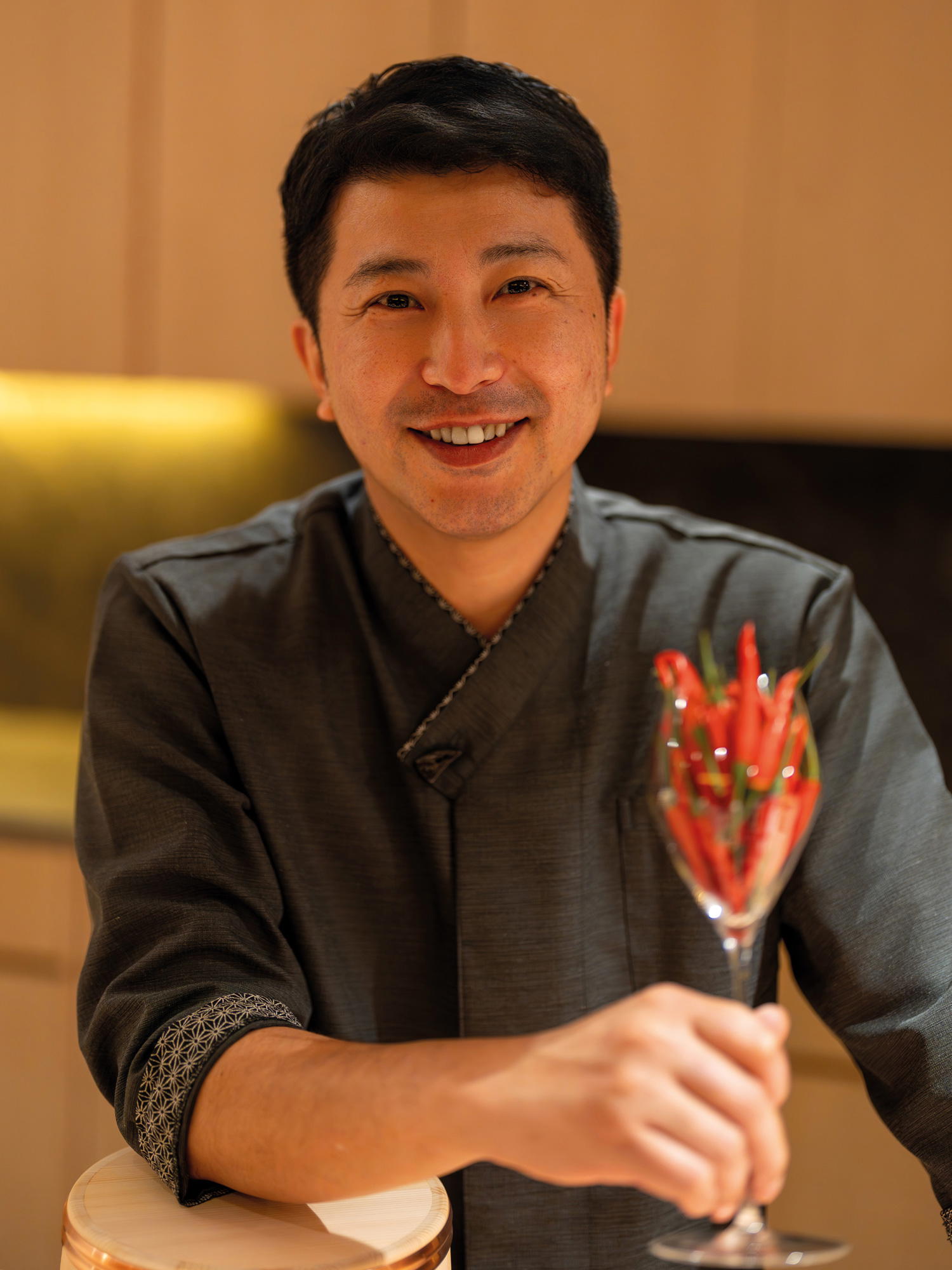
Saito might, for example, offer his chilli sauce made with green chillies from Kochi in Japan, to accompany richer courses such as the signature Ise Ebi Hot Pot if he observes the guest reaching for more wasabi. “I make it myself. It is my way of saying I see you.”
The restaurant seats 32 guests across a 12-seat counter and three private rooms that can accommodate six to eight diners each. Warm, earthy interiors reinforce the calm and unhurried atmosphere. Leading the counter is Head Chef Mitsutaka Sakamoto, mentored by Saito and joined by Sous Chef Koichi Matsuda. This dynamic trio combines decades of Japanese culinary mastery.
Sakamoto’s career was deeply influenced by Japan’s ryokan tradition. Before joining Jiin, he honed his skills at Kagaya, one of Japan’s most prestigious establishments, and spent 18 years at Hyakurakuso Ryokan, where he was an executive director and executive chef, overseeing the culinary operations of both its Noto and Kanazawa properties.
Growing up in Hyogo Prefecture’s Kami Town, an area known for Matsuba crab and Tajima beef, Sakamoto developed a keen sense for seasonality at an early age. Of the two, he feels a strong connection to Matsuba crab, a male snow crab and winter delicacy prized for its sweet, firm, and tender meat. “Growing up near the Sea of Japan, crab was always part of the local food culture. Working with it instils patience and an appreciation for allowing the ingredient to showcase its natural essence,” he explains.
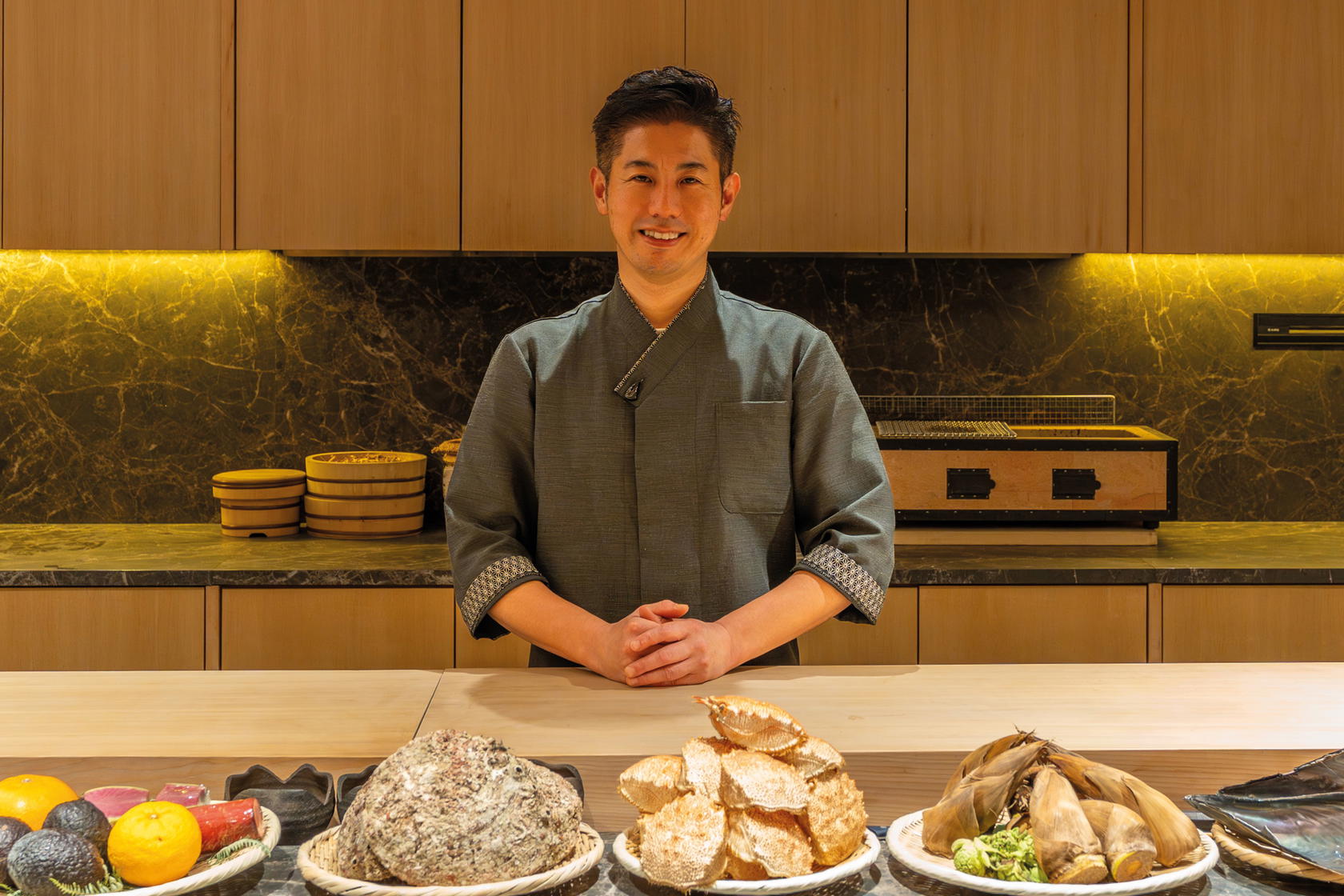
Speaking of appreciation, the Jiin team maintains daily communication with suppliers and fishermen across Japan to monitor market trends, seasonal availability, and the latest catches. Ingredients are flown in four times a week to ensure peak quality upon arrival.
“They provide us with regular trade insights, and updates on what is at its peak. This enables us to curate menus around the finest produce while also securing ingredients at competitive prices,” says Sakamoto.
During my late April visit, the appetiser highlighted kegani (Japanese hairy crab) from Hokkaido paired with hotaru ika (firefly squid). The crab’s rich, buttery sweetness and the squid’s briny depth were brought together by a savoury Tosazu jelly infused with dashi, mirin, and kombu.
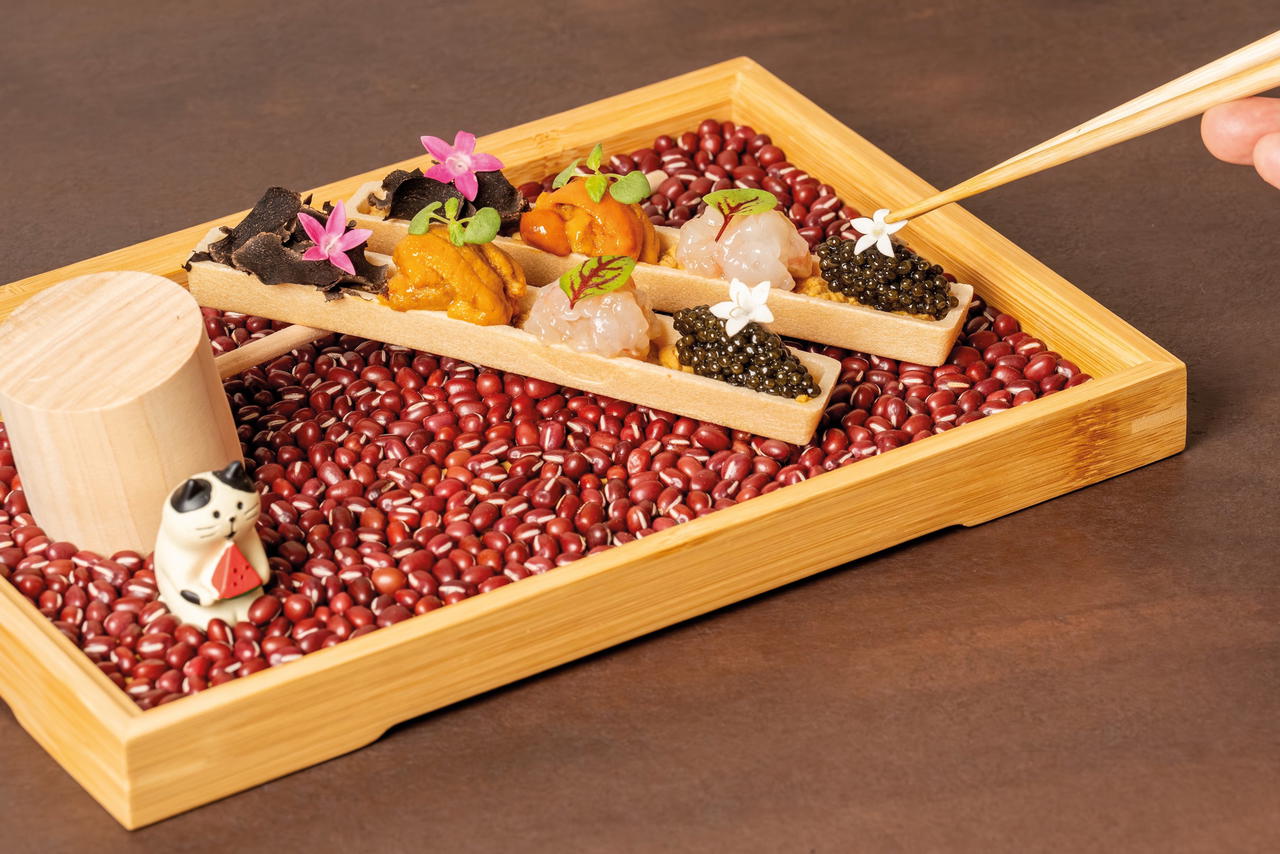
A standout course—Sakamoto’s personal favourite—featured monaka. “The crispy monaka wafer shell contrasts beautifully with the rich filling, creating a play of texture and flavour. I especially enjoy watching guests’ reactions when they take the first bite,” he says. Jiin uses an elongated version of the traditionally round monaka wafers to spark curiosity. They are filled with silky ankimo (monkfish liver), often called the foie gras of the sea, and topped with caviar, botan ebi (peony shrimp), uni, and truffle.
“The shape creates a sequential process of enjoying the dish, offering space for explanation and interaction,” explains Saito. “We present it on a board with little cat trinkets, sometimes accompanied by an hourglass. These touches invite interaction between the guest and the chef.”
The serving board also holds symbolic meaning. In Japan, the maneki-neko, or lucky cat, represents good fortune and welcomes guests. Even the red beans scattered across the tray symbolise prosperity, while the bamboo scoop supporting the monaka references the traditional tea ceremony.
In Saito’s opinion, food should never feel distant or overly serious. While technique and ingredients are important, his favourite moments at the counter occur when guests grow curious and start discussing what they are tasting.
The grilled A5 wagyu, gobo (burdock root), kadaifu (also called kataifi), and mashed potato in another course were equally delightful, with the burdock root balancing the richness of wagyu and the kadaifu, a vermicelli-like shredded pastry, adding a satisfying crunch. “I enjoy pairing wagyu with vegetables as it brings balance and depth to the dish. The flavours of the vegetables change naturally with the seasons, so the expression of the dish shifts accordingly,” he explains.
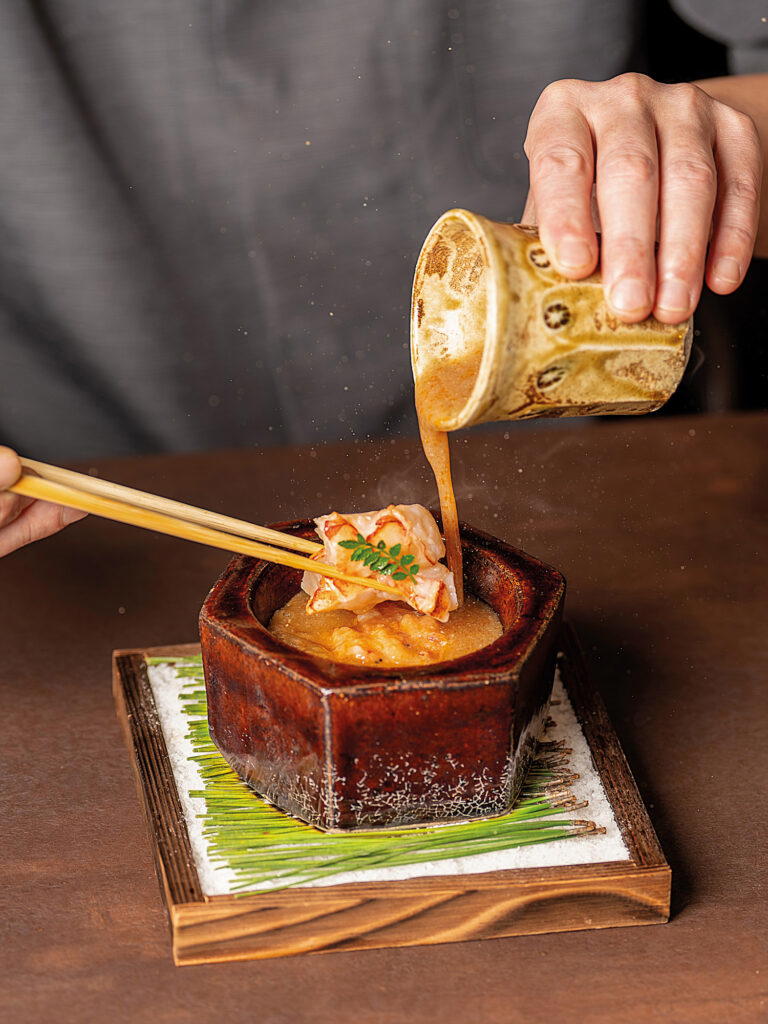
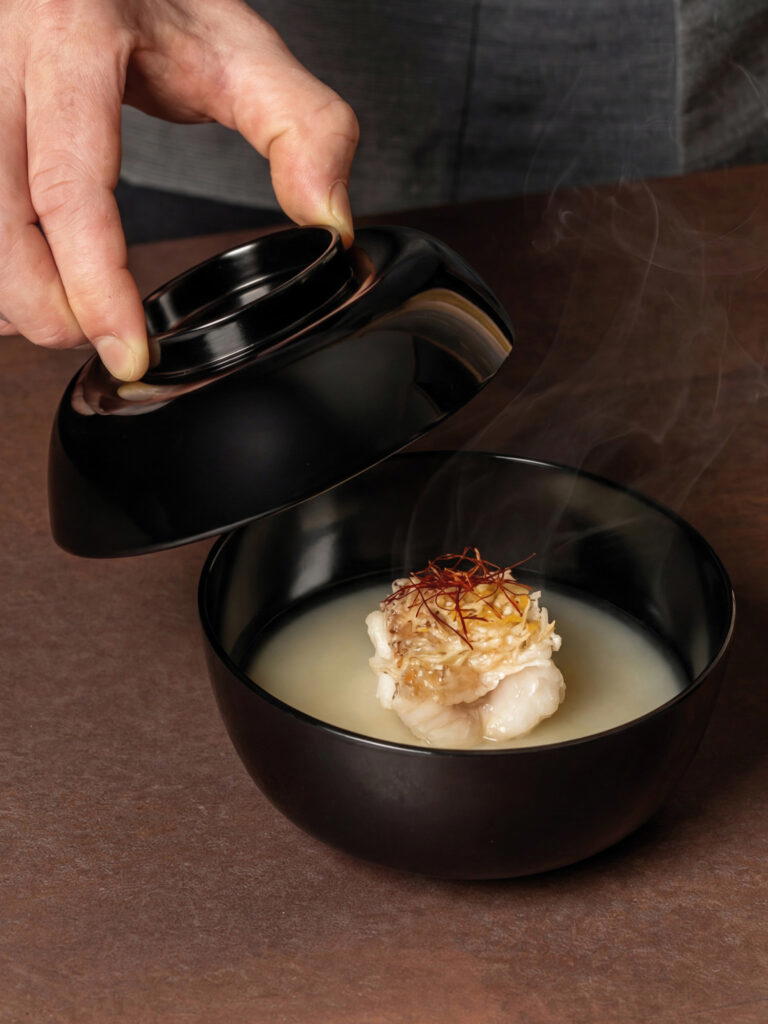
Equally memorable was the hot pot, featuring ise ebi, rice and sakura ebi. Evoking paofan, the Teochew dish of rice steeped in broth, Jiin’s take features Japanese spiny lobster brushed with garlic and butter before grilling to medium-rare, preserving its springy texture and natural sweetness. “I love this dish because it has both elegance and warmth. As the meal unfolds, the lobster broth’s aroma, the sweetness of the lobster, and the rice’s flavour slowly come together and deepen,” says Sakamoto.
When crafting a dish, he also considers how guests experience it through all five senses. “While the visual presentation of omakase is important, I also focus on aroma, texture, temperature, and even the sound of biting into something. Taste, too, is also not just about richness; I aim to balance sweetness, acidity, bitterness, saltiness, and umami.”
Omakase—rooted in the Japanese concept of “to entrust”—invites you to embrace the phrase “I will leave it up to you” with excitement. Come with an open mind and an appetite, and let Sakamoto and his team take you on a culinary adventure.