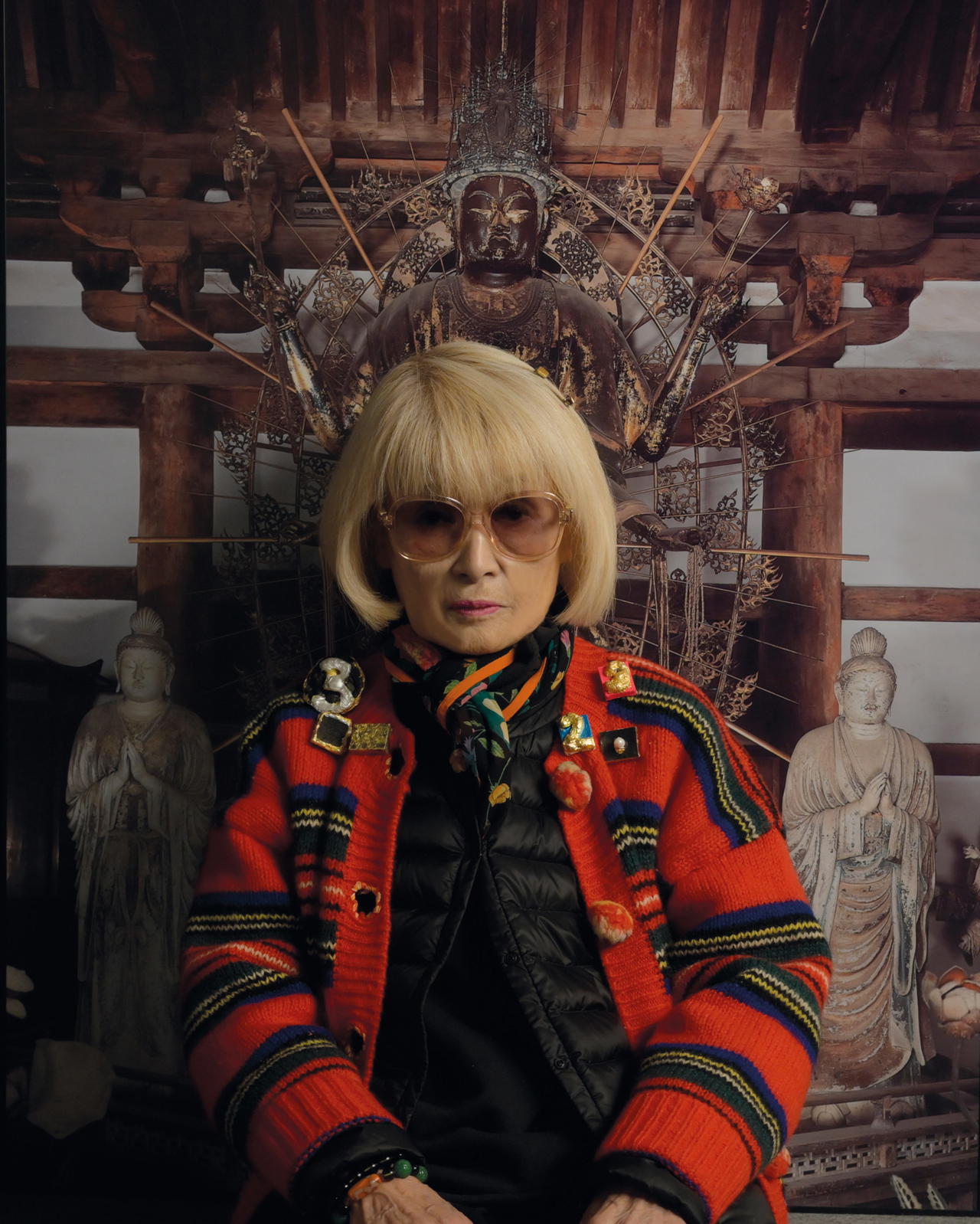
In the rarefied world of high-value art, few materials carry the weight of both history and the heavens quite like gold. For Japanese artist Keiko Moriuchi, however, it is far more than a decorative luxury; it is a spiritual necessity.
“Gold is the universe’s prescription,” she declares. “It’s the best eye medicine for humankind. When you gaze upon the universe, you need gold-rimmed glasses, or rather, gold eye drops. Without them, you can’t see the universe. Seeing gold is about achieving immediate enlightenment.”
At 83, Moriuchi is a living pioneer of the avant-garde, yet her work feels urgently contemporary. As one of the last surviving members of the legendary Gutai Art Association—and the only artist personally recruited by its founder Jirō Yoshihara—she holds a unique place in art history.
Her golden compositions radiate a spiritual energy, invoking Asian philosophy, sacred geometry, ancient mythology, and mathematical principles.
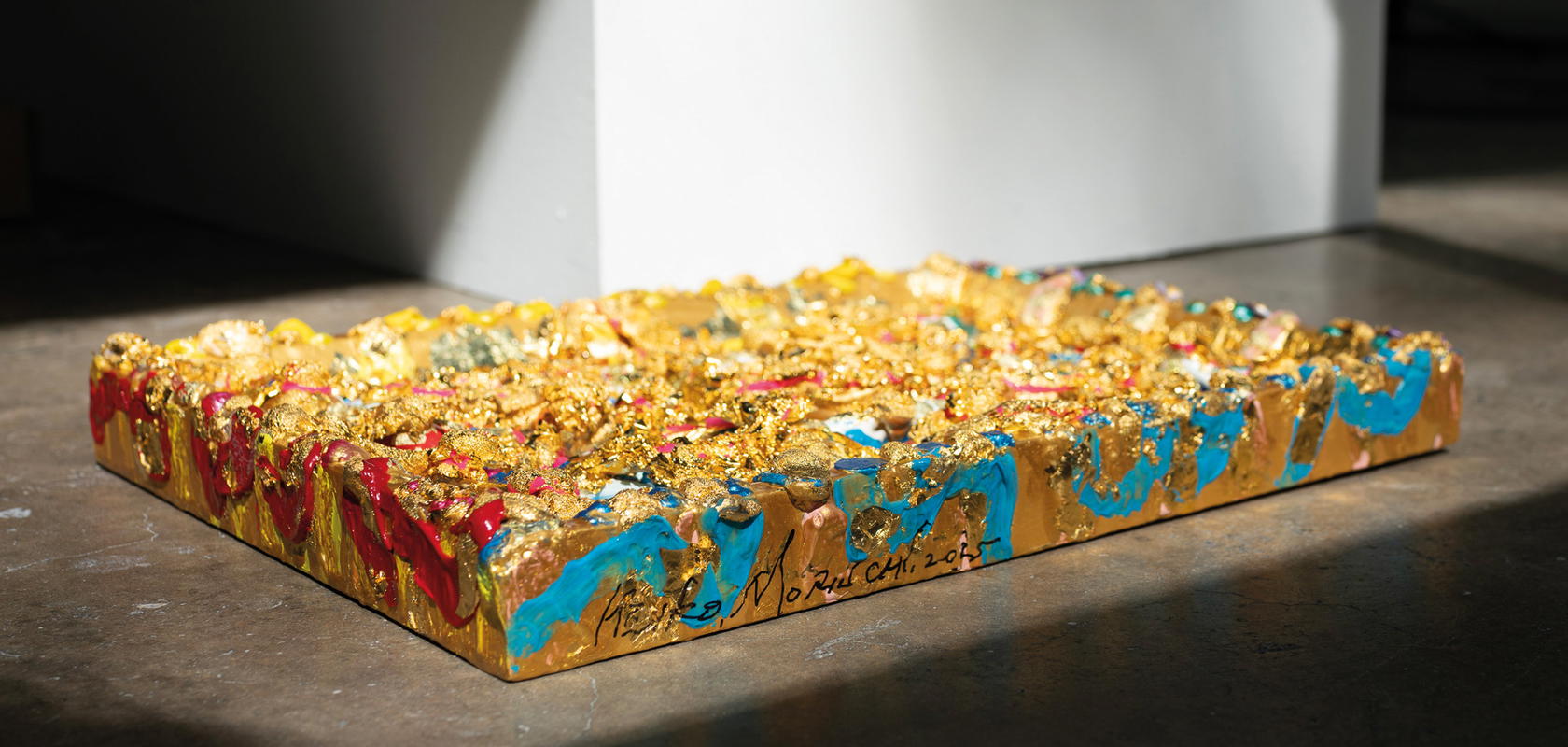
“When 24ct gold leaf was perfected, I was astonished,” she shares. “I felt it was the perfect element for my paintings. Although it is expensive, when I applied it to my work, it fluttered and moved—matching Einstein’s idea that the universe is in a state of fluctuation.”
Moriuchi’s path to the stars began in the long shadows of post-WWII Osaka. Born in 1943, she was often described as “an eccentric child”. To her family’s amazement, she memorised the Buddhist scriptures, specifically the Lotus Sutra, by the age of five, having begun drawing at just three years old.
While many of her peers focused on the rebuilding of post-war Japan, she was climbing Mount Ikoma in Nara prefecture and visiting the Osaka planetarium to stare at the night sky. As she learnt to draw, she sketched the faces of saints, Buddha Shakyamuni, Jesus Christ, and Egyptian pharaoh Akhenaten.
“Gold leaf was the perfect element for my paintings. When I applied it to my work, it fluttered and moved.”
This early fascination with the divine and the cosmic remains the bedrock of her art. “Simply put, my paintings depict the universe through motifs,” she says. “The universe, which expands in many ways, is something too awe-inspiring to create lightly. That is
why I constantly question my connection to the universe.”
When Yoshihara, the patriarch of the Gutai movement, became interested in Moriuchi, her artistic trajectory changed forever. As much as she dreamt of Paris, he insisted she head to New York City. So, in 1965, she moved into a small building at 209 East 19th Street, living below American abstract giant and art theorist Ad Reinhardt.
A roll call of 20th-century titans surrounded her: she explored galleries with American artist, furniture designer and landscape architect Isamu Noguchi, shared meals with Reinhardt, and stomped around with Yoko Ono, Man Ray, and other Neo-Dadaists.
Moriuchi’s New York odyssey, however, was truncated by the Great Northeast Blackout of 1965. As the city plunged into darkness, her father grew fearful and ordered her immediate return to Japan. It was a homecoming that led her straight into the heart of the Gutai movement. She joined the group as its final member in 1968 and remained until it disbanded four years later.
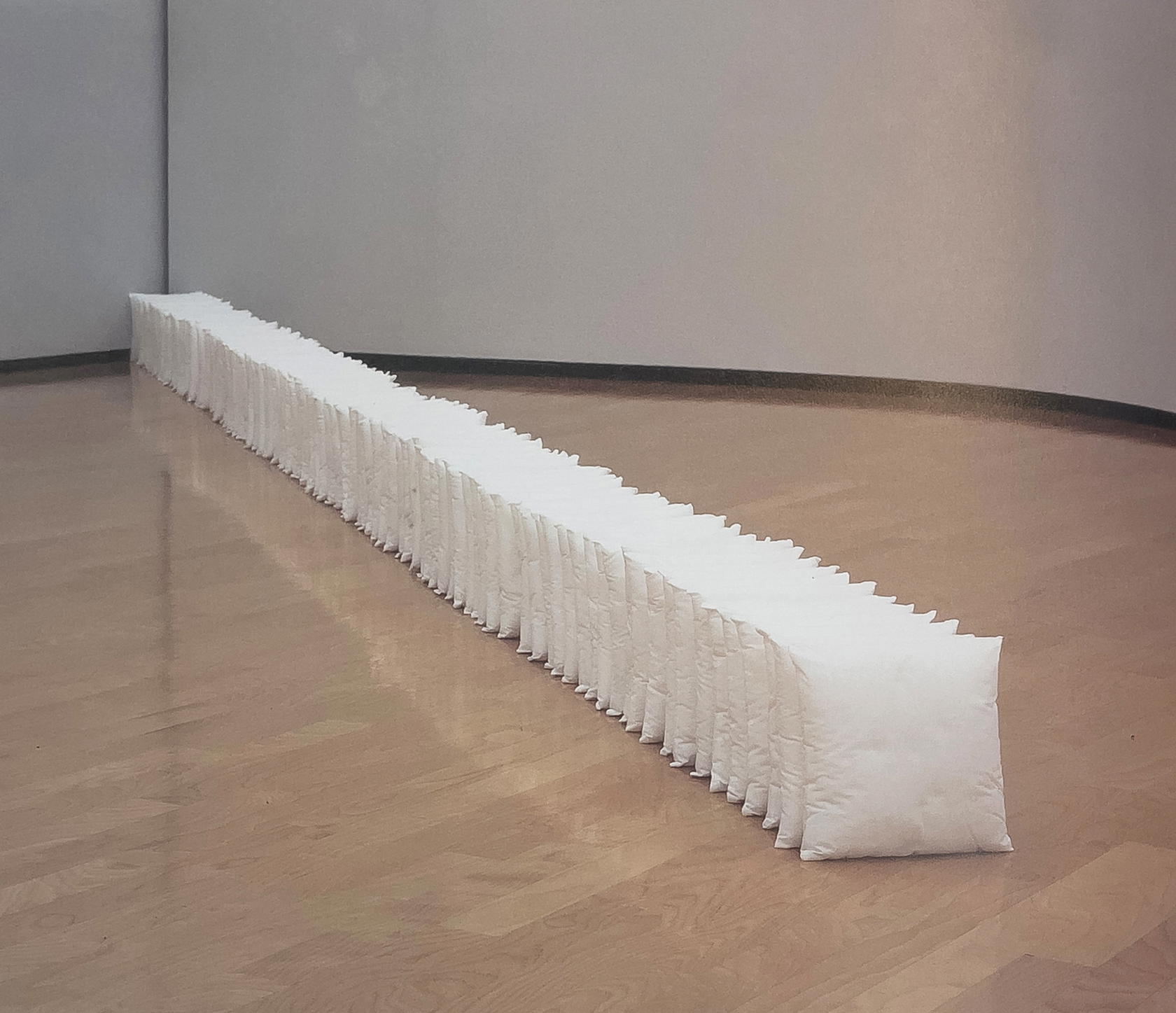
Her debut work, ‘Yūtaitōten’ (Ascending to Heaven with a Ladder), featured 108 white cushions arranged in a row. She frames the repetition which leant towards Minimalism, in spiritual sense: “At the end of one’s life, a person must go to heaven. To build one’s own path, one must build the steps of that ladder oneself. I am creating a path of zabuton cushions.” These traditional Japanese square floor cushions must be soft, she adds.
These days, Moriuchi shrouds her creative process in mystery. She is notoriously superstitious about her working environment—no photographs exist of her studio, and even her manager cannot see her at work.
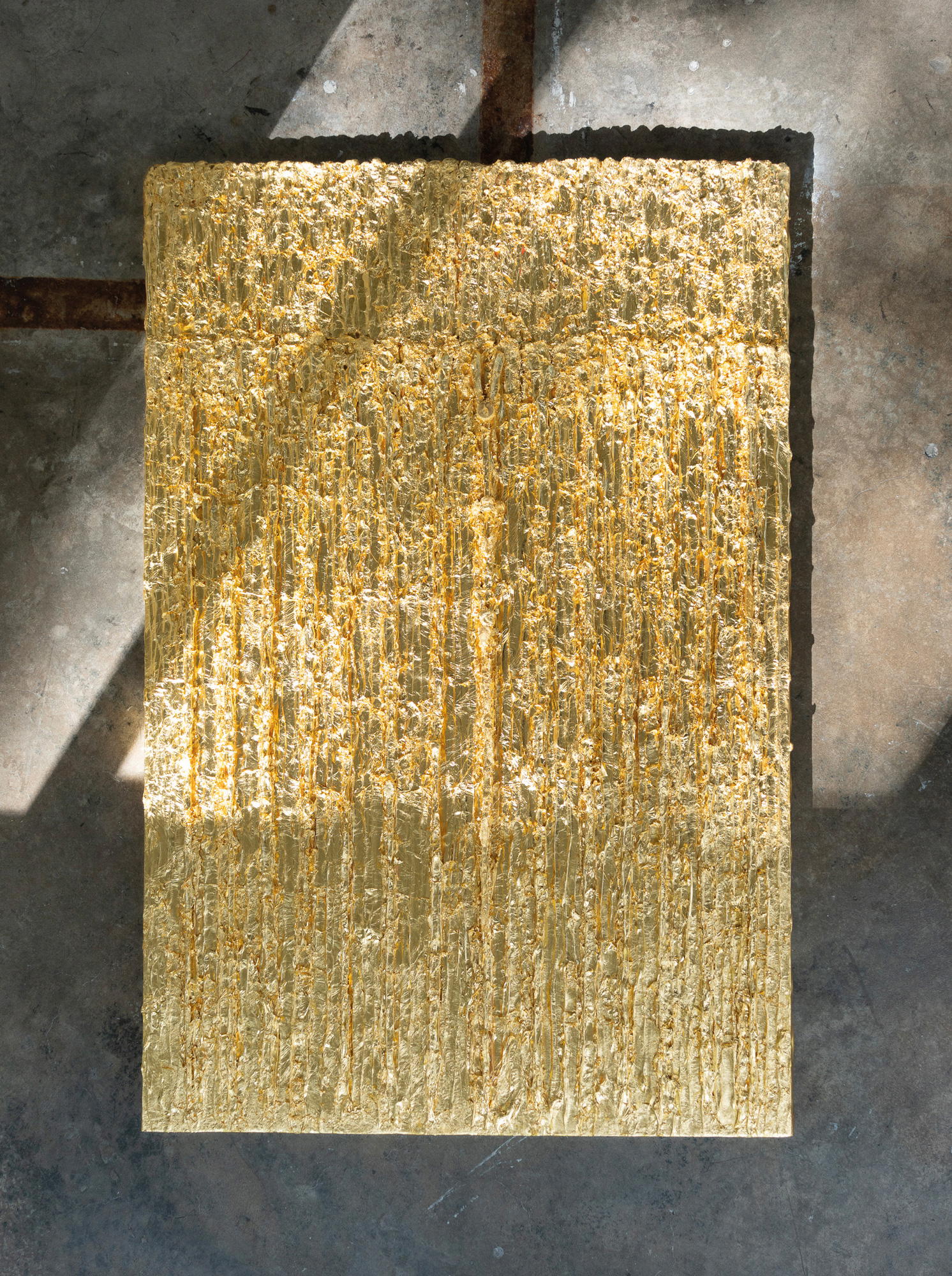
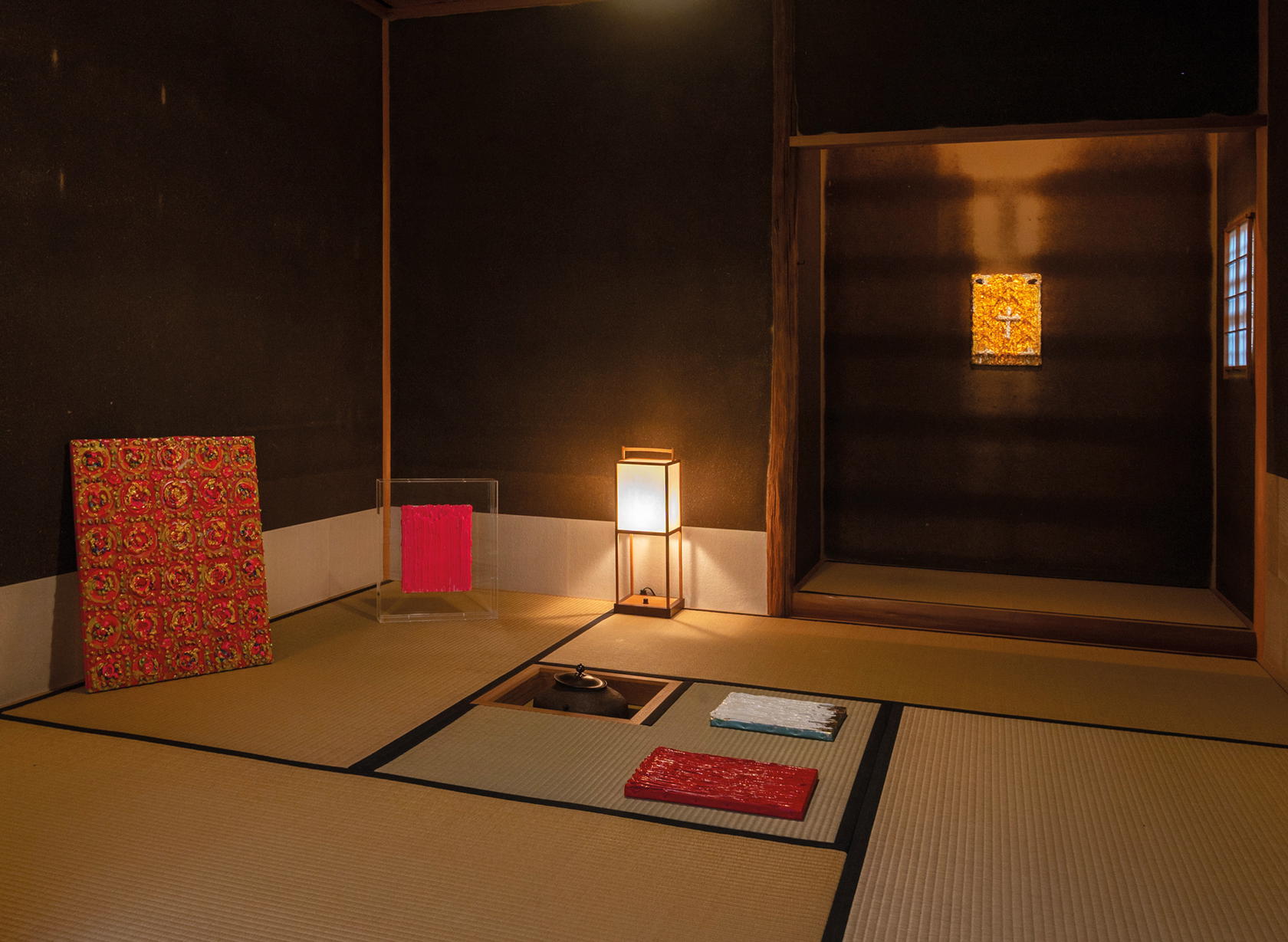
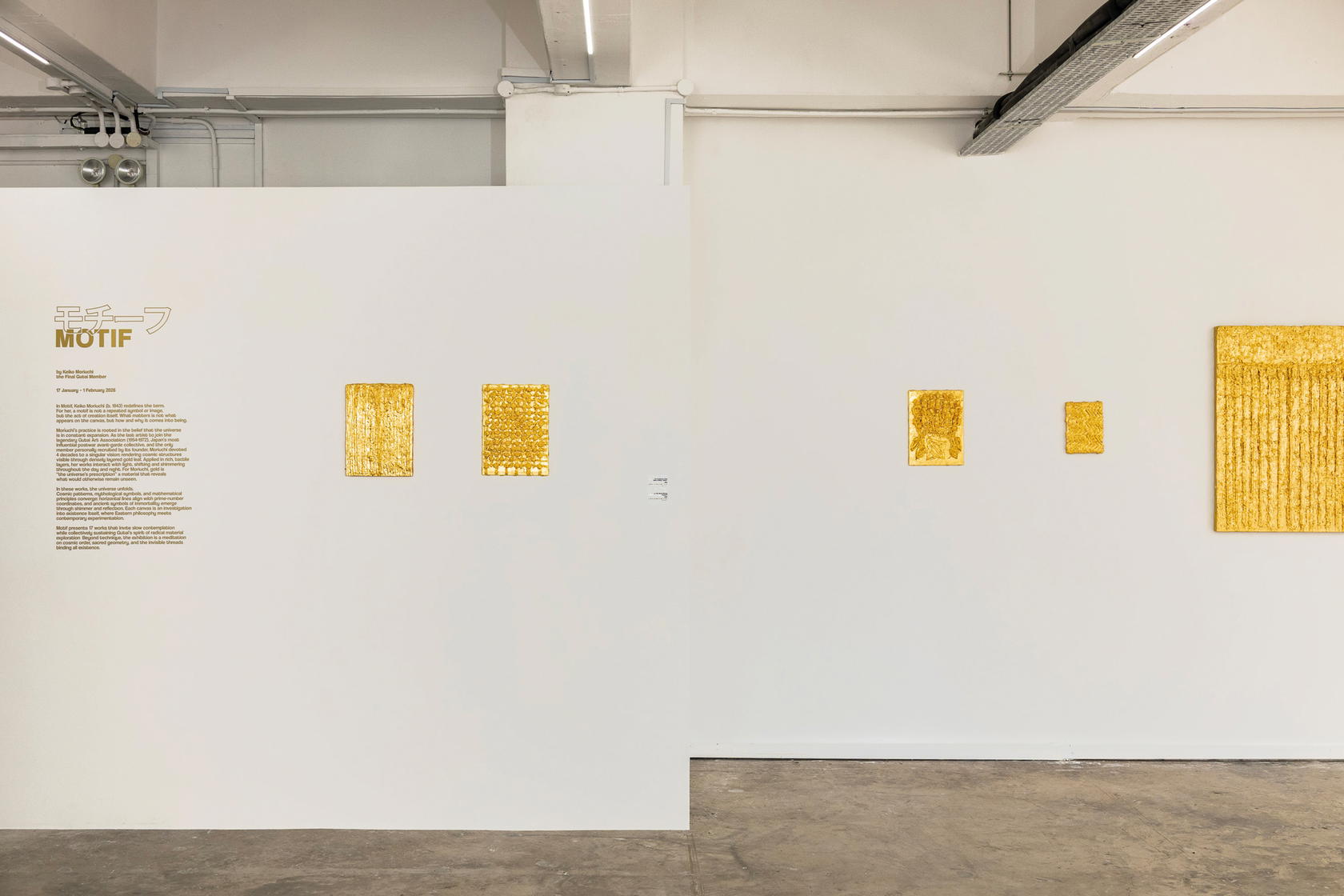
Instead, she reveals the results: canvases that function as living materials. If Gutai exploded painting into performance and raw materiality, Moriuchi would later concentrate that energy into dense, textured surfaces. Gold leaf became central. Layered painstakingly over heavy impasto, it catches the light and shifts with movement. In her hands, gold is not an ornament but an instrument; a way of perceiving the universe.
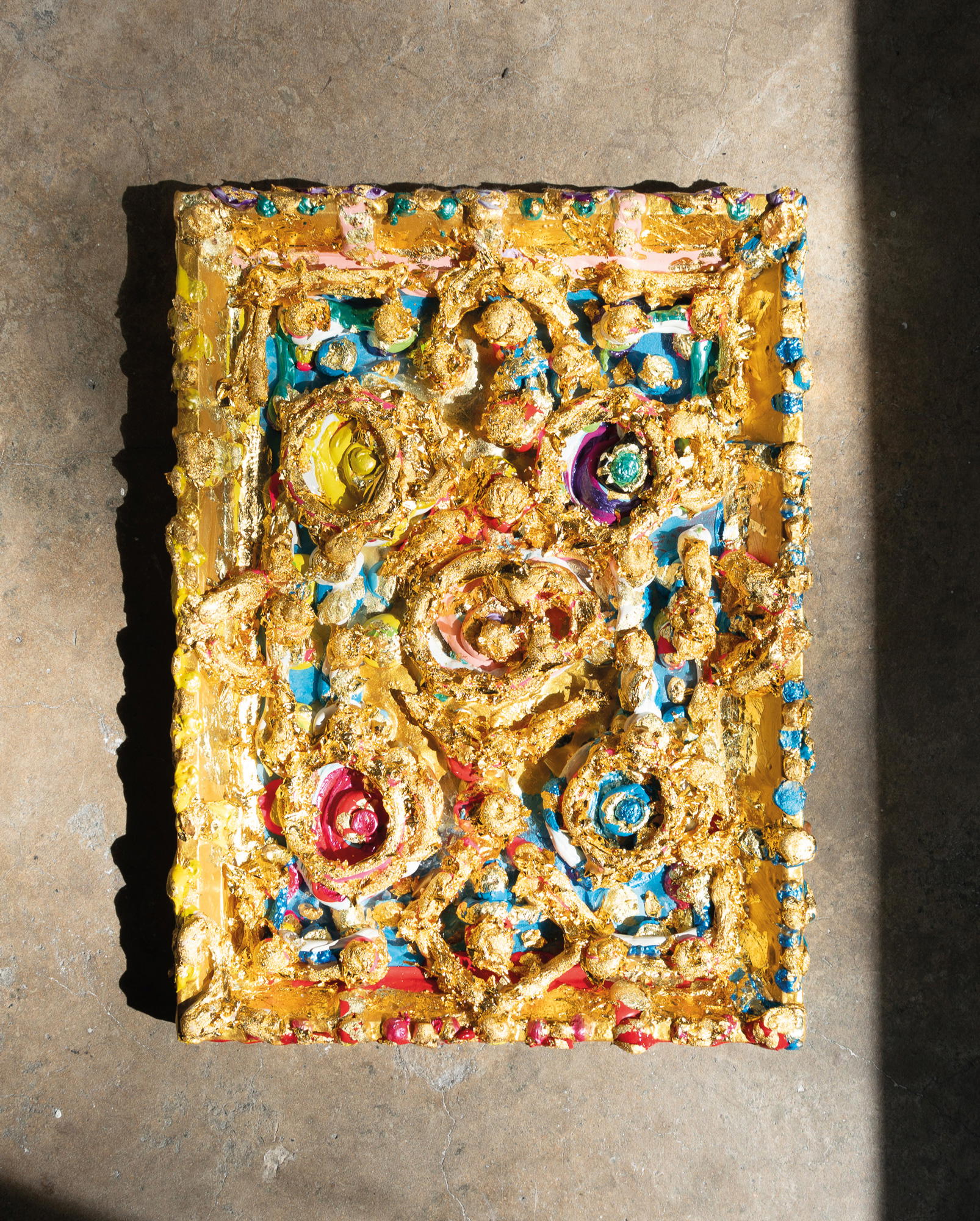
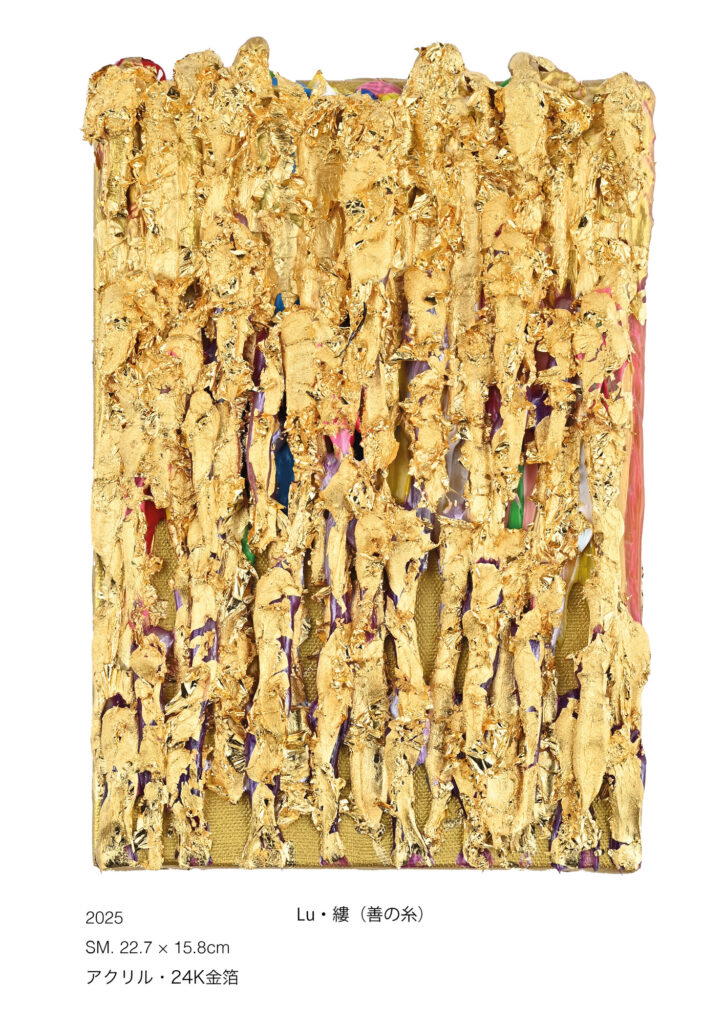
At her Singapore exhibition, some of the featured masterpieces included works from her ‘Lu: The Never-Ending Thread’ series, which expressed this cosmic meditation. As the lines traversed the canvas like filaments of goodness, they seemed to reach into deep space, connecting human existence with prime-number coordinates, the building blocks of the universe.
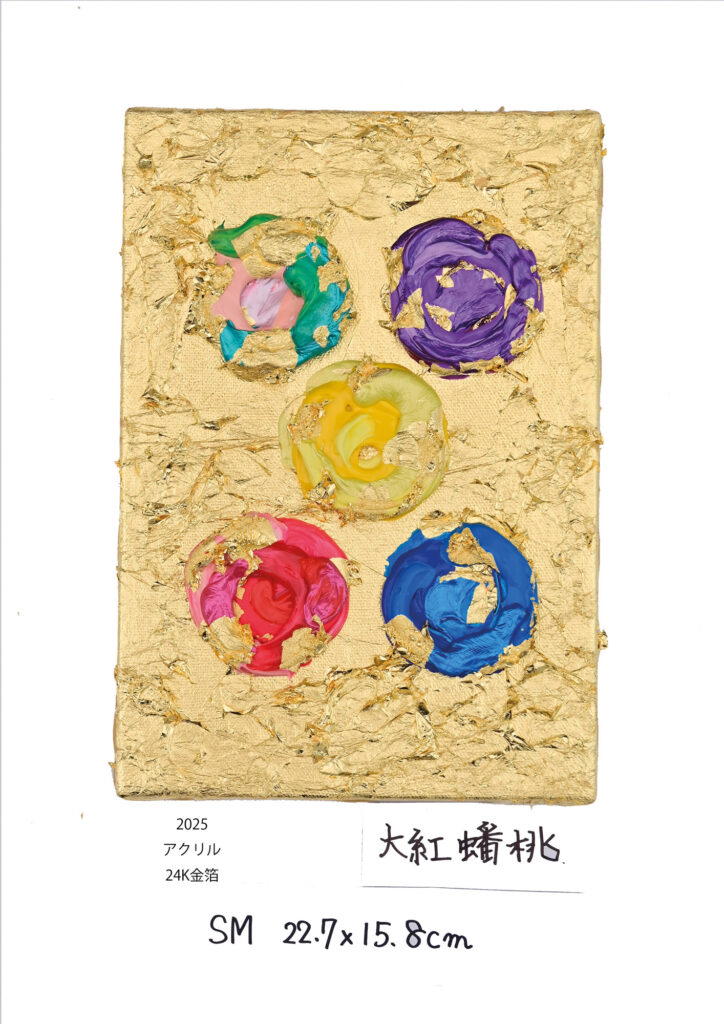
In ‘Donut Peach’, Moriuchi fused Eastern philosophy with the Poincaré conjecture in mathematics—the idea that a 3D space with no boundary is spherical. She used the flat peach’s donut shape as a metaphor for a universe that loops back into itself. In her view, the peach is a fruit of immortality, the carrier of life’s destiny, and a model of the cosmos’ hidden geometry.
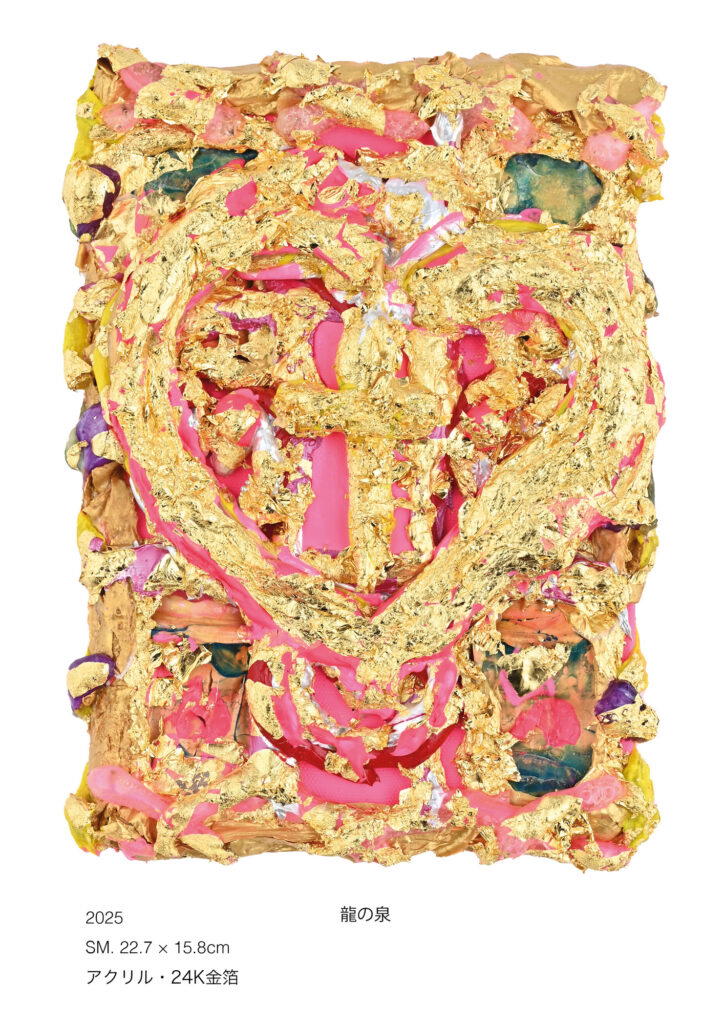
‘The Dragon’s Spring’ depicted a limestone cave with a dragon’s nest, based on Chinese legend. As the story goes, the world will not know peace until the dragon emerges from its hidden spring, revealing unseen energy.
Rejecting conventional ideas of age, Moriuchi sees each new day as a form of rebirth, insisting, “Every day is a birth. Tomorrow, a new self is born again, and the day after tomorrow, yet another is born.
It just keeps happening. Even after death, you’re still alive.” Throughout her work, her philosophy of perpetual renewal permeates what she views as a lifelong pursuit of knowledge and understanding. As she sees it, the success of her regional debut was the result of “en”—the Japanese term for an almost sacred, mysterious bond shaped by invisible forces beyond logic or intention.
“The karmic connections between people bind us,” she muses. “This person and that person would never meet in the normal course of events.”
For collectors and admirers of the post-war avant-garde, Moriuchi’s presence in Singapore marked a significant milestone. Amid the fast trends and digital noise of modern life, her canvases served as timeless testaments to cosmic order in the healing, purifying light of gold.