The preservation of craft has long been inseparable from watchmaking itself at Vacheron Constantin. Over more than 270 years, this oldest continuously operating watchmaker has kept skills such as guillochage, engraving, enamelling and gemsetting alive through generations of apprenticeships, while also formalising this commitment through collaborations with institutions like the Louvre and the Metropolitan Museum of Art.
Its craftsmanship goes beyond the traditional horological metiers d’art this year. Through its One of Not Many Crafts Programme, the maison invited artisans from disciplines typically associated with large-scale objects to translate their practices onto the miniature canvas of a watch dial.
The shift in scale was more than decorative. Each watch originated from a direct collaboration between an independent artisan and the maison’s own specialists, merging external craft knowledge with haute horlogerie’s technical constraints. The partnerships often required both sides to rethink familiar materials, invent new tools, and adapt techniques that had never before been tested at such a small scale.
The result? Six unique concept watches, each dedicated to a different craft: gold embroidery, feather work, wood marquetry, glass sculpture, paper sculpture, and micro-origami. Collectively, they form the Metiers d’Art Tribute to the Animal Kingdom collection, inspired by animals, a recurring theme for Vacheron Constantin.
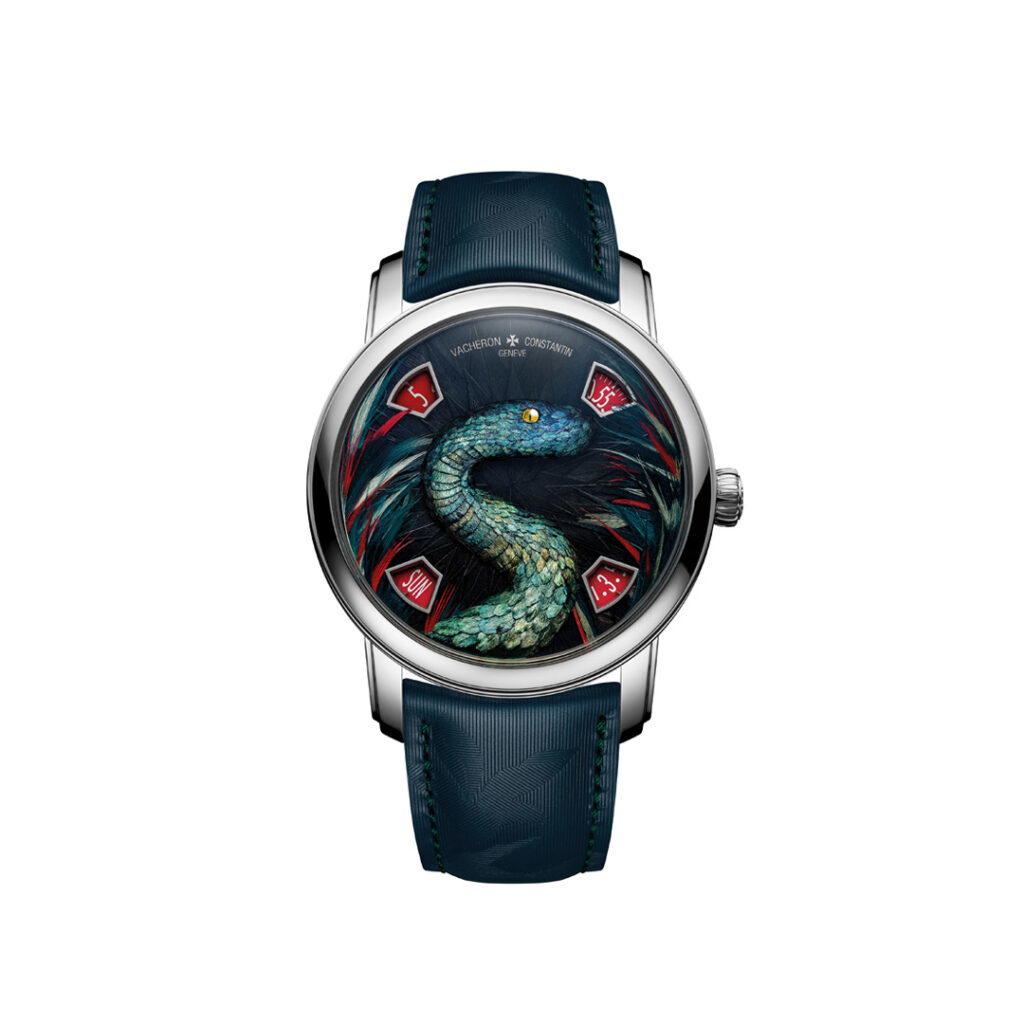
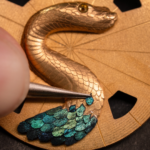
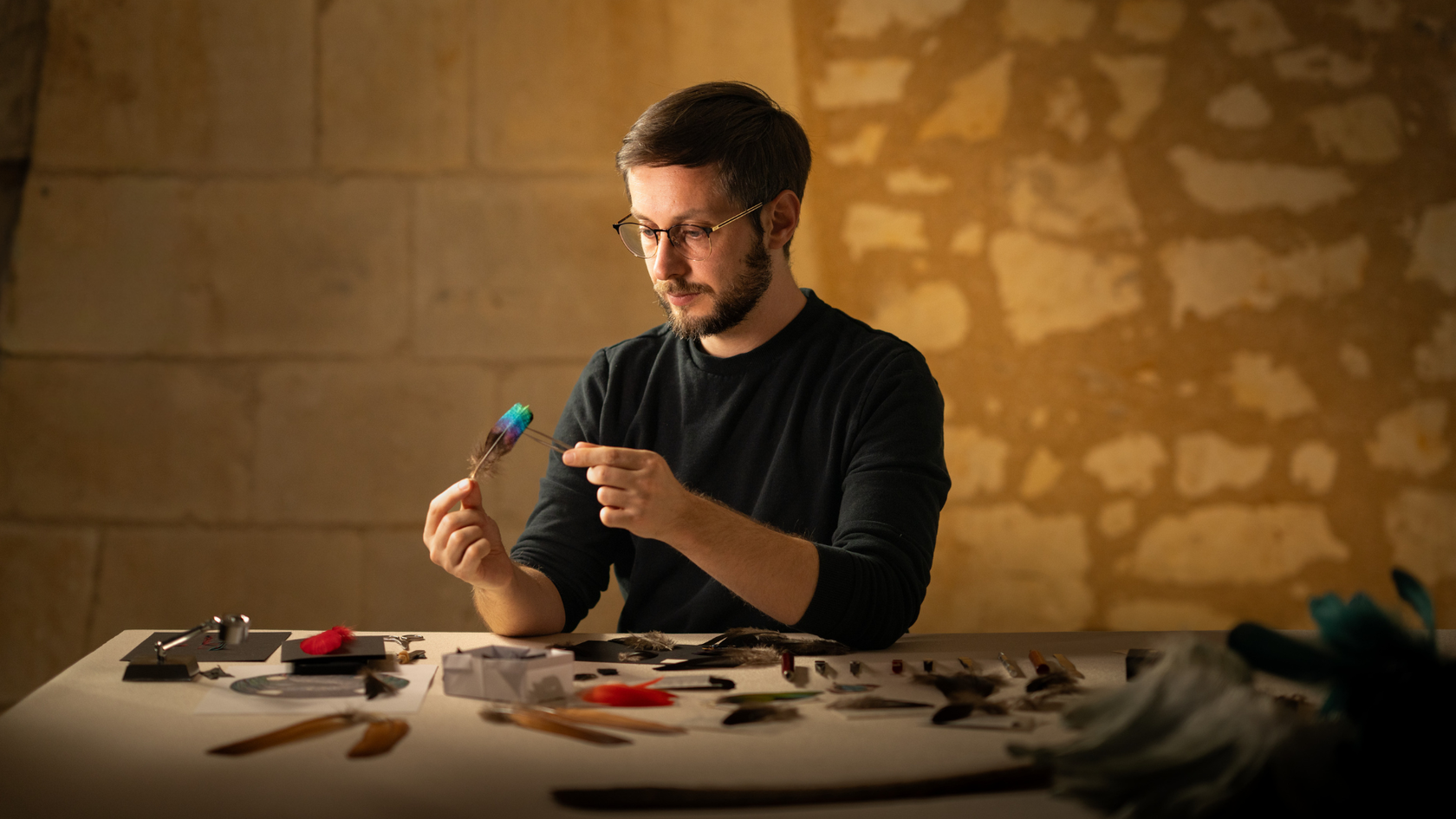
In Metiers d’Art Tribute to the Animal Kingdom – Feathersnake, an iridescent blue-green serpent coils around the dial with more than 200 pieces cut from seven rare Lophophore feathers (from the Himalayan Monal, a bird renowned for its iridescent, metallic plumage).
For precise cutting, the feathers were mounted on silk paper with the quills removed to reduce their thickness. Against a background of goose feathers, the final snake protrudes just 3mm from the dial. To bring this vision to life, the artisan in charge fashioned his own micro-scalpel by reshaping a needle because existing instruments were too large.
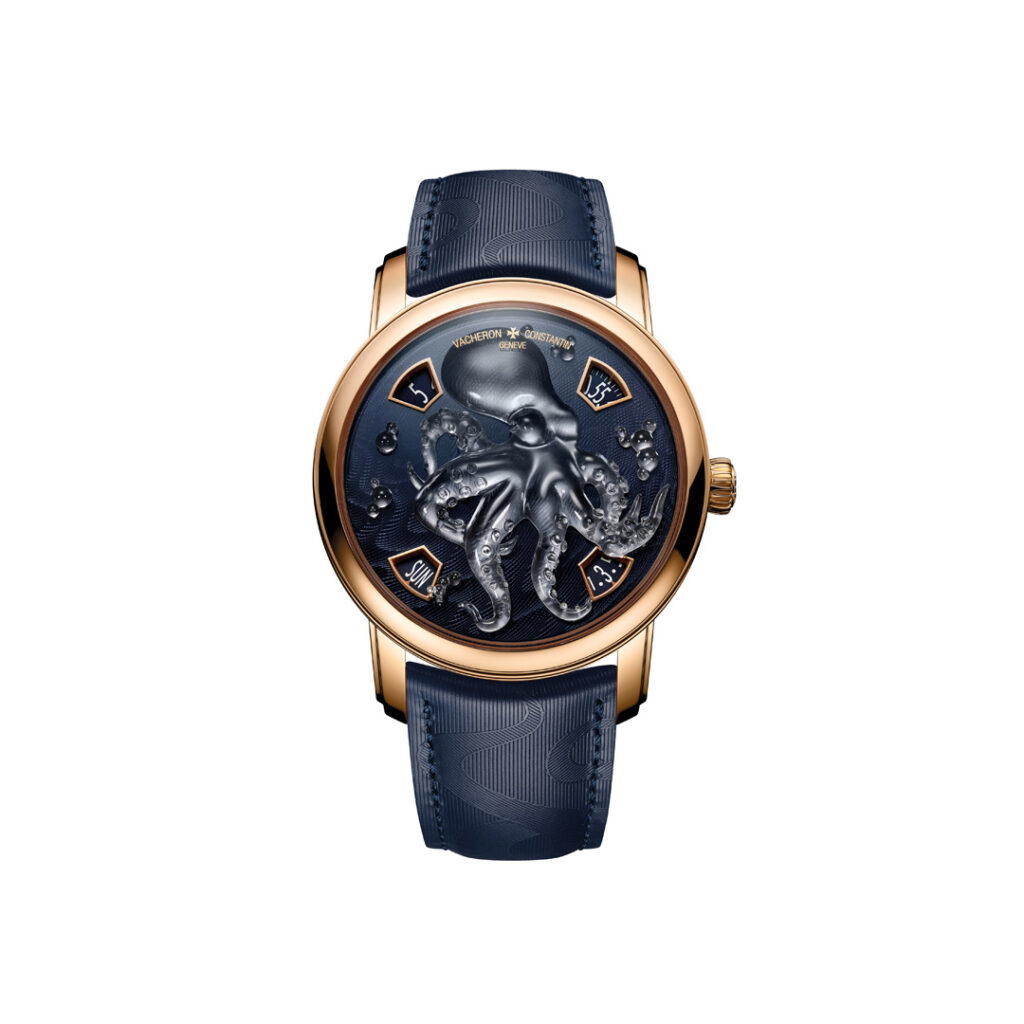
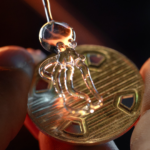
Glass presented a different set of constraints in Glassoctopus. It features a transparent octopus crafted from melting glass rods gently gliding over a dark blue, hand-guilloche gold dial that evokes the depths of the ocean. With tungsten tools, each tentacle was carefully shaped, and the sculpture stands 3.5mm high.
Because reheating the glass threads could cause them to collapse into spheres, the sections were built incrementally. Several parts of the octopus pass over the dial’s four apertures, which are just 0.2mm above the surface, adding complexity to the figure’s placement. A year-long development process resulted in four prototypes before final approval.
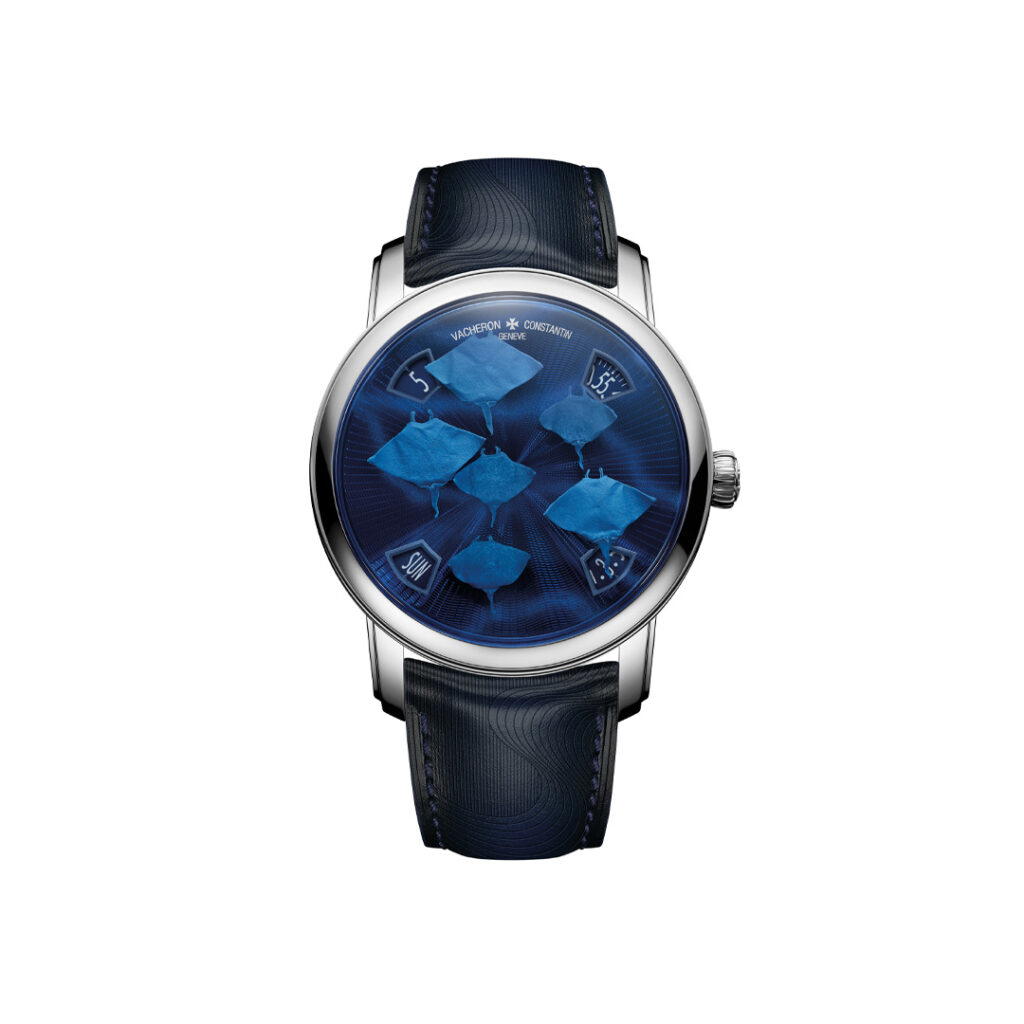
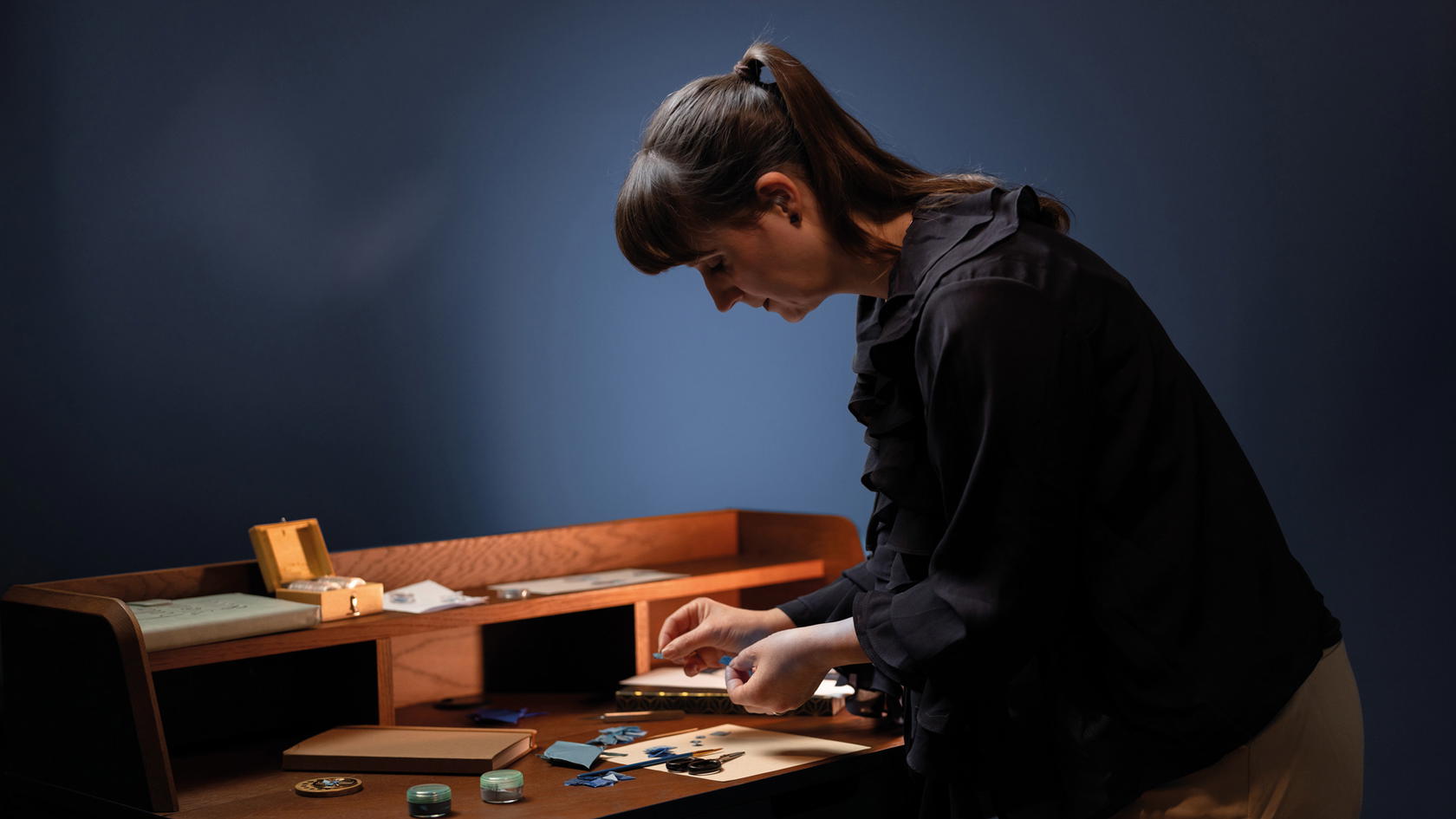
In Metiers d’Art Tribute to the Animal Kingdom – Oraygami, the aim was to create paper that mimicked a tiny manta ray. Each ray, measuring 5mm to 10mm in length, was carefully folded from hand-dyed Japanese paper and mounted on brass stems, forming the illusion of a swimming cluster on a deep blue guilloche dial. A moire crystal effect enhances the impression of light moving underwater.
The artisan worked only with fingers and a toothpick—no magnifying glass or pre-made folding instructions—studying real manta rays to refine their folding technique. To increase flexibility during folding, a specific blue dye was added to the paper and blended with cellulose.
A Closer Look At The Making Of Metiers d’Art Tribute to the Animal Kingdom
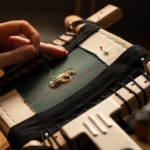
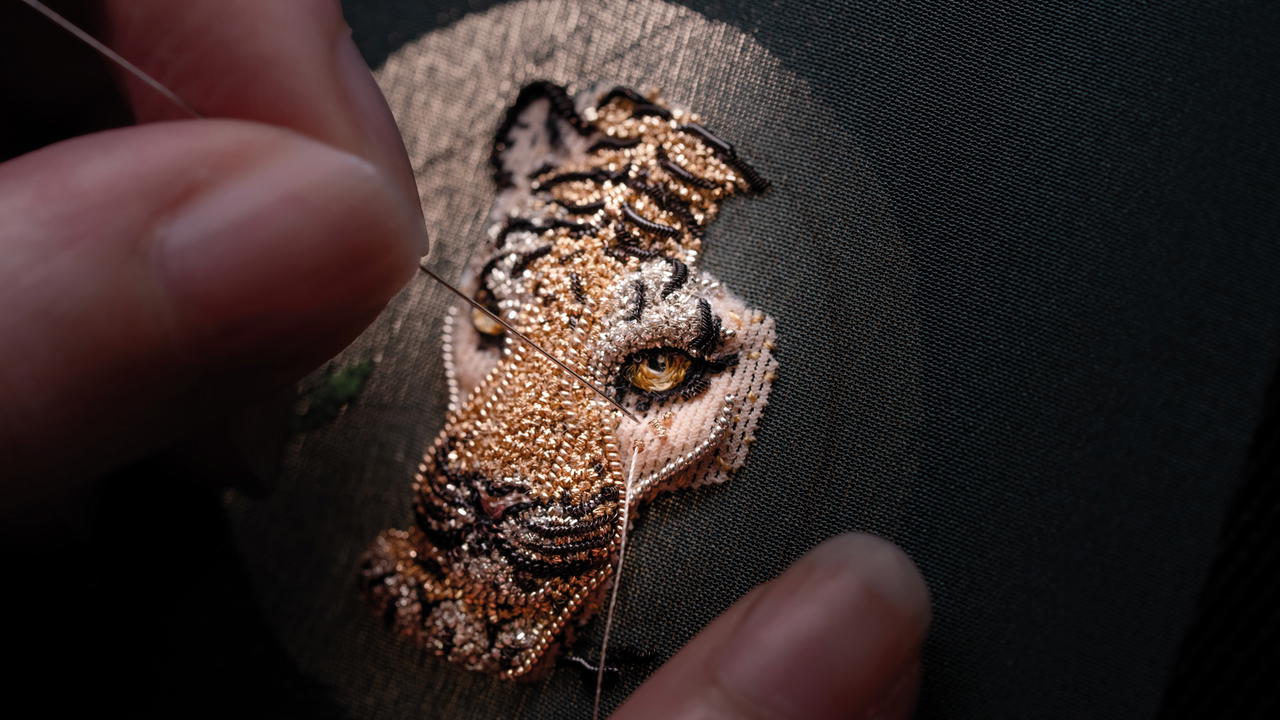
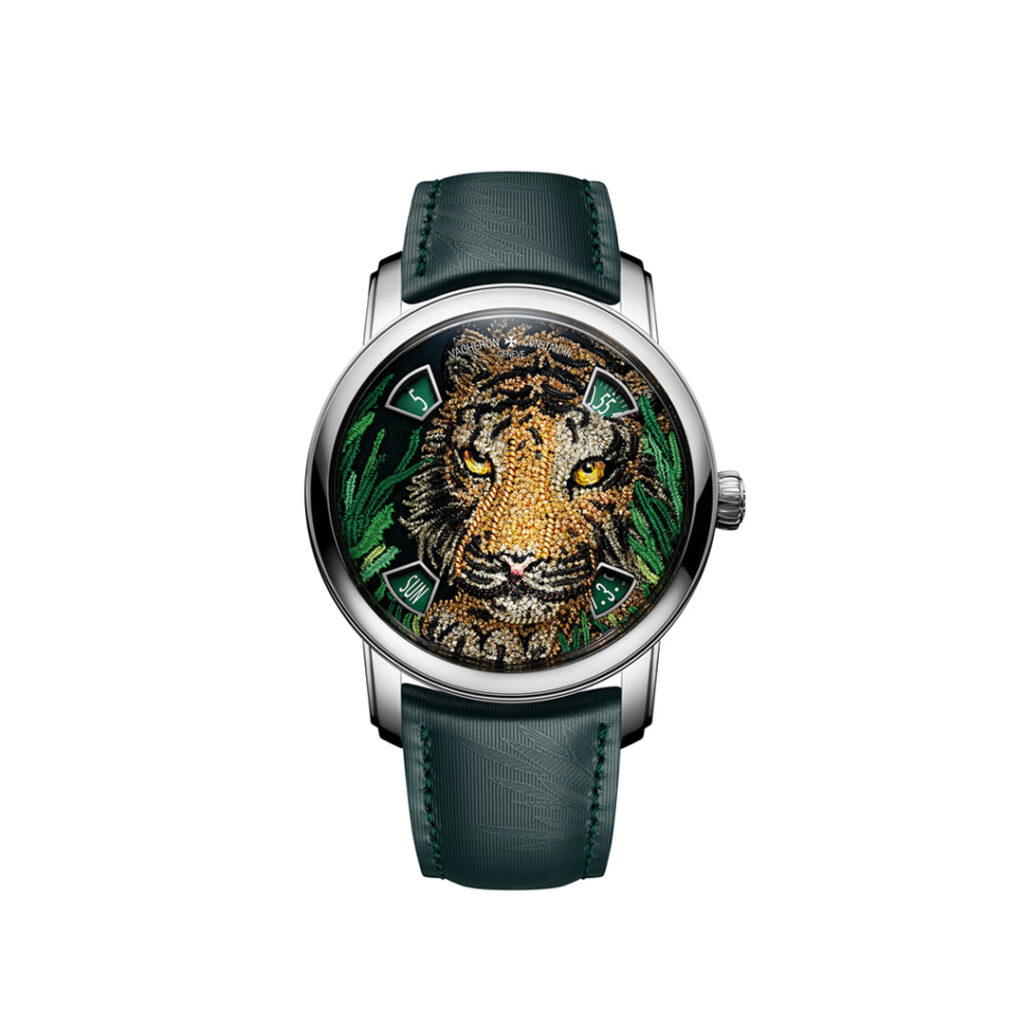
In Tigerbroidery, embroidery portrays a prowling tiger in a jungle setting. Its fur is crafted from 9k yellow and white gold wire, while its stripes were formed by ceramic-coated black wire layered over copper. The high gold content necessitated new tools to twist the metal into workable threads.
A bespoke green silk backdrop, dyed by a British manufacturer, sits on a perforated titanium dial plate, specially designed to hold the stitching without affecting the movement. For this project, needles as precise as 0.25mm were developed.
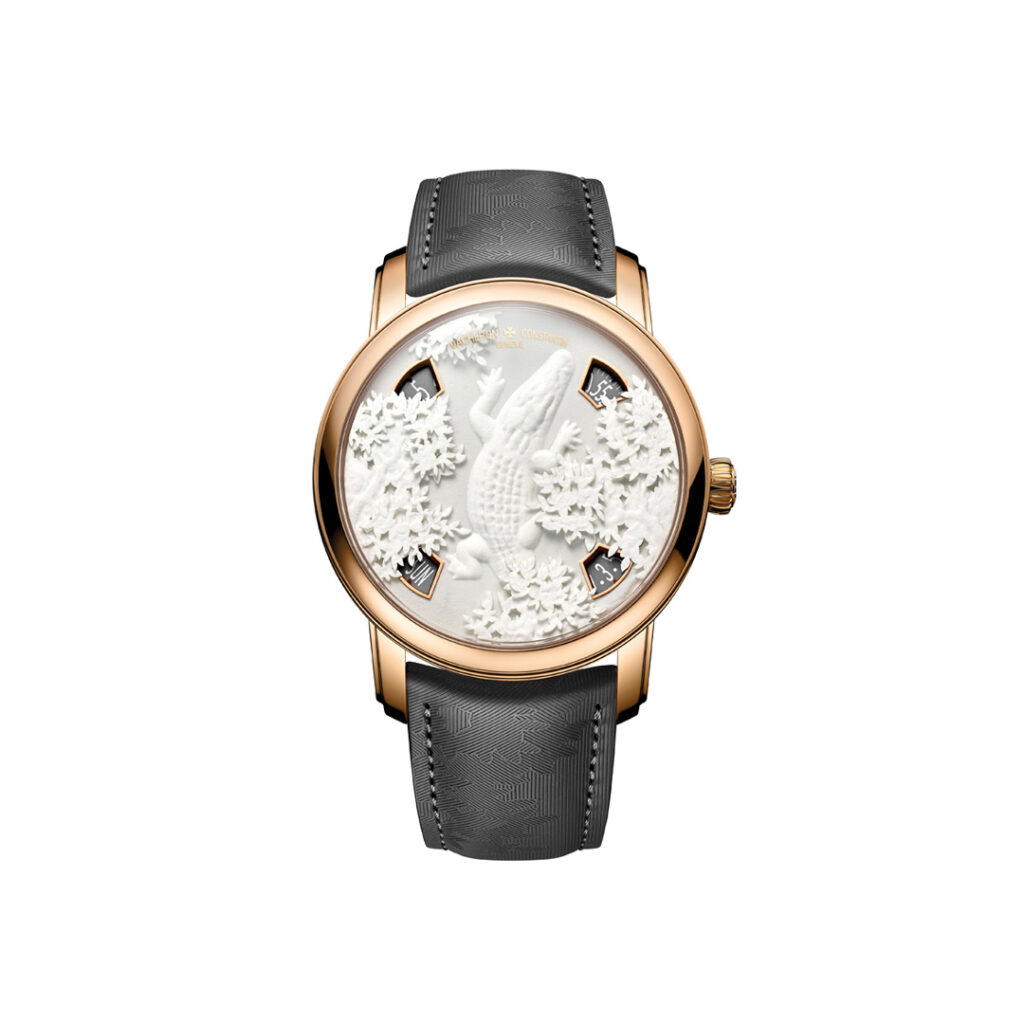
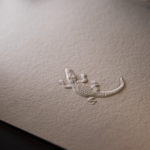
Metiers d’Art Tribute to the Animal Kingdom – Papercroc redefines form and texture. A white crocodile, crafted entirely from cotton paper, moves through snow-toned vegetation created with embossing, laser cutting, and hand assembly.
The piece measures just 3mm thick. Brass matrices heated to between 60 and 70 deg C were pressed into two layers of paper to produce relief without damaging the fibres, refined through months of testing to determine the right tools and pressures, so the foliage remains clear at this scale. The finished components were carefully layered by hand to add shadow and depth, with the crocodile positioned between the dial’s four apertures.
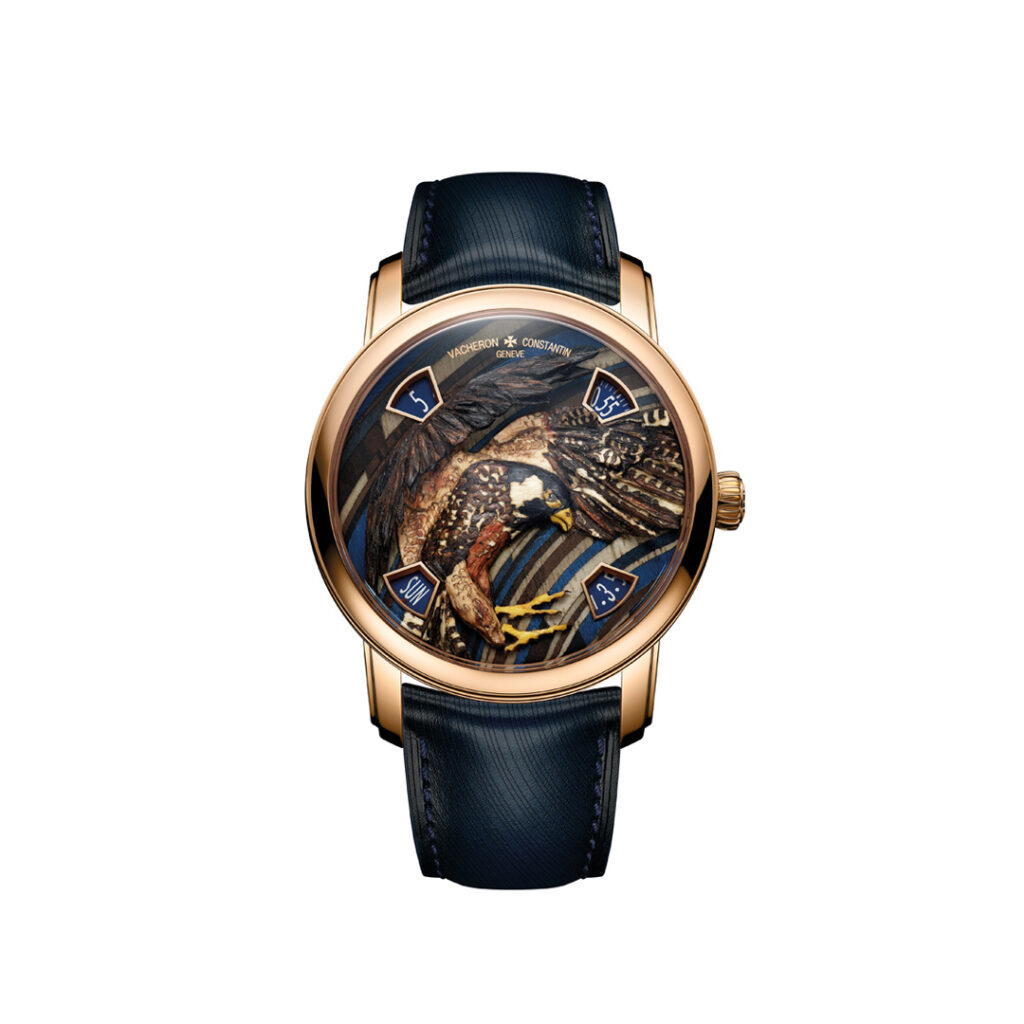
The final watch, Metiers d’Art Tribute to the Animal Kingdom – Woodenwings, uses 12 species of wood, including smoked eucalyptus and dyed blue birch. It depicts a falcon in flight against a circular marquetry background. The body was constructed using a sculpted, sandwiched veneer technique developed just for the piece, while the wings were hand-assembled feather by feather.
At this scale, standard woodworking tools were unsuitable, so the artisan worked primarily with surgical scalpels and micro-carbide bits under binocular magnification. The finished bird rises 3mm from the dial, with its wingtips reaching the crystal edge. The wood choice was determined by its structural behaviour and colour.
Vacheron Constantin will remain inspired by the animal world as long as it has such incredible talent behind its creations. What a fascinating phenomenon time can be.