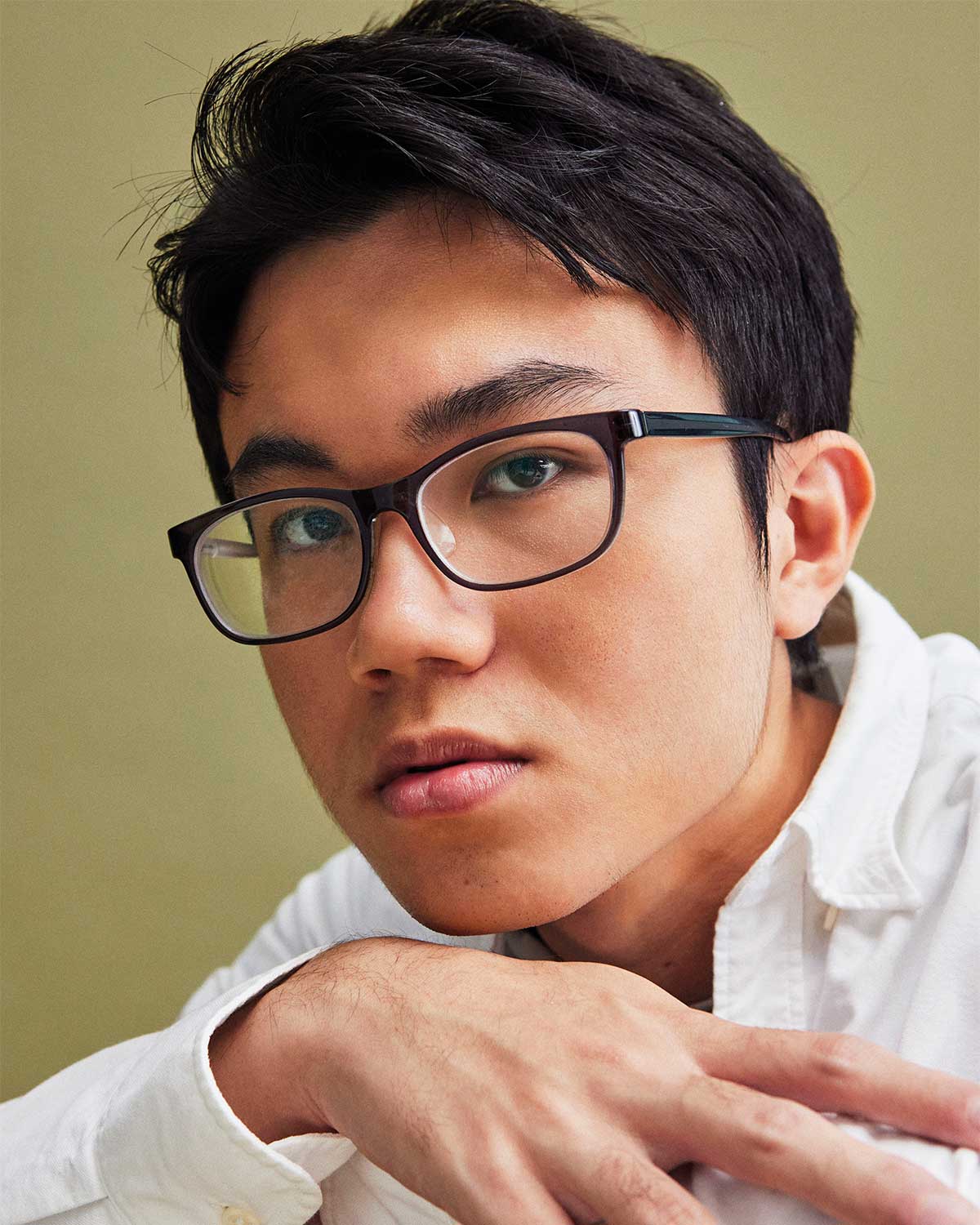
Tin Jingyao picked up chess by accident. He was at his aunt’s house and saw an opened laptop. Intrigued, he approached it and launched the chess software and through trial and error, understood the rules of the game. Jingyao was only 7.
Two years later, in 2010, he won several local and regional titles for his age group. He also received the International Chess Federation (FIDE, the acronym in French) Master title the same year.
Despite this, arguably his fondest memory was playing against legendary grandmaster Garry Kasparov in a 22-board simul—an exhibition in which Kasparov played 22 other players simultaneously. Kasparov called Jingyao, who was 9 at the time, a “real player”.
A picture of Kasparov in a khaki jacket and blue pants standing while studying the board is engrained in local chess lore. A small Jingyao sits across him, writing on a notepad. Around them, an army of chess enthusiasts watches with great interest.
“To be frank, I remember little,” Jingyao says sheepishly when I ask him about the incredible improvement he underwent during that period. He recalls playing against himself a lot and picking up important concepts rapidly, but admits that he just “understood” the game. Preternaturally talented, Jingyao also credits his father for nurturing his love of chess from young. His dad taught himself the rules of the game so he could better understand his son’s games and would accompany Jingyao to different competitions locally and overseas.
Even after playing chess for more than half his life—Jingyao turns 23 this year—he’s still passionate about the game of kings. “Even though I’ve played thousands of times, every game is different. I enjoy the problem-solving process, calculating the position, and determining the best possible move.”
The National University of Singapore student doesn’t see the board on the ceiling though, unlike Beth Harmon in the popular Netflix miniseries The Queen’s Gambit. Instead, Jingyao visualises the positions in his mind, mentally moving different pieces, calculating whether he’s at an advantage and repeating the process over and over again. Many grandmasters instinctively know the right move. Jingyao, who became Singapore’s youngest-ever grandmaster in Aug 2022 is similar.
“There’s a lot of pattern recognition. With practice, you usually know almost immediately the moves that make the most sense in every position,” he explains.
Chess is now more popular than ever, thanks to the Internet increasing accessibility to knowledge and giving players the ability to play with anyone at any time.
The surge in interest can also be attributed to still-active chess savant and probably the game’s greatest player Magnus Carlsen, who loves deviating from tried-and-tested lines.
Jingyao prefers quieter, closer wars of attrition. His controlled style is still garnering results. He recently finished second in the El Llobregat Open Chess Tournament 2022 in Spain, defeating notable grandmaster Hans Niemann in the seventh round. Nevertheless, Jingyao is not averse to adding more creativity, especially as he rises in the rankings and faces better opponents. The goal is to reach 2,700 in the next five years. Currently, he has 2,598.
The game of chess has taken a back seat as Jingyao focuses on finishing his computing degree. The only time he travels for tournaments is during school holidays. However, he has entertained thoughts of turning professional.
Once he graduates in a year, he’ll make his decision. No matter what he does, it will be the best move. He has already calculated all the possibilities.